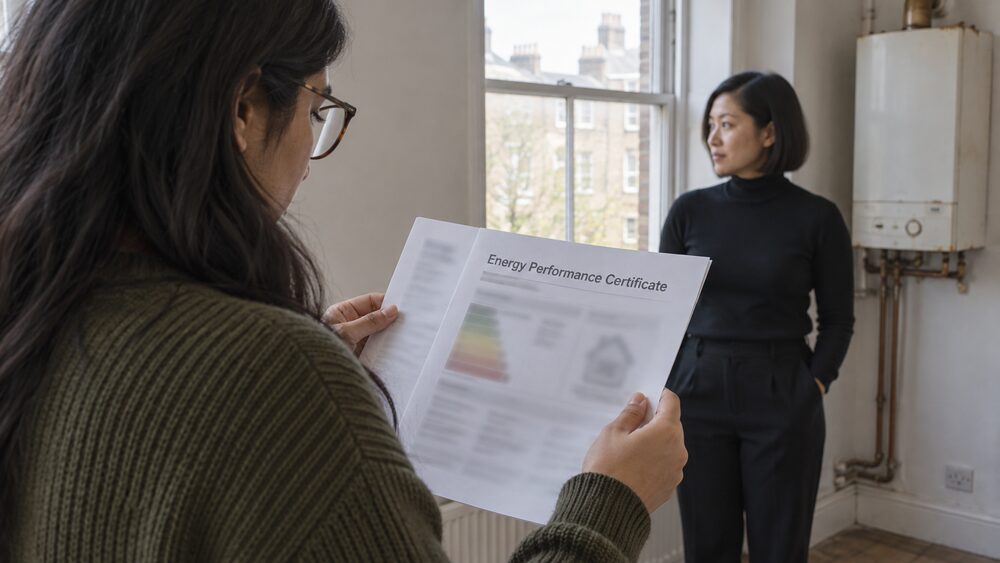
An Energy Performance Certificate, usually called an EPC, rates a home's energy efficiency from A, the most efficient, down to G, the least efficient. If you are thinking of buying a property, the seller must give you the certificate free of charge, and it is normally produced before the home is even put on the market1. The certificate tells you how energy efficient the property is, what its typical energy costs are likely to be, and what improvements could raise the rating1.
The rating comes from an inspection by an accredited assessor, who gives the home a score out of 100, grouped into the A to G bands2. A certificate lasts for 10 years, so a home that has changed hands recently may already have a valid one on the register1. If a new one is needed, it typically costs between £60 and £1203.
The A to G rating scale and the score out of 100
An EPC gives information on the energy efficiency of a property using A to G ratings, with A being the most energy efficient and G the least efficient1. The certificate provides a rating of the energy efficiency and carbon emissions of a building from A to G, where A is very efficient and G is very inefficient6. The familiar coloured chart works much like the energy labels on household appliances, which run from A (very efficient) to G (inefficient)7.
Behind the letter is a number. An assessor inspects the home and gives it a score out of 100, and the scores are grouped to give the overall rating, with A being the most energy efficient2. So two homes both rated C can sit at different points within that band, and the number gives a finer picture than the letter alone.
The certificate is more than a single grade. It sets out the home's energy efficiency rating, estimated energy costs, carbon emissions and tips to save energy8, along with suggestions for energy-efficient improvements and the rating the home could reach if those changes are made9. An EPC is always accompanied by a recommendation report that lists cost-effective and other measures to improve the energy rating of the home6.
The rating matters for running costs. Analysis by the Resolution Foundation found the efficiency gap between an EPC E and an EPC C rated home was set to jump to £380 a year in typical energy costs from October 202210. A buyer comparing two similar homes with different bands can reasonably expect the better-rated one to cost less to heat, though actual bills depend on how the home is used.
The seller must give you an EPC, free of charge
If you are thinking of buying a property, you must receive an Energy Performance Certificate, free of charge1. An EPC is a legal requirement for a seller to provide to the buyer11. The obligation sits with the seller, not with you: they arrange and pay for the assessment, and the certificate is handed over as part of the sale.
The rules bite before you even see a listing. If you are selling or letting, you must have an EPC before marketing your property, and the rating must be included in your listing12. Estate agents' own guidance confirms that an EPC rating must be displayed when marketing the property13. A property needs an EPC when it is built, and before it is sold or rented14. The certificate forms part of the standard set of documents in a sale: official legislation lists the energy performance certificate among the documents involved in the process, and in Scotland the recommendations report goes with it15.
There are situations where a seller's paperwork matters to a lender as well. A homeowner selling to avoid repossession may be asked to show the property is on the market at a reasonable price, provide a sale brochure and an energy performance certificate, and give the lender permission to speak to their estate agent and conveyancer16. In other words, the EPC is treated as a standard piece of evidence that a sale is genuinely under way.
How to find and check a home's EPC
You do not have to wait for the seller to hand you a paper copy. Existing certificates are held on public registers that anyone can search free of charge.
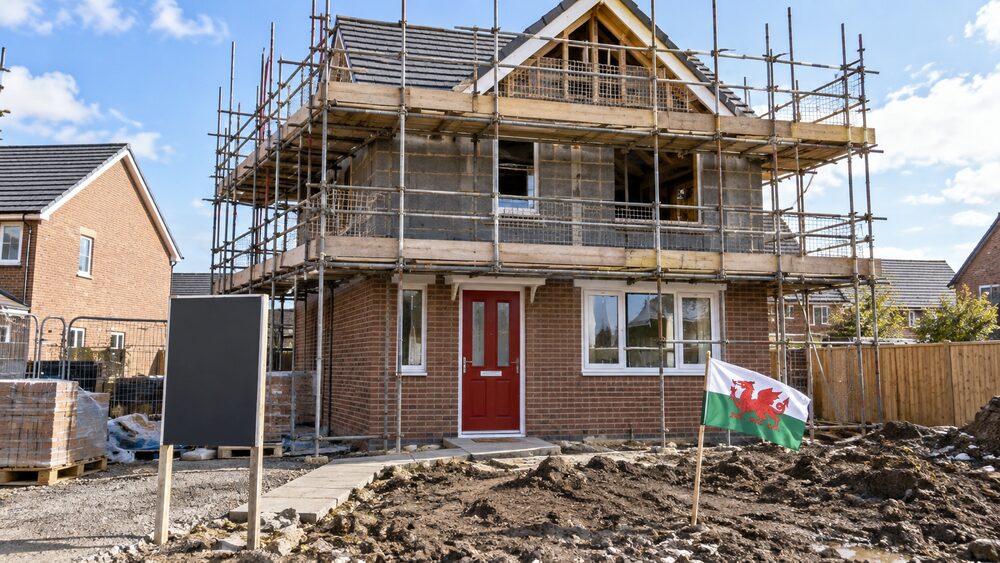
In England, Wales and Northern Ireland, use the government's service to check if a home has an existing EPC17. In England and Wales you can find an energy certificate on GOV.UK2. In Scotland there is a different way to check: the Scottish EPC Register holds the certificates for Scottish properties2. If you are buying a new build that is still being finished, the rating can be checked on the EPC register, or you can ask the house builder for the Energy Performance Certificate or predicted energy assessment19.
Scotland has one extra rule worth knowing if you plan to let the property. In Scotland, the EPC must be displayed somewhere within the property which can be easily seen by your tenants20. Some banks also build EPC information into their apps: Santander's My Home Manager shows the home's EPC rating and how to improve it21.
Checking the register yourself is worth doing before you make an offer. It confirms the rating the seller is quoting, shows when the certificate was issued (which tells you how much of its 10-year life is left), and lets you read the recommendation report, which lists the improvements the assessor identified6.
Getting a new EPC: who does it, how long it takes and what it costs
When no valid certificate exists, a new one has to be produced. You can get an EPC from an accredited energy assessor who visits the property to carry out an inspection17. Assessments must be done by an accredited energy assessor; this is not something the seller or buyer can do themselves2.
The visit is short. It usually takes less than an hour, depending on how large the property is2. Once the assessment has been completed, it can take a few days for the EPC to show on the government database2, so a seller preparing to market a home should book the assessor in advance rather than the day before.
The cost is a guide price rather than a fixed fee. As a guide, you can expect to pay between £60 and £1202, and Energy Performance Certificates cost between £60 and £120 depending on your local assessor's prices3. The price varies by assessor, and by the size, type and location of the property2. Which? lists the EPC among the standard costs of selling a house, and notes that certificates are valid for 10 years, so a seller who bought less than a decade ago may be able to use the existing one22.
For a buyer, the position is simple: the seller pays. You must receive the certificate free of charge1. The only time you would pay for an EPC yourself as an owner is if you later need a fresh one, for example when your existing certificate expires and you want to sell or let, or when a grant scheme asks for an up-to-date certificate.
An EPC lasts 10 years
A certificate is valid for ten years and can be used multiple times during this period1. EPCs are valid for 10 years23, and the same figure appears across lenders' and insurers' guidance: the EPC will be valid for ten years20, and Energy Performance Certificates last for 10 years18.
The 10-year clock starts when the certificate is issued, not when the property is sold. That means a home marketed with a certificate issued eight years ago is being sold with one that has only two years of validity left. The buyer loses nothing, since the certificate still satisfies the legal requirement for the sale, but if that buyer later wants to let the home or apply for a scheme that requires a current EPC, a fresh assessment may be needed sooner.
Some schemes are explicit about the age of the certificate they accept. The Boiler Upgrade Scheme requires an Energy Performance Certificate that is no more than 10 years old24. The same scheme also requires that the EPC has no outstanding recommendations for loft or cavity wall insulation25, which in practice means installing that insulation (or having it properly assessed) before a heat pump grant can go ahead.
Because certificates can be reused for a decade, the first thing to check on the register is the issue date. If it is close to expiring and you plan improvements, grants or letting, factor the cost of a new assessment, at the usual £60 to £1203, into your plans.
Green mortgages and schemes that ask for an EPC
Some mortgage products price according to the energy rating of the property being bought. Green mortgages are typically available on properties with a high energy efficiency rating, often EPC A or B5. Individual lenders set their rules in those terms: Gatehouse Bank's Green Home Finance products are available where properties have a valid EPC rating of A or B, in addition to standard eligibility criteria19, and its Buy-to-Let green products carry discounted rates and are only available for properties with a valid EPC rating of A or B26. Its home purchase plan criteria state the same A or B requirement for the green range27.
Government-backed schemes can also ask for a rating. Help to Buy - Wales requires a minimum of Energy Performance Certificate (EPC) B for homes sold through the scheme from 1 April 202328, and all homes delivered under the scheme are rated A or B for energy performance29. If you are buying a new build through such a scheme, the EPC requirement is part of the deal rather than an optional extra.
For homes rated below B, standard mortgages remain available; the green products are an additional option, not a gate. A buyer whose prospective home is rated C or D can still borrow as usual, and could revisit green deals later if the rating improves. Lenders have also run time-limited offers tied to energy efficiency: Lloyds offered to cover the cost of a heat pump and standard installation by Octopus Energy for customers accepting a first mortgage illustration between 15 October and 24 November 2025, subject to Boiler Upgrade Scheme qualification and a Club Lloyds account30.
Grants for improving a low-rated home
A low EPC rating is not just a cost problem; it can be an entry ticket to grant funding, because many schemes target the least efficient homes. Qualification for heating and insulation grants is likely to depend on a combination of household circumstances, property characteristics, the existing heating system and the property's EPC rating31. If your home does not have an EPC, an installer can usually assess the property as part of the application process31.
The main schemes work like this:
| Scheme | Who it tends to suit | What the EPC has to show |
|---|---|---|
| ECO4 | Households on qualifying benefits or low incomes | Properties rated A to C do not qualify; Band D properties are limited32 |
| Warm Homes: Local Grant (England) | Homeowners, funding via local councils | Home rated D, E, F or G33 |
| Boiler Upgrade Scheme | Homeowners installing a heat pump | EPC no more than 10 years old, with no outstanding loft or cavity wall insulation recommendations24 |
| Insulation grants | Homeowners and private renters | Property must meet EPC rules; Housing Association tenants only for E, F or G rated homes34 |
The Energy Company Obligation, currently in its ECO4 phase, has £4 billion of funding available32. Pension Credit is a qualifying benefit, and households claiming Child Benefit only can qualify on income: the annual income limit is £19,900 for a one-adult household with one child, rising through £24,800 with two children and £29,600 with three, to £34,500 with four; for two-adult households the limits run from £27,500 with one child to £32,300 with two32. Energy companies can only spend 15% of their funding on Band D properties, so applications for those homes are only being accepted in limited cases32. Measures covered include air source heat pumps, boiler upgrades for homeowners, electric storage heaters and first-time central heating32. You may be offered enough to fund the entire cost of improving insulation or installing other measures, though some people receive only part of the money and must contribute the rest32.
Other routes exist alongside ECO. The Green Homes Grant allowed homeowners in England on certain benefits, such as Pension Guarantee Credit, up to £10,000 in vouchers to cover energy-efficiency costs such as insulation, double glazing or low-carbon heating improvements37, and if you used half your budget on low carbon heating and insulation measures you could use the other half for double or triple glazing, upgrading to energy efficient doors and heating controls38. Some Local Authorities offer grants or other financial assistance to install energy saving measures and central heating39. In Northern Ireland, the Housing Executive provides grants towards the cost of making your home more energy efficient40. In Wales, the Green Deal provides loans for energy efficiency improvements to homes, including energy-efficient boilers, double glazing and insulation41, and Welsh Government funding has supported the renovation of up to 300 empty properties, turning neglected buildings into safe, energy-efficient family homes42.
If you don't currently have an EPC, a registered installer can estimate the rating when you apply under ECO4 and will produce an EPC for you if the application is successful32. To receive an ECO grant, a registered installer will need to survey your home to check you meet all the necessary criteria32.
If you plan to let the home: minimum ratings and fines
Buying with a view to letting brings a legal minimum into play. Rental properties need to achieve a minimum EPC rating of E4. Rental properties must currently have a minimum EPC rating of E unless a valid exemption applies12, and the energy efficiency rating should be E or higher23. The rule applies across Britain: private rented properties in Wales must have an energy rating of E or above43, and private landlords in Wales must arrange an EPC on any property they intend to let and ensure that any property they let has an EPC rating of at least band E43.
The consequences of falling short are financial. A landlord who fails to comply could face a fine of up to £5,00041. For a buyer, this means a low-rated investment property is not just expensive to run: it may not be lettable at all without improvement work, and the cost of that work belongs in the purchase calculation.
The rules are also on the move. The government has consulted on requiring all newly rented properties to be EPC rated C or above from 2025, with existing tenancies having until 2028 to comply under the proposals14. Separately, from 2030 properties must attain a minimum C energy performance rating before they can legally be rented out, with up to £10,000 of improvement spending required44. Because these are consultation proposals and future rules rather than the law today, a buyer planning to let should check the current position before relying on either date.
Where to get help
Free, independent help with energy efficiency and its costs is available from several sources. Citizens Advice covers EPCs and the house-buying process generally1. Turn2us lists energy schemes, including the Affordable Warmth Scheme, where some homeowners could get grants to improve energy efficiency measures, and Warm Homes: Local Grant funding through local councils33. Age UK explains help with the cost of energy saving measures, including the Boiler Upgrade Scheme's EPC requirements25, and Independent Age covers home energy efficiency and the same scheme24. Entitledto sets out the grant schemes and their EPC rules in plain terms31. In Scotland, One Parent Families Scotland offers energy and money saving guidance39, and in Northern Ireland the Law Centre's cost of living guide covers grants for making a home more energy efficient40. In Wales, Shelter Cymru advises on energy saving improvements and the Green Deal41.
For the buying process itself, the step-by-step guide to how to buy a house explains where the EPC fits among the other documents, the costs of buying a house covers what you pay as a buyer, and buying a home in Scotland explains the Scottish process, where the EPC and recommendations report form part of the seller's disclosure15. If you are considering a shared equity scheme in Wales, Help to Buy - Wales explains a scheme whose homes must meet EPC B28. The full buying a home guide brings these together.
Sources44 cited
- Buying a home Citizens Advice, 2026-09-25
- How to get an EPC rating Lloyds Bank, 2026-09-27
- Cost of moving calculator HomeOwners Alliance, 2026-06-11
- Becoming a landlord Which?, 2026-07-30
- What's the catch with cashback mortgages? Which?, 2026-06-18
- Renting a property RICS, 2026-09-26
- Tips for saving energy at home Macmillan Cancer Support, 2022-11-01
- EPC: A, B, C Coventry Building Society, 2026
- Energy efficiency Santander, 2026
- Stressed out Resolution Foundation, 2022-04-01
- Home buying and selling jargon HomeOwners Alliance, 2026-07-31
- A guide to EPCs Cambridge Building Society, 2026-05
- Mortgage guides TSB, 2026
- Energy Performance Certificates Coventry Building Society, 2026
- The Energy Performance of Buildings (Certificates and Inspections) (England and Wales) Regulations 2012 legislation.gov.uk, 2012-08-06
- Selling your home to avoid repossession Shelter England, 2025-09-16
- Energy efficient home Bank of Scotland, 2026-09-27
- Energy efficient home loan Lloyds Bank, 2026-09-27
- Savings FAQs Gatehouse Bank, 2026-09-26
- Landlord checklist Halifax, 2026-09-27
- My Home Manager Santander, 2026
- The cost of selling a house Which?, 2026-01-27
- Upfront costs of private renting Shelter England, 2026-05-01
- Home energy efficiency Independent Age, 2026-09-26
- Help with the cost of energy saving measures Age UK, 2026-08-24
- Products for existing customers Gatehouse Bank, 2026-09-26
- Home purchase plan criteria up to 80% FtV Gatehouse Bank, 2026-09-04
- Help to Buy - Wales shared equity loan scheme April 2024 to March 2025 Welsh Government, 2023
- Help to Buy Wales report Home Builders Federation, 2026-09-26
- First time buyers Lloyds Bank, 2025-10-15
- Home improvements grants Entitledto, 2026-09-26
- ECO4 scheme Entitledto, 2026-09-26
- Help with energy efficiency measures Turn2us, 2026-09-08
- Insulation grants Entitledto, 2026-09-26
- Boiler and insulation grants Entitledto, 2026-09-26
- Looking after your boiler Age UK, 2026-12-31
- Seven ways older people can heat their homes for less this winter Which?, 2020-11-16
- Green Homes Grant worth £10,000 Entitledto, 2026-09-26
- Energy and money saving tips guide One Parent Families Scotland, 2026-02-03
- Cost of living guide: health, transport and heating costs Law Centre Northern Ireland, 2022-11-21
- Gwelliannu arbed ynni Shelter Cymru, 2026-09-17
- Hundreds of households benefit from extension of three key schemes Welsh Government, 2026-07-28
- Home energy saving improvements Shelter Cymru, 2026-08-28
- Energy efficiency rules to require EPC C for rented homes from 2030 Financial Times, 2030-01





 MoneyHelperFree, impartial money and pensions guidance, set up by government
 Citizens AdviceFree advice on money, consumer and legal problems in England and Wales
 ShelterFree housing advice from a charity
 GOV.UKOfficial information on tax, benefits and government services
 Financial Ombudsman ServiceFree, independent help when a complaint about a firm is not put right