
A student bank account is a current account built for people at university. It works like an ordinary current account for everyday money, receiving your student finance, paying bills by Direct Debit, spending with a debit card and withdrawing cash, but it comes with terms aimed at students: most charge no monthly fee, and the headline feature is an overdraft that is interest-free while you are studying1.
That overdraft is the main reason students pick one account over another. It lets you spend more than you have in the account up to an agreed limit without interest being charged during your course, though the money still has to be repaid afterwards, possibly with interest once you graduate2. Beyond the overdraft, student accounts often carry perks such as free railcards, vouchers and retail discounts, and many switch automatically to a graduate account when the course ends3.
What a student bank account offers
A student account is a current account first. It does the everyday jobs: money comes in, you spend in shops, withdraw cash, manage the account online or by mobile app, and set up Direct Debits and standing orders7. What marks it out is who it is for and what is attached to it. Student bank accounts are designed to help those at university manage their finances, and they are available to anyone looking to enter higher education3.
The feature that matters most in practice is the interest-free arranged overdraft. Not every student account offers the same limit, and the limit can rise over the course as you progress, depending on the bank and how you have used the account8. When comparing accounts, the things worth weighing up are the size of the interest-free overdraft, the charges and interest on authorised and unauthoranged borrowing, and how long you can keep using the account after graduation9.
The account is also where your student finance lands. Student Finance England can only make payments to a UK bank or building society account5, and the Maintenance Loan is usually paid directly into your account at the start of each term, after you have registered at your university or college10. That makes the student account the centre of your money while you study: loan in, rent and bills out, spending on the debit card in between.
Some banks attach a student credit card to the account, available to student account holders, but these are a separate borrowing product with their own costs, including fees for using the card outside the UK11. The account itself is the borrowing that is cheap while you study; anything beyond the arranged overdraft is not.
Fees and charges: usually no monthly fee, but overseas spending and going over your limit can cost
Most student accounts do not charge a monthly account fee1. Bank of Scotland's Student Account offers free everyday banking when you stay in credit12, and Halifax's Student Current Account is an everyday account with no monthly fee for students13. Halifax also states there are no debit card fees from it when you use the card abroad on that account14. But "no monthly fee" is not "no fees", and the charges that do exist tend to bite at exactly the moments a student is exposed.
The main triggers are overseas spending, going over your arranged overdraft limit, and missed payments1. Using a debit card abroad can bring a spending or cash machine charge, typically between £1 and £3 each time you use the card, except for euros in the EU15. Small purchases abroad can be hit disproportionately: spending just £5 with a card that charges fees could set you back £1.15, an additional 23%16. Halifax's international student account, for example, is free while you stay in credit but other fees may apply, such as using the Visa debit card outside the UK17.
Going over the agreed overdraft limit is the other main cost. Spending beyond your arranged limit is an unarranged overdraft, and charges can apply18. It could also affect your credit score8. Some banks take a different approach: Nationwide states that with its FlexStudent account it normally does not let you go beyond your agreed limit, so a payment will fail and a cash withdrawal will be rejected rather than debt building up1.
If a standard student account is out of reach, a basic bank account is a fallback. Basic accounts have no monthly fee and no overdraft, though charges may apply for using a debit card overseas or in a foreign currency19. Credit union current accounts are another option, though these often carry a monthly fee for a debit card, setting up regular payments and overdraft access20.
Perks and freshers offers: railcards, vouchers, cash and prize draws
Banks compete for students each summer, and the common incentives are vouchers, railcards, cash back and cash rewards for opening the account2. Some student account incentives are worth more than £2006. The value of a perk depends on whether you would have bought it anyway: a railcard is worth around £90 over four years if you travel by train, and less than nothing if you never do.
Examples from recent offers show the range:
| Offer | What you get | Conditions |
|---|---|---|
| Santander Edge Student | Free four-year 16-25 railcard; prize draw with prizes from £20 to £100,000 | Open or transfer between 14 July and 16 October 2026, debit card purchase by 31 December 202621 |
| Nationwide FlexStudent | £100 cash and £120 in Just Eat vouchers | Pay in £500 and make 5 debit card payments by 11 December 202622 |
| Bank of Scotland Student Account | £100 cash and a Deliveroo voucher | Pay in at least £500 by 30 October 202623 |
| Starling student account | £50 Amazon.co.uk gift card; chance to have tuition fees covered | Complete application and student verification by 31 October 202624 |
The Santander prize draw guarantees at least £20 for students who open or transfer in the window and make a debit card purchase by the end of the year, with prizes running up to £100,00021. Starling's account, launched on 12 August 2026, is described as the first dedicated student current account from a UK digital bank, with an interest-free overdraft alongside the gift card and tuition fee prize draw24.
Perks are not the only discounts available to students. Separate schemes such as Totum, Tastecard, Unidays, Student Beans and the International Student Card can be signed up for independently of any bank account25. A perk should be weighed against the account's overdraft terms and charges, since the overdraft is usually worth far more over three years than a one-off voucher.
You can normally hold only one student account at a time
Students should hold only one student account at a time, a rule that exists because of regulations around overdrafts4. HSBC states the same plainly: you are normally allowed to have only one student bank account26. NatWest applies the rule across its own brands, allowing only one Student account with NatWest Group, meaning NatWest, Royal Bank of Scotland and Ulster Bank, at a time27.
The limit is on student accounts specifically, not on current accounts generally. You can hold other accounts alongside your student account if you have a reason to. What you cannot do is collect the interest-free overdraft or the freshers' offer at several banks at once.
That constraint is worth knowing before freshers' week, because the choice of account is harder to reverse than it looks. Some providers do allow you to switch a student account to a different provider later, so an account chosen in a hurry is not necessarily permanent, but the switching process and the timing both matter4.
Who can open a student account
The typical requirements are straightforward. Nationwide's guidance lists them as: be 18 or over, be studying, or about to start, a full-time higher education course, and prove it with something like a UCAS code, plus proof of UK residency such as a passport or driving licence1. NatWest and Royal Bank of Scotland set their student account age at 17 or over, for students living in the UK28. So the age threshold varies by bank: some accept 17-year-olds, others require 181.
Residency is the requirement that catches most people out. You usually need to have been a UK resident for 3 or more years to open a UK student bank account4. This is why many international students cannot open the standard student account, even with a confirmed university place. Some banks offer a separate international student account instead, which Halifax does, free while you stay in credit17.
For context, the same three-year residency rule appears in student finance itself: to qualify for a student loan you must generally be a UK national or have settled status and have been living in the UK for at least three years before starting your studies30. Students who fall outside these rules have other options: a basic bank account, which anyone can open regardless of credit history19, or a credit union account20. Under-16s need a parent or guardian's permission for an account, and high street banks set a minimum age of 16 or 18 for standard accounts31.
How to apply and the documents you need
You can apply as soon as you meet the requirements, which is usually once you have received an unconditional offer or had your conditional offer confirmed after results day4. Many students apply during the summer before their first term1. TSB adds that you can apply as soon as you receive your UCAS confirmation letter, and also once your course has begun33.
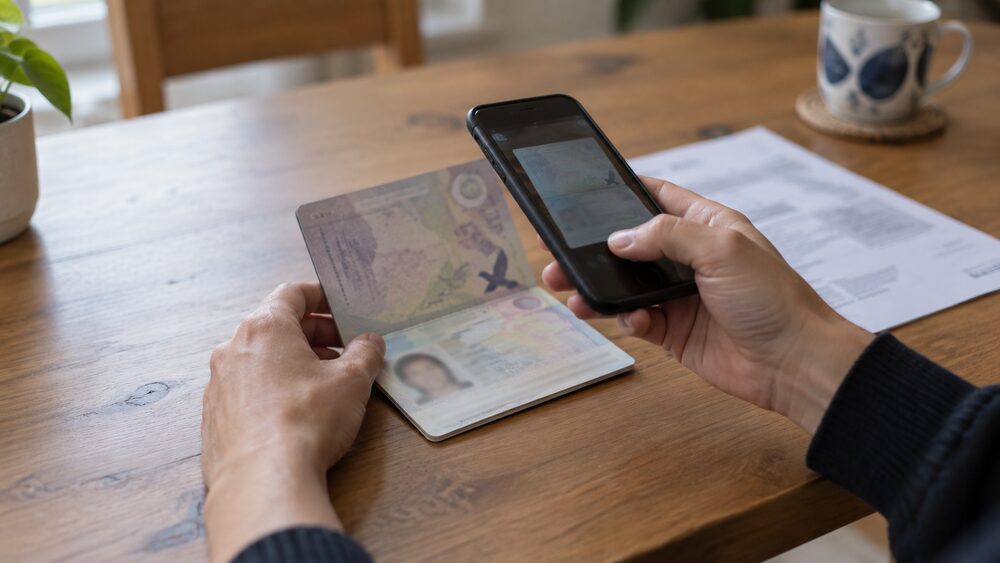
The documents fall into three groups. First, identification and proof of address: banks usually ask for two separate documents, one proving who you are, such as a passport, and one proving where you live, such as a recent bill34. Second, proof of student status: depending on the bank, you may be asked for your UCAS details, a four-digit UCAS status code or confirmation from your university6. NatWest requires a unique 16-digit UCAS code to confirm student status, along with valid photo ID29. Third, if you are applying for student finance at the same time, have your National Insurance number, passport and bank details to hand, including your 8-digit account number and 6-digit sort code35.
A UCAS email can prove student status but not address, so it does not remove the need for a separate proof of where you live33. If you do not have the standard documents, ask the bank what it will accept instead; alternatives can include a letter from a responsible person such as a GP, teacher, social worker or probation officer36. Applications can usually be made online, by phone or in branch32.
Once the account is open, check your bank details are accurate and up to date in your student finance online account before payments begin37. If your course or university changes, for example through clearing, you can log into your online account and update your university or college along with your course details38.
Credit checks when you apply
Because student accounts include an overdraft, applying involves a hard credit check which will appear on your credit file6. The bank runs the check to see your credit history, including whether you have had problems paying money back15. This is a normal part of the process, but it means a refused application leaves a mark, and several applications in a short period can matter for later borrowing.
Two practical steps improve the odds. First, register to vote with your local council, as some banks use the electoral register as part of their checks7. If you are not registered to vote where you live, you might not pass the check, and students who have recently moved are a classic example39. Second, check your credit score and correct any errors before applying7.
To be accepted, you will also need your university place confirmed40. A weak credit history does not necessarily shut you out of banking altogether: a basic bank account checks your credit rating but approval is given whatever your history41, and credit union accounts usually require no credit check at all, even for an overdraft, because credit unions use manual checks to decide whether to lend20.
What happens after you graduate
The interest-free overdraft does not last forever. Student overdrafts may be interest-free while you are a student, but the money has to be paid back, with possible interest, once you graduate2. In most cases the change happens without you doing anything: student accounts generally turn into graduate accounts automatically after graduation, and the provider moves you across4. NatWest, for example, states that after you graduate your Student bank account will switch to a Graduate account27.
The graduate account keeps some of the interest-free buffer but shrinks it over time: the overdraft limit goes down every 12 months42. TSB's graduate account runs for up to three years following graduation33. You do not need to stay with the same bank when you finish your course, so the graduate terms can be compared and switched like any other account42.
The end of the graduate period is the point to watch. Once the interest-free allowance has gone, the remaining overdraft balance becomes borrowing that must be repaid, with possible interest2. If the balance is large by then, the debt section of this site sets out the options, and free debt advice is available from the charities listed below.
Where to get help
Free, impartial help with student money is available from several places. MoneyHelper, the government-backed money guidance service, covers banking basics, overdrafts and how to open, switch or close an account15. National Debtline publishes guidance specifically on student money and debt, including what to weigh up when choosing a student bank account9. StepChange, the debt charity, covers graduate overdrafts and what happens to them after university42.
Citizens Advice helps with banking problems, including what to do if a bank refuses to open an account for you34. If you have a complaint about a bank that it will not resolve, the Financial Ombudsman Service is the free, independent body that decides disputes between customers and financial firms. For students managing money with a disability or health condition, Scope and MoneyHelper publish guidance on making your money easier to manage yourself31.
For student finance itself, gov.uk covers how to apply, when payments arrive and what to check before your first payment5. The student finance calculator works out what you might get10.
Sources44 cited
- How student accounts work Nationwide, 2026
- Student banking need to knows HSBC, 2026
- Choosing a bank account HSBC, 2026
- Parents' guide to student banking Nationwide, 2026
- Student finance: how to guide GOV.UK, 2022
- Can you switch your student bank account after the first year? Which?, 2026-08-06
- Choosing a bank account for your Universal Credit payment MoneyHelper, 2026-09-25
- Understanding your student overdraft HSBC, 2026-08-06
- Student money and debt National Debtline, 2026-09-25
- Student finance calculator GOV.UK, 2026-09-26
- Student credit cards: are they ever a good idea? Which?, 2020-03-08
- Student and youth accounts Bank of Scotland, 2026-09-27
- Bank accounts Halifax, 2026-09-27
- Current accounts Halifax, 2026-09-27
- How to open, switch or close your bank account MoneyHelper, 2026-09-25
- Spending abroad: the 4 dos and 5 don'ts Which?, 2024-07-26
- International student account Halifax, 2026-09-27
- Overdrafts explained MoneyHelper, 2026-09-25
- Basic bank accounts MoneyHelper, 2026-09-25
- Credit union current accounts MoneyHelper, 2026-09-25
- Santander Edge Student current account Santander, 2026-07-14
- FlexStudent freshers offer Nationwide, 2026-07-15
- Student Account Bank of Scotland, 2026-10-30
- Starling launches student account Starling Bank, 2026-08-12
- How to save as a student Which?, 2022-08-28
- Student Bank Account HSBC, 2026
- Student bank account NatWest, 2026-09-25
- What you need to open a current account Royal Bank of Scotland, 2026-09-25
- What do you need to open a current account NatWest, 2026-09-25
- Parents' guide: student insurance and bills Which? University, 2025-09-10
- Managing your own money Scope, 2025-08-18
- How to open a bank account online Which?, 2026-04-23
- Student bank account TSB, 2026
- Getting a bank account Citizens Advice, 2026-09-25
- Full-time undergraduate student finance applications now open for 2026 to 2027 GOV.UK, 2026-03-23
- Getting a bank account (Scotland) Citizens Advice Scotland, 2026-09-26
- Preparing for payment GOV.UK, 2026-09-02
- Clearing: the way to university GOV.UK, 2026-08-11
- Fail referencing or credit check Shelter England, 2024-04-30
- Student loans and finance Prospects, 2026-09-26
- Basic bank accounts with no credit check Shelter England, 2025-03-27
- Graduate overdrafts StepChange, 2026-09-25
- Graduate account Royal Bank of Scotland, 2026-09-26
- Make your money easier to manage by yourself MoneyHelper, 2026-09-25

 MoneyHelperFree, impartial money and pensions guidance, set up by government
 FSCSProtects your money if a bank, insurer or investment firm fails
 Financial Ombudsman ServiceFree, independent help when a complaint about a firm is not put right
 Citizens AdviceFree advice on money, consumer and legal problems in England and Wales