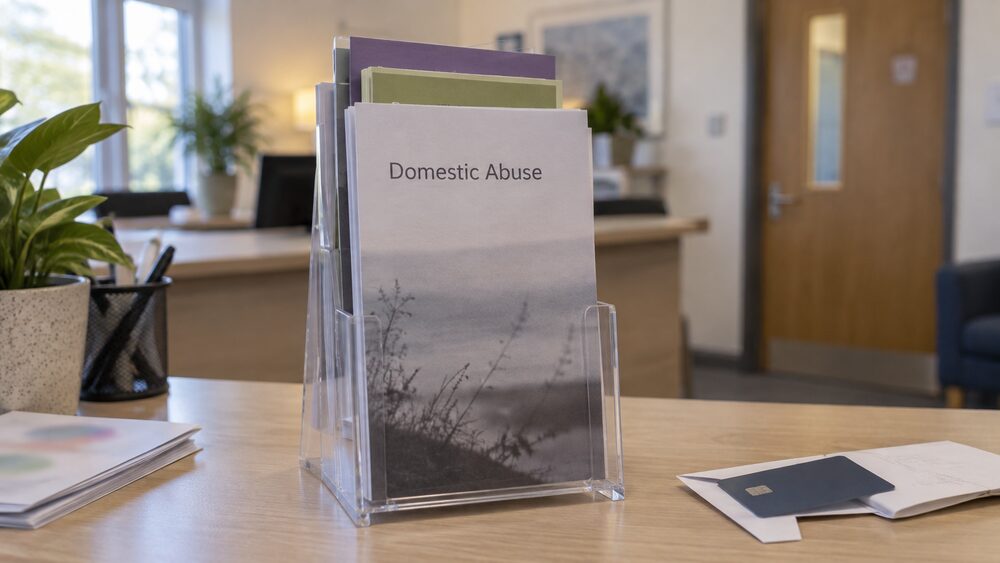
If you are leaving an abusive partner, your bank can help you separate your money from theirs. Banks that support customers affected by domestic, financial or economic abuse can help you split accounts, freeze a joint account, issue new cards and PINs, send letters to a safe address, reset your online banking password, and tell you what accounts are held in your name1. Some also have a specialist team for domestic and financial abuse, and some branches are Safe Spaces you can walk into2.
If you are leaving an abusive partner, your bank can help you separate your money from theirs. Banks that support customers affected by domestic, financial or economic abuse can help you split accounts, freeze a joint account, issue new cards and PINs, send letters to a safe address, reset your online banking password, and tell you what accounts are held in your name1. Some also have a specialist team for domestic and financial abuse, and some branches are Safe Spaces you can walk into2.
You do not need your partner's permission to open an account in your own name, and the bank should keep your personal data and contact details private4. If you have no fixed address or struggle to provide standard ID, some banks run special schemes and will work with a local homeless charity to confirm who you are5. Banks should also let you open a basic bank account after going bankrupt6.
The practical steps are to contact your bank safely, ask what it can do, and get free debt and benefits advice alongside it. The CEDEAS Helpline for Victims of Domestic Abuse offers specialist advice to anyone experiencing domestic abuse who is in financial difficulty7, and the National Domestic Abuse Helpline is on 0808 2000 2478.
What banks can offer after domestic, financial or economic abuse
Support varies by bank, but the pattern is similar. Nationwide says it can help you understand the payments going in and out of your account, reset login details or card PINs, discuss joint account options, set up new accounts, redirect statements, deal with debts and signpost you to other organisations11. Barclays can help with account security, changing how you receive statements and letters, removing the abuser as a named cardholder from your credit cards, and removing you from joint accounts or freezing them3. Bank of Ireland UK offers support to separate accounts, freeze joint accounts, issue new cards and PINs, send correspondence to a safe address, reset your online banking password, give information on accounts held in your name, and review income, outgoings and debts held with the bank1.
Some banks go further. TSB has an emergency flee fund that can provide money to help you leave an abuser, and all of its branches are Safe Spaces for people experiencing domestic abuse12. TSB has also piloted opening accounts in some branches without standard documentation13. NatWest's Banking Facilities for All initiative helps people who struggle to provide standard ID, such as refugees, those fleeing abuse or leaving prison14. Hampshire Trust Bank offers support in regaining control of your finances15, and Skipton Building Society has a financial abuse support page16.
Many banks and building societies have signed up to the UK Finance 2021 Financial Abuse Code, committing to inform people who have experienced domestic abuse, including economic abuse, about assets and liabilities held in their name3. If your bank is a signatory, that commitment is a useful starting point when you ask for help.
Financial and economic abuse: what they mean for your money
Economic abuse is a form of domestic abuse recognised in the Domestic Abuse Act 202117. It covers control of money and finances rather than only physical violence: taking someone's wages, running up debts in their name, stopping them working, or making them justify every purchase. Victims of financial abuse are often at risk of other forms of violent, sexual and psychological abuse as well18.
The money effects outlast the relationship. Where economic abuse has happened through a mortgage, someone may be left with significant debt, mortgage arrears, or debt from loans and credit cards taken out to keep up payments or pay legal fees20. Coerced debt, where borrowing is taken out in one person's name under pressure from another, is a recognised problem17.
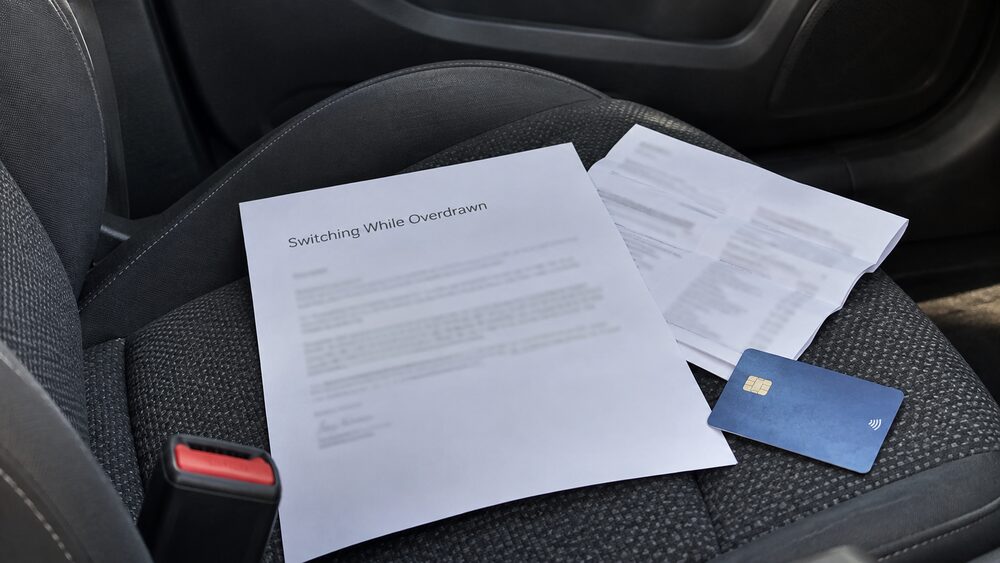
If you are dealing with debt built up this way, the rules matter. The bank's right of set-off lets it take money from your account to cover a debt you owe it, which is why separating an overdraft from your day-to-day account can matter21. Free debt advice is available from charities including StepChange and National Debtline, and the Debt Advice Foundation lists where to go22.
Bank of Ireland UK's domestic abuse support
Bank of Ireland UK says it will give you practical support to help you take back control of your money if you have experienced domestic, financial or economic abuse24. Its specialist support team can support you to separate your accounts, freeze joint accounts, send you new cards and PINs, send correspondence to a safe address, change your banking passwords, give you information on accounts held with them in your name, and support you to review your budget and discuss any debts held with them3.
The bank keeps personal data and contact details confidential, and a support form tells it how to contact you safely4. If your situation is as a result of domestic, financial or economic abuse, the bank asks that you make its staff aware, because it has a specialist team for customers affected by abuse26.
Bank of Ireland UK is not the only provider with a named team, but it is one of the clearest examples of what a bank can commit to in writing. If your own bank does not advertise this kind of support, the same requests can still be made: ask to separate accounts, freeze a joint account, change your contact address and reset your passwords.
Taking back control of your money: practical first steps
Start with the account you can control. If you have sent money to the wrong account, contact your bank to request your money back27. If you spot transactions on your statements that you do not recognise, contact your bank immediately28. Check your bank statements regularly for transactions you do not recognise, as this is one of the main ways identity theft and unauthorised use come to light29.
If you have lost money or spotted an unauthorised transaction, contact your bank immediately using the phone number on the back of your card30. If you are worried about your account security, contact your bank directly using the number on your card or by calling 1599. If you think your card, online bank account or cheque book has been stolen or hacked, speak to your bank or building society straight away31.
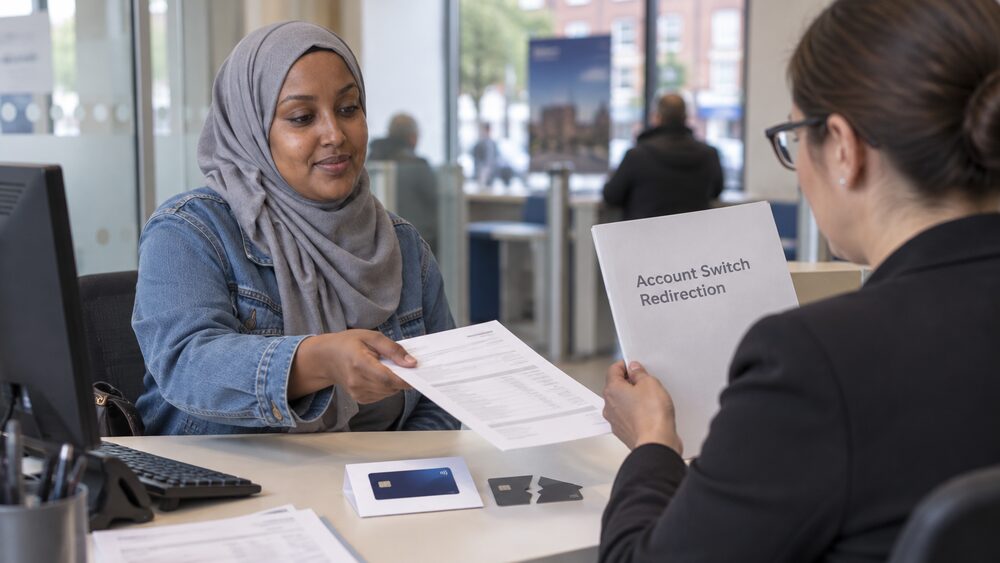
Where a joint account is involved, the bank may offer to separate any overdraft from your existing account, set up a new basic bank account for you, and help you keep banking with them while you pay off debts21. If you already have an account elsewhere, you can ask your new provider to transfer your balance and all your incoming and outgoing payments over32.
What happens to a joint account when you flee domestic abuse
A joint account is a shared legal arrangement, and it does not simply disappear when a relationship ends. If you use a joint bank account and one of you goes bankrupt, it will be frozen, and the bank may close it and refund half the money in it to the other person, or remove your name from the account6. You can also ask the bank to register a dispute and cancel the mandate, which freezes the account until everyone agrees how to split the money10.
Closing a joint account will not remove the link to the other person from your credit file10. If there is no other financial connection between you, you can ask credit reference agencies for a notice of disassociation10. This matters because a joint account can damage your credit score if the other person has poor credit, and you could be responsible if they run up debt32.
In Scotland, if a joint account is arrested, the bank will usually freeze the full amount in it apart from the protected minimum balance33. If a partner loses mental capacity, a joint account could be frozen unless there is a power of attorney in place, and the bank might freeze it completely or allow only essential payments10. If someone with a joint account dies, you can still usually use the account34.
Where to get help beyond your bank
The CEDEAS Helpline for Victims of Domestic Abuse is run by Money Advice Plus, the frontline partner of Surviving Economic Abuse, and offers specialist advice to anyone experiencing domestic abuse who is in financial difficulty7. Surviving Economic Abuse also has information on economic abuse and provides support22.
The National Domestic Abuse Helpline is on 0808 2000 247 for women8. If speaking to your partner about debt could put you or your family in danger, contact the National Domestic Abuse Helpline instead35. If you do not feel safe reporting a change online because of domestic abuse, you can speak to your work coach on the phone or at the jobcentre36.
Grants and benefits can help with the costs of leaving. Family Action grants must be applied for through a referring agency, including a health or social care worker or a domestic abuse support charity37. A Sanctuary Scheme can make your home more secure, and the domestic abuse can be confirmed by a health care professional, the police, a support worker or social worker, a housing officer, or any public, voluntary or charitable organisation that has had contact with you about the abuse38.
If you need emergency housing because you feel unsafe, Scope has advice on finding it8. Shelter explains what to do if you need a new account because yours was closed, you cannot access it, or you need your own account after a relationship breakdown or domestic abuse39. If you have refugee status, you can usually open a bank account40. If you are opening an account to receive Universal Credit, MoneyHelper explains how to choose one32, and a bank statement showing Child Benefit going into your account can be used as proof in some situations41.
Sources41 cited
- Support for domestic, financial and economic abuse Bank of Ireland UK, 2026-09-25
- Branch banking TSB, 2026
- Separating your finances Surviving Economic Abuse, 2023-11
- Life events Bank of Ireland UK, 2026-09-25
- Basic bank accounts MoneyHelper, 2026-09-25
- Bank accounts after bankruptcy StepChange, 2026-09-25
- Debunking common debt myths Surviving Economic Abuse, 2023-03
- How to find emergency housing if you feel unsafe Scope, 2026-04-01
- Types of scam MoneyHelper, 2026-09-25
- Joint accounts MoneyHelper, 2026-09-25
- Domestic, financial and economic abuse Nationwide, 2026
- How banks can help Surviving Economic Abuse, 2023-11
- How your bank can help protect you from financial abuse Which?, 2023-06-14
- Banks join scheme to help homeless people open bank accounts Which?, 2025-11-14
- Additional support Hampshire Trust Bank, 2026
- Financial abuse Skipton Building Society
- Coerced debt StepChange, 2026-09-25
- Addressing financial abuse Citizens Advice Wales, 2016-04-25
- Addressing financial abuse Citizens Advice, 2016-04-25
- Economic abuse via a mortgage Surviving Economic Abuse, 2024-09
- Right of offset StepChange, 2026-09-25
- Where to go for debt advice Debt Justice
- From Control to Financial Freedom UK Finance, 2024-05
- Support during long term or critical illness Bank of Ireland UK, 2026-09-25
- Together we can work it out Bank of Ireland UK, 2026-09-25
- We are here to help Bank of Ireland UK, 2026-09-25
- How do I get money back that I've sent to the wrong account Which?, 2026-07-30
- Banking fraud Take Five, 2026-09-26
- Identity theft Take Five, 2026-09-26
- Tips for reporting scams Which?, 2026-06-17
- Protect your identity nidirect, 2025-10-28
- Choosing a bank account for your Universal Credit payment MoneyHelper, 2026-07-01
- Diligence (Scotland) National Debtline, 2026-09-25
- Debt when someone dies nidirect, 2026-06-26
- Talking about debt StepChange, 2026-09-25
- Ex-partner not paying rent Shelter, 2026-07-01
- Grants, benefits and financial help Surviving Economic Abuse, 2025-08
- Sanctuary Scheme Entitledto, 2026-09-26
- Keeping a bank account Shelter, 2025-01-23
- Refugees moving on from asylum support housing Shelter, 2025-08-27
- Child Benefit proof GOV.UK, 2026-09-26
 MoneyHelperFree, impartial money and pensions guidance, set up by government
 FSCSProtects your money if a bank, insurer or investment firm fails
 Financial Ombudsman ServiceFree, independent help when a complaint about a firm is not put right
 Citizens AdviceFree advice on money, consumer and legal problems in England and Wales