
The NatWest Reward credit card is a rewards card that pays a percentage back in Rewards on supermarket spending and a smaller percentage at supermarket petrol stations and everywhere else1.
Rewards are paid into a MyRewards balance rather than as cash on your statement. You can bank them into a NatWest current or savings account, exchange them for gift cards and e-codes, or donate them to charity, and banking them takes five working days to clear2. The card is a Mastercard, and it is open to UK residents aged 18 or over earning at least £10,000 a year1.
This page covers what the card offers, how the Rewards are earned and cashed in, what it charges for cash withdrawals, balance transfers and spending abroad, who can apply, how to check eligibility first, and how to manage the card once it is open. NatWest's own site carries today's rates and figures.
What the NatWest Reward credit card offers
The card is built around a single idea: everyday spending earns a small amount back, with supermarkets treated more generously than anything else. NatWest pays a percentage back in Rewards on supermarket spending and a smaller percentage at supermarket petrol stations and everywhere else1. That range is wide because it depends on the retailer and the offer running at the time, so the rate you actually get on a given purchase is set by the offer attached to that retailer, not by the card. NatWest's product page carries the current percentages.
Rewards cards generally work this way. Experian describes the model as giving you a certain number of points or a percentage of what you spend back each time you use the card3. The NatWest card sits in the percentage camp rather than the points camp, which makes the arithmetic easier to follow: a supermarket shop earns a set percentage of its value in Rewards, and most other spending earns a smaller one.
The card is a Mastercard1. That determines where it is accepted and, on non-sterling transactions, the exchange rate applied: NatWest says the rate of exchange is set by Mastercard or Visa rather than by the bank4.
It is worth being clear about what the card is not. It is not a balance transfer card, and it is not a low-rate card. NatWest states plainly that if you transfer a balance onto the Reward credit card, interest is charged on it1. Anyone whose main aim is to move existing debt to a cheaper home is looking at a different kind of product, and the balance transfer cards explained page sets out how those work.
How Rewards are earned on everyday spending
Earning happens automatically as you spend. The supermarket rate and the lower rate on everything else are the two tiers that apply to the card itself1.
There is a separate Rewards stream that belongs to NatWest current accounts rather than to the credit card, and it is easy to confuse the two. Which of these applies depends on which current account you hold, not on the credit card.
The two schemes do meet in one place. Boosted Rewards are earned on transactions made using a debit card linked to your MyRewards account5. So the MyRewards balance a credit card holder sees can be fed by more than one source, and the terms attached to each source differ.
Not everything earns. Reward schemes commonly exclude cash withdrawals, cash advances, balance transfers, tax payments and any fees or charges incurred on the card, which is how HSBC sets out the exclusions on its own Rewards card6. NatWest's own exclusions for the Reward credit card are set out on its product page, and the provider's site carries the current list.
Spending and cashing in your Rewards
Rewards accumulate in a MyRewards balance and are cashed in when you choose, subject to a minimum. Banking Rewards into a NatWest current or savings account takes five working days to clear2.
The three routes do different things. Banking the Rewards puts money into your account, which is the closest thing to cashback. Exchanging them for a voucher or e-code locks the value into a particular retailer, which is only worth doing if you would have spent there anyway. Donating them passes the value to a charity.
The annual fee and when it is refunded
The same refund arrangement applies to the Reward Black credit card for customers with a Reward Black current account4, and the Reward credit card's annual fee is refunded for Reward current account holders7.
The current account that triggers the refund is not free. Whether the combination is cheaper than paying the £24 depends on whether you would hold that account anyway.
The Reward Silver and Reward Platinum accounts are only open to existing current account customers8, so they are not a route in for someone who does not already bank with NatWest.
Other charges: cash, balance transfers and spending abroad
The charges that catch people out on a rewards card are the ones that sit outside normal spending, and this card has all of them.
Taking cash out of a cash machine on the card attracts a fee1. On top of that, NatWest adds a small percentage to cover the foreign exchange fee on cash withdrawals abroad1. The standard NatWest credit card page is blunter about the same point: you will still pay fees if you take money out of cash machines abroad or get a money advance, and you may also pay local fees9. Citizens Advice notes that you will usually be charged for going over your credit limit, for using the card abroad and for late payments, and that the credit agreement sets out what other charges apply10.
Balance transfers are the other trap. NatWest states that if you transfer a balance onto the Reward credit card, interest is charged on it1. That is unusual among rewards cards only in how plainly it is said. If moving a balance is the goal, the balance transfer fees page explains how those charges are structured, and the cash withdrawals page covers what a cash advance costs.
Spending abroad on the card is a different matter from withdrawing cash abroad. The card's own terms on non-sterling purchases are set out on NatWest's product page, and the using a credit card abroad page explains how the exchange rate and any fee combine.
Who can apply for a NatWest Reward credit card
The eligibility rules are short. To apply you must be a UK resident, aged 18 or over, and earning at least £10,000 a year1. You must not have been bankrupt in the last six years, and if you hold a joint account, the other party must not have been bankrupt in that period either1. The same bankruptcy condition appears on the standard NatWest credit card page9.
You do not need a NatWest current account to hold the card. What a current account changes is the annual fee, which is refunded for Reward current account customers1.
NatWest also runs a credit score service for customers. The free score and report come from TransUnion, and the feature is available to customers aged 18 or over with a UK address1. In the app you tap the customer icon in the top right, open your profile and select Know your credit score; in Online Banking you log in and select Know my credit score6. The feature includes a full credit report, proactive alerts, a score predictor and personalised insights6, and the score and report in the app and Online Banking use data from TransUnion11. Which? notes that NatWest has a partnership with TransUnion to provide customers with free access to their credit score and report through the app and online banking12.
If your circumstances mean a rewards card is not the right fit, the credit-builder credit cards page covers cards designed for people with a thin or damaged credit file.
How to check eligibility and apply
Checking first is the sensible order, and it does not cost you anything on your credit file. NatWest's eligibility check covers all of its credit cards and will not hurt your credit score1. Other lenders say the same: Capital One describes using an eligibility checker to see whether you will be accepted without affecting your credit rating13, and Experian says checking your chances of approval will not affect your credit score14. NatWest makes the same promise on its overdraft eligibility checker, which it says is free to check, takes minutes and will not affect your credit score15.
New customers need to sign up for Online Banking in order to apply for a NatWest credit card, and NatWest says registration normally takes only five minutes and needs your sort code, account number and NatWest Debit Card1. If you would rather not share biometric data, the phone route is open: NatWest takes credit card applications on 03453 073 702, with Relay UK on 18001 03453 073 702, open Monday to Friday 8am to 8pm and Saturday 9am to 3pm, closed Sundays and public holidays1.
NatWest works with security specialists Mitek to speed up identity checks during the application1. If you are asked for documents, the rules on what counts are strict: downloaded copies of letters and mobile phone bills are not accepted as proof of address, and the document must be an original showing your name and address16.
Managing the card: app, payments and digital wallets
Paying the bill can be done several ways. NatWest lists the NatWest app, Online Banking, and another UK bank account via Open Banking (Payit) alongside Direct Debit7. If you set up a Direct Debit, NatWest usually collects it 25 calendar days after you get your statement, or soon after1. The same timing appears on the Reward Black and standard NatWest credit card pages2.
The app is where most day-to-day management happens. Balance transfers can be made in the app: select the credit card you want to transfer to, tap the three-dot icon in the top right to open the account action menu, choose Balance Transfer and follow the on-screen instructions3. NatWest's support page points to its balance transfer credit cards page for the costs, offers and eligibility attached to transfers3.
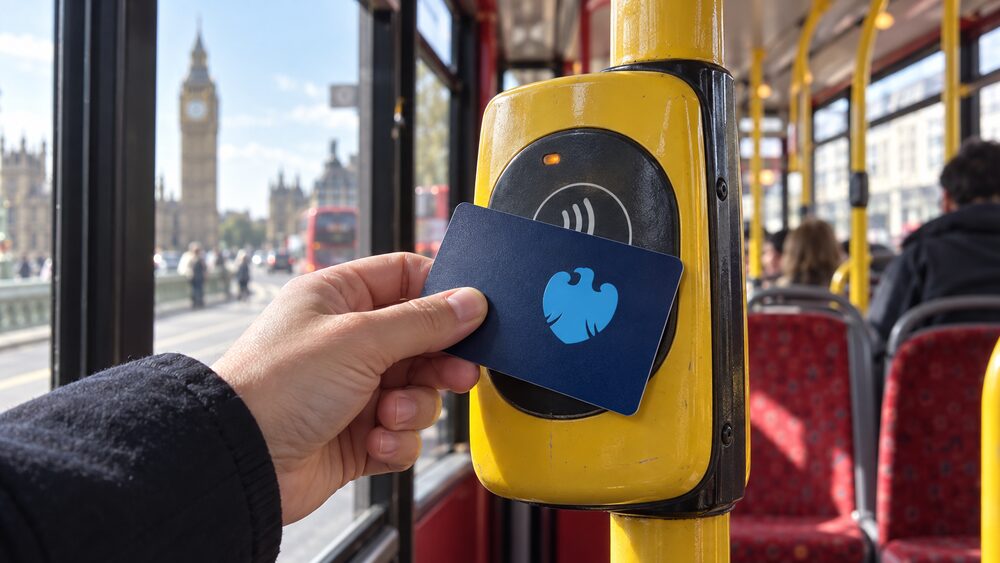
The card works with both Apple Pay and Google Pay, though Apple Pay is only available on certain Apple devices and Google Pay only on certain Android devices1. NatWest lets you manage cards and wallets from your current account by selecting Manage cards & Apple Wallet or Manage cards & Google Wallet1. The paying with a credit card by phone, wallet and contactless page covers how wallet payments work and what protections apply.
If you are new to managing money online, Scope publishes guidance on managing your own money17, and Age UK has a guide to online banking18 that walks through registering and staying safe.
Problems and complaints
If something goes wrong with the card, the first step is the provider. NatWest's own guidance for a suspicious email is to call the number on the back of your card20, and its text message fraud guidance sets out the same principle: the bank will never ask you to call a number in a text message to confirm or cancel payments19. The credit card fraud and unauthorised payments page explains what happens when a payment is not yours.
On charges, Citizens Advice notes that you will usually be charged for going over your credit limit, for using the card abroad and for late payments, and that the credit agreement sets out what other charges apply10. The credit card fees and charges page lists the charges that apply across the market, and the late payment and over-limit charges page covers what is allowed.
If a complaint is not resolved, the complaining about a credit card provider page sets out the route to the Financial Ombudsman Service. If the problem is debt rather than a dispute, free and impartial help is available from MoneyHelper and from debt advice charities, and the help with credit card debt page lists the options. Readers in Scotland have a separate page on credit card debt in Scotland, and there is one for Northern Ireland as well.
Sources20 cited
- Reward credit card NatWest, 2026-09-25
- Reward Black credit card NatWest, 2026-09-25
- How can I do a balance transfer to my credit card? NatWest, 2026-09-25
- Credit card fees and charges NatWest, 2026-09-25
- MyRewards terms and exclusions RBS, 2026-09-25
- Credit scoring guide NatWest, 2026-09-25
- Longer balance transfer card NatWest, 2026-09-25
- Reward Silver account NatWest, 2026-09-25
- The NatWest Credit Card NatWest, 2026-09-25
- Choosing and applying for a credit card Citizens Advice, 2026-09-25
- Understand your credit report NatWest, 2026-09-25
- Credit reports: how they work and what's included Which?, 2025-10-24
- Clear APR credit card Capital One, 2026
- Low interest credit cards Experian, 2026
- Overdrafts NatWest, 2026-09-25
- What do you need to open a current account? NatWest, 2026-09-25
- Managing your own money Scope
- Online banking Age UK
- Text message fraud NatWest, 2026-09-25
- Email fraud NatWest, 2026-09-25










 MoneyHelperFree, impartial money and pensions guidance, set up by government
 StepChangeFree debt advice and solutions from a charity
 National DebtlineFree debt advice by phone, webchat and online
 Financial Ombudsman ServiceFree, independent help when a complaint about a firm is not put right
 Citizens AdviceFree advice on money, consumer and legal problems in England and Wales