People on low incomes often pay more for car insurance than wealthier drivers, for reasons that have nothing to do with how they drive. Living in a deprived area can add £153 a year to a motor policy on average, and paying monthly instead of annually adds £71 a year1. Fair By Design, which researches the extra costs low-income households face, describes car insurance as having the costliest poverty premium in Great Britain2.
People on low incomes often pay more for car insurance than wealthier drivers, for reasons that have nothing to do with how they drive. Living in a deprived area can add £153 a year to a motor policy on average, and paying monthly instead of annually adds £71 a year1. Fair By Design, which researches the extra costs low-income households face, describes car insurance as having the costliest poverty premium in Great Britain2.
The two effects stack. Fair By Design says people in less affluent areas can pay up to £314 more a year than those in more affluent areas, and that this rises to almost £400 extra a year if they also pay in monthly instalments rather than annually3. Its 2026 research, carried out with the University of Bristol, found that 44% of motor policyholders live in a deprived area and incur a deprivation-related premium, and that 45% of low-income households with motor insurance pay for their policies monthly1.
This page explains what drives those figures, how the postcode penalty and the monthly payment charge work, what the research shows about low-income and ethnically diverse areas, and what protection exists when pricing feels unfair.
The postcode penalty: up to £314 more a year in deprived areas
Where you live is one of the factors insurers use to set a car insurance premium, alongside the type of vehicle, your occupation, where the car is parked, whether you use it for work, your age and driving experience, any motoring convictions and your accident record6. Insurers price on the risk they believe they are taking on, and an area with more crime or more collisions tends to produce more claims.
Fair By Design says people in less affluent areas are hit by a postcode penalty and can pay up to £314 more a year than others living in more affluent areas3. Its 2026 research with the University of Bristol estimates the extra cost at £153 a year for motor insurance for low-income households in a deprived area, and just under £6 a year for contents insurance1. The same research found that 44% of motor policyholders live in a deprived area and incur a deprivation-related premium, while 42% of contents policyholders do1.
The size of the penalty varies by age. Fair By Design puts the deprivation-related annual poverty premium on motor insurance at between £105 for the over 60s and £294 for those aged 17 to 241. For contents insurance, the premium for living in the bottom two deprivation quintiles is approximately 5% compared with a median area1.
The motor insurance figure is a decrease compared with £233 in the 2022 report, which is attributed to a methodological change rather than a fall in the underlying cost1.
Paying monthly can add almost £400 a year
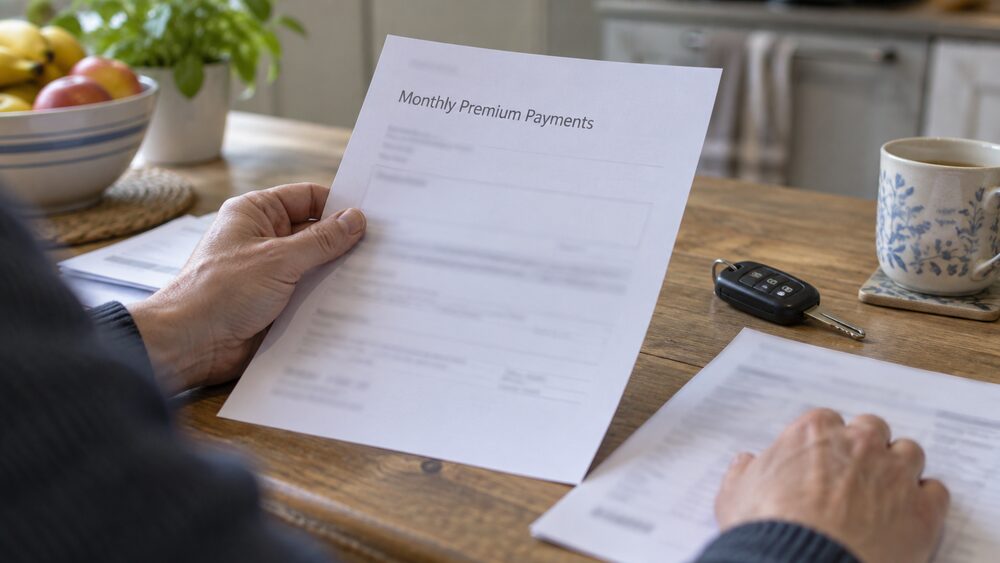
Paying for car insurance in monthly instalments rather than in one annual payment is a form of credit, and it carries a charge. Fair By Design found that paying monthly rather than annually pushes the average cost of motor insurance up by 10%, and that the average poverty premium paid by those paying monthly for motor insurance is £71 a year1. Its 2026 press release puts the same figure at £71 per year for drivers paying monthly rather than annually7.
The charge varies sharply by age. Fair By Design puts the motor insurance premium finance cost at between £48 for those aged 60 and over and £181 a year for 17 to 19 year olds1. For contents insurance, paying monthly adds £9 a year on average1.
The combined effect is what produces the headline figure. Fair By Design says the postcode penalty rises to almost £400 extra a year if a driver in a less affluent area also needs to pay in monthly instalments instead of paying annually3. Its 2024 research put the monthly payment premium for people on low incomes at as much as 40% extra, or £3844.
"If you choose to pay by monthly instalments, you are in essence entering a credit agreement. This means you'll be charged the APR % stated in your credit agreement."
That is how the charge arises: the instalments are a credit agreement, so interest is added on top of the premium. Post Office states on its car insurance pages that paying monthly means you will pay more than you would through an annual lump sum arrangement8. The same principle applies across the market, and it is why the annual figure is usually the cheaper option where a household can find the money up front.
Insurance Premium Tax is usually included in the price you pay for insurance, so it is already part of any premium quoted9.
Low income and ethnically diverse areas: how much more people pay
The poverty premium is not confined to car insurance. Fair By Design says 95% of households in poverty across Britain pay a poverty premium, and that those households incur an average poverty premium of £380 a year5. It defines the poverty premium as the extra costs that people on low incomes pay for essential services like energy, insurance and credit10.
Within insurance, the pattern repeats across products. Fair By Design found that 53% of low-income households with contents insurance and 45% of low-income households with motor insurance paid for their policies monthly, paying an extra £9 annually for contents insurance and £71 for motor insurance compared with those who paid a single annual amount1. Those figures equate to 27% and 22% of all low-income households respectively1.
There is also a geographic and ethnic dimension. Fair By Design found that people living in more ethnically diverse areas pay around 20% higher premiums, or £180 more, than those in less ethnically diverse areas4. A 2025 report on the ethnicity premium found that racially minoritised people pay more for their car insurance because of factors such as living in urban areas with higher population density2.
In London the effect is concentrated. Trust for London says the poverty premium affects the majority of Londoners in poverty, costing them a combined £111 million a year, and that for each household affected it costs an additional £451 a year, 9% higher than the next highest region, the West Midlands11.
Would the same driver with the same car pay more in a different area?
This is the question at the centre of the poverty premium debate, and the research suggests the answer is yes. Fair By Design says that even after removing risk factors such as crime levels, traffic collisions and age, the same driver in the same car could still pay at least £131 to £156 more to get insured in a more deprived area4.
That finding matters because it separates the postcode penalty from the things a driver can change. If the difference survived the removal of crime and collision rates, then something about the area itself, rather than the measured risk, is feeding into the price.
Fair By Design's wider research says people on low incomes are often charged higher premiums because of factors outside their control, such as living in areas with higher crime or collision rates10. Its 2026 research uses a more conservative estimate of 22.5% applied to typical motor insurance costs when calculating the deprivation premium1.
The Financial Conduct Authority's own analysis, cited by Fair By Design, shows that customers are paying more for their car insurance due to risks outside of their control and if they pay in monthly instalments through premium finance12.
What is the total poverty premium on car insurance?
There is no single number, because the total depends on where a driver lives, how they pay and their age. What the research gives is a set of components that can apply to the same policy.
Fair By Design's 2026 research puts the deprivation premium at £153 a year on average for motor policyholders in a deprived area, and the monthly payment premium at £71 a year on average1. Its 2024 research put the deprivation premium at £131 to £156 compared with wealthier areas4. Its guidance says the postcode penalty can reach £314 more a year, rising to almost £400 extra a year with monthly instalments3.
For younger drivers the figures are higher. Fair By Design puts the deprivation-related annual poverty premium on motor insurance at £294 for those aged 17 to 24, and the premium finance cost at £181 a year for 17 to 19 year olds1.
What protection exists, and where it stops
Insurance pricing is regulated, but the rules do not ban higher premiums for deprived areas. Insurers must treat customers fairly, and the Financial Conduct Authority has examined how firms price motor cover, finding that customers pay more because of risks outside their control and because of premium finance12. Fair By Design has argued that the Motor Insurance Taskforce's final report left people in poverty behind2.
Where a consumer believes they have been treated unfairly, the route is a complaint to the insurer first, then to the Financial Ombudsman Service, which is free to use. The ombudsman can look at whether a firm applied its rules consistently and whether the outcome was fair.
On the cost side, the main lever is how the policy is paid for. Paying annually avoids the premium finance charge, though not every household can find the full amount at once. Fair By Design's research found that 53% of car owners surveyed believe it is unfair to pay extra for monthly insurance payments3.
Free, impartial help is available. MoneyHelper offers guidance on insurance and money problems, and debt advice charities can help where premiums are adding to arrears. Fair By Design's own work includes lived-experience accounts, such as Zahada, who discusses her experience of being charged more for insurance because she is on a low income13.
Sources13 cited
- Poverty Premium 2026 University of Bristol Personal Finance Research Centre, 2026
- Motor insurance taskforce final report leaves people in poverty behind Fair By Design, 2025
- The poverty premium in 2026: insurance Fair By Design, 2026
- Low-income drivers pay up to 48% more for car insurance Fair By Design, 2024
- The poverty premium in 2026 Fair By Design, 2026
- How much will motor insurance cost? British Insurance Brokers' Association, 2026
- New research shows £736 poverty premium adds to cost of living crisis for low-income households Fair By Design, 2026
- Car insurance help and support Post Office, 2026
- Insurance Premium Tax GOV.UK, 2026
- Socio-economic duty and the poverty premium Fair By Design, 2025
- Poverty premium Trust for London, 2026
- Driving change: policy ideas to tackle the car insurance poverty premium Fair By Design, 2025
- Zahada's story: lived experience of the poverty premium Fair By Design, 2024





 MoneyHelperFree, impartial money and pensions guidance, set up by government
 Financial Ombudsman ServiceFree, independent help when a complaint about a firm is not put right
 FSCSProtects your money if a bank, insurer or investment firm fails
 Citizens AdviceFree advice on money, consumer and legal problems in England and Wales
 GOV.UKOfficial information on tax, benefits and government services