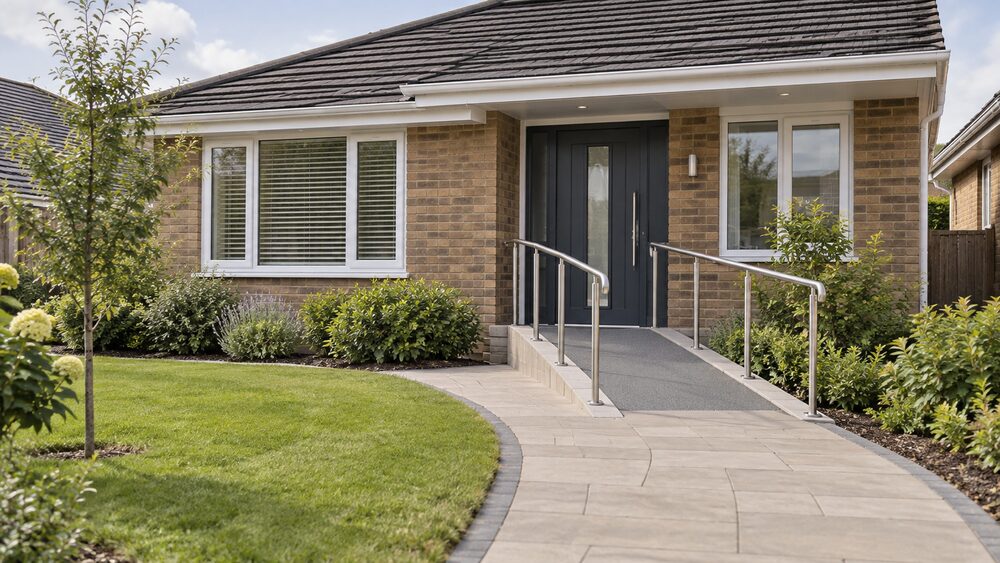
HOLD, the Home Ownership for people with a Long-term Disability scheme, is a shared ownership route in England for adults with a long-term disability who need a home suited to their needs. You buy a share of a home, usually between 10% and 75%, and pay rent to a housing association on the share it still owns1.
HOLD, the Home Ownership for people with a Long-term Disability scheme, is a shared ownership route in England for adults with a long-term disability who need a home suited to their needs. You buy a share of a home, usually between 10% and 75%, and pay rent to a housing association on the share it still owns1.
It follows the same rules as standard shared ownership, with one important difference: the home can be second-hand as well as new build, so you search the open market rather than waiting for a particular development1. You need a deposit of usually between 5% and 10% of the share you are buying, and your household income must be £80,000 a year or less, or £90,000 a year or less in London1.
HOLD applies to England only. Scotland, Wales and Northern Ireland each run their own part-buy schemes, and the Right to Shared Ownership scheme is likewise not available outside England1.
How HOLD works: shared ownership adapted to your needs
Shared ownership means you buy a share of a property and pay rent to a landlord on the share they own. It is also called part-buy, and it is a government-backed scheme3. The rest of the home is owned by a housing association, and you pay them an occupancy charge to live in it5. HOLD takes that structure and applies it to homes that suit a long-term disability, which is why the property search works differently from the standard route.
The scheme follows the same rules as the shared ownership scheme, so the mechanics a buyer meets elsewhere apply here too: a lease, a mortgage on your share, rent on the remainder, and the option to buy more later1. The Older Persons Shared Ownership scheme works in the same way, following the same rules as shared ownership, which shows how these variants sit on one common framework6.
What makes HOLD distinct is the fit between the home and the person. Because homes can be second-hand or new build, you are not tied to a new development, and the provider checks both that you can afford the home and that the property itself is suitable before the purchase proceeds1. That check is the point at which the scheme's disability focus does its work.
If you are weighing this against other routes, shared ownership in England sets out the standard version, and shared ownership or shared equity explains how the two structures differ.
Who can apply: disability, age and income limits of £80,000 or £90,000 in London
You must be an adult and receive one of a set of disability benefits, which includes Disability Living Allowance at the middle or high rate of the care component3. The scheme is for people with a long-term disability whose housing needs are not met by an ordinary home.
The income test is a household one: £80,000 a year or less, rising to £90,000 a year or less in London1. The same £80,000 and £90,000 London figures appear across shared ownership guidance, so the limits are not unique to HOLD7. One official guide to the Right to Shared Ownership states a £90,000 or less annual gross household income figure for London without setting out the position outside it, so the two documents do not line up on every point8.
If you already rent from a council or housing association, the Right to Shared Ownership is a separate route that lets some tenants in England buy a share of their rented home on shared ownership terms4.
Share and deposit: buying 10% to 75% with a 5% to 10% deposit
The share you buy is the foundation of the whole arrangement. Across shared ownership, official evaluation work describes buying a share of between 10% and 75% and paying rent on the remainder2. Other guidance puts the range at 25% to 75%, and one independent guide describes buying a 25% to 75% share9.
On the deposit, HOLD guidance is specific: usually between 5% and 10% of the share you are buying1. The same 5% to 10% range appears in the Older Persons Shared Ownership guidance and in the Right to Shared Ownership guidance, so it is a consistent feature of these schemes6. Independent guidance states a minimum deposit of at least 5% of the share you are buying, with a mortgage covering the rest11. One source gives a 10% figure alongside the 5% minimum without resolving the difference, so a buyer should expect the provider to confirm the deposit required for a particular purchase11.
| Item | What the guidance says |
|---|---|
| Share purchased | 10% to 75% in official evaluation work; 25% to 75% in other guidance2 |
| Deposit | Usually 5% to 10% of the share you are buying1 |
| Minimum deposit | At least 5% of your share, with a mortgage for the rest11 |
| Rent | Paid to the landlord on the share they own3 |
The deposit is calculated on the share, not on the full value of the home, which is what makes the sums smaller than a standard purchase. How much deposit do I need to buy a house? covers the wider picture, and how much deposit for a shared ownership home deals with this route directly.
Lease length, repairs and service charges
A HOLD leasehold home should have a remaining lease length of at least 990 years. Where no homes with that lease length are available, a minimum lease length of 125 years applies instead1. Across shared ownership more broadly, a 990-year lease as standard is being applied to existing shared owners as well as new ones13. Older shared ownership leases were usually 125 years, which is where the fallback figure comes from15.
Repairs are where the scheme's structure matters most. For the first 10 years from the date the home was built, known as the initial repair period, the landlord is responsible for the cost of some repairs1. After that period ends, or if you buy a home that is more than 10 years old, you are responsible for all repairs and the cost of them1. New-build homes usually carry a building warranty covering the cost of structural repairs for the first 10 or 12 years12.
As a leaseholder you buy a share of your home, pay rent to the landlord on the rest, and usually pay monthly service charges4. Housing associations contribute up to £500 a year towards certain repairs and maintenance costs in the first 10 years of ownership13. Beyond that, shared owners agree to pay the full costs of repairs and maintenance, and the lease makes the shared owner responsible for all repairs and maintenance in the home, including major structural works16. That division of responsibility is a common source of surprise, and cladding costs and shared owners and do shared owners pay service charges on 100% of the property? go into the detail.
Buying more shares later through staircasing
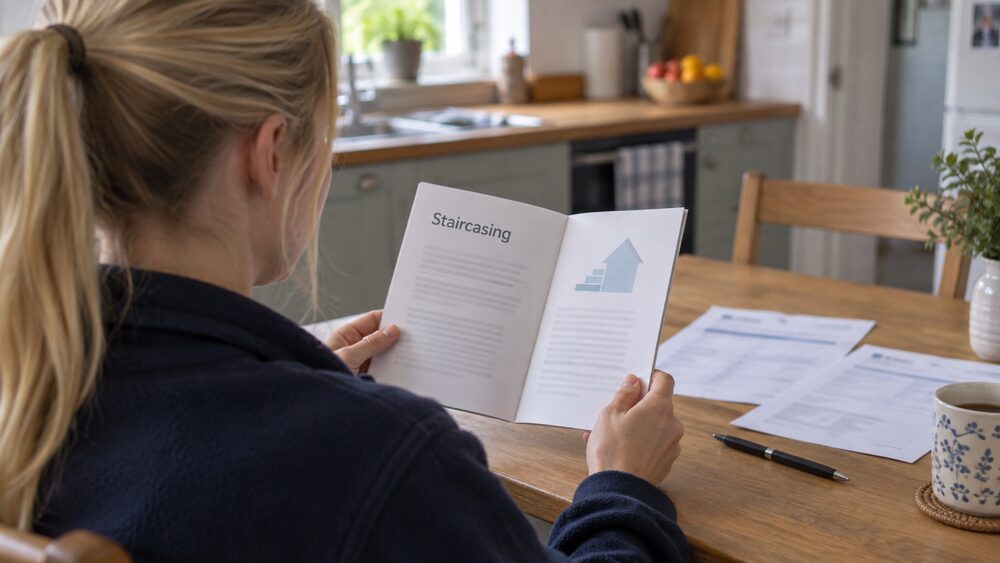
You can buy more shares in your home in future, which is known as staircasing. If you buy more shares, you will pay less rent1. The same wording appears in the Older Persons Shared Ownership guidance, and the Right to Shared Ownership scheme allows staircasing on the same basis6.
Staircasing is the mechanism that turns a part-buy into full ownership over time. The scheme offers the person the opportunity over time to increase their share within the property and eventually own the property in full17. Under the new national model for shared ownership, it is possible to staircase in larger increments, with the minimum additional share purchase reduced from 10% to 5%18.
The practical questions are how much each step costs and how small a step you can take. Staircasing: buying more shares in a shared ownership home covers the process, what is the minimum share I can buy when staircasing? deals with the increment, and what fees do I pay when staircasing? sets out the costs. If you later want to move, selling a shared ownership home explains how that works.
How to apply through a shared ownership provider
The first step is a conversation, not an application form. You discuss your situation with your chosen shared ownership provider, and once they confirm you can proceed, you search for a home on the open market. The provider then checks that you can afford the home and checks the property itself, and after that you find a legal professional for conveyancing1.
Because the search is on the open market, the property is not chosen for you. That is different from routes tied to specific developments, and it is why the provider's check on the property matters as much as the check on your finances.
If you receive Housing Benefit, shared ownership does not automatically rule it out: you buy a share of your home through a shared ownership scheme but still pay rent, and you can get Housing Benefit during this time19. Housing Benefit and Universal Credit for shared owners explains how that works in practice, and what happens if a shared owner falls behind on rent covers the position if payments become difficult. Free, impartial help is available from MoneyHelper and from debt advice charities if affordability becomes a problem20.
Where HOLD stops: the rest of the UK
HOLD applies to England1. The Right to Shared Ownership scheme is not available in Scotland, Wales or Northern Ireland either4. A buyer elsewhere in the UK needs the scheme that operates where they want to live.
In Scotland, the Open Market Shared Equity scheme lets you buy a share of an existing home that is on sale, and applications go through the administering agent Link Homes after reading the information leaflet5. The New Supply Shared Equity scheme works differently: you contact the relevant registered social landlord or local council directly, and they explain the scheme and how to send an application22.
In Wales, shared equity routes let you buy an initial share of 25% to 75% of a property with rent paid on the remaining share23. In Northern Ireland, Co-Ownership is the equivalent route, and its staircasing process requires you to purchase additional shares in set amounts, typically of 5%, 10%, 20%, or to buy out the remaining share in full24.
| Nation | Route | How to start |
|---|---|---|
| England | HOLD, and shared ownership generally | Discuss your situation with a shared ownership provider1 |
| Scotland | Open Market Shared Equity, New Supply Shared Equity | Contact Link Homes, or a registered social landlord or local council21 |
| Wales | Shared equity schemes | Buy an initial share of 25% to 75%23 |
| Northern Ireland | Co-Ownership | Purchase additional shares in set amounts, typically 5%, 10%, 20%, or buy out the rest25 |
If you are buying outside England, shared equity and shared ownership schemes in Scotland, shared ownership, Homebuy and Rent to Own in Wales and Co-Ownership in Northern Ireland compared with English shared ownership set out the alternatives.
Sources25 cited
- Home Ownership for people with a Long-term Disability (HOLD) GOV.UK, 2025-12-03
- Evaluation of the Help to Buy scheme GOV.UK, 2026-09-16
- Mortgages Scope, 2026-04-01
- Right to Shared Ownership GOV.UK, 2026-09-26
- Help to buy a home mygov.scot, 2026-06-24
- Older Persons Shared Ownership (OPSO) GOV.UK, 2025-12-03
- 7 first-time buyer schemes that are available now Which?, 2026-03-26
- Shared ownership and affordable homes programme 2016 to 2021: designated protected area key information documents GOV.UK, 2024-09-02
- 95% mortgages Which?, 2026-04-02
- Buying a house or flat in London Which?, 2026-06-19
- Shared ownership Which?, 2026-03-26
- Shared ownership: repairs and home improvements GOV.UK, 2026-09-28
- Shared ownership National Housing Federation, 2026-09-26
- Shared ownership National Housing Federation, 2026-09-26
- A shared ownership lease is an assured shorthold tenancy National Housing Federation, 2026-09-26
- Why are shared ownership customers responsible for paying for major structural works? National Housing Federation, 2026-09-26
- Mortgage jargon buster StepChange, 2026-09-25
- The Right to Shared Ownership: a guide for tenants GOV.UK, 2025-09
- Housing Benefit Mental Health and Money Advice, 2025-07-21
- Help with your mortgage payments National Debtline, 2026-09-25
- Open Market Shared Equity scheme: how to apply mygov.scot, 2026-03-17
- New Supply Shared Equity scheme: how to apply mygov.scot, 2026-07-28
- Help to Buy - Wales schemes Welsh Government, 2026
- Shared ownership in Northern Ireland Co-Ownership, 2026-09-26
- Can I increase my monthly payments to buy more of my home? Co-Ownership, 2026-09-26










 MoneyHelperFree, impartial money and pensions guidance, set up by government
 Citizens AdviceFree advice on money, consumer and legal problems in England and Wales
 ShelterFree housing advice from a charity
 GOV.UKOfficial information on tax, benefits and government services
 Financial Ombudsman ServiceFree, independent help when a complaint about a firm is not put right