
Shared ownership means you buy a share of your home and pay rent on the rest, and that rent is the part the benefits system can help with. You can claim the housing element of Universal Credit for rent and some service charges, and in certain circumstances Housing Benefit instead. What you cannot get is help with the mortgage on the share you own. As an owner-occupier, you will not receive any Housing Benefit to help with your mortgage costs1.
Shared ownership means you buy a share of your home and pay rent on the rest, and that rent is the part the benefits system can help with. You can claim the housing element of Universal Credit for rent and some service charges, and in certain circumstances Housing Benefit instead. What you cannot get is help with the mortgage on the share you own. As an owner-occupier, you will not receive any Housing Benefit to help with your mortgage costs1.
The split matters because it decides which part of your monthly payment is eligible. Shared ownership properties are usually leasehold, so shared owners are leaseholders who pay rent to the landlord on the share they do not own, plus service charges2. The housing element looks at the rent and qualifying service charges, not at the mortgage.
Most working-age claimants now get help through Universal Credit rather than Housing Benefit. Housing Benefit still exists for particular groups, including people in supported housing or temporary accommodation3. If you are in one of those groups, you may claim Housing Benefit for rent while still getting Universal Credit for other costs4.
Shared owners can get help with the rent part, not the mortgage
The dividing line is simple: benefits help with rent, not with buying. Housing Benefit cannot be claimed to help pay your mortgage costs10, and it does not help with a mortgage at all5. As an owner-occupier you will not receive any Housing Benefit to help with your mortgage costs1.
Shared ownership is the exception that lets an owner claim help with rent. You will not be able to claim Housing Benefit if you are a homeowner, unless you are in a shared ownership scheme, in which case you can claim on any rent you pay11. Shared owners may be eligible to receive help to cover the rent part, and separately a Support for Mortgage Interest loan to help with the mortgage interest12.
Support for Mortgage Interest is a loan, not a grant, and it is claimed separately from the rent help. If you live in a shared ownership property, you could get Support for Mortgage Interest as well as help with your rent13. The two run alongside each other rather than one replacing the other.
One caution applies to anyone who sold a home and now rents it back. Former owners under a sale and rent back scheme may not be entitled to Housing Benefit, and you may not be able to claim Housing Benefit if you have a low income or you lose your job14. That is a different arrangement from shared ownership, but it is worth knowing if your housing history includes a sale and rent back.
How the Universal Credit housing element works for shared owners
Universal Credit has a housing element, and that is the part that helps with rent15. For a shared owner it works in the same way as for a fully rented tenancy: Housing Benefit or Universal Credit can pay for the rental element in the same way as for fully rented tenancies16. The housing costs element can help with rent and some service charges5.
What it will not do is help with the mortgage. You will not get any help with your mortgage through Universal Credit, but you might be able to get help through a Support for Mortgage Interest loan16. If you are a homeowner, you cannot get the housing costs element to help with mortgage payments, though you might be able to get it for service charges17.
The amount is worked out from your rent, your income and your household, so two shared owners in similar homes can receive different amounts. The housing element is not a fixed sum and it is not based on the share you own.
What the housing element covers: rent and some service charges
Housing Benefit can cover your rent and some service charges, such as upkeep of communal areas or a caretaker18. It might cover all or part of your rent, and it may also cover some service charges, like maintenance of lifts or communal areas, but not costs included in your rent such as fuel costs or Council Tax19. You might also be eligible for Housing Benefit to help with your rent and/or service charge, whether or not you are eligible for help with mortgage costs20.
Some charges are excluded. Part of your rent may pay for bills or services that Housing Benefit does not cover, which could include electricity, water charges, meals or laundry services21. Where your rent bundles in these items, the eligible rent is reduced accordingly.
| What the housing element can cover | What it does not cover |
|---|---|
| Rent on the share you do not own18 | Mortgage payments on your share16 |
| Service charges such as communal upkeep or a caretaker18 | Fuel costs included in your rent19 |
| Maintenance of lifts or communal areas19 | Council Tax19 |
| Electricity, water, meals or laundry services21 |
Service charges are a normal part of shared ownership. Shared owners usually pay monthly service charges alongside rent9, and the shared owner has the same benefits and rights in relation to the common parts as any other leaseholder2. Where a service charge pays for something the rules exclude, that portion is not covered.
Deductions: the bedroom tax and the non-dependant deduction
Two deductions catch shared owners as much as other social tenants. The first is the bedroom tax, which applies where you have more bedrooms than the rules say you need. If you have one spare bedroom, 14% of your Housing Benefit is deducted, and the reduction is 25% for two or more additional bedrooms6. The same 14% figure appears across the guidance: 14% if you have an extra bedroom22, a 14% cut if you under-occupy by one bedroom23, and 14% taken off if you have one extra bedroom24.
The second is the non-dependant deduction, which applies where other adults live with you. Your Housing Benefit could be reduced if you or your partner have income from work, you live with other adults who count as non-dependants, or you are affected by the benefit cap or the bedroom tax25. The deduction applies in the cases where another adult in the home counts as a non-dependant7.
Where help may not cover your full rent
Even if the council agrees you are eligible for Housing Benefit, you might not get enough to cover your full rent, and any shortfall must be paid to the landlord. The amount depends on your income, the size of your home and your circumstances18. That shortfall is a real cost, and it sits alongside your mortgage, service charges and any other household bills.
There are cases where rent is covered in full. Your rent could be covered in full if you get income-related Employment and Support Allowance, income-based Jobseeker's Allowance, Income Support or Guarantee Pension Credit7. Housing Benefit will cover all of your rent if your only income is from means-tested benefits and you live in a property owned by the local authority or housing association21.
Where benefits do not cover the full amount, a housing payment is extra help with rent, and you could apply for a housing payment if benefits may not cover your full rent and you still need help26. These are sometimes called Discretionary Housing Payments and they are made by the council, not by the housing association.
If you fall behind, contact your housing association directly. If a shared owner is unable to pay their rent then they should contact their housing association directly and they will support and advise them on this27. Falling behind on rent is a serious matter in shared ownership, because the rent is a condition of the lease.
Paid to you or to your landlord
The default for Universal Credit is that the housing element is paid to the landlord, and you can ask for it to be paid to you if you meet certain conditions13. Housing Benefit works the other way round in some cases: if you have a community landlord, your Housing Benefit is usually paid directly to your landlord18. Housing Benefit is sometimes paid to you, but it may be paid directly to your landlord in some circumstances28.
You can ask for a change of direction. If you have difficulty budgeting, you can ask the council to pay your Housing Benefit directly to your landlord25. The landlord can also act: if your housing element is paid to you and you stop paying your rent, your landlord can ask to have your future housing element paid directly to them13.
Does staircasing change how much housing element I get?
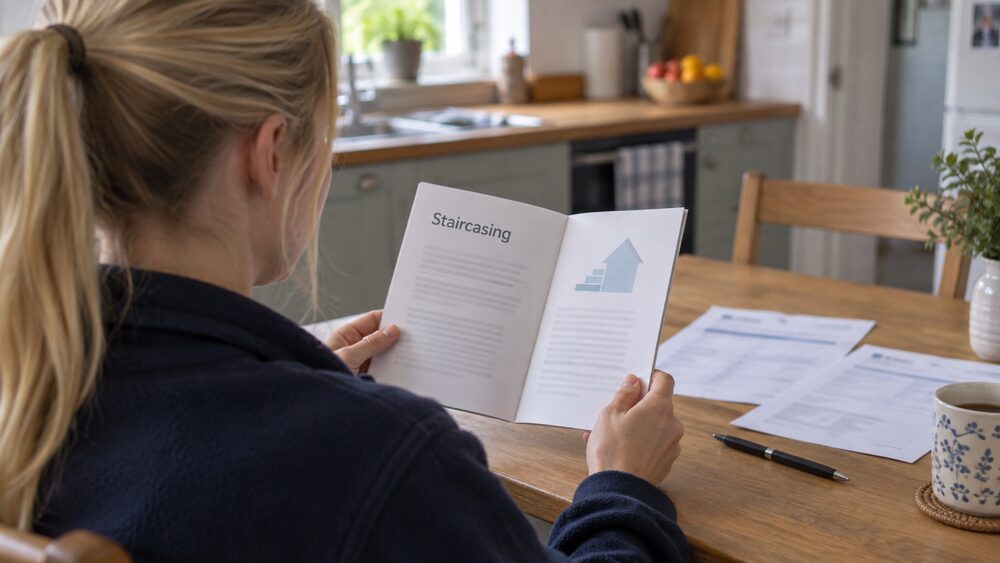
Staircasing is buying more shares in your home, and it changes the rent you pay. You can buy more shares in the future, known as staircasing, and pay less rent on the rest of the property9. Each time you buy more, the amount of rent you pay each month goes down because you own a bigger portion29.
Because the housing element is based on the rent, a lower rent generally means less help is needed. New shared owners can buy additional shares in their home in 1% increments for up to 15 years, with heavily reduced fees30. Buying a further share therefore reduces both your rent and the rent help you receive, and it increases the share of the property you own outright.
What proof of rent do I need to claim the housing element?
You will need to show the rent you pay. Show a tenancy agreement or a letter from the landlord when you claim benefits15. For a shared owner, that means the lease or the rent statement from the housing association.
In Northern Ireland, a Housing Benefit claim asks for more. You must give your National Insurance number and evidence of who you are, for example a birth certificate or driving licence, evidence that you must pay the rent, for example your rent book or tenancy agreement, and, if you are not claiming benefits like Pension Credit, evidence of your income and savings, for example bank statements31. Proof of the tenancy start date can take the form of a written tenancy agreement or a letter from the local authority housing benefit section32.
What if my shared ownership rent agreement is with a family member?
Shared ownership rent is normally paid to a housing association, not to a private individual, so a rent agreement with a family member is unusual in this tenure. Where a claim involves renting from a relative, the arrangement has to be a genuine commercial tenancy, and claims can be refused where it is not.
The shared accommodation rate is a separate rule that can apply to younger claimants in shared housing. You can usually only get the shared accommodation rate if you live in a shared house, unless your children are part of your benefit claim33. If you are unsure how the rules apply to your household, free and impartial advice is available from Citizens Advice, Shelter and MoneyHelper before you claim.
Where to get help
Free, impartial help is available if you are struggling with rent or with a claim. Citizens Advice, Shelter and MoneyHelper all give free advice, and your housing association can advise on rent arrears and payment arrangements27. If your income has dropped, check what you are entitled to before arrears build up, because a shortfall between your rent and your housing element has to be paid to the landlord18.
Sources33 cited
- Buying a home: things to consider nidirect, 2026-02-25
- Why are shared ownership customers responsible for major structural works National Housing Federation, 2026-09-26
- Check benefit entitlement Scottish Borders Council, 2026-09-28
- Universal Credit Age UK, 2026-08-26
- Can I get Housing Benefit Turn2us, 2026-03-25
- Child poverty in Scotland Scottish Government, 2026-08-06
- Housing Benefit Carers UK, 2026-09-26
- Universal Credit housing element Shelter England, 2026-06-18
- Right to Shared Ownership GOV.UK, 2026-09-26
- Your right to buy your home: a guide GOV.UK, 2026-04-08
- Support for homeowners after redundancy Shelter Cymru, 2026-08-29
- Housing status Entitledto, 2026-09-26
- Universal Credit payments: housing nidirect, 2026-09-01
- Advice to avoid losing your home nidirect, 2025-12-03
- Can you get Universal Credit if you own a property Shelter England, 2026-08-24
- Universal Credit and shared ownership Turn2us, 2026-02-25
- What is the Universal Credit housing costs element Turn2us, 2026-02-25
- What is Housing Benefit Shelter Cymru, 2026-08-26
- Help with your rent or mortgage Independent Age, 2026-09-26
- Shared ownership Entitledto, 2026-09-26
- Housing Benefit Mental Health and Money Advice, 2025-07-21
- The bedroom tax: how it works and who it affects Age UK, 2026-08-17
- Housing Benefit and bedroom tax Scope, 2026-08-26
- Rent arrears: social housing National Debtline, 2026-09-25
- Apply for Housing Benefit Shelter Scotland, 2025-12-12
- Dealing with a rent increase if you claim benefits Shelter England, 2026-07-03
- Can shared owners lose all of their investment if they don't pay their rent National Housing Federation, 2026-09-26
- How to claim Turn2us, 2026-05-26
- Costs and responsibilities Co-Ownership, 2026-09-26
- Shared ownership research briefing House of Commons Library, 2026-07-08
- How do I claim Housing Benefit Turn2us, 2026-09-26
- Repossession by your landlord's mortgage lender Citizens Advice Scotland, 2026-09-25
- Benefits for under 35s in shared housing Shelter England, 2026-07-02










 MoneyHelperFree, impartial money and pensions guidance, set up by government
 Citizens AdviceFree advice on money, consumer and legal problems in England and Wales
 ShelterFree housing advice from a charity
 GOV.UKOfficial information on tax, benefits and government services
 Financial Ombudsman ServiceFree, independent help when a complaint about a firm is not put right