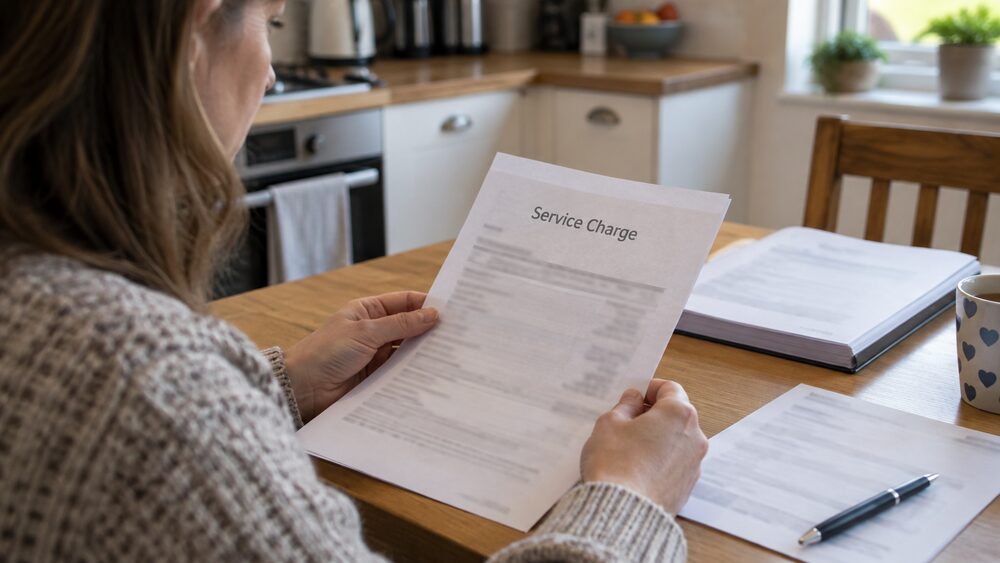
Yes. A shared owner pays the full service charge on the property, not a share of it. The service charge covers the building and its shared areas, and it is not divided according to how much of the home you own. A shared owner is the leaseholder of the whole property, so the lease makes them responsible for all the repairs and maintenance in the home, including major structural works and major repairs1.
Yes. A shared owner pays the full service charge on the property, not a share of it. The service charge covers the building and its shared areas, and it is not divided according to how much of the home you own. A shared owner is the leaseholder of the whole property, so the lease makes them responsible for all the repairs and maintenance in the home, including major structural works and major repairs1.
What does change with your share is the rent. The rent in the lease covers the landlord's cost of financing the percentage of the property you have not yet paid for, so it falls as you buy more shares and stops when you own 100%3. The service charge does not follow that pattern. Even if you own 100% of a shared ownership house, you are likely to still have to pay service charges5.
Most shared owners start by buying between 25% and 75% of a property and paying rent on the remainder6. Each month that usually means a mortgage payment, rent and a service charge for things like cleaning shared areas7.
Rent falls as your share grows, but the service charge does not
The two costs behave differently because they pay for different things. Rent is the landlord's return on the part of the property you have not bought. The service charge is the cost of running and maintaining the building, and it is the same whether you own a quarter of the home or all of it.
There is no requirement to increase your share at all, and a shared owner can continue paying rent on the landlord's share for as long as they wish10. Where a shared owner does staircase, the rent falls in step with the share they buy. Under the Right to Shared Ownership, buying more shares means paying less rent on the rest of the property3.
Some schemes bend the rent rule. Under Older Persons Shared Ownership, once you own 75% of the home you do not have to pay rent on the remaining 25% share11. Under the Home Ownership for people with a Long-term Disability scheme, a shared owner still needs to pay the service charge while the home is in the initial repair period12.
The service charge itself can move in either direction, but not because of your share. For leaseholders covered by the Right to Buy rules, there is protection from unexpected costs for the first 5 years, during which the landlord must give an estimate and increases are limited to inflation; after 5 years the service charge can rise to reflect actual costs13.
What a shared owner pays each month: mortgage, rent and service charge
Three payments usually leave a shared owner's account each month, and only one of them shrinks as they buy more of the home.
| Payment | What it covers | Does it fall as your share grows? |
|---|---|---|
| Mortgage | The share you have bought | No, it depends on your loan |
| Rent | The landlord's cost of financing the share you have not bought | Yes, and it stops at 100%3 |
| Service charge | Building upkeep and shared areas | No, it is charged in full1 |
The rent figure is set out in the lease. Under the Right to Shared Ownership, an official worked example shows rent for the first year of the lease set at 2.75%, giving £4,950 for the year, or £413 a month, on a home valued at £300,000 with a 40% stake14. A separate official example for the same scheme gives £6,600 for the first year, or £550 a month; the two documents disagree and it is not resolved which applies14.
Shared ownership has been offered on shares between 10% and 75% in official statistics15, and some providers might let a buyer take a 10% share16. The share a buyer takes affects the rent, not the service charge.
Repairs and maintenance: the up to £500 a year contribution in the first 10 years
Repairs are the shared owner's responsibility, but a new shared ownership home comes with a period of help. Under the national model for shared ownership, the cost of repairs and maintenance is met by the landlord for the first 10 years after purchase of a new property, with some limits8. Housing associations contribute up to £500 a year towards certain repairs and maintenance costs in the first 10 years of ownership9.
That £500 is aimed at specific items. A shared owner can claim up to £500 a year from the landlord to cover repairing, replacing (if faulty) and maintaining fixtures and fittings that supply water, gas or electricity, or heat the home1. The allowance can roll over: in an official example, a shared owner claims £1,000 in year 2 (£500 plus £500) and rolls £250 over to the next year1.
Outside that period, the position is firmer. A shared owner will need to pay for repairs and maintenance no matter what share they own1. In a flat, if the reserve fund does not cover the cost of external repairs, the cost is divided between the shared owner and the other flat owners in the building1.
Staircasing to 100%: what changes and what stays the same
Staircasing is the process of buying more shares until the home is fully owned. After becoming a shared owner, a buyer can buy more shares in the property, usually increasing to up to 100%9. New shared owners can buy additional shares in 1% increments for up to 15 years, with heavily reduced fees8. Other staircasing transactions are reduced to a minimum of 5% rather than 10%17.
What changes at 100% is the rent. If a shared owner buys the remaining amount, they own 100% of the property and will not pay any rent16. What usually stays is the service charge. Even at 100%, a shared ownership house is likely to carry service charges5.
Staircasing carries its own costs. In Scotland, a buyer increasing their share under the Open Market Shared Equity scheme pays all the valuation and legal costs as well as the administration costs of the organisation handling the request18. The same applies under the New Supply Shared Equity scheme19.
Help with housing costs: how benefits treat rent and eligible service charges
Benefits can help with some of a shared owner's housing costs, and the split between rent and service charge matters here too.
Universal Credit has a housing element that can help with rent and some service charges20. It can cover service charges such as cleaning or maintenance of communal areas21. If a shared owner has a shared ownership tenancy, their housing costs payment can also include an amount for rent20. The service charges Universal Credit can help with include using shared facilities such as rubbish collection or communal lifts, using essential items in the home such as domestic appliances, and window cleaning of upper floors22.
Housing Benefit works alongside this. A shared owner might be eligible for Housing Benefit to help with rent and/or a service charge, whether or not they are eligible for help with mortgage costs23. Housing Benefit can help with rent, some service charges and also with rates24. It is also possible to get help with some types of service charges, such as communal heating or cleaning bills25.
There are limits. Housing Benefit and the Universal Credit housing element can pay some service charges, for example the fees for cleaning communal areas, but not personal care and support charges in supported housing26. In Northern Ireland, Support for Mortgage Interest is available to homeowners, including leasehold properties for some service charges, and shared ownership properties alongside help with rent27.
Leasehold rules that come with shared ownership
Shared ownership is a leasehold arrangement, and the lease is what sets the cost sharing. The sharing of cost is stipulated in the lease, as with all leasehold properties2. A shared ownership lease usually has an initial fixed term equal to the term of the lease, usually 125 years for a shared ownership lease29.
The lease also carries the enforcement machinery. If a shared owner falls behind, any cost incurred by the lender in recovering the position will be added to the monies owed by the shared owner to its mortgage lender30. A shared owner who is struggling should contact their housing association as well as their lender, because failure to pay rent or service charges can result in forfeiture of the lease31.
The rules differ across the UK. In Wales, Help to Buy schemes let a buyer purchase an initial share of 25% to 75% of a property with rent paid on the remaining share32. In Scotland, shared ownership lets a buyer with a low income buy a share and pay an occupancy charge to the housing association that owns the rest4. In Northern Ireland, Co-Ownership works on a different model again33.
If a service charge looks wrong, the first step is the housing association that sets it. A leasehold shared owner who cannot resolve a dispute can use the formal complaints route for leaseholders, and keep paying while the dispute runs, because arrears can lead to forfeiture31.
Sources33 cited
- Repairs and home improvements GOV.UK, 2026-09-28
- Why are shared ownership customers responsible for paying for major structural works within their home? National Housing Federation, 2026-09-26
- Right to Shared Ownership GOV.UK, 2026-09-26
- Help to buy a home mygov.scot, 2026-06-24
- Selling a shared ownership home Lease Advice, 2026-06-15
- Buying a house or flat in London Which?, 2026-06-19
- Shared ownership mortgages NatWest, 2026-09-25
- Shared ownership and affordable homes House of Commons Library, 2026-07-08
- Shared ownership National Housing Federation, 2026-09-26
- Increasing your share Co-Ownership, 2026-09-26
- Older Persons Shared Ownership GOV.UK, 2025-12-03
- Home Ownership for people with a Long-term Disability GOV.UK, 2025-12-03
- Your Right to Buy your home: a guide GOV.UK, 2026-04-08
- The Right to Shared Ownership: a guide for tenants GOV.UK, 2025-09
- Evaluation of the Help to Buy scheme GOV.UK, 2026-09-16
- Shared ownership mortgage Lloyds Bank, 2026-09-27
- Shared ownership National Housing Federation, 2026-09-26
- Open Market Shared Equity scheme: after buying mygov.scot, 2026-03-17
- New Supply Shared Equity scheme: after buying mygov.scot, 2026-07-28
- Universal Credit and shared ownership Turn2us, 2026-02-25
- Universal Credit housing costs element Shelter Cymru, 2026-08-25
- Universal Credit and social tenants Turn2us, 2026-02-25
- Shared ownership Entitledto, 2026-09-26
- Can I get Housing Benefit? Turn2us, 2026-03-25
- Housing costs: more information Entitledto, 2026-09-26
- How to afford rent Scope, 2026-09-24
- Universal Credit payments and housing nidirect, 2026-09-01
- Service and ground charge arrears StepChange, 2026-09-25
- A shared ownership lease is an assured shorthold tenancy: is this just another form of renting? National Housing Federation, 2026-09-26
- Can shared owners lose all of their investment in their home if they don't pay their rent? National Housing Federation, 2026-09-26
- Problems paying your mortgage Suffolk Building Society, 2026-05-21
- Help to Buy schemes Welsh Government, 2026
- Shared ownership in Northern Ireland Co-Ownership, 2026-09-26








 MoneyHelperFree, impartial money and pensions guidance, set up by government
 Citizens AdviceFree advice on money, consumer and legal problems in England and Wales
 ShelterFree housing advice from a charity
 GOV.UKOfficial information on tax, benefits and government services
 Financial Ombudsman ServiceFree, independent help when a complaint about a firm is not put right