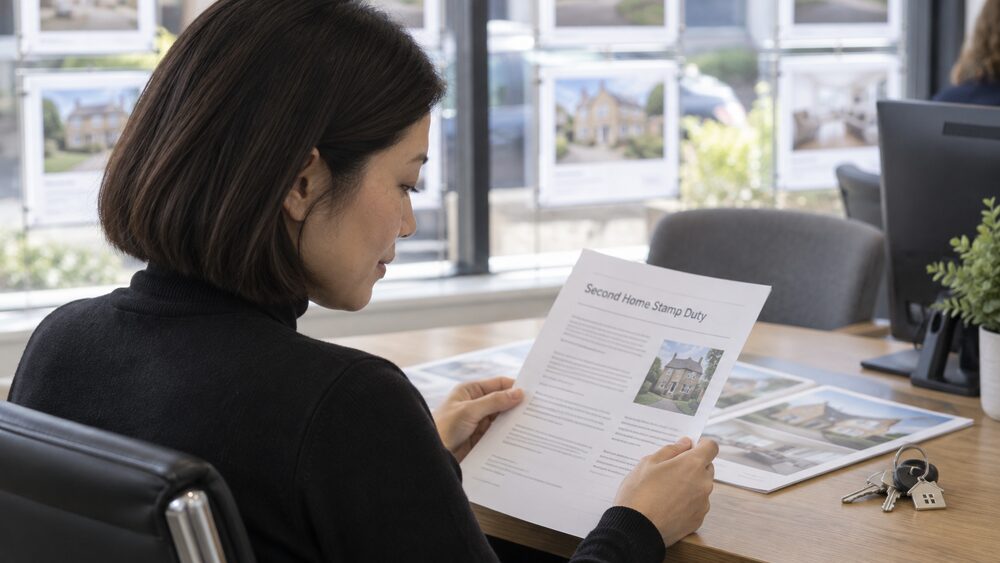
Stamp Duty Land Tax is charged on a sliding scale, so more expensive properties face progressively higher rates1. If you are buying an additional home, whether a second home or a buy-to-let, you usually pay an extra 5% on top of the standard Stamp Duty rates2. In England and Northern Ireland, the higher rates for additional dwellings are currently five percentage points above the standard residential rates3.
Stamp Duty Land Tax is charged on a sliding scale, so more expensive properties face progressively higher rates1. If you are buying an additional home, whether a second home or a buy-to-let, you usually pay an extra 5% on top of the standard Stamp Duty rates2. In England and Northern Ireland, the higher rates for additional dwellings are currently five percentage points above the standard residential rates3.
That surcharge is not automatic. There are recognised situations where it does not apply at all, and a refund route if you pay it and then sell your previous main home within three years. The rules differ in Scotland and Wales, which run their own property taxes.
Higher rates on additional homes: a 5% surcharge on top of standard rates
The higher rates apply to transactions involving second homes or buy-to-let properties3. In England and Northern Ireland, the surcharge is 5% on top of the standard Stamp Duty rates8. The legislation sets out the higher rate bands: 5% on the portion up to £125,000, 7% on the portion between £125,001 and £250,000, 10% on the portion between £250,001 and £925,000, and 15% on the portion between £925,001 and £1,500,0009.
There is a further surcharge for overseas-based buyers. This applies on top of the 5% buy-to-let surcharge, so overseas residents buying an investment property pay 7% more than the standard rates for UK home movers in total extra stamp duty10.
The surcharge is not limited to properties in England and Northern Ireland. References to a dwelling include dwellings situated outside England and Northern Ireland, with special provisions for dwellings in Wales and outside England, Wales and Northern Ireland9.
One exception in the legislation concerns transfers between spouses or civil partners living together. A chargeable transaction is not a higher rates transaction if there is only one purchaser and one vendor, and they are spouses or civil partners9.
Replacing your main home: when the surcharge does not apply
The most common exemption is replacing your main residence. The extra charge does not apply if you are buying a property to replace your main residence, or if you sold your last main home within three years of completing the new purchase11.
This can apply even where you own an interest in another property. Where HMRC views you as replacing your main residence, standard stamp duty rates apply12.
The rule matters for people in a chain or buying before they sell. If you buy a new main home before selling the old one, you may pay the higher rates at the time and then reclaim the difference once the sale completes.
A separate point concerns buy-to-let. The surcharge kicks in because you will technically be buying a second home, even though it is one you will be living in yourself13. If you sell your original property, the one you are renting out, within three years, you can claim back the difference between what you paid and the normal home mover rates13.
There is also a council tax parallel. If you have a second home that you let out, the extra council tax would not apply14. That is a different tax from Stamp Duty, but the principle of an exemption for let property runs through both.
Claiming a refund after selling your previous main home
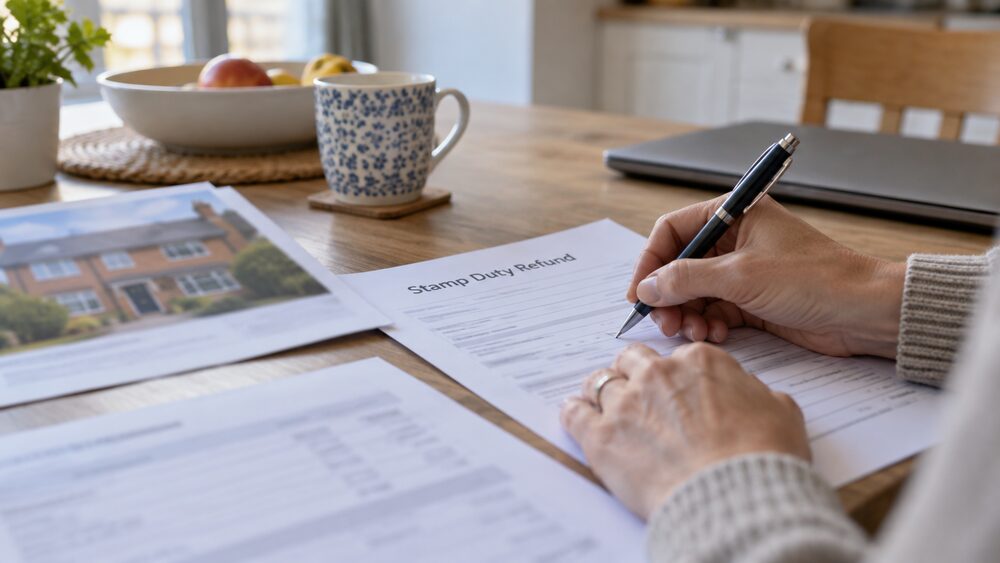
If you paid the higher rates of SDLT on the purchase of a new main home but you have sold your previous main home, you can apply for a refund4. The refund covers the higher rate part of your bill.
The application must be made within 12 months beginning with the effective date of the transaction disposing of the major interest in the sold dwelling, though HMRC can allow a longer permitted period in exceptional circumstances9.
You will need to provide your personal details, the main buyer's details if different, details of the property you paid higher-rate stamp duty on including the purchase date and transaction reference number, details of the former main home you sold including sale date, address and buyer's name, the amount of stamp duty originally paid, the amount you are claiming back, and your bank account and sort code for the refund payment6.
HMRC will pay any refund to you unless you give permission to pay it to someone else, for example your solicitor or agent4.
If you do not send all of the information and documents with your amendment, HMRC may reject it as invalid4.
Inherited property and other purchases outside the higher rates
Inheriting property in a will is one of the recognised exclusions from the higher rates16. So are transferring ownership due to separation or divorce, being gifted a second property without a mortgage attached, and caravans, mobile homes or houseboats16.
A freehold property bought for less than £40,000 is also excluded6.
In Scotland, the position on inherited shares is set out in the Additional Dwelling Supplement rules. Where existing co-owners acquire another share and are each treated as owning the whole dwelling, no ADS will be due17.
There are also cases where no Stamp Duty return is needed at all. These include a property left to you in a will5. A transaction that changes the terms of a will within two years of someone dying is exempt as long as a different beneficiary gets the property and the new beneficiary does not pay a compensation payment, including taking over a mortgage18.
First-time buyer relief is a separate matter. The relief will not apply to properties above £500,00019.
Multiple Dwellings Relief allowed buyers to pay stamp duty based on the average price of the individual properties they purchase, rather than the total cost of the transaction20. That relief has since been withdrawn, so it no longer reduces the bill on a portfolio purchase.
Scotland and Wales use their own taxes and rules
Stamp Duty Land Tax applies in England and Northern Ireland only1. Scotland has Land and Buildings Transaction Tax, and Wales has Land Transaction Tax. Both have their own higher rates for additional homes.
In Scotland, the Additional Dwelling Supplement imposes an amount of tax on transactions involving second homes or buy-to-let properties3. The rules on particular transactions, including inherited shares, are set out in Revenue Scotland's technical guidance17.
In Wales, the higher rates of Land Transaction Tax allow the taxpayer up to three years to sell their previous main residence and claim a refund7.
The three nations collect their property tax revenues separately. Stamp Duty Land Tax revenues for England and Northern Ireland come from HMRC, Land and Buildings Transaction Tax revenues for Scotland come from Revenue Scotland, and Land Transaction Tax revenues for Wales come from the Welsh Government22.
If you are buying in Scotland or Wales, the exemption rules and refund process are different from the SDLT system, and the relevant tax authority's guidance sets out how they work.
Filing the return and paying on time
A Stamp Duty Land Tax return must be sent within 14 days of the effective date of the transaction, even if you do not owe any tax5. The return applies to England and Northern Ireland23.
You need to send a return if you take over a property and pay money or take on a debt, for example a mortgage, for the property5.
Most buyers use a solicitor or conveyancer to file the return and pay the tax. HMRC will pay any refund to you unless you give permission to pay it to someone else, for example your solicitor or agent4.
If you are struggling to pay a tax bill, TaxAid provides free tax advice to people on low incomes24. StepChange offers debt advice for people in financial difficulty25.
Where to get help
If you are buying a home and are unsure whether the higher rates apply, a solicitor or conveyancer handling the purchase can advise on the specific transaction. The Stamp Duty Land Tax page covers the standard rates and bands, and the higher rates on second homes and additional properties page sets out the surcharge in more detail.
For Scotland, the Additional Dwelling Supplement page explains the Scottish rules. For Wales, see Land Transaction Tax.
If you have paid the higher rates and want to claim a refund, the reclaiming the higher rates after the three-year window page covers what happens if you miss the deadline.
Sources25 cited
- Stamp Duty Land Tax research briefing House of Commons Library, 2026-07-08
- What is Stamp Duty Land Tax Experian, 2026
- Review of Land and Buildings Transaction Tax Scottish Government, 2026-03
- Apply for a refund of Stamp Duty Land Tax HMRC, 2026-06-26
- Check if you need to send a Stamp Duty Land Tax return HMRC, 2026-06-26
- Stamp duty on second homes Lloyds Bank, 2026-09-27
- Land Transaction Tax statistics Welsh Government, 2026-09-28
- Buy-to-let stamp duty Which?, 2026-05-14
- Stamp Duty Land Tax: higher rates for additional dwellings legislation.gov.uk, 2026
- Tax on overseas property Which?, 2026-04-06
- Second homes stamp duty Lloyds Bank, 2026-09-27
- Will I have to pay extra stamp duty on my new home? Which?, 2026-08-17
- Let to buy explained Which?, 2026-06-23
- Can my friend save me from extra council tax? Which?, 2025-11-24
- Apply for a refund of the higher rates of Stamp Duty Land Tax HMRC, 2024-08-29
- Stamp duty on second home Halifax, 2026-09-27
- ADS rules for particular transactions Revenue Scotland, 2026-09-26
- Stamp Duty Land Tax transactions that don't need a return HMRC, 2014-01-03
- Stamp Duty Land Tax relief for first-time buyers HM Treasury, 2017-11-22
- Property tax and stamp duty changes announced in Spring Budget Which?, 2024-03-06
- Land Transaction Tax statistics Welsh Government, 2025-09
- Calculating the Household Costs Indices ONS, 2026-05-28
- How to send a Stamp Duty Land Tax return HMRC, 2026-06-26
- Problems paying tax debt TaxAid, 2026-07-17
- Debt and long-term sickness StepChange, 2026-09-25






 MoneyHelperFree, impartial money and pensions guidance, set up by government
 Citizens AdviceFree advice on money, consumer and legal problems in England and Wales
 ShelterFree housing advice from a charity
 GOV.UKOfficial information on tax, benefits and government services
 Financial Ombudsman ServiceFree, independent help when a complaint about a firm is not put right