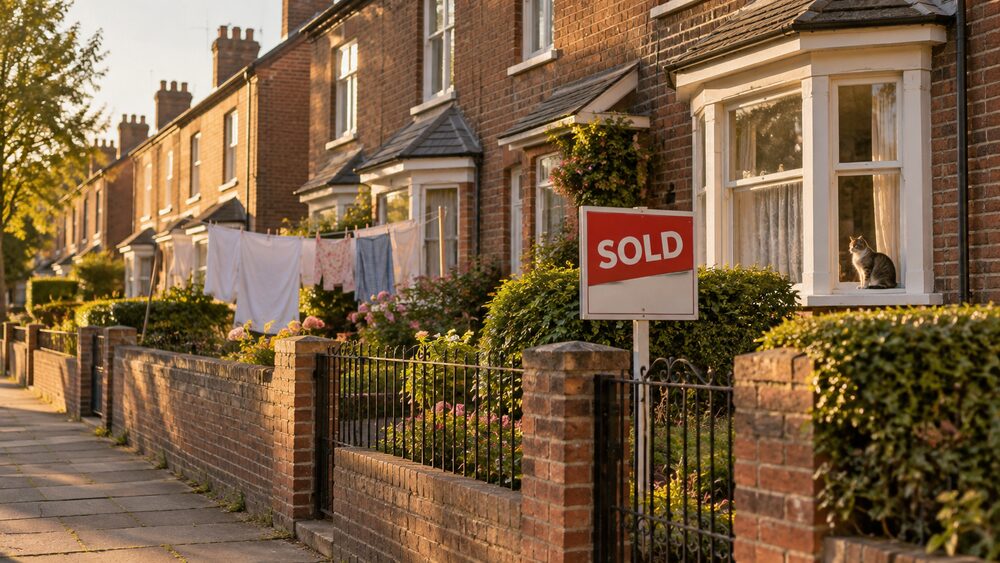
If you rent your home from a council or a housing association, there are two main routes to owning it, and they work in opposite ways. Right to Buy gives you a discount on the full market value of your home, so you buy it outright at less than it is worth. Right to Shared Ownership gives you no discount at all, but lets you buy a slice of your home and pay rent on the rest, so the sum you need upfront is smaller.
The two are not available in the same places or to the same people. Right to Buy is England only, and the discount is capped at £16,000 to £38,000 depending on where you live for applications received on or after 21 November 2024. Applications received before that date were eligible for much larger discounts of up to £102,400 across England, or up to £136,400 in London1. Right to Shared Ownership is also England only, and lets you buy between 10% and 75% of your home's full market value2.
Which one fits depends on your tenancy, where you live, how much you can put down and how much rent you can carry alongside a mortgage. This page sets out what each scheme is, who qualifies, what it costs and what can go wrong.
Right to Buy and Right to Shared Ownership: two different routes to owning your home
Right to Buy is the older scheme. If you are a secure council tenant and have spent at least 3 years as a public sector tenant, you can buy your home at a price lower than the full market value1. The discount is based on the number of years you have spent as a public sector tenant, and it rises with the length of that service1. You buy the whole property, with a mortgage if you need one, and you own it outright from completion.
Right to Shared Ownership works the other way round. You buy a share of your home as a leaseholder, pay rent to the landlord on the rest, and usually pay monthly service charges as well2. The scheme was announced on 17 October 2019 and is aimed at tenants in eligible social or affordable rented homes delivered by the Affordable Homes Programme 2021 to 20265. You can buy a share of between 10% and 75% of your home's full market value2.
The practical difference is what you are buying. With Right to Buy you own 100% of the property and owe nothing in rent, but you need a mortgage big enough to cover the discounted price. With Right to Shared Ownership you own a smaller slice and owe rent on the rest, so the mortgage is smaller but the monthly outgoings continue. Shared owners do own their homes and can be called homeowners, but the lease means the arrangement is not the same as owning outright6.
Who qualifies for each scheme
Right to Buy is open to secure tenants of a social housing landlord, which can include a local authority or a non-charitable housing association7. The property must be your only or main home and must be self-contained1. You need at least 3 years as a public sector tenant, and those years do not have to be consecutive1. If you rent from a registered social landlord such as a housing association and do not have a secure tenancy, you may have the Right to Acquire instead, which carries a discount of between £9,000 and £16,000 depending on where you live4.
Right to Shared Ownership has its own conditions. The home must be your only or main home, it must have been built with grant funding from the government's Affordable Homes Programme 2021 to 2026, and an almshouse does not qualify2. There is an income test: an annual gross household income of £80,000 or less outside London3.
Shared ownership more broadly is aimed at people who cannot afford to buy outright. If you can afford to buy a house outright, you will not qualify for shared ownership housing8. That test is about affordability, not just income, and landlords apply it when they assess an application.
| Right to Buy | Right to Shared Ownership | |
|---|---|---|
| What you buy | The whole home, at a discount1 | A 10% to 75% share2 |
| Discount | £16,000 to £38,000 depending on region1 | None2 |
| Rent on the rest | None, you own it outright | Capped at 3% of the unsold stake3 |
| Tenancy needed | Secure tenant, 3 years public sector1 | Eligible social or affordable tenant2 |
| Where it operates | England only4 | England only2 |
Right to Buy discounts: up to £136,400 in London and £102,400 elsewhere
The discount is the heart of Right to Buy, and it changed sharply for applications received on or after 21 November 2024. Applications received by social landlords before that date from eligible tenants were eligible for discounts of up to £102,400 across England, or up to £136,400 in London boroughs1. For applications received on or after that date, the maximum cash discounts are £16,000 to £38,000 depending on where you live1.
The regional figures vary widely. In the South East the maximum is £38,000, in the Eastern region £34,000 except the district of Watford where it is £16,000, in the North West £26,000, and in the North East £22,0001. In London the maximum is £16,000, except in Barking and Dagenham and Havering where it is £38,0001. Some boroughs have maximum discounts set as low as £16,0007.
The percentage discount also depends on what you are buying. On a house the discount ranges from 35% to 70% of the market value, and on a flat from 50% to 70%, in each case up to a maximum of 70% or the cash cap for your area, whichever is lower1. So a long-standing tenant buying a flat may reach the percentage ceiling before the cash ceiling, and the cash cap then decides the final figure.
Two rules can reduce what you get. A rule called the cost floor may apply, under which your discount is reduced to reflect what your landlord has spent on building, buying, repairing or improving your home over a specific period before you apply1. And if you have previously bought another council property, any discount you got then will usually be deducted from the discount you get when you buy again1. Improvements you have made yourself are not allowed to put the price up1.
Right to Shared Ownership has no discount: you buy a 10% to 75% share
There is no discount under Right to Shared Ownership. You buy a share at full market value and pay rent on the part you do not own2. The share can be between 10% and 75% of your home's full market value, and the minimum first purchase is a 10% share5. Shared ownership schemes more generally usually involve a share of between 25% and 75%, so the Right to Shared Ownership range starts lower than the typical scheme9.
Because you are buying a share rather than the whole home, the sums are different. The deposit is usually between 5% and 10% of the share you are buying, not of the full property value, which is where the upfront saving comes from2. Shared ownership homes can be purchased with a deposit of at least 5% of your share and a mortgage to cover the rest10.
The trade-off is that you never stop paying for the part you do not own until you buy it. You buy a share as a leaseholder, pay rent to the landlord on the rest, and usually pay monthly service charges as well2. Service charges cover the upkeep of shared areas and the building, and they are separate from both the mortgage and the rent.
Rent, staircasing and repairs under Right to Shared Ownership
Rent on the share you do not own is capped. Your rent is limited to a maximum of 3% of the value of the equity stake you have not acquired, and landlords will often set the rent at the lower target rate of 2.75%3. On a home valued at £300,000 where you buy a 40% stake, the first year rent at 2.75% would be £4,950, or £413 a month3. The documents also give a second worked example with a first year rent of £6,600, or £550 a month, so the figures depend on the value and the share, and the two examples in the official guide do not match each other.
Rent can rise at each review. One official example shows a rent review of 5.4%, made up of a 4.9% increase in RPI plus 0.5%, using September 2021 as the relevant month3. That is an illustration of how a review can be calculated, not a forecast, and the actual increase depends on the formula in your lease.
Staircasing is how you buy more. You can buy more shares in your home in future, known as staircasing, and pay less rent on the rest of the property2. The leaseholder can buy further shares at the market value of those shares at the time of purchase, until they own 100%, and as the leaseholder buys further shares the rent is reduced proportionately to reflect the landlord's smaller stake11. In some cases the shared owner may be able to purchase 100% of the property, which is referred to as final staircasing6. After you have been living there for a year, you can buy a larger share if you want to12.
The cost of staircasing depends on the value at the time. One official example, on a full market value of £325,000 at the time of staircasing, gives costs of £3,250 for 1%, £16,250 for 5%, £48,750 for 15% and £81,250 for 25%3. A second example in the same guide gives £4,250 for 1%, £21,250 for 5%, £63,750 for 15% and £106,250 for 25%, so the two sets of figures disagree and the actual cost depends on your home's value when you staircase.
Repairs are your responsibility. You will need to pay for repairs and maintenance no matter what share you own13. Changes you make to your home may increase or decrease its market value, which can affect the price if you buy shares of 5% or more in the future13. On the legal side, a shared ownership lease provides similar rights to an ordinary long residential lease but there are some differences14, and the shared owner has the same benefits and rights in relation to the common parts as any other leaseholder15.
How a Right to Buy application works, step by step
The process starts with the form. The Right to Buy application form is known as form RTB1, and it is available from your landlord7. Once your landlord receives it, they must respond within 4 weeks if you have been a tenant for 3 years or more, or within 8 weeks if you have been a tenant of your landlord for less than 3 years1. Their response is a Section 125 notice setting out the price, the discount and the terms.
You then have up to 12 weeks to accept your landlord's offer1. If you think the valuation is wrong, you must tell the landlord within 3 months of receiving the Section 125 notice that you want a determination of value by the District Valuer, and you then have 4 weeks to put your case1. There is no charge for the landlord's valuation service, and you will not have to pay for the District Valuer service either1.
On the money side, you have access to the same mortgage products available on the market as everyone else1. Lenders that work with the scheme include high street names such as Leeds Building Society, TSB, Lloyds Bank, Halifax and Together, and Suffolk Building Society offers Right to Buy lending on all products except specialist remortgage products, buy to let and shared ownership Right to Buy or Right to Acquire16. A lender will want a deposit, and the size depends on the lender and your circumstances.
Where Right to Buy discounts must be repaid or resale is restricted
The discount is not unconditional. Usually, you must pay back some or all of your discount if you sell the home within 5 years4. If you purchase your home under the Right to Buy scheme and wish to resell or dispose of it within 10 years, you will have to offer it to your landlord first under the right of first refusal rule1. Certain sales or transfers are exempt from the requirement to repay the discount, for example transfers between certain family members1.
Rural areas carry extra conditions. If you live in a rural area, you may only be able to resell to a person who lives or works locally1. In a National Park, a designated Area of Outstanding Natural Beauty, or an area designated rural by the Secretary of State, the sale will be on the condition that you may only resell it to someone who has been living or working in the area for at least 3 years1. Your landlord may also require you to offer your home to them if you want to resell within 10 years of buying1.
There is a separate rule for leaseholders. If you buy your home on a 125-year lease and sell it after 15 years, the buyer will get a 110-year lease, so the remaining term shortens with every year you hold it1. If you are buying under the Preserved Right to Buy, the cost floor period is 15 years regardless of when the property was built or acquired1.
Disputes, delays and where to complain
If something goes wrong with a Right to Buy application, the first step is your landlord's own complaints process. If that does not resolve it, the Housing Ombudsman handles complaints about social landlords in England. On the shared ownership side, a shared ownership lease provides similar rights to an ordinary long residential lease but there are some differences, and the lease sets out what the landlord can and cannot do14.
Possession is one area where the lease matters. There are grounds on which a landlord can seek possession, and for the majority of these the court has the ability to consider the surrounding circumstances and the leaseholder would have an opportunity to challenge any application for possession by the landlord14. The landlord may instead choose to rely on Grounds 10 and 11, which are also linked to non-payment of rent but do allow the court to consider any surrounding circumstances in choosing whether to award possession of the property to the landlord22.
On the consumer side, if you buy goods or services as part of the process, you have rights. You can choose whether to have an item repaired or replaced, but the shop can refuse your choice if the other option is cheaper23. For complaints about the Help to Buy equity loan process, which is a different scheme, you can complain via email, telephone or in writing24.
If money problems put the home at risk, there is free help. In Scotland, the Mortgage to Rent scheme and the Mortgage to Shared Equity scheme exist for people in difficulty, and the sale price under Mortgage to Shared Equity is split between the Scottish Government and you based on the level of equity each holds25. Those who bought under the Scottish Government's funded shared ownership or shared equity schemes are considered for Mortgage to Rent but not for Mortgage to Shared Equity25. Free, impartial debt advice is available from charities such as StepChange and National Debtline, and Citizens Advice can help with housing and debt questions27.
Where the schemes do not operate
Right to Buy and Right to Acquire have ended in Wales and Scotland4. Right to Shared Ownership is England only and is not available in Scotland, Wales or Northern Ireland2. That means a tenant in Scotland or Wales looking to own their home has to use a different route.
Scotland runs the Open Market Shared Equity Scheme, which helps first time buyers on low to moderate incomes buy a home on the open market30. The percentage the buyer gets is not affected by changes in the value of the property over time16. Scotland also has its own shared ownership arrangements, and after buying you have the option to buy a larger share at any time after you have been living in the home for a year12. Shelter Scotland lists affordable home ownership options for people in Scotland32.
Wales has its own shared ownership guide and Help to Buy arrangements33. The Rent to Own scheme in Wales has closed to new landlords, but some properties might still be available35. Rent to Buy is not available in Scotland35. The Help to Buy equity loan scheme is no longer available in England or Scotland9.
Northern Ireland is not covered by any of these schemes. The House Sales Scheme is the Northern Ireland route to buying a social home, and it works differently from Right to Buy.
Sources35 cited
- Your right to buy your home: a guide GOV.UK, 2026-04-08
- Right to Shared Ownership GOV.UK, 2026-09-26
- The Right to Shared Ownership: a guide for tenants GOV.UK, 2025-09
- Right to Buy and Right to Acquire Scope, 2026-04-01
- The Right to Shared Ownership House of Commons Library, 2026-07-08
- Why is shared ownership considered ownership? National Housing Federation, 2026-09-26
- Buying a home Citizens Advice, 2026-09-25
- Shared ownership: how to apply mygov.scot, 2018-05-25
- 7 first-time buyer schemes available now Which?, 2026-03-26
- Shared ownership National Housing Federation, 2026-09-26
- Key information for shared owners of flats in England GOV.UK, 2015-12-15
- Shared ownership: after buying mygov.scot, 2018-05-25
- Shared ownership: repairs and home improvements GOV.UK, 2026-09-28
- A shared ownership lease is an assured shorthold tenancy: is this just another form of renting? National Housing Federation, 2026-09-26
- Why are shared ownership customers responsible for paying for major structural works? National Housing Federation, 2026-09-26
- Open Market Shared Equity Scheme buyer information Scottish Government, 2025-04
- Right to Buy explained Leeds Building Society, 2026-09-21
- Affordable housing mortgages TSB, 2026
- Government housing schemes Lloyds Bank, 2026-09-27
- Government housing schemes Halifax, 2026-09-27
- Right to Buy mortgages Together, 2026-09-26
- Can shared owners lose all of their investment if they don't pay their rent? National Housing Federation, 2026-09-26
- Consumer rights mygov.scot, 2022-07-01
- Help to Buy complaints procedure GOV.UK, 2022-11-17
- Mortgage to Rent and Mortgage to Shared Equity Scottish Government, 2010-06-23
- Home Owners Support Fund information booklet Scottish Government, 2015-04
- Mortgage jargon buster StepChange, 2026-09-25
- Debt consolidation National Debtline, 2026-09-25
- Debt consolidation Business Debtline, 2026-09-26
- Open Market Shared Equity Scheme: buyer information Scottish Government, 2025-09-19
- Open Market Shared Equity Scheme: buyer information leaflet Scottish Government, 2022-08-17
- Affordable home ownership Shelter Scotland, 2024-07-25
- Shared ownership Wales: buyers' guide Welsh Government, 2018-02
- Help to Buy home schemes Welsh Government, 2026
- Rent to Buy GOV.UK, 2026-09-26





 MoneyHelperFree, impartial money and pensions guidance, set up by government
 Citizens AdviceFree advice on money, consumer and legal problems in England and Wales
 ShelterFree housing advice from a charity
 GOV.UKOfficial information on tax, benefits and government services
 Financial Ombudsman ServiceFree, independent help when a complaint about a firm is not put right