Shared ownership means buying a share of a home, usually between 25% and 75%, and paying rent to a landlord on the rest1. Because the lease is yours, the building's costs are yours too. Government guidance is direct about it: if your home is in England, you may need to pay towards replacing cladding or fixing other safety problems with your building2. The same guidance says you pay for repairs and maintenance no matter what share you own2.
Shared ownership means buying a share of a home, usually between 25% and 75%, and paying rent to a landlord on the rest1. Because the lease is yours, the building's costs are yours too. Government guidance is direct about it: if your home is in England, you may need to pay towards replacing cladding or fixing other safety problems with your building2. The same guidance says you pay for repairs and maintenance no matter what share you own2.
That is the answer most shared owners are looking for, and it is not the answer they hope for. Owning 25% of a flat does not mean paying 25% of the service charge. The charge is set against the home, not against your share, and it sits alongside your mortgage and rent as a monthly cost3.
What follows is how those costs work, what the £500 repairs contribution does and does not cover, what happens if you want to sell, staircase or let the flat, and the help that exists in Wales for leaseholders facing waking watch bills.
Shared owners are leaseholders, so building costs can reach them
A shared ownership lease makes you the leaseholder of your home. The housing association or other landlord owns the freehold or the head lease and the share you have not bought, but the legal interest in your lease is yours. As one shared ownership body puts it, the leaseholder "owns the full legal interest in their lease" and takes on full responsibility for the property7.
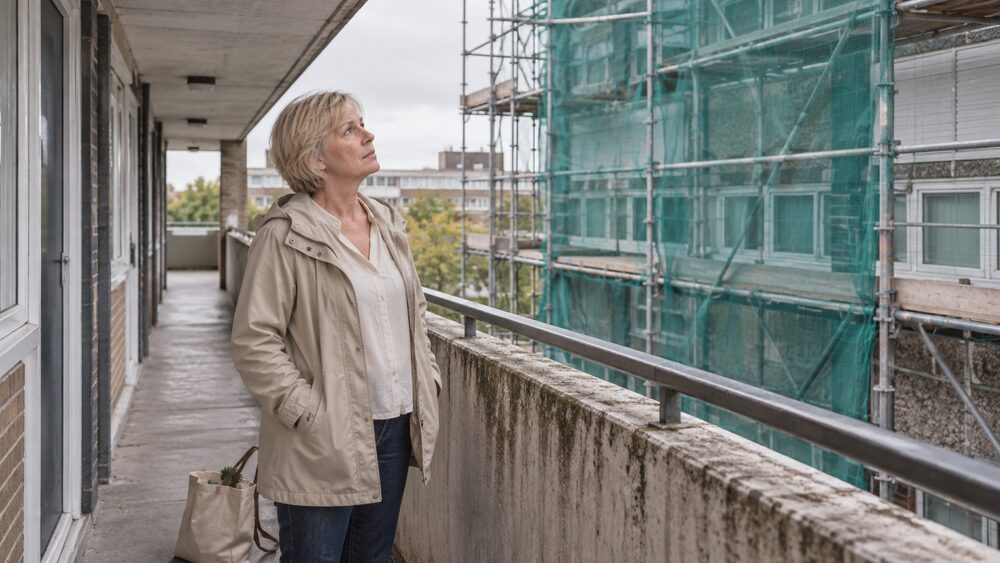
That structure is why building-wide costs land on shared owners. Where a landlord carries out major structural works, the cost is recovered through the lease, and the shared owner pays it. The same principle applies to cladding and fire safety remediation: in some circumstances, leaseholders, including shared owners, are responsible for the costs by law8.
For flats, the cost of external repairs is divided between the flat owners in the building if the reserve fund does not cover it2. A reserve fund is money set aside over time for future works; where it is too small for a cladding bill, the shortfall is shared out.
There is a limit worth knowing on the other side of the ledger. New-build homes usually come with a building warranty that covers the cost of structural repairs in the first 10 or 12 years2. That warranty sits with the building, not with your share, and it is separate from the service charge.
How service charges work when you own only a share
A service charge is what you pay your landlord or management company to maintain the common areas of the building9. On a shared ownership home you normally pay it monthly, alongside your mortgage payment and your rent3. The Right to Shared Ownership scheme describes the same three-part structure: buy a share as a leaseholder, pay rent on the rest, and usually pay monthly service charges10.
The charge is not reduced because you own part of the home. It covers cleaning shared areas, maintaining the building, and building up or topping up the reserve fund. Where a landlord also charges ground rent, that is a separate item4.
What a service charge looks like varies with the property. Co-Ownership in Northern Ireland, a different scheme with a similar shape, expects a service charge for a house to be usually no more than £200 a year, and for an apartment no more than £1,000 a year11. Those are that scheme's expectations for the properties it accepts, not a cap on what any landlord may charge, and they are a useful illustration of how widely the figure moves between a house and a flat.
If you claim Universal Credit, the housing costs element can help with rent and some service charges12. The charges it can cover include using shared facilities such as rubbish collection or communal lifts, using essential items in your home such as domestic appliances, and window cleaning of upper floors13. Shelter Cymru sets out the same principle for Wales: Universal Credit can help pay rent and some service charges, such as cleaning or maintenance of communal areas14. If you have a shared ownership tenancy, your housing costs payment can also include an amount for your rent15.
Repairs contribution: up to £500 a year in the first 10 years
Newer shared ownership leases include an initial repair period. During it, you can claim up to £500 a year from the landlord to cover repairing, replacing where faulty, and maintaining fixtures and fittings that supply water, gas or electricity, or heat your home2. The same £500 a year figure appears in the sector's own description of the scheme, as a contribution towards certain repairs and maintenance costs in the first 10 years of ownership5.
The allowance can carry over. In the government's worked example, a shared owner claims £1,000 in year two, made up of £500 for that year plus £500 carried forward, and £250 rolls over to the next year; in year three the claim is £750, being £500 plus £2502.
Outside the initial repair period, repairs and maintenance are the shared owner's responsibility, though providers cover costs during the first 10 years with some limits5. After that, the split is the ordinary leaseholder one: you maintain the inside of your home, and you pay your share of the building's costs through the service charge.
Selling, staircasing or letting when your building has cladding problems
Cladding problems can make a flat hard to sell, and shared ownership adds its own rules on top.
Selling. If you are still on the shared ownership scheme, the housing association will generally find its own buyer, and you cannot advertise the home on the open market16. If you have staircased to own outright and no shared ownership agreement remains, an estate agent may be used, subject to the original purchase terms16.
Staircasing. Buying more shares is normally possible. The leaseholder can buy further shares at the market value of those shares at the time of purchase, until they own 100%17. In some cases the shared owner may be able to purchase 100% of the property, which is called final staircasing18. You need the permission of the company that owns the rest of the home3, and staircasing is available from lenders who serve shared ownership customers19.
Staircasing brings costs of its own. Under the Right to Shared Ownership, the cost of buying 1% of a home with a full market value of £425,000 at the time of staircasing is given as £4,250, with £21,250 for 5%, £63,750 for 15% and £106,250 for 25%20. A separate table in the same guidance gives £3,250 for 1%, £16,250 for 5%, £48,750 for 15% and £81,250 for 25%; the two sets of figures are not reconciled in the document. Under the Scottish shared equity schemes, the buyer pays all the valuation and legal costs, plus the administration costs of the organisation handling the request21.
Letting. Standard terms say you cannot rent out your home, although you can sublet a room23. There is a legal wrinkle that matters here: because of a quirk in leasehold law, shared ownership leases, together with all long leases with an annual rent above £250 a year, or £1,000 in Greater London, are classed as Assured Shorthold Tenancies24. Lenders who provide shared ownership mortgages require the landlord to confirm they will notify them before taking any steps using Ground 8, the possession ground used for serious rent arrears24. Any cost a lender incurs in that process is added to what the shared owner owes the lender25.
Wales: help with waking watch and alarm costs for leaseholders
Wales has a grant aimed squarely at the interim safety costs that cladding problems create. The Wales Interim Measures Alarm Grant is part of the Welsh Building Safety Fund, and leaseholders in eligible buildings can access funding through it6. It supports the cost of alarm systems, easing costs that have run into hundreds of pounds a month for interim measures such as waking watch or an upgraded alarm system6.
The grant opened to leaseholders in eligible buildings from 1 October 20266. Where leaseholders have already funded the installation of interim alarms in eligible buildings, an application can be made for reimbursement6.
Shared ownership in Wales is delivered through schemes including Shared Ownership, Homebuy and Rent to Own, which have their own eligibility rules and application routes26. Rent to Own in Wales requires a holding fee of £250 and an application form, and applicants must rent an eligible home from a participating landlord26.
Where the costs stop and where they do not
The protections that exist for leaseholders facing building safety costs are real but bounded, and it helps to know which side of the line you are on.
- The repairs contribution is capped and time-limited. Up to £500 a year, in the first 10 years, for fixtures and fittings inside the home2.
- The building warranty is time-limited. It usually covers structural repairs in the first 10 or 12 years for new-build homes2.
- The reserve fund spreads cost over time, not away. Where it does not cover external repairs, the cost is divided between the flat owners2.
- Cladding and fire safety costs can fall on shared owners. In some circumstances leaseholders, including shared owners, are responsible for them by law8.
- Wales has interim measures support. The alarm grant covers interim alarm costs for leaseholders in eligible buildings, with reimbursement where alarms were already funded6.
If you are struggling with the bills, the consequences of not paying rent on the share you do not own are serious, and lenders can add their own costs to what you owe25. Free, impartial help is available: Shelter Cymru advises on housing costs and Universal Credit in Wales14, and Turn2us sets out what the Universal Credit housing costs element covers for shared owners15. Your landlord, the leaseholder advisory services and the housing ombudsman are the routes for a dispute about what you are being charged for.
Sources26 cited
- How much deposit do you need for a mortgage? Which?, 2026-04-02
- Shared ownership scheme: repairs and home improvements GOV.UK, 2026-09-28
- Shared ownership mortgages NatWest, 2026-09-25
- Shared ownership mortgage Lloyds Bank, 2026-09-27
- Shared ownership National Housing Federation, 2026-09-26
- Welsh Government fund for interim alarm measures for leaseholders facing waking watch costs Welsh Government, 2026-09-22
- Why are shared ownership customers responsible for paying for major structural works within their home? National Housing Federation, 2026-09-26
- Will existing shared owners have to pay for cladding replacement and what are EWS1 forms? National Housing Federation, 2026-09-26
- Leasehold vs freehold Which?, 2026-06-08
- Right to Shared Ownership GOV.UK, 2026-09-26
- Property criteria Co-Ownership, 2026-09-15
- Can I get the Universal Credit housing costs element? Turn2us, 2026-02-25
- Universal Credit: how much will I get if I'm a social tenant? Turn2us, 2026-02-25
- Can I claim for help paying my rent? Shelter Cymru, 2026-08-25
- Universal Credit: how much will I get if I have a shared ownership property? Turn2us, 2026-02-25
- Shared ownership mortgages Suffolk Building Society, 2024-10-11
- Key information for shared owners of flats in England GOV.UK, 2015-12-15
- Why is shared ownership considered ownership? National Housing Federation, 2026-09-26
- Changing my circumstances Kent Reliance, 2026-09-26
- The Right to Shared Ownership: a guide for tenants GOV.UK, 2025-09
- New Supply Shared Equity scheme: after buying mygov.scot, 2026-07-28
- Open Market Shared Equity scheme: after buying mygov.scot, 2026-03-17
- Shared ownership Experian, 2026
- A shared ownership lease is an assured shorthold tenancy: is this just another form of renting? National Housing Federation, 2026-09-26
- Can shared owners lose all of their investment in their home if they don't pay their rent? National Housing Federation, 2026-09-26
- Evaluation of the Help to Buy scheme: evaluation findings report GOV.UK, 2026-09-16








 MoneyHelperFree, impartial money and pensions guidance, set up by government
 Citizens AdviceFree advice on money, consumer and legal problems in England and Wales
 ShelterFree housing advice from a charity
 GOV.UKOfficial information on tax, benefits and government services
 Financial Ombudsman ServiceFree, independent help when a complaint about a firm is not put right