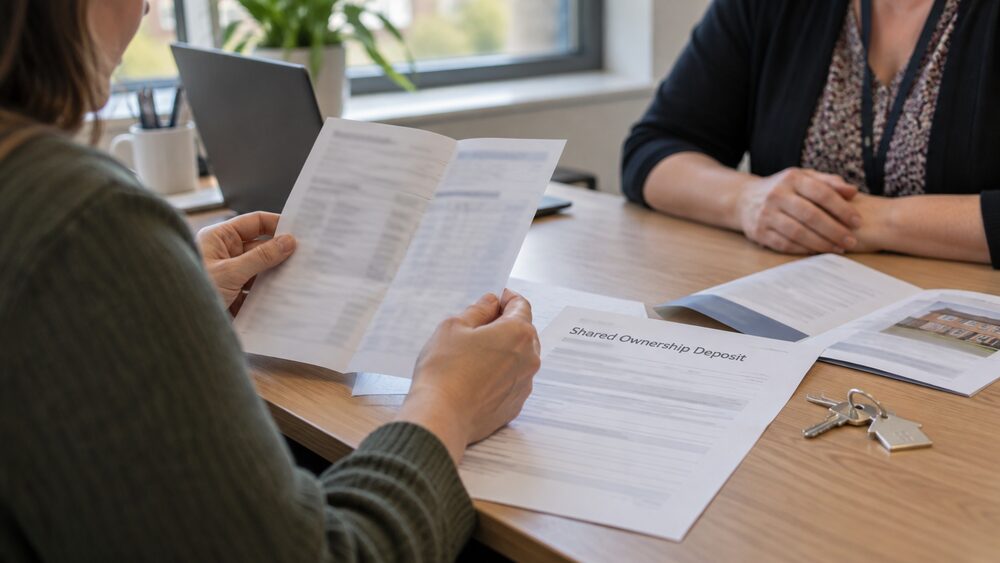
Shared ownership lets you buy part of a home and rent the rest, usually from a housing association. The deposit works differently from an ordinary purchase: it is a percentage of the share you are buying, not of the whole property. Official guidance for the Right to Shared Ownership scheme says you will need to pay a deposit, usually between 5% and 10% of the share you are buying1. Independent guidance puts the minimum at 5% of your share2.
Shared ownership lets you buy part of a home and rent the rest, usually from a housing association. The deposit works differently from an ordinary purchase: it is a percentage of the share you are buying, not of the whole property. Official guidance for the Right to Shared Ownership scheme says you will need to pay a deposit, usually between 5% and 10% of the share you are buying1. Independent guidance puts the minimum at 5% of your share2.
That is what makes the upfront cost smaller. If you buy a 60% share of a £150,000 property, the share is worth £90,000, and a 5% deposit on that is £4,5003. You are not finding a deposit on the full £150,000. The rest of the home stays with the landlord and you pay rent on it.
The same 5% to 10% range appears across the schemes: the Right to Shared Ownership in England, the Older Persons Shared Ownership scheme and the HOLD scheme for people with a long-term disability all use it1. What changes is the size of the share, which sets both the deposit and the rent.
Deposit: at least 5% of your share, not the whole price
The deposit is calculated on the share value rather than the full value of the property, which is why a shared ownership purchase needs a much smaller sum upfront than buying outright9. A lender will still want a mortgage to cover the rest of the share, and the deposit is what you put in yourself.
The range across the sources is consistent. Official guidance for the Right to Shared Ownership, the Older Persons Shared Ownership scheme and the HOLD scheme all give 5% to 10% of the share being bought1. Independent guidance from Which? and the National Housing Federation puts the minimum at 5% of your share2. Lenders advertise shared ownership mortgages from a 5% deposit11.
There is one unresolved disagreement in the documents. Independent guidance on shared ownership in England gives the minimum deposit as at least 5% of the share you are buying, while another independent source gives 10%2. The two figures are not reconciled, so treat 5% as the floor the sources agree on and check the current requirement with the scheme or provider.
In Scotland, the position is different in kind. The Open Market Shared Equity Scheme is a shared equity scheme rather than shared ownership, and official guidance notes that a lender may expect you to provide a modest deposit in order to obtain a shared equity mortgage12. The shared ownership scheme in Scotland offers a 25%, 50% or 75% share of a home for buyers on low incomes13.
How the size of your share changes the deposit and the rent
The share you buy sets two numbers at once: the deposit you need and the rent you pay. Buy a bigger share and the deposit rises, but the rent falls, because rent is charged only on the part you do not own.
In England, independent guidance describes shared ownership as buying a 25% to 75% share of a property and paying rent on the remaining share6. In Scotland, the shared ownership scheme offers a 25%, 50% or 75% share13. Official statistics on the Help to Buy scheme describe shared ownership as buying a share of between 10% and 75% and paying rent on the rest14.
Rent is capped. Official guidance for the Right to Shared Ownership says rent is limited to a maximum of 3% of the value of the equity stake you have not acquired7. A lender's product page gives the same ceiling, describing rental payments of up to 3% of the total remaining share15. In Wales, official guidance says the rent you pay is subject to an annual increase of no more than the 12 month average Consumer Prices Index plus 1%16. For shared owners of flats in England, official guidance caps the rent increase at 0.5% where the Retail Prices Index is zero or negative17.
The practical effect is that a smaller share means a smaller deposit and a larger rent, and a larger share means the reverse. The deposit is the entry cost; the rent is the ongoing one.
Monthly costs on top of the deposit: mortgage, rent and service charge
Once you have bought your share, the monthly outgoings are threefold. A lender's guidance sets them out plainly: each month you will usually pay your mortgage payment, your rent, and a service charge for things like cleaning shared areas8.
The mortgage covers the share you own. The rent covers the share you do not. The service charge covers the upkeep of shared parts of the building or estate, and it applies whether or not you have bought the whole home.
There is a risk attached to the rent element. Independent guidance on shared ownership leases notes that where a lender incurs costs in recovering money, any cost incurred by the lender in doing this will be added to the monies owed by the shared owner to its mortgage lender18. Falling behind on rent can therefore add to what you owe on the mortgage as well.
Help is available if costs become difficult. If you have a shared ownership tenancy, your Universal Credit housing costs payment can also include an amount for your rent19. Support for Mortgage Interest is available for shared ownership properties alongside help with rent20. Housing Benefit can also be paid during the period when a shared owner is paying rent on the unowned share21.
Upfront costs beyond the deposit: stamp duty, legal and survey fees
The deposit is not the only money you need at the start. Stamp duty is the largest variable, and shared ownership gives you a choice about when to pay it.
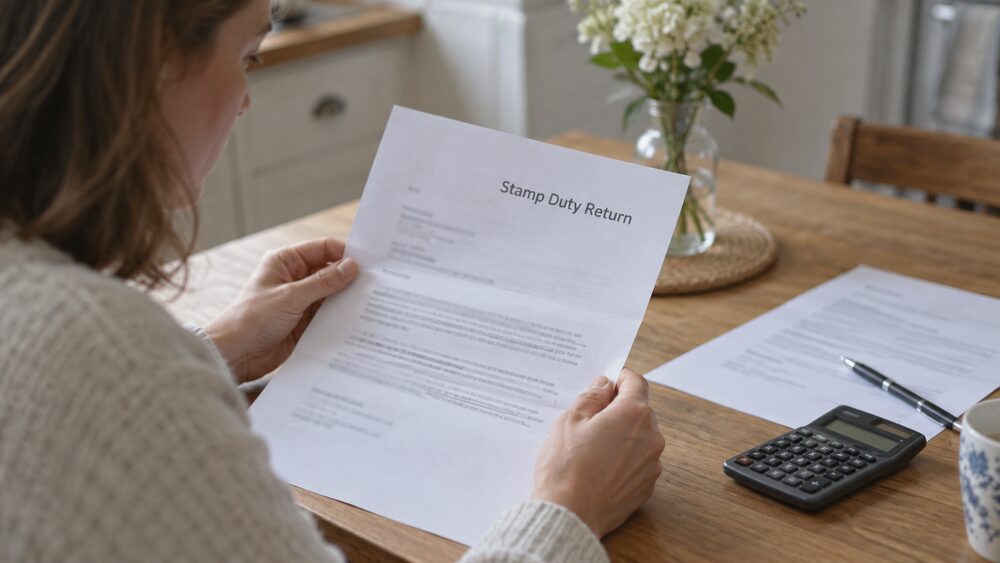
A lender's guidance sets out the two options: pay on the whole home, which costs more now but means you will not pay again if you buy further shares, or pay just on your share8. Another lender's guidance adds that each time you buy a share of the property you must pay stamp duty, either as a one-off lump sum based on the total market value of the property or in stages22.
There are also legal and survey costs. Guidance on the Co-Ownership process in Northern Ireland lists confirming borrowing with a lender, instructing a solicitor, paying for a survey if the lender requires one, plus application fees, property assessment fees and legal fees23. The same source notes that the property value used for the scheme includes the purchase price but does not include additional costs like stamp duty, legal fees or survey costs24.
In Scotland, official guidance for the Open Market Shared Equity scheme says you pay for your share of the home's price in the usual way, along with other costs like legal costs, registration fees and any stamp duty25. Official guidance on buying a home in Northern Ireland splits costs into one-off costs, like a deposit and Stamp Duty, and ongoing costs, like mortgage payments, rates and utilities26.
If you later buy more shares, the costs recur. Official guidance for the New Supply Shared Equity scheme in Scotland says that to buy a bigger share you have to pay all the valuation and legal costs as well as the administrative costs of the organisation handling your request27.
Who can buy through shared ownership
Shared ownership is aimed at people who want to buy a home but do not earn enough to purchase outright28. Each nation runs its own version, with its own eligibility rules.
In England, the Right to Shared Ownership scheme allows some tenants in England to buy a share of their rented home on shared ownership terms1. It is available to tenants living in social and affordable rent homes funded by the new affordable homes programme10. The income limit is £80,000 or less in annual gross household income outside London7. Independent guidance gives the same £80,000 figure outside London and £90,000 or less in London2.
In Scotland, the shared ownership scheme offers a 25%, 50% or 75% share of a home for buyers on low incomes13. The Open Market Shared Equity Scheme helps eligible buyers on low to moderate incomes to purchase a home where this is sustainable for them12.
In Northern Ireland, Co-Ownership offers a route to buy a share of a home, and Co-Own for Over 55s is designed for people aged 55 and over using savings or the equity from selling their current home to buy their share29.
There are exclusions. Independent guidance on the Home Owners' Support Fund states that you cannot join the Mortgage to Shared Equity scheme if you have bought a shared ownership or a shared equity house31.
Buying more of your home later: staircasing and what it costs
Buying more shares in your home is called staircasing. Each time you buy a further share, your rent falls, because there is less of the property left to pay rent on. Official guidance for the Right to Shared Ownership says you can buy more shares in the future and pay less rent on the rest of the property1. Independent guidance says that after becoming a shared owner you can buy more shares, usually increasing to up to 100%10.
The increments are getting smaller. The new national model for shared ownership lets new shared owners buy additional shares in 1% increments for up to 15 years, with heavily reduced fees32. Larger purchases are also possible: the minimum additional share purchase has been reduced from 10% to 5%32.
The cost depends on the value of the home at the time you staircase, not what you paid for it. Official guidance for the Right to Shared Ownership gives a worked example based on a full market value of £325,000 at the time of staircasing: £3,250 for 1%, £16,250 for 5%, £48,750 for 15%, and £81,250 for 25%7. The same guidance gives a second set of figures for the same percentages: £4,250 for 1%, £21,250 for 5%, £63,750 for 15%, and £106,250 for 25%7. The two sets of figures are not reconciled in the documents, so treat them as an illustration of how the cost scales rather than a fixed price.
There are fees on top. Official guidance for the New Supply Shared Equity scheme in Scotland says you have to pay all the valuation and legal costs as well as the administrative costs of the organisation handling your request27. In England, purchases of 5% or more require a valuation and an administration fee33.
Sources33 cited
- Right to Shared Ownership: how it works GOV.UK, 2026-09-26
- Shared ownership explained Which?, 2026-03-26
- Getting a mortgage for Co-Ownership Co-Ownership, 2026-09-26
- Older Persons Shared Ownership scheme GOV.UK, 2025-12-03
- Home Ownership for people with a Long-term Disability (HOLD) GOV.UK, 2025-12-03
- 95% mortgages Which?, 2026-04-02
- The Right to Shared Ownership: a guide for tenants GOV.UK, 2025-09
- Shared ownership mortgage guide Lloyds Bank, 2026-09-27
- What is shared ownership? HSBC, 2025-11-17
- Shared ownership National Housing Federation, 2026-09-26
- Shared ownership mortgage The Hanley, 2026-09-26
- Open Market Shared Equity scheme: buyer information Scottish Government, 2025-09-19
- Help to buy a home mygov.scot, 2026-06-24
- Evaluation of the Help to Buy scheme GOV.UK, 2026-09-16
- Shared ownership mortgages NatWest, 2026-09-25
- Shared ownership in Wales: buyers' guide Welsh Government, 2018-02
- Key information for shared owners of flats in England GOV.UK, 2015-12-15
- Can shared owners lose their home if they don't pay rent? National Housing Federation, 2026-09-26
- Can I get Universal Credit housing costs element? Turn2us, 2026-02-25
- Universal Credit payments for housing nidirect, 2026-09-01
- Housing Benefit Mental Health and Money Advice, 2025-07-21
- Help to Buy schemes in Wales Welsh Government, 2026
- Costs and responsibilities Co-Ownership, 2026-09-26
- Finding a property Co-Ownership, 2026-09-26
- Open Market Shared Equity scheme: how to apply mygov.scot, 2026-03-17
- Buying a home: step by step guide nidirect, 2025-08-22
- New Supply Shared Equity scheme: after buying mygov.scot, 2026-07-28
- How exactly do I pay for a house? first direct, 2026
- Homes only available through Co-Ownership Co-Ownership, 2026-09-26
- Starting the process Co-Ownership, 2026-09-26
- Help with your mortgage payments National Debtline, 2026-09-25
- New national model for shared ownership House of Commons Library, 2026-07-08
- Staircasing limits Leasehold Advisory Service, 2028-06-15









 MoneyHelperFree, impartial money and pensions guidance, set up by government
 Citizens AdviceFree advice on money, consumer and legal problems in England and Wales
 ShelterFree housing advice from a charity
 GOV.UKOfficial information on tax, benefits and government services
 Financial Ombudsman ServiceFree, independent help when a complaint about a firm is not put right