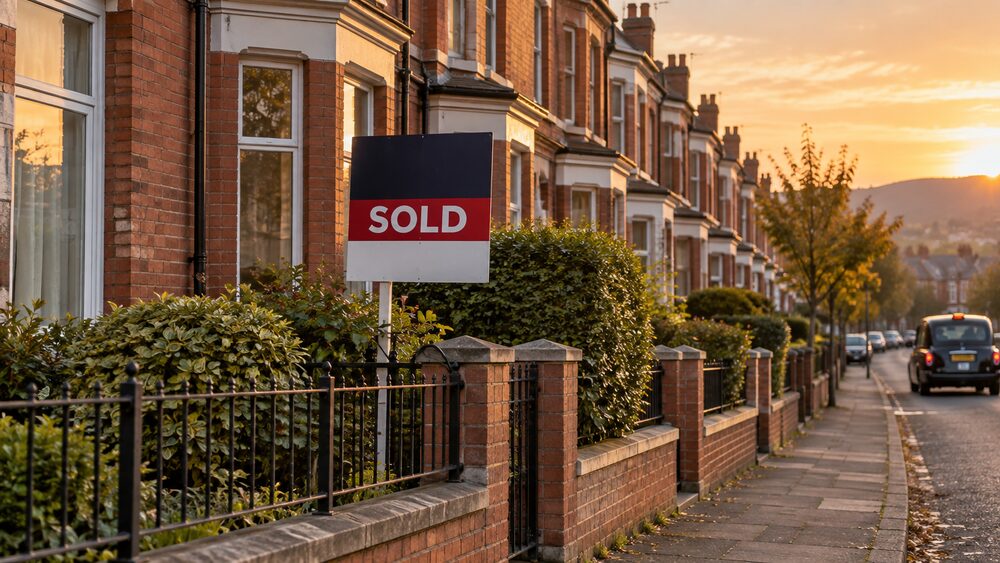
Buying a home in Northern Ireland follows the same broad legal process as England and Wales: you find a property, make an offer, have the legal work done, exchange contracts and complete. The official nidirect guidance puts the usual length of the process at around two to three months1, and the UK House Price Index statistics note that a purchase typically takes 6 to 8 weeks to reach completion2. The average house price in Northern Ireland was £202,000 in Quarter 2 (April to June) 2026, up 9.2% (£17,000) on a year earlier3, which is well below the UK average and is a large part of why stamp duty bills there are often small or nothing at all.
Two things make Northern Ireland distinct. First, the property tax is the same Stamp Duty Land Tax that applies in England, not the separate taxes Scotland and Wales run. Second, Northern Ireland has its own part-buy scheme, Co-Ownership, which helps people who cannot afford to buy a home outright4, alongside the House Sales Scheme for Housing Executive and housing association tenants4.
How buying a home in Northern Ireland works: two to three months from offer to completion
The nidirect step-by-step guide describes the process as taking around two to three months, with a deposit of at least five per cent of the house price usually paid to the seller1. Once the seller accepts your offer, they are responsible for drawing up the legal contract that transfers ownership, and your own solicitor or conveyancer checks the title, carries out the searches and reports on the property before you commit8. For comparison, the UK-wide guidance for England and Wales puts the average time to buy a home at about 5 months8, so Northern Ireland transactions have historically moved a little more briskly, though every purchase differs.
The steps in order are broadly these:
- Find a property and make an offer through the estate agent. Until contracts are exchanged, the arrangement is not legally binding in the way a Scottish offer can be.
- Instruct a solicitor or conveyancer to do the legal work, and apply for a mortgage. The lender will value the property.
- Pay the deposit, usually at least five per cent of the price1.
- Exchange contracts, which is the point at which both sides are committed.
- Complete: the money moves, you get the keys, and the SDLT return is due within 14 days of the effective date, usually the completion date7.
- Register your ownership. In Northern Ireland this is done with Land & Property Services rather than HM Land Registry, which covers England and Wales.
If you are a Housing Executive or housing association tenant, a separate route exists: the House Sales Scheme, Northern Ireland's version of Right to Buy. Tenants with a tenancy of less than five full years might still be able to buy if a partner or parent was previously the tenant10, and anyone receiving an offer under the scheme must decide whether to go ahead within six weeks10. The scheme is covered in detail on the page about the House Sales Scheme in Northern Ireland.
Stamp duty in Northern Ireland: nothing to pay on the first £125,000
Stamp duty in Northern Ireland is Stamp Duty Land Tax, the same tax that applies in England. HMRC's statistics confirm that SDLT is paid on property or land purchases in England and Northern Ireland11, and the nil rate starts at the same point: buyers pay 0% on the portion of the price up to £125,0005. Scotland and Wales each run their own transaction tax instead, with different bands, thresholds and deadlines, covered on the pages about Land and Buildings Transaction Tax and Land Transaction Tax.
The £125,000 allowance is the figure for most buyers of a main home. First-time buyers get a better deal: if the home costs under £300,000, they pay no stamp duty at all, and they pay a reduced rate on prices up to £500,0006. Because the average house price in Northern Ireland was £185,000 at the time that was reported6, and £202,000 in the most recent official figures3, the great majority of first-time buyers there pay nothing.
The rules changed on 1 April 2025, when the temporary thresholds that had applied before that date ended13. For home movers buying a property over £125,000, stamp duty costs rose by £2,5006. The full rates, reliefs and how the tax is worked out are on the Stamp Duty Land Tax page, and the first-time buyer rules are on the stamp duty first-time buyer relief page.
What stamp duty costs at different prices
Because the nil rate band is £125,000, the price of the property drives the bill. On a house bought at the average UK house price of £292,000 in England or Northern Ireland, the cost of stamp duty would be £4,6005. The same £292,000 purchase would cost a first-time buyer nothing, because it falls under the £300,000 first-time buyer threshold14.
Some worked examples at round prices, from figures published during the stamp duty holiday period, show how the bill scales:
Those figures date from the temporary holiday arrangements, when the tax-free threshold was £500,000, up from £125,000 for existing homeowners or £300,000 for first-time buyers15, so they illustrate the shape of the tax rather than today's exact bills. Under the current £125,000 allowance, a buyer of a typical Northern Ireland home pays far less: at the £202,000 average price3, only the portion above £125,000 is taxed.
Two practical points matter whatever the price. First, a return must be sent to HMRC within 14 days of the effective date of the transaction, usually completion, even if no tax is owed7. Your solicitor normally handles this and pays the tax out of the completion money. Second, if you have overpaid, for example because a relief applied that was not claimed at the time, you can apply for a refund16, and the guidance on sending a return explains how to file online or on paper17. The deadlines and penalties are covered on the page about the stamp duty deadline.
Co-Ownership: buying part of a home when buying outright is out of reach
Co-Ownership is Northern Ireland's shared ownership scheme. The official nidirect guidance describes it plainly: the Northern Ireland Co-ownership scheme can help people who cannot afford to buy a home outright4. You buy a share of a property with a mortgage, the scheme holds the remaining share, and you pay rent on the part you do not own. It is the Northern Ireland counterpart of the shared ownership schemes elsewhere in the UK, which let people buy between a 10% and 75% share and pay rent on the rest18, and the comparison page on Co-Ownership compared with English shared ownership sets out how the two differ.
The scheme is run alongside the other low-cost home ownership routes in Northern Ireland. The House Sales Scheme is offered by the social landlords, the Northern Ireland Housing Executive and registered housing associations4, and nidirect notes there is a different rent-to-buy style scheme in Northern Ireland from the one that operates elsewhere in the UK19. If you are weighing up all the options across the four nations, the page on first-time buyer schemes gathers them in one place.
Who tends to suit Co-Ownership: people whose income or savings cannot stretch to a full mortgage on a home at local prices, but who can afford a mortgage on a share plus the rent on the rest. Because the mortgage is only on your share, the deposit is worked out on that share too, which is what makes the route cheaper to start than buying outright. The page on whether Co-Ownership is only for first-time buyers covers who can apply, and the Co-Ownership deposit page covers the money you need up front.
Co-Ownership price limits, including £230,000 on new build homes
Co-Ownership applies property value limits: your purchase must fall within them to qualify. In September 2026 the scheme introduced a second property value limit of £230,000 for new build properties, alongside the existing £215,000 limit, to help more people buy a new build home. The maximum property limit for new builds rose to £230,000 at that point.
What this means in practice is that the scheme covers most of the Northern Ireland market. The average house price in Northern Ireland was £196,000 in Quarter 4 (October to December) 202520, £198,000 in Quarter 1 (January to March) 202620 and £202,000 in Quarter 2 202613, so a limit of £215,000, and £230,000 for new builds, sits above the typical price of a home there. A buyer looking at properties near the average has room within the limits; a buyer looking at the top of the local market may find the scheme closed to them.
For context, comparable limits elsewhere in the UK are set at similar levels relative to local prices: buyers of new build homes under £300,000 can apply for the equity loan in Wales4. The limits are reviewed from time to time, so check the current figures with the scheme before making an offer, since a purchase above the limit cannot proceed through Co-Ownership.
What Co-Ownership costs each month: mortgage plus rent
Each month a co-owner pays two housing costs: the mortgage on the share they own, and rent to the scheme on the share they do not. The rent is reviewed periodically and can rise, so it is worth budgeting for increases rather than assuming the starting figure lasts. The page on how Co-Ownership rent is calculated covers the method.
Private sector rents give a sense of the local market. Average monthly rent in Northern Ireland was £876 in March 2026, up 3.3% (£28) from a year earlier20. Over the longer term, official analysis of affordability found private-renting households in Northern Ireland spent 25.3% of their income on rent, £751 of rent against £2,974 of gross monthly income21.
The comparison that matters for a Co-Ownership buyer is against renting privately, since the scheme is aimed at people who would otherwise rent. Buying with a mortgage has historically cost less per week than renting privately in Northern Ireland, as the figures above show, but a co-owner also carries the responsibilities of an owner, set out below, which a private tenant does not. The Co-Own or a standard mortgage page compares the two routes side by side.
Buying more of your home: staircasing in 5% steps
Co-owners can increase their share over time, which is known as staircasing. The official nidirect guidance on equity sharing states: "You can increase your equity share in multiples of five per cent at any time, which is known as 'staircasing'."23 So the minimum step in Northern Ireland is 5% of the property's value, and you can staircase whenever you can afford to.
This aligns with the direction of travel elsewhere. The new national model for shared ownership reduced the minimum additional share purchase from 10% to 5%18, and Scottish schemes require at least a 5% increase each time18. The new model also lets new shared owners buy additional shares in 1% increments for up to 15 years, with heavily reduced fees18, though that applies to the English model rather than to Co-Ownership.
In practice, staircasing reduces the rent you pay, because rent is charged on the share you do not own. Each purchase requires a valuation of the property and legal work, so there are costs each time, and the pages on staircasing, the minimum share you can buy and staircasing fees cover these in detail.
Your responsibilities as a co-owner
Owning a share of a home means carrying the owner's responsibilities for the whole property, not just your share. The equivalent shared equity schemes elsewhere spell out what the buyer is responsible for: paying your mortgage, home contents insurance, building insurance, repairs and maintenance, council tax (or rates in Northern Ireland), heating, lighting and water bills, and fittings and furniture24. Co-Ownership co-owners carry the same kind of obligations: the home is theirs to maintain and insure, and the scheme does not act as a landlord who repairs things.
This is the main practical difference from renting. A tenant calls the landlord when the boiler fails; a co-owner pays for it. It is also why buildings insurance and contents insurance both matter: the building cover protects the structure that you and the scheme jointly own, and the contents cover protects your belongings. The page on when buildings insurance is needed explains the timing.
Co-ownership of a different kind also arises when people buy together. You can own a home with up to 3 other people8, and if you are buying with a partner, friend or family member, the pages on buying a home jointly and joint tenants or tenants in common explain how the legal ownership can be structured.
Selling or leaving a Co-Ownership home
When you sell, you sell your share, and the scheme deals with the rest. The sale proceeds are split according to the shares owned, so if house prices have risen, your share has risen in value; if they have fallen, it has fallen. The process for selling is covered on the page about selling a shared ownership home, which sets out how the valuation and the split work.
Circumstances can also force a change of ownership. If a relationship ends, MoneyHelper sets out the options for the family home: sell the home and both partners move out; one partner buys the other out; keep the home without changing ownership; or transfer part of the property's value from one partner to the other26. A co-owner going through divorce or dissolution needs to agree not only the split of their share but what happens to the scheme's share, and to tell the scheme what is happening.
If money gets tight, help may exist. In Northern Ireland, if you own your own home and qualify for Housing Benefit, you can claim it to help with the rates27, and if you live with a partner, only one of you can claim for you both27. The page on Housing Benefit and Universal Credit for shared owners covers what support co-owners can get.
Getting a mortgage and help with problems
You arrange your own mortgage for a Co-Ownership purchase, as you would for any purchase, and the general rules on deposits and lending apply: nidirect's guidance puts the usual deposit at at least five per cent of the house price1. The scheme does not lend you the money for your share; a mortgage lender does. The mortgages section explains how mortgages work, and the page on how much deposit you need covers the deposit side.
Some routes that existed in the past are closed. The Help to Buy mortgage guarantee scheme in Northern Ireland closed to new loans on 31 December 201628, so it is not an option; the page on the Mortgage Guarantee Scheme covers what replaced it and what it means for buyers with small deposits. For older homeowners, the Northern Ireland Pension Centre can help you apply for help with housing costs at the same time as an application for Pension Credit29.
If the purchase goes wrong, there are places to go. Problems with a mortgage lender, adviser or insurer can be taken to the Financial Ombudsman Service after the firm's own complaints process, and the page on complaining when buying a home goes wrong sets out the routes. For free, impartial help with money and housing questions, MoneyHelper and Citizens Advice both cover Northern Ireland, and nidirect's own guides are the official source for the local process1.
Frequently asked questions
Is stamp duty the same in Northern Ireland as in England? Yes. Stamp Duty Land Tax applies in both England and Northern Ireland, with the same rates and thresholds, including the £125,000 allowance below which most buyers pay nothing5. Scotland and Wales are different: they run their own property taxes, called Land and Buildings Transaction Tax and Land Transaction Tax, with their own bands and deadlines.
Do first-time buyers pay stamp duty in Northern Ireland? First-time buyers pay no stamp duty on a home costing under £300,000, and a reduced rate on prices up to £500,0006. Because the average house price in Northern Ireland has been well below £300,0003, most first-time buyers there pay nothing. A return may still be needed even when no tax is owed7.
When does a Stamp Duty Land Tax return have to be sent? The return must reach HMRC within 14 days of the effective date of the transaction, which is usually the completion date7. This applies even if you do not owe any tax. Your solicitor or conveyancer normally files it for you and adds the tax to your bill, but the legal deadline is the same either way17.
How much deposit do I need for a Co-Ownership home? The general guidance for buying puts the usual deposit at at least five per cent of the house price1. For shared ownership style schemes, the deposit is usually worked out on the share you are buying rather than the whole property: the HOLD scheme elsewhere, for example, asks for a deposit of usually between 5% and 10% of the share30. Because you buy a share, the cash needed up front is smaller than buying outright.
Does Co-Ownership recommend mortgage lenders? No. The scheme helps people who cannot afford to buy a home outright by holding a share of the property4; it does not recommend particular lenders. You arrange your own mortgage with any lender willing to lend on a Co-Ownership purchase, and independent mortgage advice is available if you want help understanding the options.
Do I need to attend the Co-Ownership survey? The scheme arranges a valuation of the property as part of the purchase process, and you are normally expected to be available so the valuer can access the home. If you cannot attend, arrange access through the seller or estate agent, since a missed survey can delay the purchase. You may also want your own survey, and the page on HomeBuyer Report or Building Survey explains the options.
How often does Co-Ownership rent go up? The rent on the share you do not own is reviewed periodically and can go up as well as down; the review method is set out in your occupancy agreement. For context, private rents in Northern Ireland rose by between about 1.6% and 3.3% a year across the figures published in 202620, down from 5.2% a year earlier20.
Can I make a complaint about Co-Ownership? Yes. Start by complaining directly to Co-Ownership through its own complaints procedure. If you are not satisfied with the outcome, you can take the complaint further through the routes for housing complaints, and if the problem involves a mortgage or insurance product rather than the scheme itself, the Financial Ombudsman Service may be able to look at it. The page on complaining when buying a home goes wrong sets out the steps.
Sources31 cited
- Buying a home: a step by step guide nidirect, 2025-08-22
- UK House Price Index for February 2026 HM Government, 2026-04-22
- Private rent and house prices, UK: latest Office for National Statistics, 2026
- Low cost home ownership schemes nidirect, 2026-02-18
- Cost of moving calculator HomeOwners Alliance, 2026-06-11
- The most unexpected moving costs Which?, 2025-11-02
- Check if you need to send a Stamp Duty Land Tax return GOV.UK, 2026-06-26
- Buying a home GOV.UK, 2026-09-26
- Joint tenants vs tenants in common Which?, 2026-06-08
- House Sales Scheme nidirect, 2026-02-18
- Quarterly Stamp Duty Land Tax (SDLT) statistics: commentary HM Revenue and Customs, 2025-12-19
- Stamp Duty Land Tax (residential) rates Scottish Parliament Research, 2025-26
- Private rent and house prices, UK: August 2026 Office for National Statistics, 2026
- Cost of buying a house calculator HomeOwners Alliance, 2026-06-11
- Stamp duty holiday changes: how you can still make a saving when buying a home Which?, 2021-07-01
- Apply for a refund of Stamp Duty Land Tax GOV.UK, 2026-06-26
- How to send a Stamp Duty Land Tax return GOV.UK, 2026-06-26
- Research briefing on shared ownership House of Commons Library, 2026-07-08
- Rent to Buy GOV.UK, 2026-09-26
- Private rent and house prices, UK: March 2026 Office for National Statistics, 2026-03
- Private rental affordability, England, Wales and Northern Ireland 2024 Office for National Statistics, 2024
- Policy briefing on welfare reform mitigations Law Centre NI
- Equity sharing nidirect, 2026-02-25
- Open Market Shared Equity scheme: how it works mygov.scot, 2026-03-17
- New Supply Shared Equity scheme: how it works mygov.scot, 2026-07-28
- Dividing the family home and mortgage during divorce or dissolution MoneyHelper, 2026-09-25
- Can I get Housing Benefit? (Northern Ireland) Turn2us, 2026-09-26
- Help to Buy Wales shared equity loan scheme: quality report Welsh Government, 2024-06-04
- Applying for Pension Credit nidirect, 2026-07-06
- Home Ownership for people with a Long-term Disability (HOLD) GOV.UK, 2025-12-03
- Private rent and house prices, UK: September 2026 Office for National Statistics, 2026-06



 MoneyHelperFree, impartial money and pensions guidance, set up by government
 Citizens AdviceFree advice on money, consumer and legal problems in England and Wales
 ShelterFree housing advice from a charity
 GOV.UKOfficial information on tax, benefits and government services
 Financial Ombudsman ServiceFree, independent help when a complaint about a firm is not put right