
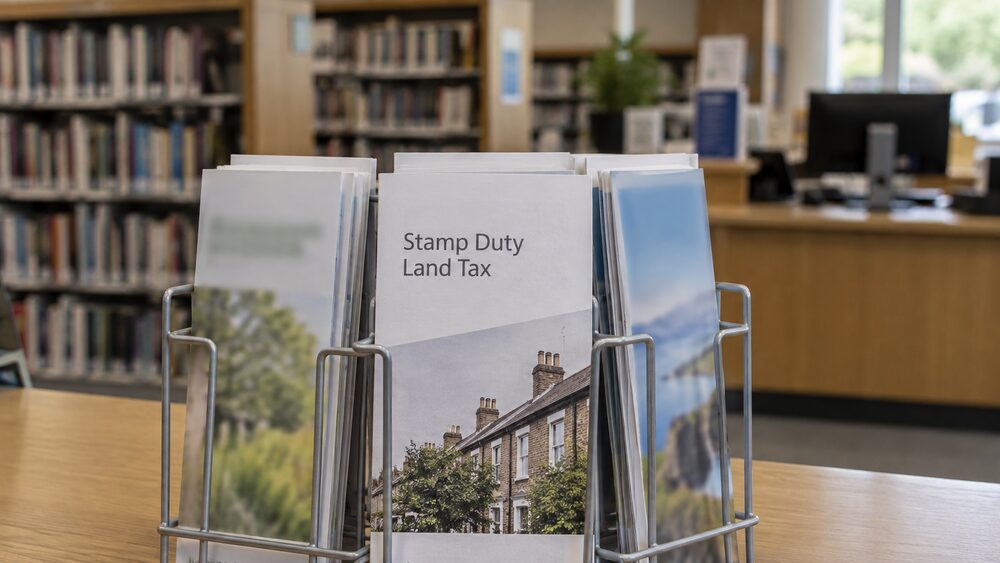
If you are buying your first home in England or Northern Ireland, Stamp Duty Land Tax (SDLT) first-time buyer relief removes the tax on the first £300,000 of the price. Where the home costs between £300,000 and £500,000, you pay 5% only on the portion above £300,000, and nothing below it1. The relief was announced at Autumn Budget 2017 and took effect on 22 November 20172.
The relief has a hard price cap: it applies only where the total purchase price does not exceed £500,000. Above that figure it is lost altogether, and standard SDLT rates apply to the whole price, not just the excess1. At the £500,000 cap itself, the relief is worth up to £5,0001.
This relief applies in England and Northern Ireland only. Scotland and Wales run their own property taxes, with their own first-time buyer rules: Scotland has a relief worth up to £600, and Wales has none at all1.
First-time buyer relief: no Stamp Duty on the first £300,000
Stamp Duty is charged when you buy a home in England or Northern Ireland, but first-time buyers get a better set of rates than other home buyers. The relief works by exempting the first £300,000 of the purchase price from tax entirely. If the price is between £300,000 and £500,000, the amount above £300,000 is taxed at 5%, and nothing else is1. A first-time buyer paying £300,000 or less pays no SDLT at all2.
The relief was introduced by the Chancellor at Autumn Budget 2017, when Stamp Duty was described as abolished for first-time purchases up to £300,0003. It was not the first attempt at this kind of help: a temporary relief for first-time buyers had existed much earlier, introduced on 24 March 2010, which raised the threshold at which first-time buyers paid SDLT from £125,001 to £250,001 for purchases up to £250,0004. That earlier relief was temporary; the current one is a permanent part of the SDLT system, though its thresholds have been temporarily enhanced in the past, as covered below.
The relief sits within the wider SDLT framework, which is explained in the guide to Stamp Duty Land Tax in England and Northern Ireland, alongside the other reliefs and exemptions that can reduce a bill. For most first-time buyers, though, this relief is the single largest saving available on the tax side of a purchase, and it is claimed through the SDLT return rather than applied automatically.
Who counts as a first-time buyer
The definition is set in legislation, and it is stricter than many people assume. A first-time buyer is an individual who has never previously been a purchaser in a land transaction whose main subject-matter was a major interest in a dwelling, and who has never previously acquired an equivalent interest in a dwelling anywhere outside England, Wales and Northern Ireland5. In plain terms: you must never have owned a home, anywhere in the world, not just in the UK.
The scope is broad. It is not limited to homes you bought. Guidance describing the equivalent test in Scotland spells this out: a first-time buyer is a person who does not own and has not previously owned a dwelling in Scotland, the rest of the UK or the rest of the world, including gifted or inherited dwellings and dwellings held in trust where the individual is or was a beneficiary under a bare trust or a settlement trust with a relevant interest6. Property acquired by gift, inheritance or through a trust can therefore end your first-time buyer status, even if you never paid a penny for it or never lived in it.
There is also an intention test. The purchaser must be a first-time buyer who intends to occupy the purchased dwelling as their only or main residence5. Buying a property to let out does not qualify, however recently you last owned a home.
Two points catch people out in practice. First, owning a share counts as owning property: a Financial Ombudsman Service case study notes that buying an initial share in a property gives the buyer a legal interest in it, meaning they would not in future meet the definition of a first-time buyer7. Second, the same statutory definition is borrowed by other schemes, so your status matters beyond this one tax: the First Homes scheme, for example, requires purchasers to be first-time buyers as defined in Schedule 6ZA of the Finance Act 20038. The narrow guide to who counts as a first-time buyer for property tax covers the definition in more depth.
The £500,000 limit: when the relief stops applying
The relief applies only where the total purchase price does not exceed £500,0001. This is a cliff edge, not a taper: at £500,000 you get the full relief, but at £500,001 it disappears entirely and standard SDLT rates apply to the whole price. Independent guidance makes the same point from the buyer's side: anyone searching for a home over £500,000 will not qualify for the lower thresholds given to first-time buyers9.
The cap has not always been £500,000. In the 2022 to 2023 period the UK Government temporarily enhanced the relief, raising the nil-rate band from £300,000 to £425,000 and the price cap from £500,000 to £625,00010. That enhancement expired on 31 March 2025: as legislated in the SDLT (Temporary Relief) Act 2023, the thresholds reverted to their pre-September 2022 levels from 1 April 2025, restoring the £300,000 nil-rate band and the £500,000 purchase price limit12. Anyone budgeting from older articles or calculators needs to check which set of thresholds they are looking at.
The cliff edge can matter when negotiating. A home priced at £500,000 attracts 5% on the £200,000 above the nil band, while the same home at £510,000 attracts standard rates on the entire price. One published example puts a first-time buyer's bill on a £510,000 home at £15,500, more than double the bill at £500,000, though another published figure for the same example is £7,5009. Either way, the jump at the cap is large, and it is worth knowing where a proposed price sits relative to it.
How much you save: worked examples up to £500,000
How much the relief saves depends entirely on the price. The legislation sets the first-time buyer rates as 0% on so much of the consideration as does not exceed £300,000, with 5% on the remainder up to the £500,000 cap5. Some examples show what this means in practice:
| Purchase price | SDLT as a first-time buyer | How it is worked out |
|---|---|---|
| £292,000 | £0 | Entire price within the £300,000 nil band13 |
| £300,000 | £0 | Nothing exceeds the nil band2 |
| £350,000 | 5% on the £50,000 above £300,000 | Reduced rate band1 |
| £500,000 | 5% on the £200,000 above £300,000 | Maximum saving, up to £5,0001 |
| Over £500,000 | Standard rates on the whole price | Relief lost completely1 |
Independent cost calculators illustrate the same point: a first-time buyer purchasing a house of £292,000 would pay zero stamp duty, where the same purchase without the relief would be taxed under the standard bands13. The saving is largest, at up to £5,000, for homes at the £500,000 cap1.
Remember that SDLT is only one of the costs of buying. The full picture, including legal fees, surveys and removals, is set out in the guide to the costs of buying a house.
Buying jointly: every buyer must qualify
Where a home is bought by more than one person, the relief is available only if each buyer meets all the relevant criteria15. That means every purchaser must be a first-time buyer under the statutory definition and must intend to occupy the dwelling as their only or main residence5. If one buyer has previously owned a home, anywhere in the world, the relief is lost for the whole purchase, not just for that person's share.
This is a common trap for couples. A couple in which one partner owned a flat years ago and the other has never owned property cannot claim the relief on a joint purchase, because the previously-owning partner fails the definition. The same rule applies in Scotland: Revenue Scotland's guidance states that where there is more than one buyer, the relief is available only if each buyer meets all the relevant criteria16.
It is worth knowing that some government purchase schemes use a different test. The First Home Fund in Scotland required only one of the purchasers to be a first-time buyer on a joint purchase17, and the First Homes Fund guidance similarly provides that where you are buying with someone else, at least one of you must be a first-time buyer, with any property currently owned by one applicant sold before purchase completes18. Those are scheme rules, not tax rules: they do not carry over to the SDLT or LBTT reliefs, where the every-buyer test applies. The page on buying a home with someone else covers the other financial implications of joint purchases.
Shared ownership and first-time buyer relief
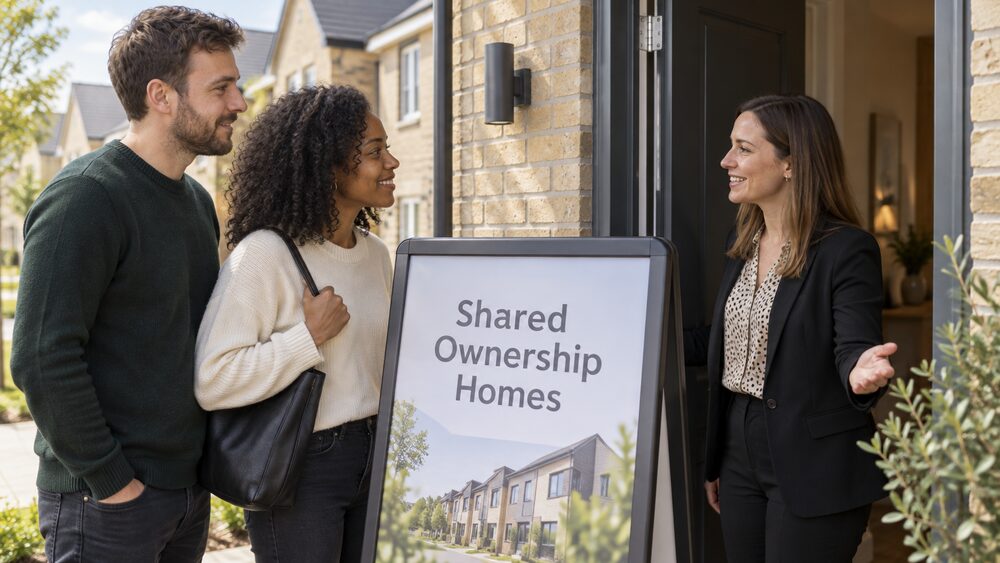
Shared ownership lets first-time buyers and people who do not currently own a home buy a share in a property and pay rent on the rest19. When the SDLT first-time buyer relief was introduced in 2017 it did not cover these purchases, but it was extended to purchasers of qualifying shared ownership property with effect from 29 October 201820.
The extension works on the market value of the whole property, not just the share being bought. First-time buyers of shared ownership properties can claim the relief where the market value of the property is £500,000 or less21. A buyer can choose to make a claim on the market value of the whole property, and where that election is made for a shared ownership lease, no tax is chargeable on so much of the chargeable consideration for the grant as consists of rent22. In other words, the rent you pay under the lease does not attract SDLT when the relief claim is made in this way21.
Guidance confirms that the special rules and rates for first-time buyers apply to first-time buyers purchasing through a shared ownership scheme23. Two things still need care. First, the every-buyer rule applies here too: on a joint purchase, each buyer must qualify. Second, buying that initial share gives you a legal interest in the property, which means you would not meet the definition of a first-time buyer in future7, so a later claim on another purchase would not be possible. The mechanics of paying SDLT in stages on a shared ownership purchase, and what happens when you staircase to a bigger share, are covered in the guide to shared ownership in England.
How to claim the relief on your SDLT return
The relief is not applied automatically: it must be claimed in an SDLT return2. In practice your conveyancer usually completes the return as part of the purchase, but the responsibility for the claim sits with the buyer, so it is worth checking that the return is completed correctly before it is sent.
The mechanics are simple. To claim First Time Buyers' Relief, relief code 32 is entered in the SDLT return, in box 921. The claim is made alongside the other conditions in the legislation: the main subject-matter of the transaction must consist of a major interest in a single dwelling, and the purchaser must be a first-time buyer who intends to occupy it as their only or main residence5.
If the relief was not claimed on the original return, the position can be corrected by amending that return. Revenue Scotland states the equivalent position for the Scottish tax plainly: the relief must be claimed in the first return made in relation to the transaction or in an amendment to that return16. Once an amended return establishes the claim, any tax overpaid is repaid. If you discover the error long after completion, or your conveyancer got the return wrong, the narrow guide on what to do if your conveyancer fails to pay property tax explains the steps, and the page on what happens if you don't pay Stamp Duty on time covers the position from the other direction.
One further rule protects the Exchequer rather than the buyer: if, after the relief is claimed, the transaction becomes linked to a later transaction so that it no longer qualifies, tax or additional tax becomes chargeable on the first transaction as if the claim had not been made15. Linked transactions, where one purchase forms part of a single scheme or series with another, are explained in the main SDLT guide.
Scotland and Wales: different taxes, different rules
SDLT was devolved to Scotland on 1 April 2015, and the first-time buyer relief does not apply there2. Scotland and Wales now run their own land taxes, and the first-time buyer position differs sharply between them.
Scotland: Land and Buildings Transaction Tax (LBTT). Scotland has its own first-time buyer relief, which came into effect on 30 June 201824. It works differently from the English relief: rather than a 0% band of £300,000, it raises the zero-tax threshold for first-time buyers from the standard £145,000 to £175,00024. Because it lifts the nil-rate band rather than creating a large 0% band, the relief is worth a maximum of £600 per transaction25. The Scottish Government estimated that the increased threshold meant around 80% of first-time buyers would pay no LBTT at all, with other first-time buyers seeing savings of £600, and that the relief would help 12,000 first-time buyers in Scotland every year26. By the end of September 2024, 80,740 first-time buyers had benefited since its introduction27.
Wales: Land Transaction Tax (LTT). Wales has no first-time buyer relief at all. The Welsh Government's own material confirms that first-time buyer relief is not available under Land Transaction Tax28, and official statistics note that the relief applied for the predecessor tax but not for Land Transaction Tax29. First-time buyers in Wales pay LTT under the same rules as everyone else, though schemes such as Help to Buy Wales support them in other ways.
The practical deadlines also differ. In Scotland and Wales, buyers have 30 days to make the payment for the equivalent land taxes9. The full rules for each nation are covered in the guides to Land and Buildings Transaction Tax in Scotland, Land Transaction Tax in Wales, and buying a home in Scotland, Wales or Northern Ireland.
Where first-time buyer relief does not apply
Several conditions can remove the relief even for a genuine first purchase. The main exclusions are:
- Price over £500,000. The relief is lost completely, and standard rates apply to the whole price1.
- Not entirely residential. The relief only applies to purchases of entirely residential property26.
- Buy-to-let and second homes. The buyer must intend to occupy the dwelling as their only or main residence5, and the relief does not apply to transactions where the higher rates for additional properties apply. In Scotland, first-time buyer relief is not available where the Additional Dwelling Supplement is payable16. The higher rates are covered in the guide to Stamp Duty on second homes and additional properties.
- Multiple dwellings. A buyer who qualifies for Multiple Dwellings Relief does not qualify for first-time buyer relief, and would be subject to the Additional Dwelling Supplement in Scotland26. See Multiple Dwellings Relief.
- Linked transactions. The transaction must not be a linked transaction, and if it becomes one later, the relief is withdrawn and tax is charged as if the claim had not been made15.
- Wales. No first-time buyer relief exists under Land Transaction Tax28.
The intention test deserves emphasis. A first-time buyer purchasing a small flat to live in while keeping options open to let it out later should be aware that the relief depends on the intention at the time of the transaction to occupy the dwelling as the only or main residence5. If the facts at completion do not match the claim, the tax position can be reopened.
What the evidence says about the relief
The relief costs the Exchequer money, and the official evaluations ask whether it actually gets more people onto the property ladder. The findings are sobering. HMRC's evaluation of the 2017 relief analysed its impact over the year from November 2017 to November 201830. The Scottish Government's independent review of LBTT notes that an earlier SDLT first-time buyer relief increased first-time buyer transactions by only 0.2%, with the cost to the Exchequer estimated at £160,000 for each additional first-time buyer transaction26.
Scotland's own relief shows a similar pattern. The review's analysis found no clear evidence that the introduction of the first-time buyer relief under LBTT had a significant effect on first-time buyer transactions, with increases reflecting a continuation of pre-existing upward trends1. The zero-tax threshold of £175,000 has remained unchanged since the relief was introduced in 20181.
None of this changes a buyer's entitlement: if you qualify, you claim the relief and keep the saving. But the evidence suggests the relief mostly helps people who would have bought anyway, rather than creating new homeowners. The relief is well used: in Scotland, First-Time Buyer Relief accounted for 91% of returns received in which some LBTT revenue was forgone to relief in 2021/2231. In Scotland, most respondents to the review considered the £175,000 threshold outdated given rising house prices, and the review recommended examining the fiscal implications of increasing the threshold and setting it on a regional basis32. For England and Northern Ireland, any change to the £300,000 band or the £500,000 cap would be a matter for the UK Government, and the current thresholds apply as described above.
Sources32 cited
- Review of Land and Buildings Transaction Tax, page 7 Scottish Government, 2026-03-25
- Stamp Duty Land Tax relief for first time buyers HM Revenue and Customs, 2017-11-22
- Stamp Duty Land Tax relief for first-time buyers: Autumn Budget 2017 brief HM Treasury, 2017-11-22
- Evaluating the impact of Stamp Duty Land Tax first time buyer's relief HM Revenue and Customs, 2011-11-28
- Finance Act 2003, Schedule 6ZA legislation.gov.uk, 2026
- First-time buyer relief worked examples Revenue Scotland, 2025-11-19
- Customer loses bonus when Lifetime ISA is cashed in Financial Ombudsman Service, 2026-09-26
- First Homes research briefing CBP-10740 House of Commons Library, 2026-07-08
- The most unexpected moving costs Which?, 2025-11-02
- Stamp Duty Land Tax (Temporary Relief) Bill publications UK Parliament, 2022-09-23
- Stamp Duty research briefing CBP-9698 House of Commons Library, 2026-07-08
- Quarterly Stamp Duty Land Tax statistics commentary HM Revenue and Customs, 2025-04-01
- Cost of buying a house calculator HomeOwners Alliance, 2026-06-11
- Cost of moving calculator HomeOwners Alliance, 2026-06-11
- Finance Act 2003, Schedule 6ZA as at 2018-03-15 legislation.gov.uk, 2018-03-15
- LBTT3048: First-time buyer relief Revenue Scotland, 2025-11-19
- First Home Fund evaluation Scottish Government, 2021-02-24
- First Homes Fund: before you apply mygov.scot, 2026-08-31
- Shared ownership guidance UK Parliament deposited paper, 2025
- Extension of Stamp Duty Land Tax First-time Buyers' Relief HM Revenue and Customs, 2018-10-29
- Stamp Duty Land Tax relief for land or property transactions HM Revenue and Customs, 2014-05-06
- Finance Act 2019 legislation.gov.uk, 2018-10-29
- Stamp Duty Land Tax temporary reduced rates HM Revenue and Customs, 2021-06-08
- LBTT updates Revenue Scotland, 2026-09-26
- Annual Summary of Trends in the Devolved Taxes 2023-24 Revenue Scotland, 2024-10
- Review of Land and Buildings Transaction Tax: independent external policy analysis 2025-26 Scottish Government, 2026-03
- Scottish Budget 2025 to 2026 Scottish Government, 2024
- Land Transaction Tax differences from Stamp Duty Land Tax Welsh Government, 2018-04-26
- Land Transaction Tax statistics StatsWales, 2025-09
- Evaluating the impact of the 2017 Stamp Duty Land Tax First Time Buyers' Relief HM Revenue and Customs, 2023-05-31
- Annual summary of trends in the devolved taxes 2021-22: LBTT Revenue Scotland, 2021
- Review of Land and Buildings Transaction Tax Scottish Government, 2026-03-25

 MoneyHelperFree, impartial money and pensions guidance, set up by government
 Citizens AdviceFree advice on money, consumer and legal problems in England and Wales
 ShelterFree housing advice from a charity
 GOV.UKOfficial information on tax, benefits and government services
 Financial Ombudsman ServiceFree, independent help when a complaint about a firm is not put right