
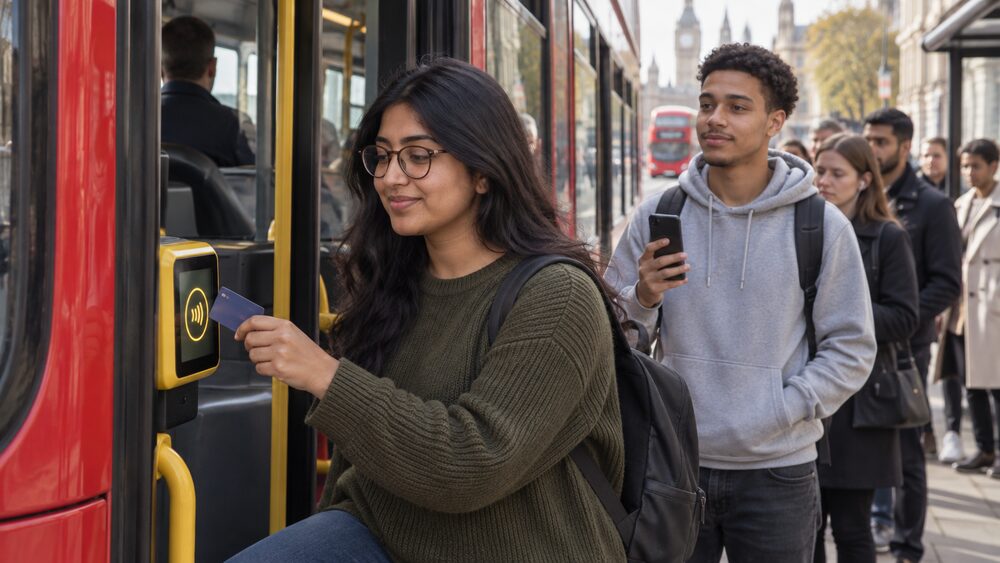
The contactless limit in the UK is £100 per payment. Tap your debit or credit card on a reader and the payment goes through without a PIN, as long as the transaction is £100 or less and the shop accepts contactless. Above that figure, the terminal will ask for your PIN instead, or you can pay with your phone or watch, which is not bound by the same cap1.
The contactless limit in the UK is £100 per payment. Tap your debit or credit card on a reader and the payment goes through without a PIN, as long as the transaction is £100 or less and the shop accepts contactless. Above that figure, the terminal will ask for your PIN instead, or you can pay with your phone or watch, which is not bound by the same cap1.
That £100 figure is the one most people are looking for, and it applies across the major banks and building societies. Barclays, HSBC, Nationwide, Lloyds, RBS, first direct, TSB, AIB in Northern Ireland and Zempler all state a £100 limit per contactless transaction on their cards3. The limit was raised to £100 on 1 April 2020, following consultation between the retail sector and the government2.
What catches people out is not the headline figure but the exceptions: a shop's older card machine, a bank that lets you set your own lower limit, a phone payment that behaves differently, or a trip abroad where the local limit is not £100 at all.
The contactless limit: £100 per payment
The £100 ceiling is a per-transaction rule, not a daily or weekly budget. Each time you tap, the payment must be £100 or less to go through without authentication. The Consumer Council describes contactless payments as allowing "fast and secure payments up to £100 just by touching your card to the reader"1. Santander states plainly that contactless card payments have a £100 limit per transaction12, and the same figure appears across the high street banks3.
The limit is a maximum, not a target. Nothing stops a shop setting a lower acceptance threshold, and nothing stops your bank applying its own rules on top. What the £100 figure does is set the point at which the terminal must switch to Chip and PIN for a card payment. UK Finance explains the logic: "If the value is above the limit, the payment will default to a Chip & PIN payment for card, or, if available, payment via mobile phone"2.
The rationale given when the limit was raised was a balance of competing pressures. UK Finance said the change was "designed to balance security, convenience and consumer demand"2. That framing matters for understanding why the limit exists at all: it is a fraud-control measure as much as a convenience one, and it is set centrally rather than by each bank.
Why you are sometimes asked for your PIN
Being asked for a PIN on a contactless card is normal and does not mean anything has gone wrong. UK Finance states that "for extra security you may occasionally be asked to enter your PIN"2. The terminal, not the shop assistant, decides when.
There are two separate triggers. The first is value: any payment above £100 defaults to Chip and PIN2. The second is a periodic security check, which banks apply at their own discretion. Nationwide tells customers they can make as many contactless payments in a day as they like, "but sometimes you'll need to use Chip and PIN to verify"5.
A rule that once forced a PIN after a set number of taps has been relaxed. The requirement to ask for a PIN after £300 of cumulative contactless spending, or five consecutive contactless payments, is no longer mandatory for banks13. That change is why some people now tap many more times in a row without being challenged, and why the experience varies between banks.
Setting your own lower limit
Some banks let you reduce the contactless limit, or switch contactless off entirely, from their app. Barclays debit card holders can select "Contactless limit" and set it to anywhere between £5 and £10015. Lloyds says you can reduce your contactless limit to be less than £100, and that if you do not want a £100 limit you can change it using its app6.
The option is not universal, and it differs between debit and credit cards at the same bank. Nationwide states: "You can't turn contactless on or off, or change the contactless limit, for our credit cards. This can only be done with debit cards and digital wallet payments"17. So a customer wanting tighter control may find the setting available on one card and not another.
At the other end, some banks and building societies offer to remove the £100 maximum altogether and allow unlimited contactless spending1. Whether that is available, and on which cards, is a question for your own provider.
| What you want to change | Where it is usually done | What to check |
|---|---|---|
| Lower the £100 limit | Your bank's app, where offered | Barclays allows £5 to £10015; Lloyds allows a reduction below £1006 |
| Switch contactless off | Your bank's app or by request | Not available on Nationwide credit cards17 |
| Remove the limit entirely | Your bank, where offered | Some banks and building societies offer unlimited contactless spending1 |
Phone and watch payments: Apple Pay and Google Pay
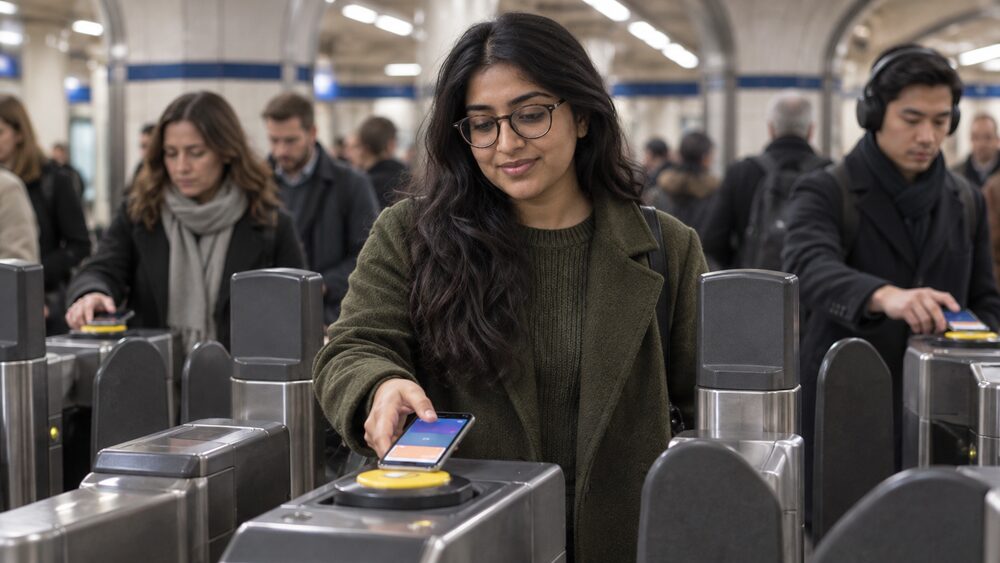
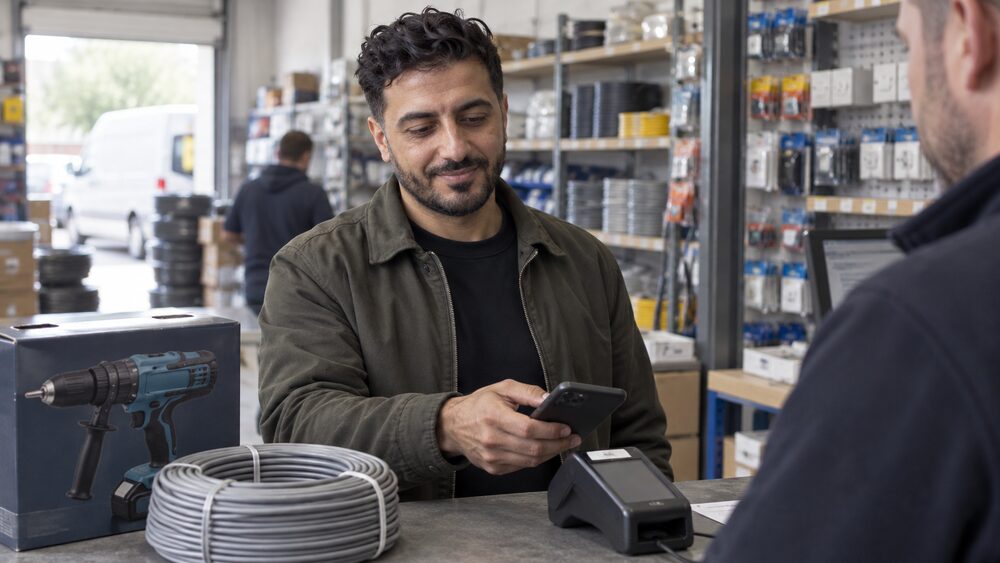
Paying with a phone or watch is not the same as tapping a plastic card, and the £100 limit does not apply in the same way. Nationwide tells customers there is "no limit to how much you can pay in one transaction" with Apple Pay, Google Pay and Samsung Pay, though some retailers set their own limits for mobile device payments5. Monzo states there is no limit on Google Pay transactions, but that some merchants apply the contactless limit and will only accept payments up to it18.
The reason is authentication. A phone or watch payment is verified by your face, fingerprint or passcode before it is sent, so the bank treats it as a stronger check than a bare tap. HSBC puts it as saying goodbye to the £100 contactless limit with Apple Pay19, and Ulster Bank and RBS describe making secure contactless payments over the contactless limit on your own Apple device, with retailer limits possibly applying20.
The practical consequence is that a large purchase which would need a PIN on a card can often be completed with a phone. The caveat is the retailer: a shop can still refuse mobile payments above a figure it sets itself, and that figure is not published centrally5.
Paying contactless abroad
Contactless works abroad wherever the contactless symbol is displayed, but the £100 figure is a UK rule and does not travel with you. HSBC warns that "the contactless transaction limit of £100 may vary depending on local limits (may be more or less)"4. So a tap that would sail through at home may be refused, or may go through for a larger amount, depending on the country.
Separately from the contactless limit, your card carries foreign payment and cash limits set by your bank. Virgin Money lists a £500 daily cash limit and a £10,000 foreign payment limit on its Debit Mastercard Contactless, and £350 and £5,000 respectively on its online contactless card23. Santander's international account states a £100 contactless maximum per transaction in the UK, Channel Islands and the Isle of Man24. These are the bank's own limits, not the contactless rule, and they apply to the card as a whole.
Spending abroad can also carry charges that have nothing to do with contactless. MoneyHelper notes a foreign exchange fee, often around 3% of the transaction amount, and a spending or cash machine charge typically between £1 and £3 each time you use your card, except for Euros in the EU25.
If a card is used without your permission
If your card is lost or stolen, you may be protected against fraudulent activity and will not be liable for any losses, unless you gave your card to someone1. That last condition is the important one: handing your card and PIN to another person, even a family member, can remove the protection.
Speed matters. MoneyHelper advises checking transactions and reporting any you do not recognise quickly, adding that you will usually get a refund if it is fraud25. Contactless fraud is a real risk precisely because no PIN is needed, and Which? has reported that replacing a bank card might not stop scammers from spending your money26. Santander publishes guidance on spotting fraud and scams for customers who are unsure whether a payment is genuine12.
If a complaint about a current account is not resolved, the free Financial Ombudsman Service can look at it. In the first quarter of 2025/26 the ombudsman opened 7,800 new complaints about current accounts, with an uphold rate of 28%27. The process is to contact your bank first, make a formal complaint, give it eight weeks to investigate and give a final response, and then take the complaint to the ombudsman if you still disagree25.
Where to get help
If a contactless payment goes wrong, the first step is your bank. MoneyHelper sets out the complaint route: contact customer services, make a formal complaint, allow eight weeks for a final response, then go to the free Financial Ombudsman Service25. For a payment you do not recognise, report it as soon as you spot it, since a quick report is what usually secures a refund25.
For general questions about how contactless and card payments work, the debit cards guide covers limits, fees and protection in more detail, and paying by phone explains how Apple Pay, Google Pay and Samsung Pay work from a bank account. If you are comparing how a card tap differs from a phone tap, debit card vs digital wallet sets the two side by side, and how much you can spend with Apple Pay or Google Pay deals with the phone side on its own. Daily limits on cash withdrawals and payments are a separate matter, covered in daily payment and cash withdrawal limits.
Sources27 cited
- Safer ways to pay Consumer Council
- Contactless limit change FAQs UK Finance
- Credit cards jargon buster Barclays
- Using your card HSBC
- Contactless payments Nationwide
- Tips for managing your credit card Lloyds Bank
- Is there a limit for payments made using a contactless card? Royal Bank of Scotland
- Debit cards Ulster Bank
- Ways to pay TSB
- Contactless payments AIB (NI)
- Keeping money secure Zempler Bank
- Spotting fraud or scams Santander
- Contactless £100 cap ending: how to protect yourself from fraud Which?, 13 March 2026
- Card decline reasons Danske Bank
- Card features Barclays
- Contactless cards Lloyds Bank
- Contactless card abroad Nationwide
- Google Pay Monzo
- Apple Pay HSBC
- Set up Apple Pay Royal Bank of Scotland
- Ways to pay Ulster Bank
- Contactless HSBC
- Club M account information Virgin Money
- Current account for international expats Santander International
- How to open, switch or close your bank account MoneyHelper
- Why replacing your bank card might not stop scammers Which?
- Quarterly complaints data Q1 2025/26 Financial Ombudsman Service, 7 August 2025



 MoneyHelperFree, impartial money and pensions guidance, set up by government
 FSCSProtects your money if a bank, insurer or investment firm fails
 Financial Ombudsman ServiceFree, independent help when a complaint about a firm is not put right
 Citizens AdviceFree advice on money, consumer and legal problems in England and Wales