
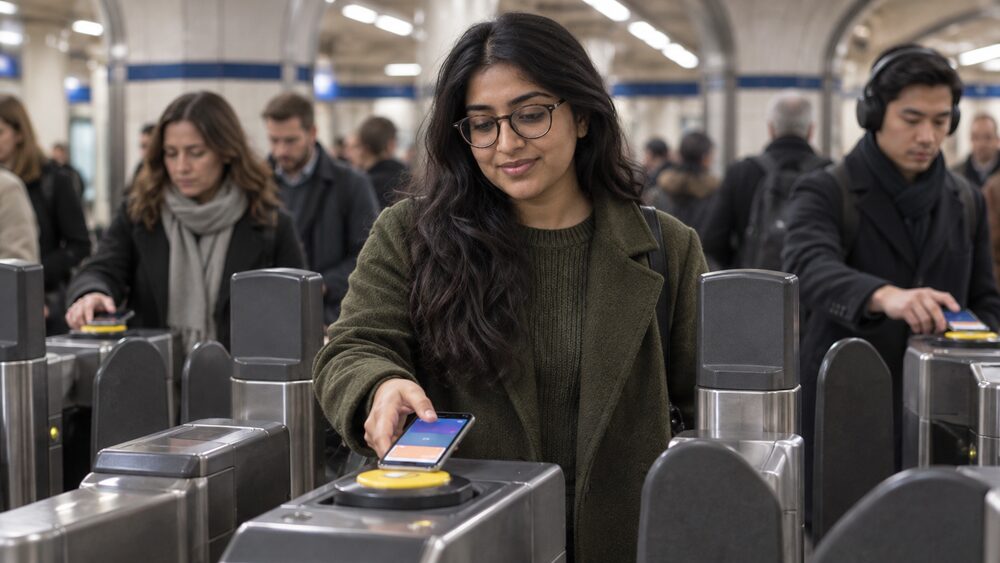
If you tap your phone to pay, the £100 contactless limit that applies to a plastic card usually does not apply to you. Ulster Bank puts it plainly: "If you use Apple Pay or Google Pay, you can make contactless payments even when it's over £100 (retailer limits may apply)"1. Barclays says the same for its own customers, describing Apple Pay with "no £100 limit"2.
The ceiling that does exist is far higher than most people expect. Nationwide states that "By default, the maximum amount you can pay in one transaction with Apple Pay is £250,000", and the same default applies to Google Pay3. In practice, what stops a large payment is almost never the wallet. It is the shop's terminal, your bank's own settings, or your available balance.
This page explains where the £100 limit comes from, why phones sit outside it, what your bank can still impose, and what happens if a payment goes wrong.
Apple Pay and Google Pay limits: above the £100 contactless cap
The £100 figure is a rule about plastic, not about phones. UK Finance confirmed the contactless card payment limit rose to £100 from 15 October 20215. Before that it had risen from £30 to £45 in April 20208, and the £45 step followed the earlier increase to £309. Each of those changes was about tapping a card.
Digital wallets were never brought inside that cap. Which? explains that "Apple Pay and Google Wallet (and other digital wallets) users have always been able to exceed this limit, where the retailer allows it"10. Barclays tells customers they can "use Google Pay without the usual contactless limit, wherever you see the contactless symbol"11. Monzo's guidance is that "There is no limit on Google Pay transactions, but some merchants apply the contactless limit and will only accept payments of up to £100"6.
That last clause is the one that catches people out. The wallet has no cap; the till might. Nationwide's own wording is that "There's no limit to how much you can pay in one transaction. But some retailers might set their own limits for mobile device payments"12. Halifax adds a general caution that "Different limits might apply when using Apple Pay or Google Pay"13.
So the honest answer to "what is the Apple Pay limit?" is that there is no single number. There is a default ceiling set by your bank, a retailer's own acceptance rule, and your balance. The £100 figure belongs to the card in your wallet, not the phone in your hand.
The £250,000 maximum on a single payment
The default ceiling on a single phone payment is £250,000. Nationwide states this for both wallets: "By default, the maximum amount you can pay in one transaction with Apple Pay is £250,000"3, and the identical figure applies to Google Pay4. That is a default, not a guarantee, and it is set by the provider rather than by Apple or Google.
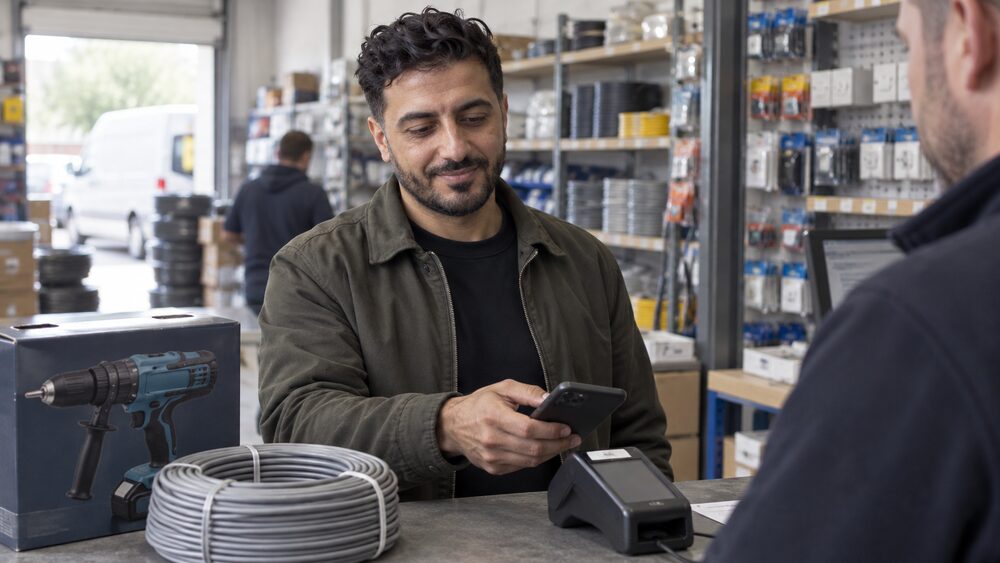
Two things sit underneath it. The first is your available balance or credit limit, which is the real constraint for almost everyone. The second is the retailer's terminal. Bank of Ireland tells customers that "You can make payments for any amount with Apple Pay, though some retailers may not support Apple Pay transactions above £100"14. Chase's guidance for Google Pay is that "You can make a purchase for any amount with Google Pay, but a small number of retailers have a £100 limit"15.
Some providers advertise the higher ceiling directly. Bip says "You can spend above £100 in many stores using Apple Pay and Google Pay"16, and the Post Office's Travel Money Card states that "Unlike other contactless payments, Apple Pay isn't capped" within the UK17.
The practical picture is a chain of three limits, and the lowest one wins:
- Your bank's own limit for the wallet, which may be below £250,000.
- The retailer's terminal limit, which may be £100 or may be nothing at all.
- Your available balance or credit limit.
Can you spend over £100 in shops with Apple Pay?
Usually yes, but it depends on the shop rather than the wallet. Which? surveyed major retailers in 2018 and found that Aldi, the Co-Op, WHSmith, John Lewis, Screwfix, Ikea and Lidl all allowed phone payments above the contactless limit, while Tesco did not18. That survey is dated 14 December 2018 and retailer policies change, so treat it as a snapshot rather than a current list.
One entry in that survey shows how fiddly acceptance can be. Pret A Manger accepted above-limit phone payments only for linked Mastercard, Maestro or Amex cards; a linked Visa or Visa Electron card still required chip and PIN over £3018. That is a retailer's own terminal configuration, not a rule about wallets.
The pattern to take from it is that large chains with modern terminals generally accept higher phone payments, and smaller or older terminals may not. If a payment is refused, the refusal is usually the terminal declining the amount, not your bank blocking you.
Does the £100 contactless limit apply to my phone?
No, and the distinction is worth understanding because it explains most declined payments. The £100 limit is a rule for tapping a physical contactless credit or debit card, above which you would be asked for PIN authentication10. It was introduced for cards, and cards are what it governs.
Phones work differently because of how the card is stored. When you add a card to a digital wallet, the details are encrypted and stored on your device rather than on external servers, and the card information is replaced with a device account number, or token18. The terminal sees the token, not your card number. That is why the card's contactless cap does not travel with it.
There is one important exception, and it comes from your own settings. NatWest International states that "If you set your contactless limit below £100, this limit will also apply to contactless Apple Pay or Google Pay transactions"7. So if you have deliberately lowered your contactless limit for security, that lower figure follows you onto the phone.
Some banks also apply their own wallet limits. Halifax's debit card guidance says you can make contactless payments "with your debit card or even using Apple Pay or Google Pay up to the value of £100"19, which is a bank-level cap rather than a wallet one. Nationwide's FlexBasic account similarly allows contactless payments up to £100 with the Visa debit card, or by phone using Apple Pay, Google Pay or Samsung Pay20. Samsung Pay, for comparison, "lets you make purchases above the £100 contactless limit with most retailers too"21.
What your bank and card set for digital wallets
The wallet is a container. The limits inside it come from whoever issued the card. Nearly all banks, building societies, credit card companies and prepaid card providers in the UK support both Apple Pay and Google Wallet10, but support is not the same as an unlimited ceiling.
Where a bank sets a lower figure, that figure governs. Halifax's £100 wallet limit19 and Nationwide's FlexBasic arrangement20 are both examples of a provider applying its own cap below the £250,000 default. Thinkmoney takes a different approach entirely, telling customers "You can use contactless for payments up to £100. For anything over that, you'll need to enter your PIN"22, which describes a card-first setup rather than a wallet exemption.
The £250,000 default is what applies when your provider has not set something lower. Nationwide's Google Pay and Apple Pay guides both state it3, and it is the figure to quote if you are asked what the maximum is.
| What sets the limit | Typical figure | Where it comes from |
|---|---|---|
| Physical contactless card | £100 per transaction | UK Finance rule, from 15 October 20215 |
| Phone wallet, default | £250,000 per transaction | Nationwide's stated default for both wallets3 |
| Retailer terminal | £100 at some merchants, no limit at others | Monzo and Chase guidance6 |
| Your own contactless setting | Whatever you set, if below £100 | NatWest International7 |
| Your bank's own wallet cap | Varies, for example £100 | Halifax debit card guidance19 |
If a payment is declined and none of these explain it, the next step is your bank. A decline at the till is not the same as a fraud block, and your bank can tell you which limit was hit.
Using Apple Pay or Google Pay safely for bigger purchases
A phone payment is not inherently riskier than a card, and in some ways it is safer. Which? notes that "Using a digital wallet such as Apple Pay, Google Pay, PayPal or Samsung Pay ensures your card details stay private"23. The token system means a compromised terminal never sees your real card number.
The security features are built into the device. Details are encrypted and stored on your device rather than external servers, the card information is replaced with a device account number, and authorisation requires a facial scan, fingerprint, PIN or password. If the device is lost or stolen, the information can be wiped using another device18. Take Five, the fraud prevention service, publishes guidance on securing payment apps24.
For larger purchases, the practical risks are different from the technical ones:
- A declined payment at the till. Usually the retailer's terminal limit, not fraud. Have a backup method.
- A purchase that never arrives. This is a consumer rights matter, not a wallet matter. Paying by card can give you chargeback rights through your card issuer.
- A scam seller. Which? publishes guidance on spotting online shopping scams25, and the risk is the same whether you pay by phone, card or transfer.
- A fraudulent payment from your account. Your refund rights come from the payment rules. The Financial Conduct Authority explains how fraudulent payment claims work, including that your payment service provider might not reimburse the first £100 of your claim26.
"Your payment service provider might not reimburse the first £100 of your claim."
That £100 excess is worth knowing before you rely on a phone payment for something large and unfamiliar. It applies to authorised push payment fraud claims, not to every disputed transaction, but it is the kind of detail that only matters when something has already gone wrong.
For day-to-day use, the Consumer Council's guidance on safer ways to pay covers the basics of choosing between cards, wallets and transfers27. If you want to understand how phone payments sit alongside your card and your account more generally, see paying with Apple Pay, Google Pay and Samsung Pay from your bank account and debit cards and contactless payments.
Where the limits come from and who sets them
Three different bodies are involved, and knowing which is which explains most confusion.
The £100 contactless card limit is a payments industry rule, confirmed by UK Finance when it rose from £45 to £100 on 15 October 20215. It governs physical cards.
The £250,000 single-payment default is set by the wallet provider or the bank, and Nationwide publishes it for both Apple Pay and Google Pay3. It is a default, so a bank can set something lower.
The retailer's acceptance rule is commercial. Monzo's guidance that "some merchants apply the contactless limit and will only accept payments of up to £100"6 and Chase's note about "a small number of retailers" with a £100 limit15 both describe the shop's choice, not a regulatory cap.
If you want the wider picture on how contactless limits have changed over time, see the contactless payment limit. For how phone payments compare with using the card itself, see debit card vs digital wallet.
Sources27 cited
- Ways to pay Ulster Bank, 2026-09-25
- Apple Pay Barclays, 2026
- Apple Pay guide Nationwide, 2026
- Google Pay guide Nationwide, 2026
- Contactless limit change FAQs UK Finance, 2021-10-15
- Google Pay Monzo, 2026-09-26
- Manage your account NatWest International, 2026-09-26
- Coronavirus: what it means for mortgages, savings, borrowing and benefits Which?, 2020-04-01
- UK's cash infrastructure consumer research Financial Conduct Authority, 2020
- What is Apple Pay? Which?, 2026-03-05
- Google Pay Barclays, 2026
- Pay from your current account Nationwide, 2026
- Contactless cards Halifax, 2026-09-27
- Apple Pay FAQs Bank of Ireland UK, 2026-09-25
- Adding Chase to Google Pay Chase, 2026-09-26
- How Bip works Bip, 2026-09-25
- Apple Pay Post Office, 2026
- How much is the limit on Apple Pay at Tesco and high street retailers? Which?, 2018-12-14
- Debit cards Halifax, 2026-09-27
- FlexBasic Nationwide, 2026
- Samsung Pay HSBC UK, 2026
- Payments and withdrawals thinkmoney, 2025-12-15
- How to spot an online shopping scam Which?, 2026-08-03
- App guide Take Five, 2026
- Why replacing your bank card might not stop scammers Which?, 2026-07-03
- Fraudulent payments Financial Conduct Authority, 2016-04-16
- Safer ways to pay Consumer Council, 2026
 MoneyHelperFree, impartial money and pensions guidance, set up by government
 FSCSProtects your money if a bank, insurer or investment firm fails
 Financial Ombudsman ServiceFree, independent help when a complaint about a firm is not put right
 Citizens AdviceFree advice on money, consumer and legal problems in England and Wales