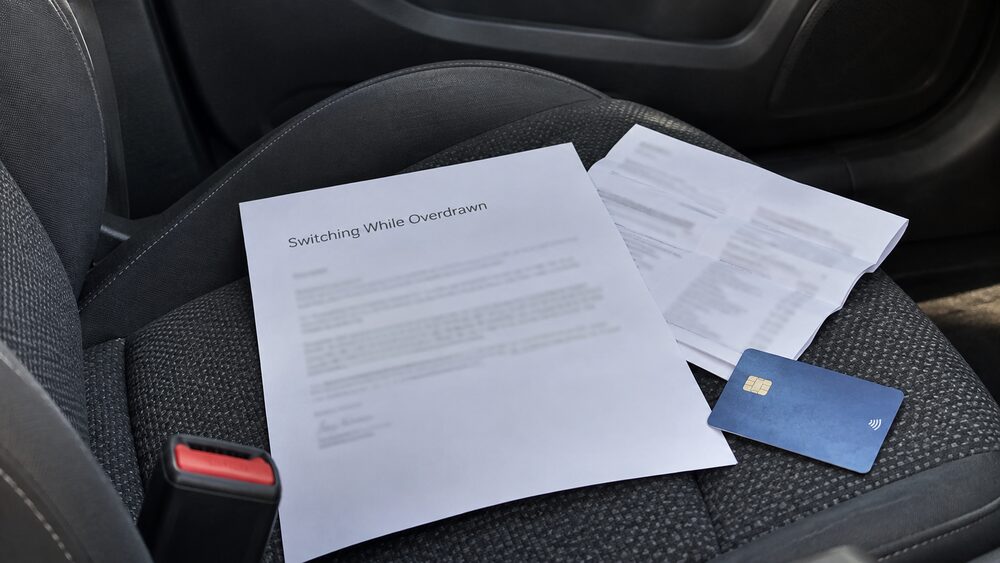
Being overdrawn does not stop you switching bank accounts. MoneyHelper states that you can switch using the Current Account Switch Service even if you are overdrawn, and the service is free to use1. What the switch does not do is carry your overdraft across automatically. Any overdraft you want on the new account is a fresh lending decision, made by the new bank on its own criteria, and it has to be agreed before the switch goes through3.
Being overdrawn does not stop you switching bank accounts. MoneyHelper states that you can switch using the Current Account Switch Service even if you are overdrawn, and the service is free to use1. What the switch does not do is carry your overdraft across automatically. Any overdraft you want on the new account is a fresh lending decision, made by the new bank on its own criteria, and it has to be agreed before the switch goes through3.
That single distinction explains most of what follows. The switch moves your payments, your balance and your Direct Debits. The overdraft is a separate debt to the old bank, and it stays with the old bank until it is repaid or, in some cases, transferred by arrangement.
The practical answer depends on three things: whether your new bank will offer you an overdraft, whether it is willing to take on the balance you owe, and whether the old account can be closed with money still owed on it. Banks differ on all three, and the differences are set out below.
You can switch while overdrawn, with conditions
The Current Account Switch Service is the seven-working-day process that moves an account from one bank to another, closing the old one and redirecting payments. Overdrawn accounts are not excluded from it. MoneyHelper's guidance is direct: yes, you can switch using the service even if you are overdrawn1. Several banks say the same of their own switching routes, including Bank of Ireland UK and AIB NI, both of which state that an account including an overdraft can switch if the bank agrees7.
The condition is the word "agrees". Virgin Money's switch guide puts it plainly: if the new bank or building society agrees, current accounts that include an overdraft can switch using the service9. Zempler Bank's guidance spells out the consequence of a refusal: you will need to agree any overdraft facilities you require with your new bank or building society, and if no agreement is reached, the existing overdraft must be repaid before switching4.
Some banks are more cautious in their public wording. HSBC says you may be able to switch bank accounts with an overdraft, but to check with your new bank first, and that you may have to repay the overdraft before switching3. NatWest's Premier switching page describes switching with an existing overdraft as often done on a case-by-case basis10. Triodos Bank takes a firmer line still: it cannot accept an account switch if the account being switched from is currently overdrawn11.
So the position is not "overdrawn accounts cannot switch". It is that the overdraft element is negotiated separately, and a bank that will not take it on will expect it cleared.
Agreeing an overdraft with your new bank
An arranged overdraft is credit. It is approved on the new bank's lending criteria and your credit status, and it is not part of the switch paperwork. HSBC's switching guidance is explicit that if you want an arranged overdraft with your new current account, you will need to be approved by your new bank before you make your switch3.
That approval is what makes a balance transfer possible. Barclays and NatWest both told Which? that if you have an overdraft with your current bank, the balance can be transferred to your new account, provided your agreed overdraft limit is high enough, and that this must be arranged before using the switch service12. Nationwide said the same in principle: you may be able to switch while overdrawn if the amount you owe is within the arranged-overdraft limit it is willing to offer you, and if your existing overdraft is higher, your application may be declined12.
Santander sits at the other end. It told Which? that an overdraft with a previous bank would not move to a new Santander account, and that the customer would remain responsible for repaying the old provider12.
Two features of overdrafts matter here. First, the bank can withdraw or reduce your overdraft at any time, without notice, so an approved limit is not a permanent entitlement13. Second, if you use an overdraft the bank is likely to start charging interest on your account, and it can ask that the overdraft is cleared on demand14. Moving an overdraft to a new bank moves those terms with it.
If you are going into an overdraft regularly, independent debt guidance suggests making an appointment to talk to your bank about changing it into an agreed one, because overdraft charges can be astronomical16.
Paying off the overdraft before you switch
Where no transfer is agreed, the overdraft has to be cleared. MoneyHelper is unambiguous: if you are using your overdraft, you will have to pay it back before you can close your account, and you will lose access to statements, so copies should be kept if they are needed17. HSBC says the same in its own words: anything owed must be repaid before the old bank will close an overdrawn account5. Barclays tells switching customers they will need to repay the overdraft on the old account before they can switch18.
There are two ways this plays out in practice. One is to clear the balance before starting the switch. The other is to switch and clear it separately, which some banks allow. TSB says customers who are overdrawn can still switch but must pay off the outstanding amount with the old bank, and that any overdraft facilities must be applied for with TSB, or TSB may assist with paying off an existing overdraft subject to its usual lending criteria19. StepChange notes that some providers will even let you switch if you have a large overdraft debt outstanding, but there may be a charge to do this20.
Timing matters if you are relying on money coming in. Any money paid into an overdrawn account, such as wages, benefits or a bank transfer, goes towards paying off the overdraft rather than being available to spend21. Some banks give you until midnight on the day you go overdrawn to pay money back in, and Lloyds says that if you go overdrawn you have until midnight to pay money into your account to avoid a daily overdraft fee for that day22.
What happens to your overdraft balance during the switch
Where the new bank has approved an overdraft large enough, the balance moves. MoneyHelper describes the mechanics: if the new overdraft covers what you owe, the funds will be sent to your old bank and you will owe the overdraft balance on the new account instead. If it is a lower amount, or you cannot get one, you will need to arrange to pay off the remainder separately before you can switch or close your old account17.
That is the whole of the transfer mechanism. The switch service itself moves any money left in the account across, and where the account is overdrawn there is nothing left to move in the ordinary sense24. The old account then closes on the switching date, unless it is overdrawn, in which case it stays open until the money owed is repaid5.
If the new bank will not give you an overdraft
A refusal is not the end of the switch, but it changes what you can do. The old overdraft remains payable to the old bank, and the old account cannot be closed while money is owed on it5.
The main alternative is a basic bank account. MoneyHelper notes that if you are turned down for a standard account you might be offered a basic bank account instead, and these do not charge fees or offer overdrafts17. StepChange describes the same product in the same terms: no overdraft facility, and these accounts do not let you be overdrawn25. The Bristol University Personal Finance Research Centre's work on basic bank accounts records that they cannot be overdrawn either with or without authorisation27.
There is a trap worth knowing about. If you have an overdraft or other debts on your current account and you open a basic bank account at the same bank, that bank may use the money in the new basic account to pay off debts in the old overdrawn account. Where benefits, tax credits or a state pension are paid in, independent guidance suggests considering opening the basic account at a different bank28.
If you are already in financial difficulty, the options widen. StepChange suggests asking the bank to reduce or remove the overdraft, or switching to a basic bank account with no overdraft29. Where bankruptcy is involved, a bank is unlikely to let you keep your account if you have an overdraft or other debts with it30. Free, impartial help is available from MoneyHelper and from debt advice charities such as StepChange and National Debtline.
Switching bonuses when you are overdrawn
Switching incentives are common and are usually a one-off cash payment. Independent Age puts the range at £50 to £200 for switching to a bank, and HSBC lists the forms they take: a one-off cash bonus, hotel discounts, gift vouchers and travel cards6.
Whether an overdraft disqualifies you depends on the individual offer's terms. TSB's position is that customers who are overdrawn can still switch, provided the outstanding amount with the old bank is paid off and any overdraft facility is applied for with TSB19. Offers also carry their own qualifying conditions, such as a minimum number of active Direct Debits or a minimum deposit, and these are what usually decide eligibility rather than the state of the old account.
If a bonus you expected has not arrived, the qualifying conditions are the first thing to check against what you actually did.
Will switching while overdrawn affect your credit score?
An overdraft on your account does not affect your credit score by itself; how you use it is what matters32. Current accounts with overdrafts do appear on your credit report, and successive applications in a short space of time could negatively affect your score33. HSBC's guidance is that switching current accounts should not affect your credit score unless you switch several times in the same year, as some banks carry out a hard credit check when you open a current account3.
Bank of Ireland UK states that switching does not affect your credit rating provided you do not request an overdraft and repay any outstanding overdrafts as required7. Triodos Bank gives the same answer on the same condition: no effect provided you repay any outstanding overdraft on your previous account as required by the old bank or building society11.
The pattern across these sources is consistent. The switch itself is not the risk. Applying for credit in quick succession, and failing to keep up with an overdraft, are.
Joint accounts and other complications
On a joint account, both account holders are responsible if the account is overdrawn34. That does not change with a switch: the debt follows the account, and both names remain liable for it. Switching a joint account has its own mechanics, and the overdraft conditions apply to both parties.
Unarranged overdrafts are a separate problem. These happen when you spend more than you have without agreeing it in advance, including going over the limit of an arranged overdraft1. While in an unarranged overdraft you will not be able to withdraw cash or transfer money, and payments may be refused35. Some banks may refuse a payment instruction if it would result in the account becoming overdrawn at all36. The consequences of an unarranged overdraft can include a penalty charge and a high rate of interest, charges for reminder letters and for direct debits or cheques put through the account, and the bank freezing the account until the overdraft is paid off37.
Where a current account agreement allows the account holder to overdraw without a pre-arranged overdraft, the charges that apply must be set out in the agreement, and information on the cost must be updated at least annually38.
Where to get help
If the overdraft is the symptom rather than the problem, the priority is dealing with the debt rather than the switch. StepChange's guidance on stopping living in an overdraft, and its material on saving for an emergency, both start from the same place: the overdraft is expensive borrowing and the aim is to reduce reliance on it29. The charity OPFS notes that if you cannot repay an overdraft there could be further consequences beyond the fee for going into it39.
Free and impartial help is available from MoneyHelper, from StepChange, and from National Debtline. None of them sells products, and none of them charges for the initial conversation.
Sources39 cited
- Overdrafts explained MoneyHelper
- How to switch your bank account Which?
- Switching current accounts HSBC UK
- Switching your personal current account Zempler Bank
- Switching to HSBC HSBC UK
- Making the most of your bank account Independent Age
- Switch to Bank of Ireland Bank of Ireland UK
- Switch your personal current account AIB NI
- Current account switch guide Virgin Money
- Switch your banking to NatWest Premier NatWest
- Current account switch guide Triodos Bank UK
- Can you switch your student bank account after the first year? Which?
- Overdrafts: things to consider StepChange
- Basic bank accounts Advice NI
- Safe bank accounts Business Debtline
- How to survive an income shock Debt Advice Foundation
- How to open, switch or close your bank account MoneyHelper
- Switch bank account Barclays
- Guide on how to switch bank accounts TSB
- Graduate overdrafts StepChange
- What is an overdraft? Experian
- Understanding interest charges StepChange
- Payment timescales Lloyds Bank
- Switching current accounts Santander UK
- How to save for an emergency StepChange
- Glossary StepChange
- Basic bank accounts research University of Bristol Personal Finance Research Centre
- Getting a bank account Citizens Advice Scotland
- How can I stop living in my overdraft? StepChange
- Bank accounts after bankruptcy StepChange
- Benefits of switching current accounts HSBC UK
- How do overdrafts work? first direct
- How to open a bank account online Which?
- How joint debts affect me StepChange
- Graduate account: how to apply Bank of Ireland UK
- Current account terms Nomo
- Overdrafts and other bank debts nidirect
- Current account agreements: explanatory memorandum legislation.gov.uk
- Priority and non-priority debts OPFS






 MoneyHelperFree, impartial money and pensions guidance, set up by government
 FSCSProtects your money if a bank, insurer or investment firm fails
 Financial Ombudsman ServiceFree, independent help when a complaint about a firm is not put right
 Citizens AdviceFree advice on money, consumer and legal problems in England and Wales