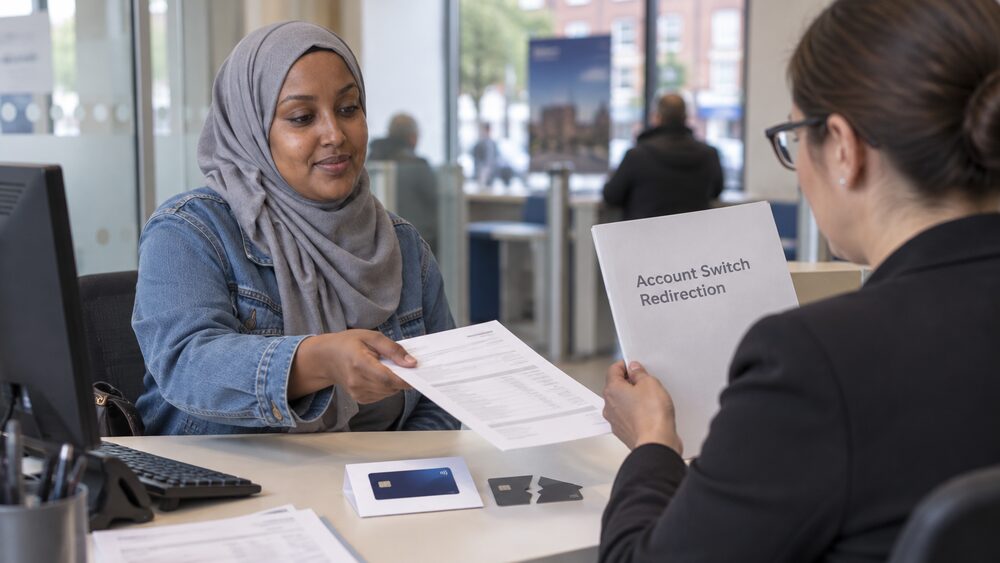
If you switch current accounts using the Current Account Switch Service, money paid into your old account after the switch date is redirected to your new one automatically. The sender is contacted and given your new account details, so you do not have to chase them yourself. The redirection runs for at least three years after the switch completes1.
If you switch current accounts using the Current Account Switch Service, money paid into your old account after the switch date is redirected to your new one automatically. The sender is contacted and given your new account details, so you do not have to chase them yourself. The redirection runs for at least three years after the switch completes1.
That covers the everyday cases people worry about: a salary, a pension, benefits, a refund, or a one-off payment from someone who still has your old details saved. The switch itself takes seven working days, and your old account stays usable right up to and including day 61.
What follows is what moves across on your switch date, what does not, how long the redirection lasts, and what happens when it ends.
Payments to your old account are redirected automatically
The redirection is the part of the switch that most people never see working. Any payments made to your previous account are automatically directed to your new one, and the sender is given your new account details8. This is not something you arrange separately: it is part of the switch your new bank sets up.
It applies to money coming in and to payments going out. All incoming and outgoing payments are redirected to the new account, and each time a payment is redirected the originator is notified of the new account details3. So a Direct Debit that a company tries to collect from the old account still reaches the right place, and the company learns the new details at the same time.
The guarantee behind this is what makes it reliable. The service is backed by a guarantee that if anything goes wrong, any charges you incur are refunded, and payments accidentally paid into your old account are redirected for three years9. If a payment is accidentally made to your old account, it is automatically redirected and the sender is given your new account details5.
There is one clear exclusion. Payments received from abroad are not covered by the redirection6. If you are paid from overseas, that payer needs your new details directly.
Redirection lasts at least three years after the switch date
The redirection is not a short grace period. For 36 months, the new bank arranges for payments accidentally made to your old account to be automatically redirected1. Some banks describe it as a minimum: payments sent to or from the old account are redirected for at least 3 years after the switch completes2, and one bank states it will do this for 3 years or longer10.
The three-year figure appears consistently across the banks that run the service. If anyone sends money to your old account, it redirects automatically to your new account for three years11. For three years after you switch, any payments accidentally made to your old account are automatically redirected12. One bank sets up a payment redirection for any credits or debits from your old account for a minimum of three years13, and another describes the period as having been extended to a minimum of 36 months14.
Three years is long enough that most payers will have updated their records, but it is not permanent. Treat it as a safety net rather than a forwarding address.
What moves across on your switch date and what does not
On the switch date, the money in your old account moves. If you have money in your old account, it is transferred to your new account on your switch date5. Any remaining credit balance is transferred and the old account closes automatically6. Your old bank account is closed once the switch completes4.
Several things do not move, and these are the ones that catch people out.
- Transaction history. Your transaction history on your old account is not transferred through the service17. Old statements have to be obtained from the old bank.
- Third-party permissions. Access given to payment and data services is not transferred automatically and has to be re-authorised on the new account3. Third-party authorisations on the old account end after the switch, and any payments set up through them end18.
- Very recent payment arrangements. Arrangements set up at the old bank within seven working days of the switch date are not automatically transferred and must be set up on the new account15.
- Payments from abroad. These are outside the redirection6.
Refunds are handled. Any refunds applied to your old debit card after switching are sent to your new bank17.
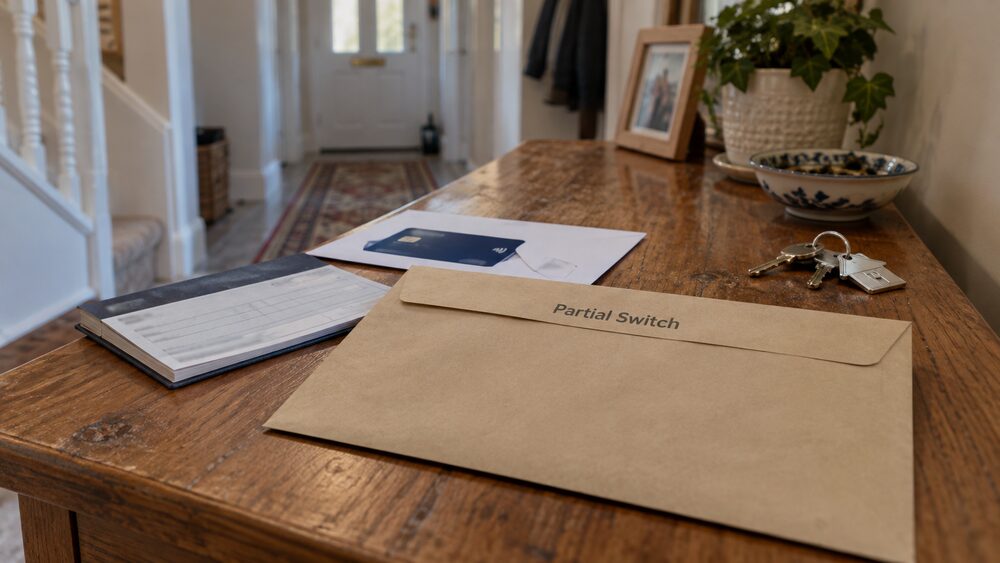
If you want to keep the old account open rather than close it, that is possible, but not through this service: you can switch and keep the old account open, but you will not be able to use the Current Account Switch Service6. That route is a partial switch, and it does not close your old account19.
Telling people who pay you your new account details
You do not have to tell anyone, because the redirection does it for you. When a payment is redirected, the sender is contacted with your new account details7. One bank describes it plainly: any payments made to or requested from your old account are redirected to your new account, and the bank also contacts the sender20.
That said, there are cases where telling people directly is worth doing:
- Payers from abroad, because their payments are not covered by the redirection6.
- Anyone paying you through a service that stores payee details. Once you have sent money to someone once, their details are stored and you do not need to enter them again21, which is exactly why old details linger in other people's banking apps.
- Anyone whose payment arrangements you set up yourself during the switch window, since those are not transferred18.
If you are updating your details with your old bank for any reason, you do not have to tell them you are switching18.
Can I keep using my old account until my switch date?
Yes. You will be able to continue using your old account up to and until your switch date, when your funds are transferred to your new account6. Your old account will still be active and usable right up to and including day 63, and you can use it until it closes24.
You can also access the funds in your old account up to and until your switch date, when they are transferred to your new account25. One bank puts the window at seven days: the old current account remains usable during the 7 day switch window, after which the old bank is asked to close it12.
There is one restriction worth knowing. You can still use the old account up to day 6 of your switch, but any new payments set up during the switch will not be transferred2. So if you set up a new Direct Debit on the old account in the days before the switch, expect to set it up again on the new one.
What happens to payments sent to my old account after the three years end
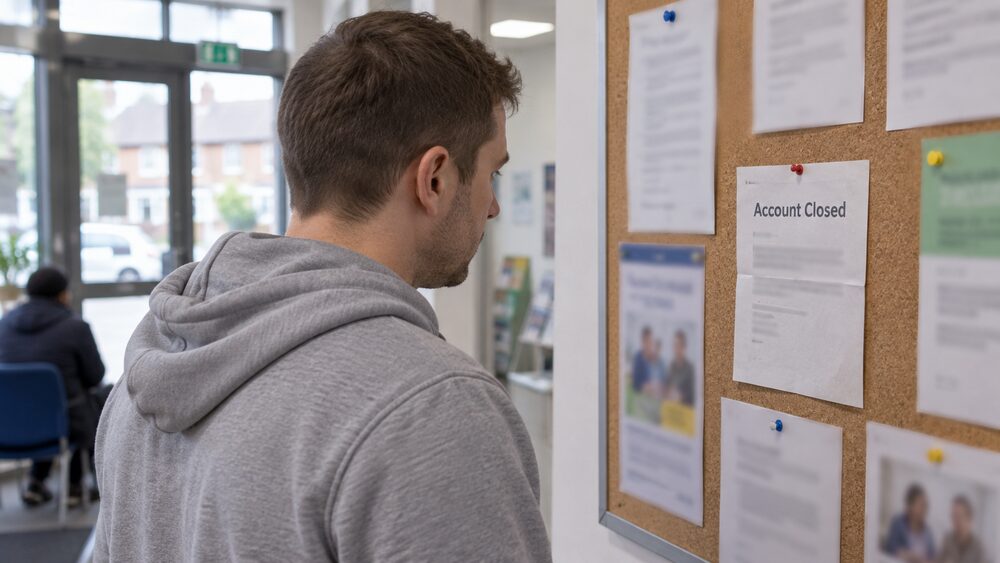
Once the redirection period ends, the safety net is gone. A payment reaching the closed old account is returned to whoever sent it, marked as account closed27. The money does not disappear, but it does not reach you either, and the payer has to try again with your correct details.
That is the practical reason to update your details with regular payers well inside the three years rather than relying on the redirection indefinitely. Anyone paying you by standing order, by saved payee details, or from an overseas account is worth contacting directly.
If a payment does go astray, the Confirmation of Payee system is what checks a name against an account before a payment is sent, and it is the reason a payer using your old details may be warned that something has changed28.
Where the protection stops
The redirection and the guarantee cover a lot, but not everything.
- Payments from abroad are outside the redirection6.
- Third-party payment permissions end with the switch and are not carried over3.
- Transaction history stays with the old bank17.
- New arrangements set up in the last seven working days before the switch are not transferred15.
- After three years, payments to the old account are returned to the sender as account closed27.
If something goes wrong with a switch, the guarantee is the first route: charges you incur are refunded and misdirected payments are redirected9. Beyond that, a complaint goes to the bank first, and then to the Financial Ombudsman Service if it is not resolved. Free, impartial guidance on switching, including what the service does and does not cover, is available from MoneyHelper29.
Sources30 cited
- How to switch your bank account Which?, 2026-09-07
- Switching bank account TSB Bank, 2026
- Switch to Ulster Bank Ulster Bank, 2026
- Current account switching service Zempler Bank, 2026-09-25
- Switching an account Coventry Building Society, 2026
- Current account switch service Triodos Bank UK, 2026-09-25
- Current Account Switch Guarantee Virgin Money, 2026
- Choosing the right current account Consumer Council
- How to open a bank account online Which?, 2026-04-23
- Switching current accounts Santander, 2026
- Switch current account Starling Bank, 2026
- Switching to Chase Chase, 2026-09-25
- Switch bank account Barclays, 2026
- Switch your personal current account AIB (NI), 2026
- Switch Monzo, 2026-09-25
- Switch your bank account to RBS Royal Bank of Scotland, 2026-09-25
- Switching your personal current account Zempler Bank, 2026-09-25
- Switching FAQs Coventry Building Society, 2026
- Ask an expert: how do I switch current account without closing my existing account? Which?, 2017-11-10
- Current account switch service Handelsbanken, 2026
- Online money transfers Age UK, 2026-03-23
- Switch your banking to NatWest Premier NatWest, 2026-09-25
- Switch your banking to NatWest NatWest, 2026-09-25
- Switching to HSBC HSBC UK, 2026-09-25
- Switch your current account AIB (GB), 2026
- When will the money in my old account be transferred to my new account? Royal Bank of Scotland, 2026-09-25
- Personal current account switch Bank of Ireland UK, 2026
- Confirmation of Payee QIB UK, 2026-09-25
- How to choose the right bank account MoneyHelper, 2026
- How to open, switch or close your bank account MoneyHelper, 2026-09-25







 MoneyHelperFree, impartial money and pensions guidance, set up by government
 FSCSProtects your money if a bank, insurer or investment firm fails
 Financial Ombudsman ServiceFree, independent help when a complaint about a firm is not put right
 Citizens AdviceFree advice on money, consumer and legal problems in England and Wales