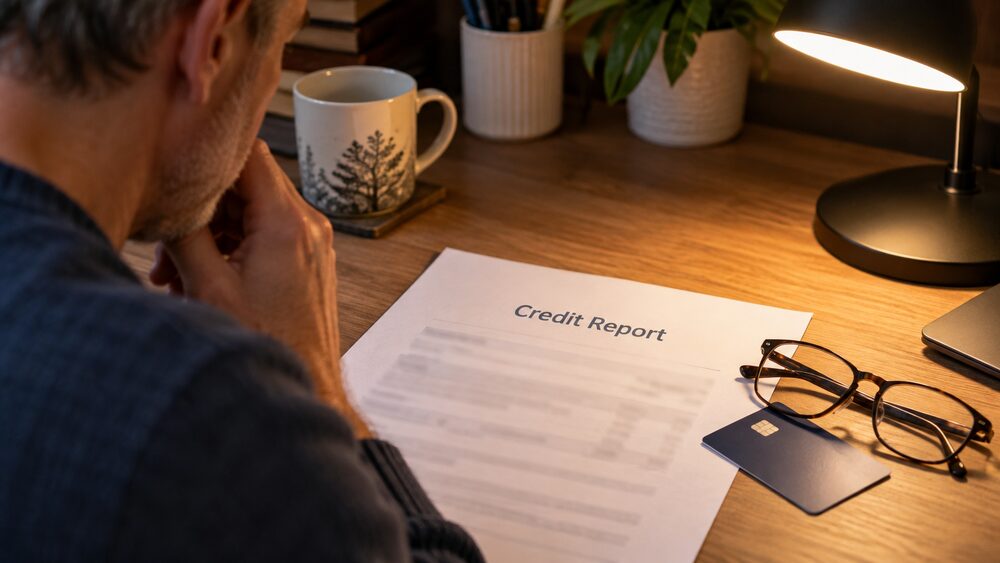
A credit card affects your credit file from the moment you apply, and it keeps affecting it for as long as the account is open, and for years after it closes. When you fill in an application, the card provider checks your credit record with a credit reference agency to judge whether you are credit worthy1. What it finds, and what the card then adds, becomes the record lenders look at the next time you borrow.
The record matters because it feeds your credit score. Depending on the agency, a score shows as a number from 0 to 1,0002, or as a three digit number accompanied by a word grading such as excellent, very good, good, fair, poor or very poor3. A card handled well can build a history that makes borrowing easier and cheaper. A card with missed payments, persistent debt or a string of rejected applications can do the opposite, and the marks stay on the file for six years4.
What a credit card adds to your credit file
A credit card adds three kinds of entry to your file. The first is the account itself: the credit limit, the balance, and month by month whether you paid on time. The second is the record of the application, which appears when you apply, not only when you are accepted9. The third is anything that goes wrong: a default shows that you did not make your agreed payments, and it impacts your credit score10.
The file is not only about borrowing money. A county court judgment (CCJ) connected with unpaid debt can make borrowing harder or more expensive while it is recorded on your credit files11, and it can affect more than credit: it can impact your score, your ability to borrow, renting and even employment opportunities12. Court judgments stay on the file for six years, like missed payments and defaults4.
Because applications themselves leave a mark, it is worth checking you are eligible before applying, as applying for more credit may appear on your credit file9. The same logic applies to any borrowing taken to clear card debt: a debt consolidation loan can help, but if the cost of the new loan is hard to manage and you miss payments, this will show on your credit file and affect your score13.
Applying for a card: soft and hard searches
There are two kinds of search a lender can run, and they behave very differently. A soft search checks your file without leaving a mark that other lenders see. A hard search is the full check made when you actually apply, and it is recorded. When you apply for a credit card it will leave a mark on your credit file, so if you apply and you are rejected, it will show14.
Soft searches are used for eligibility checks. Providers offer a soft search eligibility check which does not impact your credit score, so you can see your chances of acceptance before committing to a full application14. Santander's own guidance to borrowers is to use eligibility checkers when you can, as these don't affect your credit score6. Even some bank accounts use them: opening a basic bank account involves giving permission for a soft search of your credit file, for identity checking only, which does not affect your credit score15.
Hard searches are the ones that count against you. Multiple hard searches, particularly within a short period, can lower your credit score5. One hard search on its own is usually a small effect; the problem is several of them clustered together, because lenders read that as a sign of urgent borrowing. The practical approach is to use soft search tools first, and only make a full application when the odds look good. The page on applying for a credit card covers the process step by step.
Rejected applications and too many applications leave a footprint
Every application is recorded on your credit history, and unsuccessful applications can bring down your score16. If you apply to lots of lenders this will leave a trail on your credit reference file, and this may affect your score because lenders may think you already have lots of borrowing or have been refused by other creditors17. Applying for too many cards, or regularly switching cards, can affect your credit rating1.
StepChange describes the result as the rejection spiral: any failed application reduces your credit rating, which makes the next application more likely to fail too18. The way to avoid it is not to apply for a lot of credit cards in a short space of time, because getting a lot of rejections in a short period can hurt your score18.
The spiral is not confined to credit cards. If you apply for a mortgage and the lender rejects you, it will be recorded on your credit file and can damage your credit score19. Current accounts with overdrafts appear on your credit report too, and successive applications in a short space of time could negatively affect your score20. Even in business borrowing, lots of searches on a file can make it harder to take out credit21. The common thread: applying to lots of lenders leaves a trail on your credit reference file, and one way to avoid the spiral is not to apply for a lot of credit cards in a short space of time.
Credit utilisation: aim to use under a third of your limit
Utilisation is the share of your available credit you are actually using, and it is one of the things you can control directly. Keeping your balance below 30% of your total credit limit can boost your credit score, for example a £1,000 balance on a card with a higher limit7. Which?'s guidance on mortgage applications puts the same threshold in the same place: it is generally recommended to keep your credit utilisation rate below 30 percent22.
Not every source gives the same number. Advice NI's guidance says to keep your credit usage low, ideally below 50% of your agreed credit limits3, and its page for mortgage borrowers repeats that figure23.
Utilisation is worked out across your total limits, not card by card, so a small balance on one card can still look heavy if that card has a small limit. That matters most on credit builder cards, which come with lower spending limits18, so a modest balance can use a large share of the limit. Paying a balance down before the statement date, rather than after, can change what gets reported. The page on credit card limits explains how limits are set.
Does a higher credit limit hurt your score?
A higher limit does not hurt your score by itself. In fact it can help, because it lowers your utilisation: the same balance spread over a bigger limit is a smaller percentage. What hurts is how you use the borrowing you have. Your credit rating can be affected if you often go over your overdraft limit or owe too much on your overdraft24, and the same principle applies to cards: some credit cards have a credit limit, meaning you'll be charged if you go over it25.
The risk with a bigger limit is temptation, not the number itself. A higher limit only helps if the balance stays low relative to it. If a limit increase would lead to more spending, it can be refused: you can ask a provider not to raise a limit, or ask for a lower one, and the page on refusing a limit increase covers that. The reverse also matters: if a provider cuts your limit, your utilisation goes up without you spending a penny more, and the page on limit cuts explains the credit file effects.
One related warning applies to payment breaks. A payment break, such as a pause agreed with a lender, can affect your credit score26. Any arrangement that changes the terms of borrowing is worth checking before agreeing to it, because the file records what happened, not what was intended.
Paying on time matters most to lenders
A record of paying on time is the strongest evidence a file can carry. Once accepted for a personal loan, providing you make all your minimum repayments on time, this should improve your credit score in the long term27, and the same logic applies to cards. For someone who has never officially borrowed before, it takes six to 12 months of paying on time to improve their credit score with a credit builder card8.
Other people's payments can land on your file too. Guarantor loans can negatively affect both people's credit score if not paid back on time28. As long as the borrower pays back the debt on time, being a guarantor won't affect your credit rating, but payments made on their behalf are added to your credit history and could reduce your credit score28. Anyone asked to guarantee a loan is taking on a credit file risk, not just a financial one.
There is one historical exception worth knowing. During the coronavirus payment deferrals, the FCA told lenders to ensure that no one's credit reports and scores were impacted as a result of getting payment help under the temporary measures29. That protection was specific to those temporary measures and has ended, so payment help agreed today is treated under normal rules. The page on coronavirus payment deferrals covers what they were and their legacy.
Missed, late and minimum payments
Missed and late payments are the most damaging ordinary entries a card can put on your file. Late payments stay on your credit history for six years, as do missed payments and defaults4. One late payment on a credit card or loan can dent your score by as much as 130 points, according to Experian8. The effect is immediate and long lasting: the entry is recorded now, and it keeps counting for six years.
The damage spreads beyond the card itself. Missing payments to credit cards, unsecured loans, catalogues, overdrafts and store cards can affect your credit rating, which would make it harder to get credit in the future31. The same applies to newer forms of credit: if you miss payments on a buy now pay later agreement, then these will show on your credit score and can make it harder to get credit in the future32. Same day loans carry the same warning: missing payments can lead to extra charges and can negatively impact your credit score33.
Paying only the minimum keeps the account in good order, but it is not the same as paying well. Minimum payments keep the recorded status clean while the debt carries on, and the pages on minimum payments and how long paying only the minimum takes explain the cost. If a payment is already missed, the page on missing a credit card payment sets out what to do and what happens next.
Persistent debt and changes your provider makes to your account
Persistent debt is what the rules call it when someone pays little more than the minimum, with interest and charges taking up most of the payment, over a long period. The rules only applied to credit cards at first, but now apply to store cards and catalogues too34. When a provider decides a customer is in persistent debt, the creditor may ask them to increase their monthly payments, and may decide to remove their access to that credit35.
The options a provider offers at that point can themselves affect the file. Pausing interest and charges, reducing the minimum payment or suspending the account could impact your credit file36. A suspended or closed account changes what the file shows about available credit, and the page on persistent debt suspension covers when an account can be suspended.
Where card debt goes unpaid, the consequences escalate through the file. Credit card debt can affect your credit rating and the debt can be passed on to a debt collection agency37. Failing to pay debts, whether secured or unsecured, can affect your credit rating38. Using credit cards, store cards and short term loans to cover daily costs can quickly turn into long term debt39, which is how many people arrive here. A debt management plan lowers the payments, so a DMP affects your credit rating40. Getting advice early matters: debt advice itself does not affect your credit score, though some debt solutions will41. Free help is available through credit card debt help and the wider debt guide.
Your credit score is different at each agency
There is no single credit score. The credit reference agencies do not always have the same information about your credit score42, and each agency calculates and presents its own number. One shows a score as a number from 0 to 1,0002; another presents a three digit number accompanied by a word grading, from excellent down to very poor3. A score of 700 at one agency may mean something different from 700 at another, so the number alone tells you little without the agency's own scale.
What the agencies do agree on is the direction of travel. Certain things will have a negative impact on your score regardless of the agency, for example not being on the electoral roll or making a late payment5. Positive habits work the same way: paying on time and keeping utilisation low help everywhere. So a score that differs between agencies is normal, and the underlying file, not the number, is what lenders read.
The practical implication is simple: when preparing to apply for a card, check what the file itself says, not just one score. The page on credit scores and credit reports explains how the agencies work and what each one holds.
Checking your credit file and fixing mistakes
Checking your own credit score does no harm. You can check it as often as you like without doing any damage5, and StepChange confirms you can check your own credit score without hurting it43. Checking your score is free: you can check your credit score for free with credit reference agencies, though it is worth checking whether you have to pay before you use one42.
Your statutory credit report doesn't come with a score attached, but some services such as ClearScore and Credit Karma let you check your score for free44. So the free routes exist, and there is no need to pay to see the basics. Regular checking serves two purposes: seeing how your card use is recorded, and catching errors.
Mistakes do happen, and a wrong balance, a misrecorded payment or an account that is not yours can all drag a score down. Errors are corrected by raising a dispute with the agency that holds the wrong entry, and the agency must investigate. Checking before an application matters most, because a mistake found after a rejection has already done its damage. Advice NI's guidance on credit reports and credit reference agencies sets out how the process works3.
The electoral roll and people linked to your file
Two things outside your card account itself shape what lenders see. The first is the electoral roll. Not being on it negatively affects your score regardless of the agency5, and registering is one of the standard steps for improving a credit score, alongside paying back any credit borrowed, checking your report is correct, and making sure your file is not linked to somebody with a poor credit score18.
The second is financial links to other people. Opening a joint account adds a financial link to the other person, so companies look at both credit histories, and a poor history might lower your chances of acceptance45. Only consider opening a joint bank account with someone you trust, as it could damage your credit score if they have poor credit, and you could be responsible if they run up debt46. A partner's poor credit does not always affect you, even if you are married or in a civil partnership: it matters only if you have a joint account, loan or credit card with them42.
Links survive the relationship. Closing a joint account won't remove the link to the other person from your credit file, but a notice of disassociation can be requested from credit reference agencies if there is no other financial connection45. After separation, if you have a joint debt with your ex-partner, for example a mortgage or a loan, your credit files are connected, and how you manage your debts will affect your ex-partner if they apply for credit, and vice versa47. Even a past joint account could affect your credit file and make it harder to open a bank account and borrow money48. Keeping debts secret from a partner can also impact their credit file and joint bills49.
What credit score you need for a credit card
There is no fixed pass mark, because providers don't have to give you a credit card, and an application may be refused if your credit score is low1. Each provider sets its own rules and checks your record with a credit reference agency1, so the same file can be accepted by one and refused by another. That is another reason a rejection is not a verdict on you, only on that one application.
For people with a low score or a thin file, a category of card exists for exactly this situation. Credit builder cards come with lower spending limits18, and are designed to be repaid reliably over time: six to 12 months of paying on time is what it typically takes for someone who has never officially borrowed before to improve their score8. The page on credit-builder credit cards covers how they work and what they cost.
One reassurance if your score has just changed: Experian has changed how it presents scores, and the change does not affect your ability to get credit43. Lenders read the file, not the headline number, so a cosmetic change at one agency is not itself a barrier. If a card application is refused, waiting before applying again, and using soft searches in the meantime, avoids adding another footprint to the file.
Sources49 cited
- Choosing and applying for a credit card Citizens Advice, 2026-09-25
- How does debt affect a credit file StepChange, 2026-09-25
- Credit reports and credit reference agencies Advice NI, 2026
- Getting a mortgage with late payments and defaults Which?, 2025-08-20
- How to check your credit score for free Which?, 2025-10-24
- What is credit scoring Santander, 2026-09-25
- How to improve your credit score Which?, 2025-10-24
- How to improve your credit score Which?, 2025-10-24
- How can I stop living in my overdraft StepChange, 2026-09-25
- Default notices and missed payments StepChange, 2026-09-25
- County court judgements in England and Wales National Debtline, 2026-09-25
- What to do about a CCJ StepChange, 2026-09-25
- Debt consolidation StepChange, 2026-09-25
- Should I get a credit card Which?, 2026-09-18
- Basic bank accounts with no credit check Shelter England, 2025-03-27
- Bad credit mortgages Which?, 2025-10-08
- How lenders decide whether to give you credit Citizens Advice, 2026-09-25
- Credit cards for a bad credit score StepChange, 2026-09-25
- Self-employed mortgage squeeze: can you still get a deal Which?, 2025-12-18
- How to open a bank account online Which?, 2026-04-23
- Debt consolidation for businesses Business Debtline, 2026-09-26
- Getting a mortgage with credit card debt Which?, 2025-08-20
- Credit reports and credit reference agencies for mortgage borrowers Advice NI, 2026-09-26
- Overdrafts: things to consider StepChange, 2026-09-25
- Making the most of your bank account Independent Age, 2026-09-26
- How to deal with missed mortgage payments Shelter England, 2026-08-26
- Personal loans explained Which?, 2026-09-18
- Guarantor loans explained MoneyHelper, 2026-09-25
- Coronavirus: what it means for mortgages, savings, borrowing and benefits Which?, 2020-10-31
- Debunking common debt myths Surviving Economic Abuse, 2023-03
- Which bills are most important to pay first Mental Health and Money Advice, 2025-09-08
- Buy now pay later StepChange, 2026-09-25
- Same day loan debt StepChange, 2026-09-25
- Persistent debt rules National Debtline, 2026-09-25
- Save money on family StepChange, 2026-09-25
- Catalogue debts StepChange, 2026-09-25
- Credit card debt Shelter Cymru, 2026-08-30
- What do I need to know about debt Bank of England, 2025-08-19
- Dealing with debt Shelter Cymru, 2026-07-29
- Managing a DMP StepChange, 2026-09-25
- Debt myths: true or false StepChange, 2026-09-25
- How to rent with a poor credit history Shelter England, 2026-05-01
- Credit score StepChange, 2026-09-25
- 5 credit report myths debunked Which?, 2024-11-01
- Joint accounts MoneyHelper, 2026-09-25
- Choosing a bank account for your Universal Credit payment MoneyHelper, 2026-09-25
- Dividing the family home and mortgage during divorce or dissolution MoneyHelper, 2026-09-25
- Keeping a bank account when homeless Shelter England, 2025-01-23
- Talking about debt StepChange, 2026-09-25



 MoneyHelperFree, impartial money and pensions guidance, set up by government
 StepChangeFree debt advice and solutions from a charity
 National DebtlineFree debt advice by phone, webchat and online
 Financial Ombudsman ServiceFree, independent help when a complaint about a firm is not put right
 Citizens AdviceFree advice on money, consumer and legal problems in England and Wales