
Clearing credit card debt sooner comes down to two things: stopping the balance growing, and paying more than the minimum. The first step is to stop using the credit card you want to pay off, because that is what stops the amount you owe growing and makes it quicker to repay1. Then look at what you are paying each month.
Clearing credit card debt sooner comes down to two things: stopping the balance growing, and paying more than the minimum. The first step is to stop using the credit card you want to pay off, because that is what stops the amount you owe growing and makes it quicker to repay1. Then look at what you are paying each month.
The difference is large. On one worked example, paying the minimum on a credit card debt would take around four and a half years to clear. Paying £200 a month instead would clear it in around one year and eight months, and would save well over £1,000 in interest2. The minimum is typically around 3% of the balance due or £5, whichever is higher3.
If the debt has been running a long time, the rules change in your favour. Credit card companies must help you if you have been in credit card debt for more than 18 months4. There is also free, independent advice that costs nothing to use, and it does not affect your credit file to ask for it.
Stop using the card you want to clear
The single most effective step is to stop adding to the balance. Guidance is to stop using the credit card you want to pay off, because the amount you owe then stops growing and becomes quicker to repay1. The same advice applies when your income drops: stop using credit cards or adding to credit card debt6.
This is harder than it sounds, and the reason is structural. Using credit cards, store cards and short-term loans to cover daily costs can quickly turn into long-term debt7. A card that is being used for groceries and fuel while a balance sits on it will not fall, however much is paid towards it.
There are practical ways to make stopping easier. If you have consolidated balances onto one card, the guidance is to make your payments on time and destroy the card so you cannot use it again8. If a subscription or membership is being taken from the card by continuous payment authority, you can cancel by contacting the company taking the payment, or cancel directly with your card issuer, which must stop payments immediately9. If you would rather write, you need to write to your card issuer asking for the payment to be stopped10.
Under the Consumer Duty rules, a company must make it easy to cancel things like credit cards or a debt management plan4. So if you want the account closed or the card cancelled, that should not be made difficult.
Why a balance that stops growing is quicker to repay
Interest is charged on what you owe, so more interest is added as the balance gets bigger1. That is the whole mechanism. A balance that is still being added to each month is being charged interest on a larger figure, and the payment made has to clear that interest before it touches the capital.
This is why the persistent debt rules exist. The Financial Conduct Authority's rules on persistent credit card debt set out interventions at set points, and once a customer exits persistent debt, the persistent debt interventions at 18 months would start again if they are identified as being in persistent debt again7. In other words, the clock restarts rather than the protection disappearing for good.
The scale of the problem is not small. One in twenty (5% or 2.8m) had persistent credit card debt because they were revolving a balance on a credit card and had done so for at least 18 months, as of February 202011. StepChange has recommended to the FCA that it restart work to increase the minimum credit card repayment, ensuring payments are set at a level that is affordable and prevents expensive long-term debt12.
For a reader, the practical point is this: the balance is the thing to attack, not just the monthly payment. A payment that only covers interest leaves the debt where it is.
Paying more than the minimum each month
The advice is consistent: always pay more than the minimum payments to reduce the debt faster and save on interest9. The benefits are threefold: you reduce interest payments, pay off your balance more quickly, and save money in the long run13.
The worked example above shows how much this matters. Paying the minimum on a credit card debt would take around four and a half years to clear. Paying £200 a month instead would clear it in around one year and eight months, and would save well over £1,000 in interest2.
There is a behavioural catch, and the regulator has studied it. In one experiment, the treatment caused an average reduction in consumers paying only the minimum and a reduction in credit card debt that is not sustained10. In plain terms, people change their payment behaviour for a while and then drift back. Setting a fixed amount by standing order or direct debit, rather than deciding each month, is one way round that.
Balance transfers and other ways to cut the interest
Moving the debt to a card with low or 0% interest could help you pay off the debt faster1. A 0% balance transfer credit card freezes the interest for a set period, giving you time to clear the debt without worrying about interest14. The market has been moving in consumers' favour: the length of interest-free periods on credit cards for balance transfers increased in Q1, and was expected to increase in Q2, according to the Bank of England's credit conditions survey for 2026 Q115.
There is a cost to check. Some credit card companies also charge a balance transfer fee to take over your unpaid debt, charged either as a flat fee or depending on the amount you are transferring16. See balance transfer fees for how these are worked out.
The other routes to a lower rate are set out in the persistent debt guidance. When you are getting out of persistent debt, the options are to increase your monthly repayments, repay the balance using credit with a lower interest rate, cancel the card and move the balance to a different one with lower interest, get a loan you can afford to repay, or shop around using a price comparison site17.
| Route | What it does | What to watch |
|---|---|---|
| Pay more each month | Reduces interest and clears the balance sooner13 | Needs to be sustainable, not a one-off |
| Balance transfer | Moves the debt to a low or 0% interest card1 | A transfer fee may apply16 |
| Consolidation loan | Pays off your creditors with money you borrow, then you repay the loan instead of your credit cards8 | Can take longer to pay off and can add to your debt, especially if you only pay the minimum18 |
| Payment holiday | Pauses payments for a period | Alternatives include a consolidation loan or a card with a lower rate to transfer your balance to19 |
Consolidation deserves care. Consolidating credit card debt by moving balances onto a low interest credit card can often take longer to pay off and can actually add to your debt, especially if you only pay the minimum repayment amounts each month18. A consolidation loan may help you repair your credit file over time, if you keep up with payments20.
Which card to pay off first if you have more than one
The most expensive debt on your credit card will always be paid off first21. That is how the interest is applied, so the highest-rate balance is the one that grows fastest if it is left alone.
The debt avalanche method builds on that: it is usually the quickest and cheapest way to clear your debts without taking out any more credit2. It means putting spare money towards the most expensive debt while keeping up the minimums on everything else.
Priority debts come before credit cards. Always prioritise paying back your rent arrears before other debts, like credit cards or payday loans22. In Northern Ireland, guidance on debts after someone dies notes that repayment of personal loans, credit cards and credit debt must wait until others have been settled, and that if cards are held jointly, any debts will be the joint holder's responsibility23.
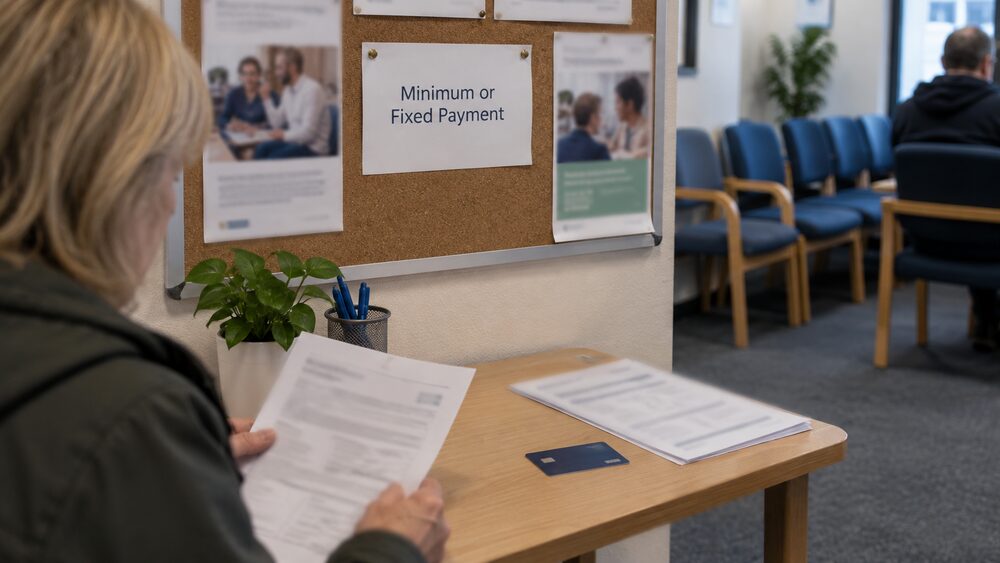
If you are juggling several cards, the order is: priority debts such as rent first, then the highest-rate card, then the rest. See minimum payment or fixed amount for how the two approaches compare.
Is it worth using savings to clear credit card debt?
Paying off your credit card in full can save you money in interest and charges1. That is the direct financial effect, and it is why the question comes up.
What the figures cannot tell you is whether a particular savings pot should be spent. That depends on what the money is for and what it earns, which is a decision for you. What the evidence does show is the direction of travel: interest is added as the balance gets bigger1, so a card balance left running costs more over time, while savings held elsewhere earn whatever they earn.
If you are considering it, the same caution about consolidation applies. Moving debt around rather than clearing it can take longer to pay off and can add to your debt, especially if you only pay the minimum18. Clearing it outright does not carry that risk.
Does paying off a credit card early affect my credit score?
Paying on time and in full can help your score over time. If you keep up with payments on time and in full, it can help to boost your credit score in time20. Paying off a 0% card in full and on time each month should improve your score over time24.
There is one caveat from a lender. In some cases, paying off a loan early may result in a temporary and minor dip in your credit score25. That is a lender's own description of its own product, and it is described as temporary and minor.
The larger risk sits with missed payments. One late payment on a credit card or loan can dent your score by as much as 130 points, according to Experian5. If you do not pay a bill on time, this could affect your credit rating and will appear on your credit file26. Buy now, pay later is not exempt: if you miss payments on a BNPL agreement, then these will show on your credit score27.
Building a score takes time. It takes six to 12 months of paying on time for someone who has never officially borrowed before to improve their credit score5. If a county court judgment is involved, paying it in full immediately means it will not be recorded on your credit file28.
Should I close the card once it is paid off?
Closing is a separate decision from clearing. What matters first is that the balance is at zero and that the record is right. The people you owe update your credit file when you miss payments, but they should also do it when you repay your debts29.
On closing itself, a company must make it easy to cancel things like credit cards or a debt management plan4. Whether to close is a judgement about how you use credit, not a rule. See cancelling or closing a credit card and closing old accounts after transferring a balance.
One type of card behaves differently. With charge cards, you have to pay off the amount you borrow in full at the end of the agreed period, usually each month30. There is no revolving balance to clear.
If you are struggling: free debt help
Free advice services exist and cost nothing to use31. StepChange offers free debt advice online13, and free debt advice providers including National Debtline, StepChange and PayPlan can set up a free debt management plan for you, handling payments and negotiating with the people you owe money to32.
The rules also put duties on your card company. Credit card companies must help you if you have been in credit card debt for more than 18 months4. If you are not able to pay back what you owe, a company must help if you are struggling to pay back what you owe, which can include reducing or cancelling any interest or fees4.
At 36 months in persistent debt, the options a firm may suggest include an affordable payment plan to clear the debt quicker, paying off the debt with a loan or credit card, pausing interest and charges, reducing your minimum payment, or suspending your account33. See can your account be suspended for persistent debt.
Breathing Space is a separate option in England and Wales: it can stop any interest and charges right away and pause any action to collect the debt34. In Scotland, free advice services can help31, and rent arrears should be prioritised before other debts22. In Northern Ireland, the same priority principle applies, and jointly held card debts fall to the joint holder23.
Sources34 cited
- Paying off credit card debt StepChange, 2026-09-25
- What is the debt avalanche method and how does it work? National Debtline, 2026-09-25
- Choosing and applying for a credit card Citizens Advice, 2026-09-25
- Check if a financial service has followed the rules Citizens Advice, 2026-09-25
- How to improve your credit score Which?, 2025-10-24
- Unemployment and reduced hours StepChange, 2026-09-25
- FCA publishes latest Financial Lives survey Finance & Leasing Association, 2020
- Consolidating credit card debt StepChange, 2026-09-25
- Credit confidence StepChange, 2026-09-25
- Occasional Paper No. 44 Financial Conduct Authority, 2026-06-03
- Dealing with creditors StepChange, 2026-09-25
- PS18/4 Financial Conduct Authority, 2018-02
- Persistent debt StepChange, 2026-09-25
- Credit card repayment calculator Which?, 2026-05-11
- Credit conditions survey 2026 Q1 Bank of England, 2026
- Credit cards and debt nidirect, 2025-11-06
- Dealing with persistent debt StepChange, 2026-09-25
- Debt consolidation calculator StepChange, 2026-09-25
- Credit card payment holidays StepChange, 2026-09-25
- Debt consolidation debt management StepChange, 2026-09-25
- Debt advice Shelter Scotland, 2026-01-16
- The costs and charges of credit cards Citizens Advice Scotland, 2026-09-25
- Rent arrears Shelter Scotland, 2025-12-12
- Low interest credit cards Experian, 2026
- How to manage your loan repayments HSBC UK, 2026
- Direct debits and standing orders explained Which?, 2026-03-05
- Buy now, pay later StepChange, 2026-09-25
- County court judgments StepChange, 2026-09-25
- Your debt management plan provider has closed Citizens Advice, 2026-09-25
- Credit card interest explained Which?, 2026-09-18
- Debt solutions Shelter Cymru, 2026-08-30
- Your debt management plan provider has closed (Welsh) Citizens Advice, 2026-09-25
- Catalogue debts StepChange, 2026-09-25
- During Breathing Space StepChange, 2026-09-25









 MoneyHelperFree, impartial money and pensions guidance, set up by government
 StepChangeFree debt advice and solutions from a charity
 National DebtlineFree debt advice by phone, webchat and online
 Financial Ombudsman ServiceFree, independent help when a complaint about a firm is not put right
 Citizens AdviceFree advice on money, consumer and legal problems in England and Wales