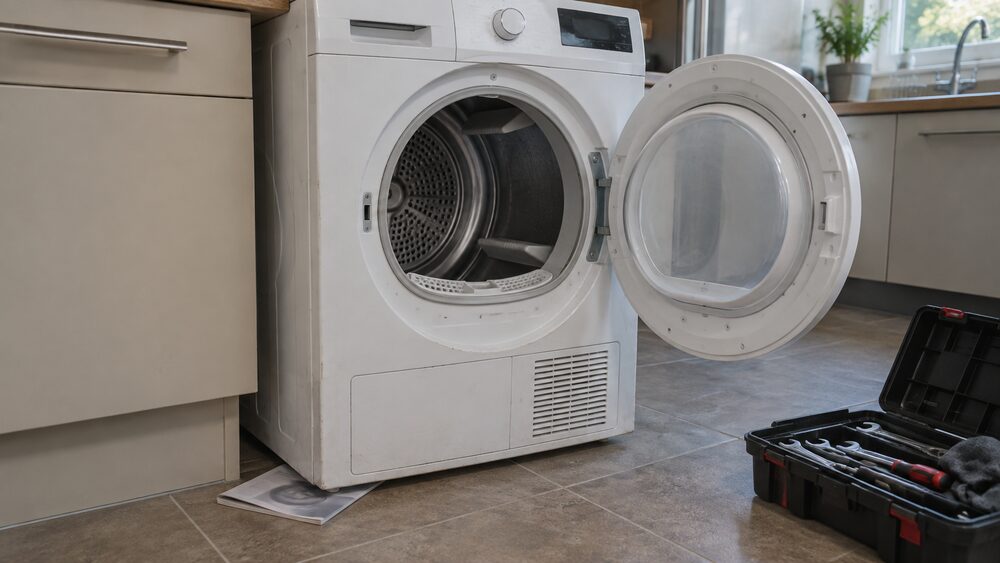
An extended warranty is a policy you buy on top of a product, usually to cover repair or replacement once the maker's own guarantee has run out. The question most people arrive with is whether it is worth it. The honest answer is that these policies can be expensive, because many products are made to a high standard and you already have statutory rights giving a high level of protection1. You do not have to buy an extended warranty to have rights for a repair up to six years after purchase2.
An extended warranty is a policy you buy on top of a product, usually to cover repair or replacement once the maker's own guarantee has run out. The question most people arrive with is whether it is worth it. The honest answer is that these policies can be expensive, because many products are made to a high standard and you already have statutory rights giving a high level of protection1. You do not have to buy an extended warranty to have rights for a repair up to six years after purchase2.
What a warranty adds is a contract on the terms the insurer sets, not a replacement for the law. Guarantees and warranties sit in addition to your statutory rights under the Consumer Rights Act 20152. Depending on when a fault develops, you could be entitled to a refund or repair under that Act alongside a warranty3. So the decision is not "warranty or rights". It is whether the extra cover is worth its price, its excess and its exclusions.
What an extended warranty covers and how long it runs
Cover depends entirely on the policy. Warranties tend to cover mechanical problems only, so the terms and conditions matter before you decide against taking one out7. A warranty is a contract with a provider, and what it pays for is whatever the document lists, not what a reasonable person might assume.
Terms vary widely by product. On a car, there are three types to know: the manufacturer's warranty, a dealer warranty, and an extended warranty3. The manufacturer's warranty is the one a new car is sold with, and it ends after a set number of years, or could end sooner if the car covers a certain number of miles3. An extended warranty is usually taken out by the owner once the warranty the car came with has expired, often bought directly from the warranty company3. Warranties commonly last for one year5.
On a home, the picture is different again. A structural warranty is an insurance policy designed to protect against defects in new buildings, normally for a period of 10 years after completion8. LABC Warranty describes its cover as protecting against a wide range of structural defects in the first 10 years of the home being completed9, and as a process that starts at the beginning of a home and finishes up to twelve years after completion6. The Financial Ombudsman Service describes cover in years 3 to 10 for structural problems where the builder has not complied with technical requirements10. For shared ownership homes, the building warranty will usually cover the cost of structural repairs in the first 10 or 12 years for new-build homes11.
Your statutory rights already give a high level of protection
This is the part most buyers underweight. Under the Consumer Rights Act 2015, if what you have bought does not satisfy the three criteria, you have the right to claim a refund, repair or replacement depending on how long you have had the faulty item5. You have the legal right to a refund if you return your faulty item within 30 days of receiving it, regardless of what the retailer's own policy says12.
Beyond 30 days, the remedies shift. If a replacement cannot be provided, the seller is legally required to give you a refund up until 6 months after you paid13. That is a statutory entitlement, not a goodwill gesture, and it exists whether or not you bought a warranty.
"Guarantees and warranties are in addition to the statutory rights you have under the Consumer Rights Act 2015."
Where a warranty and the law overlap, you can use whichever helps. Where they do not overlap, the warranty is the only route. The gap is usually wear and tear, accidental damage, and faults that appear after the statutory window but inside the warranty term.
Costs: price, excess and age-related contributions
The price of the warranty is only part of the cost. Three other charges decide whether a claim actually pays out.
The excess. Policies can carry an excess, and where you have to pay a proportion of the repair costs, you must pay this to the repairer irrespective of who was to blame14. On structural warranties, LABC's policy carries a £100 excess6. On motor policies, compulsory excesses may already apply on top of anything the warranty charges15.
Age-related contributions. Some cover costs more as the thing being insured gets older. On savings endowment policies, the cost of life cover varies according to how old you were when the plan started, and charges tend to be higher if you are older16. The same pattern of age-linked pricing appears across protection products.
The premium itself. Complaints about warranty premiums being higher than advised are common enough to have their own category17. If a premium is quoted verbally and then differs in the paperwork, that is a complaint you can raise.
Exclusions and pre-existing faults
Exclusions are where most disputes start. The pattern is consistent across product types: the policy covers what the document says, and the document is narrower than buyers expect.
Known faults that existed before you purchased cover are commonly excluded, along with faults where you failed to seek a permanent repair after a temporary one, faults due to lack of routine maintenance, and the same or similar cause of breakdown recurring19. Pre-existing medical conditions are not automatically covered on travel policies, and you may have to pay extra or find the condition cannot be covered at all20.
For cars, the practical advice is to contact the warranty provider and quote the section of the policy document that makes it clear the work you need doing is covered, ask for written reasons if it refuses, and keep a record of communications with photos and detail3.
Cancelling a warranty and making a complaint
For extended guarantees lasting over one year, the cancellation terms are a 45-day window for a full refund if no claim was made4. After 45 days, the refund is pro rata, even if a claim was made4. That is a longer window than the 14 days that applies to many online purchases under the Consumer Contracts Regulations 2013, where a refund is due within 14 days of the date the goods are returned to the retailer or the service is cancelled21.
If a claim is rejected, the first stage is the provider's own complaints process. If that fails, the Financial Ombudsman Service can step in. It can ask an insurer to deal with a claim it rejected, add interest to a claim that should have been paid, pay for more work to be done where the complaint was about repairs, and pay compensation for distress or inconvenience22.
Time limits matter. The ombudsman can consider complaints made out of time if there were exceptional circumstances, for example if the customer was incapacitated25. Free, impartial help is available from Citizens Advice and from MoneyHelper if you are unsure whether you have a case.
Sources25 cited
- Warranty claim delays complaints Resolver, 2026-09-26
- Product manufacturing complaint not handled as requested Resolver, 2026-09-26
- What to do if your car warranty company won't pay for repairs Which?, 2025-08-05
- Guarantees and warranties nidirect, 2025-09-12
- What are my statutory rights and when do they apply Which?, 2026-07-30
- Understanding your structural warranty LABC Warranty, 2026
- Gadget insurance: how to get the best cover Which?, 2025-08-05
- About structural warranties LABC Warranty, 2026
- Homeowners LABC Warranty, 2026
- Building warranties Financial Ombudsman Service, 2026-09-26
- Shared ownership scheme: repairs and home improvements GOV.UK, 2026-09-28
- I want to return something bought online Which?, 2026-03-10
- Report fake or counterfeit goods Citizens Advice, 2026-09-25
- Accident checklist BIBA, 2026-09-26
- How much will it cost BIBA, 2026-09-26
- Savings endowments Financial Ombudsman Service, 2026-09-27
- Warranty premiums higher than advised complaints Resolver, 2026-09-26
- Subsidence types ground movement Financial Ombudsman Service, 2026-09-26
- Motor breakdown cover insurance product information document Chase, 2026
- Worldwide family travel insurance (Reward Platinum benefit) RBS, 2026-09-26
- Online shopping and parcel delivery rights Consumer Council, 2026
- Accidental damage Financial Ombudsman Service, 2026-09-26
- Storm damage Financial Ombudsman Service, 2026-09-26
- Endowment complaints Shelter Cymru, 2026-08-28
- Time limits: mortgage endowments Financial Ombudsman Service, 2026-09-26








 MoneyHelperFree, impartial money and pensions guidance, set up by government
 Financial Ombudsman ServiceFree, independent help when a complaint about a firm is not put right
 FSCSProtects your money if a bank, insurer or investment firm fails
 Citizens AdviceFree advice on money, consumer and legal problems in England and Wales
 GOV.UKOfficial information on tax, benefits and government services