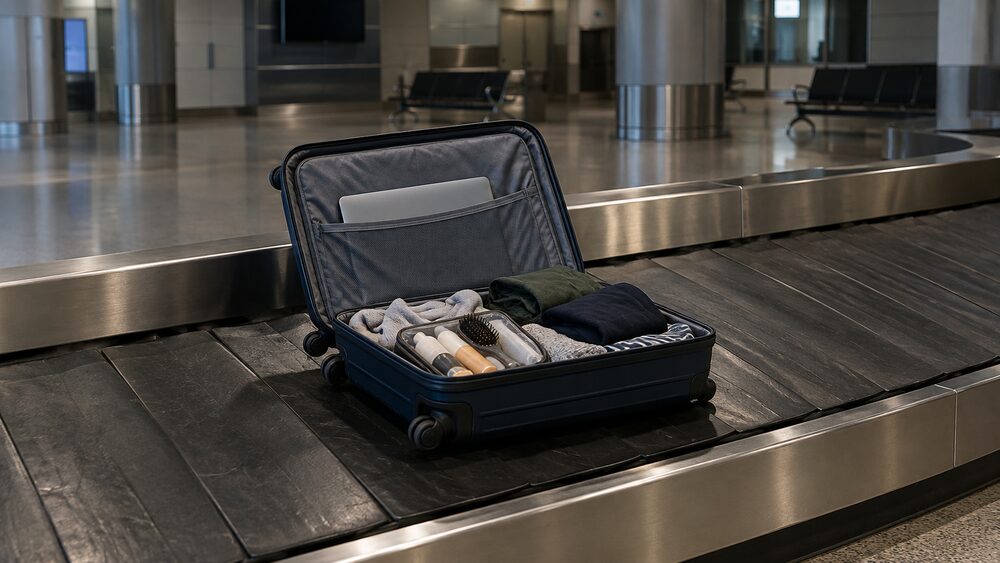
If you pack a laptop, tablet or phone into a suitcase that goes into the plane hold, many travel insurance policies will not pay out if it is lost, stolen or damaged. Guidance for travellers is blunt about it: many travel insurance policies do not cover valuables when checked into the hold, and often require you to keep valuables under your custody and control1. In practice that means the item needs to stay in your hand luggage or about your person1.
If you pack a laptop, tablet or phone into a suitcase that goes into the plane hold, many travel insurance policies will not pay out if it is lost, stolen or damaged. Guidance for travellers is blunt about it: many travel insurance policies do not cover valuables when checked into the hold, and often require you to keep valuables under your custody and control1. In practice that means the item needs to stay in your hand luggage or about your person1.
The exclusion is not universal, but it is common enough that the safe assumption is that hold baggage cover is for clothes, toiletries and similar items, not for the electronics you would hate to lose. Where a policy does cover gadgets, it is usually through a separate gadget section or an add-on, and the limits are often lower than people expect.
This page sets out what baggage cover normally includes, how per-item excesses work, where home insurance and packaged bank accounts fit in, and what to do when a claim is refused.
What travel insurance baggage cover includes
Baggage cover is one section of a travel policy, sitting alongside medical expenses, cancellation and personal liability. It pays towards replacing or repairing your belongings if they are lost, stolen or damaged during a trip, up to a limit set out in the policy schedule. The headline limit is not the whole story: policies commonly set sub-limits for categories such as valuables, and the Financial Ombudsman Service gives the example of a policy that may pay a maximum of £1,000 for lost baggage but also have a sub-limit of £200 for valuables4.
The list of items that may not be covered when checked into the hold is long. It typically includes photographic equipment and accessories, sunglasses and spectacles, laptops, tablets, radio or audio equipment and mobile phones, other electronic equipment including games and computers, telescopes, binoculars, leather, suede or fur clothing, personal jewellery, gold, silver and watches, video equipment, money, credit cards and passports, stamp, coin and medal collections, works of art, hearing aids, and sports and leisure equipment and musical instruments1.
Some insurers go further and offer enhanced gadget cover as a distinct product. One European travel policy, for example, includes theft, loss, accidental damage and malicious damage across all levels of its gadget cover6. That is a specific product feature, not a standard part of baggage cover, and it needs to be checked policy by policy.
Per-item excess: what you pay on each claim
The excess is the first part of any claim you pay yourself, and travel insurance excesses are structured in a way that catches people out. Policies usually charge separate excesses for each individual claiming under the policy and each section of the policy being claimed under4. Some insurers also apply an excess per item, for example a passport, wallet or item of luggage7.
That combination matters. A family of four claiming for four damaged bags under one section could face four excesses, and a claim spanning both baggage and cancellation could face two more. The ombudsman has published a case study involving a policy whose terms read:
"Policy Excess: Under most sections of the policy, claims will be subject to an excess. This means that you will be responsible for paying the first part of each and every claim under each and every section of the policy."
The size of the excess varies. One example policy quoted in guidance for people with a disability carries a £250 excess on a medical claim in Europe9. On some cheaper policies, the excess can be as high as £50010. A high excess on a low-value gadget claim can wipe out most of the payout, which is why the excess matters as much as the limit when comparing policies.
Home insurance may cover gadgets away from home
Standard contents insurance covers your possessions at home, such as your TV, jewellery, furniture or clothes11. It can also cover gadgets kept in the home, including TVs, games consoles, tablets and mobile phones12. What it does not do by default is follow those gadgets out of the door. Mobile phones, tablets and laptops are regularly taken out of the home, so they are not covered by regular home insurance or accidental damage cover, and need away from home cover or separate gadget cover instead13.
The route to covering a laptop abroad is usually personal possessions cover added to contents insurance. That protects your belongings whenever you leave your home and can extend to protection when you travel abroad14. Some contents policies exclude accidental loss or damage to tablets, laptops and other small electronic devices unless you have taken additional cover for portable items or already have accidental damage cover15.
Home insurance is not a substitute for travel insurance. While your home insurance may cover certain possessions away from your home, it will not cover you for medical care and cancellations16. The two do different jobs, and a trip needs both if you want protection on all fronts.
Packaged bank account and credit card cover: check the limits
Packaged bank accounts often include travel insurance as one of their benefits, and the cover is real but narrower than a standalone policy. These policies often come with strict rules such as age limits, exclusions for pre-existing medical conditions or short maximum trip lengths, and winter sports, cruises and gadget cover are often missing17. Where valuables are covered at all, the per-item limit can be low: one packaged bank account travel policy covers valuables up to £500 for any single item18.
Credit cards are weaker still. Some credit card companies provide a very basic level of cover similar to travel insurance, but it contains many exclusions and independent guidance is clear that it should not be relied on16.
There is a separate protection worth knowing about when a travel company fails. Under the Package Travel and Linked Travel Arrangements Regulations 2018, package holidays are covered for the hotel, car hire, transfers, tours, food and just about everything else19. That is protection against the organiser failing, not against your laptop being stolen, and it does not extend to flight-only bookings.
| Source of cover | What it typically does | What to watch |
|---|---|---|
| Travel insurance baggage section | Pays up to the policy limit for lost, stolen or damaged belongings | Hold baggage exclusions and sub-limits for valuables1 |
| Travel insurance gadget add-on | Theft, loss, accidental damage and malicious damage where offered6 | Not standard; check it is included |
| Contents insurance with personal possessions cover | Protects belongings away from home, including abroad14 | Often an add-on; per-item limits apply |
| Packaged bank account travel policy | Travel cover as an account benefit | Age limits, medical exclusions, short trip lengths, missing gadget cover17 |
| Credit card travel cover | Very basic cover | Many exclusions; not to be relied on16 |
When a claim can be refused
The most common reason a gadget claim fails is the hold baggage exclusion itself. If the item was in a suitcase that went into the hold, and the policy excludes valuables from the hold, there is usually nothing to claim1.
Beyond that, claims fail for several other reasons. Most travel insurance policies do not cover claims if the losses can be recovered from another source20, so an airline payout or a home insurance payout for the same item will usually stop a travel claim. Undisclosed medical conditions are another trap: if you do not tell the insurer and then need to make a claim, your policy may be invalid and the company may not pay9. All medical conditions must be declared, including anything that develops between taking out the policy and the day you travel7.
There is a route back when a policy was sold to someone who was never eligible for it. Where a customer was not eligible for a policy and so could never claim under it, the ombudsman has said it would be likely to uphold the complaint, and where the customer would have bought a different policy that would have covered the claim, it would ask the insurer to pay the claim21.
Making a claim after loss or theft
Report the loss fast. Guidance for travellers says that if you are a victim of theft, report it immediately to the local police, your hotel and your tour operator, and that insurers often require a written report7. Phone insurance policies commonly require you to report a lost or stolen phone within 24 hours of discovering the incident, and for some insurers as little as 12 hours22.
Keep the paperwork. One travel insurer asks for the original booking invoice or receipt for all claims, a written report from the relevant authority for theft, mugging, loss, damage in transit, travel delay or catastrophe claims, a medical certificate for claims resulting from accident, injury or illness, and receipts supporting the claim24. Another asks for receipts for essential purchases, a report from the public transport provider, proof of purchase for lost, stolen or damaged items, and written confirmation of the loss or damage from the police or another relevant independent authority25.
Proof of purchase is not a formality. Where gadget cover is offered, gadgets must have been bought new or used from a UK VAT registered company or an equivalent overseas company, bought second hand, or gifted, and valid proof of purchase is needed to claim26. A laptop warranty is not a substitute: it may cover minor repairs or mechanical malfunctions but may not cover loss, theft or damage27.
Where to get help
If a claim is refused and you think the decision is wrong, complain to the insurer first. If you are not satisfied with the final response, the Financial Ombudsman Service looks at travel insurance complaints free of charge and its decisions are binding on the insurer. The ombudsman opened 996 travel insurance complaints in the first quarter of 2025/2628 and 277 mobile phone insurance complaints in the first quarter of 2026/2729.
For free, impartial guidance on insurance and on complaining, the MoneyHelper service and the British Insurance Brokers' Association signposting service can point you towards help30. If you are travelling with a medical condition and are being quoted a high premium, the FCA signposting rule applies: since April 2021, consumers offered a travel insurance policy with a £100 or more additional premium due to a medical condition must be given information about a specialist provider30.
Travel insurance premiums can become more expensive as you get older, especially with a medical condition or disability31, and cover for people with mental health conditions works in much the same way as for physical conditions, with cancellation likely to be covered if a medical professional deems you unfit to travel32.
Sources32 cited
- Travelling with valuables British Insurance Brokers' Association, 2026-09-26
- Is your annual travel insurance still worth it? Which?, 2026-07-27
- 6 questions to ask yourself before buying travel insurance Which?, 2025-05-30
- Travel insurance policy excesses and limits Financial Ombudsman Service, 2026-09-26
- Will your travel insurance actually cover you this summer? Which?, 2026-05-22
- Virgin Money European travel insurance Virgin Money, 2026
- Travel insurance guides British Insurance Brokers' Association, 2026-01-19
- Our insurer is charging us too much for our baggage claim Financial Ombudsman Service, 2026-09-26
- Insurance Scope, 2025-10-14
- How to claim on your travel insurance Which?, 2026-05-21
- What is contents insurance? Lloyds Bank, 2026-09-26
- Home insurance Financial Ombudsman Service, 2026-09-26
- Accidental damage cover Post Office, 2026-09-15
- Gadget insurance: how to get the best cover Which?, 2025-08-05
- Accidental damage Baptist Insurance, 2024-02-09
- Travel insurance ABTA, 2026
- 7 costly travel insurance mistakes and how to avoid them Which?, 2025-12-07
- Gadget insurance Halifax, 2026-09-27
- Nightmare holiday? You might be able to claim your money back Which?, 2025-09-03
- Travel insurance Financial Ombudsman Service, 2026-09-26
- Mis-sold travel insurance Financial Ombudsman Service, 2026-09-26
- Mobile phone insurance: how to get the best cover Which?, 2025-08-05
- Mobile phone and gadget insurance Financial Ombudsman Service, 2026-09-27
- Make a travel insurance claim esure, 2026
- Travel insurance FAQs NFU Mutual, 2026-09-26
- Annual multi-trip travel insurance Tesco Insurance, 2026-09-26
- Laptop insurance esure, 2026
- Quarterly complaints data Q1 2025/26 Financial Ombudsman Service, 2025-08-07
- Quarterly complaints data Q1 2026/27 Financial Ombudsman Service, 2026
- Signposting access to insurance British Insurance Brokers' Association, 2026-03-25
- Shopping around for insurance Independent Age, 2026-09-26
- Travel insurance for people with mental health conditions British Insurance Brokers' Association, 2026-09-26




 MoneyHelperFree, impartial money and pensions guidance, set up by government
 Financial Ombudsman ServiceFree, independent help when a complaint about a firm is not put right
 FSCSProtects your money if a bank, insurer or investment firm fails
 Citizens AdviceFree advice on money, consumer and legal problems in England and Wales
 GOV.UKOfficial information on tax, benefits and government services