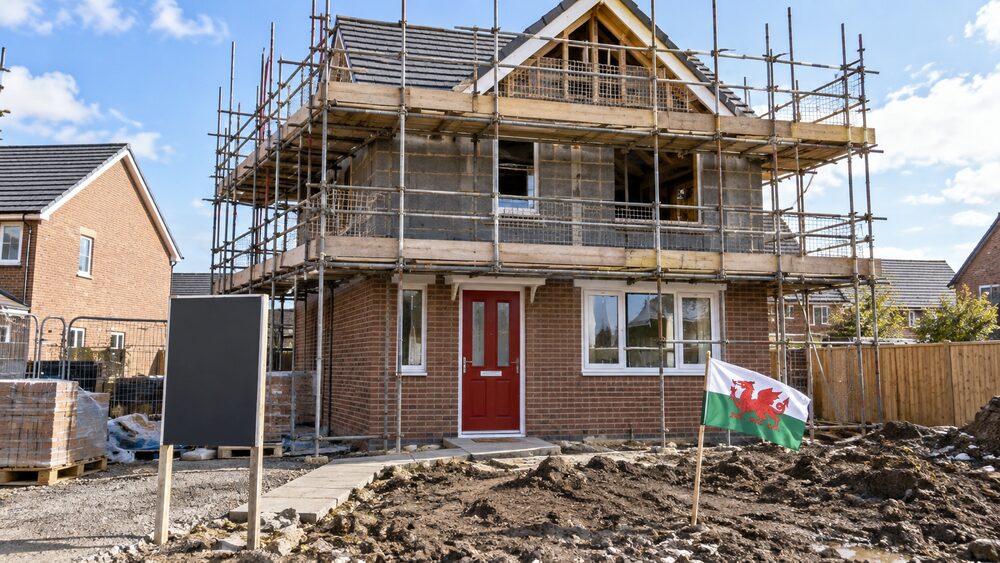
Help to Buy - Wales is a shared equity loan from the Welsh Government that helps you buy a newly built home in Wales. It lends you up to 20% of the property's value, so you need only a 5% deposit and a repayment mortgage for the remaining 75%1. The loan is interest-free for the first five years, and you repay it as a share of your home's value rather than the amount you borrowed1.
Applications must be submitted by 31 March 2027, when the scheme closes to new buyers2. Since it began on 2 January 2014, there have been 15,043 completions under the scheme3, and the Welsh Government says it has helped more than 14,000 households achieve homeownership4.
Help to Buy - Wales closes to applications on 31 March 2027
The scheme has been extended several times, and its end date has moved more than once, so it is worth checking the current position before making plans. In December 2024 the decision was made to extend the scheme to September 20267, and in July 2026 the Welsh Government confirmed that Help to Buy - Wales will continue until 31 March 2027, giving up to 400 more households the opportunity to purchase a new build home with a smaller deposit4. Applications must be submitted by that date2.
The July 2026 announcement also confirmed that the Help to Stay - Wales scheme, which supports existing homeowners struggling with their mortgage, will run until the same date4. The extension provides certainty to the 50 developers and SMEs registered with Help to Buy Wales, and the Welsh Government will continue to work with UK Finance, the Home Builders Federation, the Federation of Master Builders and the Development Bank of Wales to deliver it4.
If you already have a Help to Buy - Wales equity loan, the closing date does not affect you. The loan continues on its existing terms, and the sections below on interest, repayment and permissions apply for as long as you hold it.
How the shared equity loan works: up to 20% of a new build's value
Help to Buy - Wales is a shared equity loan scheme for homes up to £300,000, available from 1 April 2023 for first-time buyers and home movers8. The Welsh Government provides an equity loan of up to 20% of the value of the new build property1, which you put towards the cost of buying a newly built home9. You then take out a first charge repayment mortgage with a qualifying lender for the remaining 75%, and provide a deposit of at least 5%1.
The scheme's own figures show how buyers actually use it. In the quarter from 1 July to 30 September 2025, the mean property purchase price using the scheme was £264,335, with a mean equity loan value of £53,0003. Since the scheme was introduced, around two thirds (64%) of all recipients have provided the minimum 5% deposit10. The equity loan must be repaid within 25 years11.
The loan is not free money, and it is not a gift. It is a mortgage secured on your home, called an Equity Mortgage, and the amount you repay is linked to the value of your home at the point of repayment, not the amount you originally borrowed9. If your home rises in value, you repay more; if it falls, you repay less. The scheme's purpose is to support people who would not be able to get onto the property ladder without it9.
Help to Buy, Wales is a Welsh Government scheme that provides a shared equity loan to buyers of new-build homes2, with the Development Bank of Wales supporting delivery2. Over 60 builders and over 20 lenders participate11.
Who can use Help to Buy - Wales and which homes qualify
The scheme is open to anyone living in Wales: individuals, couples and families1. Support is available to all home buyers, not just first-time buyers, who wish to purchase a new home but may be constrained in doing so7. In practice, first-time buyers dominate: 77% (11,340) of all completed purchases since the scheme's introduction were made by first-time buyers10, and 84% of purchases in 2023-24 were by first-time buyers7.
The conditions you must meet are:
- You must be buying an eligible home with a maximum price of £300,000 from a builder who is registered with the scheme5.
- You must be able to fund at least 80% of the property price through a combination of a repayment mortgage and a minimum deposit of 5% of the purchase price5.
- You must take out a first charge repayment mortgage with a qualifying lender5.
- The home you purchase must be your only home6.
- You must not be renting your existing home and buying a second home through the scheme5.
- You must not sublet any part of the house you are buying through the scheme5.
The scheme is only available for purchases of new build homes through a developer registered with it12. Only developers and builders with a Home Builders Federation star rating of 4 stars and above are permitted to be part of the scheme6. Homes sold through the scheme must also meet a minimum of EPC B for energy performance11.
There are restrictions on the type of home. The scheme is not available on the purchase of houses sold on a leasehold basis, though purchases of flats sold on a leasehold basis may still be possible12. For leasehold properties in the third phase of the scheme, which began in April 2021, future ground rents are restricted to zero7.
If you are not eligible, or the scheme does not suit, other Welsh schemes exist. Homebuy - Wales provides an equity loan of between 30% and 50% of the property value for those who meet specific criteria to buy a property, including existing homes8, and Rent to Own - Wales supports the purchase of a home for those who do not have sufficient funds for a mortgage deposit8. The site's guide to shared ownership, Homebuy and Rent to Own in Wales covers these in detail, and there is a comparison of Shared Ownership and Help to Buy - Wales.
Price cap: new builds up to £300,000
The maximum purchase price for an eligible property under the scheme is £300,0006. The cap has changed over the life of the scheme, which is why some older sources give different figures. From 1 April 2021 the purchase price cap was decreased from £300,000 to £250,0007, and the December 2022 extension saw the purchase price cap rising back to £300,00011.
The price bands buyers actually use show where the cap bites. In 2023-24, 247 properties (47.6% of completed purchases) were in the £250,001 to £300,000 band, and 43 (8.3%) were in the £175,001 to £200,000 band7.
For context, the average property value in Wales was £215,000 in July 2026, an annual increase of 2.6%13. Most new builds sold through the scheme sit above that average, which reflects the fact that the loan is used for newly built homes rather than the wider market.
What it costs: nothing for five years, then interest from year 6
The equity loan is interest-free for the first five years1. You pay no interest on the loan during that period, which reduces financial pressure while you settle into your new home1. If you pay back your entire loan within the first five years, you pay zero interest1.
From year 6, you begin to pay interest9. The scheme's buyers' guide sets out how this works: you pay a monthly interest fee of 1.75% of the Equity Mortgage from year 66. On a £40,000 Equity Mortgage, that is £58.33 interest every month in year 6, worked out as (£40,000 x 1.75%) divided by 126.
After year 6, the interest rate rises each year in line with inflation, measured by the Consumer Prices Index (CPI), plus 2%. In the scheme's worked example, which assumes CPI at 2.5%, the rate is 1.83% in year 7 and 1.91% in year 86.
Interest is not the only ongoing cost. The scheme charges a monthly management fee, and if you miss a payment you will need to pay it back when you come to repay your Equity Mortgage14. The scheme's fees and interest do not classify as rent, so they do not qualify for housing benefit12.
The interest you pay is on the equity loan only, and it does not reduce the amount you owe. The loan itself is repaid separately, as a share of your home's value, as the next section explains. The site's guide to when interest starts on a Help to Buy equity loan covers the mechanics in more detail.
Repaying the loan: a share of the home's value, not the amount borrowed
The single most important thing to understand about the equity loan is that the total amount you repay is linked to the value of your home at the point of repayment, and not the amount you originally borrowed9. The terms of the shared equity mortgage confirm that the repayment amount is calculated as a proportion of either the current market value established via an independent RICS valuation, or the sale price of your property, whichever is higher9.
The scheme's rules make this concrete. If you received 20% of the initial purchase price, the amount you will have to pay back will be 20% of either the current market value or the sale price, whichever is higher15. So if your home has risen in value, the Repayment Sum rises; if it falls, it falls15.
You can repay in two ways: paying off at least 10% of your home's current value, or paying the full amount in one go1. If making a partial repayment, your first partial repayment will need to be at least 10% of the market value of your home at that time6. The amount you repay is based on the current market value of the home at the time you choose to repay, and the percentage you want to repay15.
When you repay, the market value must be established by a RICS registered valuer with experience in residential valuations in the region. The valuer must confirm the market value, provide three comparable properties and sale prices within the last six months within a five mile radius of the postcode area (or the best available), not be related or known to you nor connected to the estate agent, inspect the interior and provide a full valuation report with the inspection date. Valuations for bank or mortgage purposes are not acceptable15. The market value assumes the property is in good repair and good condition, well maintained and decorated, the garden is properly maintained, integral kitchen appliances are in good mechanical order, the covenants in the Equity Mortgage have been fully complied with, and the property will be vacant upon completion of any disposal15.
The equity loan must be repaid within 25 years11. The site's guide to repaying your Help to Buy Wales equity loan early covers the process step by step.
Remortgaging, extra borrowing and alterations need permission
Because the equity loan is secured on your home, anything that changes the mortgage or the property itself needs the scheme's consent. The rules treat switching lenders and further borrowing as things that only happen with permission, and only for permitted purposes6.
Switching mortgage deal with your current lender. If you choose to switch lenders to get a better deal on your repayment mortgage, either with your current or a new lender, you need permission, and further borrowing is only considered for permitted purposes such as repaying the equity loan, structural alterations on medical grounds, or a Transfer of Equity6.
Switching to a new lender. You need the scheme's permission to switch lenders6. Additional borrowing alongside the switch is not permitted unless you are partially repaying the Equity Mortgage, and any additional borrowing is limited to the redemption amount12.
Extra borrowing. Additional borrowing is not permitted unless you are partially repaying the Equity Mortgage, and the additional borrowing is limited to the redemption amount12. The only permitted purposes for further borrowing include repaying the equity loan, structural alterations on medical grounds, or a Transfer of Equity6.
Alterations. Consent is only given for significant home improvements in exceptional circumstances12, and structural alterations are only permitted on medical grounds6. Unpermitted alterations that increase the value of the property increase the amount you owe6.
Subletting. The scheme's permission rules extend to how you use the property: consent is only given for significant changes in exceptional circumstances12. The site's guide to subletting a home bought with an equity loan covers this in detail.
Leasehold houses. Changes affecting the property or its ownership, including anything relating to a leasehold house, fall under the same permission rules: consent is only given for significant home improvements in exceptional circumstances12, and structural alterations are only permitted on medical grounds6.
How to apply through a registered builder and a trained conveyancer
Applications are made through the scheme's own process, and there are two requirements that catch buyers out: the builder must be registered with the scheme, and the conveyancer must be trained.
The steps are:
- Check you meet the eligibility conditions, including the £300,000 price cap and the 5% minimum deposit5.
- Find a new build home from a builder registered with the scheme5. Over 60 builders participate11.
- Reserve the property. The reservation fee is fully refundable if you are not eligible for an Equity Mortgage or you do not exchange contracts6.
- Instruct a conveyancer from the scheme's List. Customers must instruct a conveyancer who is listed on the scheme's website, and applicants must use a solicitor or conveyancer who has undertaken Help to Buy - Wales training16. The List consists of conveyancers who have completed the scheme's specific training requirements16.
- Take out a first charge repayment mortgage with a qualifying lender5. Over 20 lenders participate11.
- Submit the application before the 31 March 2027 deadline2.
Neither Help to Buy Wales nor the Welsh Government accepts any liability for financial loss or damage arising from the use of the List or any of the conveyancers included on it16, so the choice of conveyancer remains yours. The site's guide to solicitors and conveyancers explains the difference, and conveyancing covers the legal work involved.
If something goes wrong, you can complain to Help to Buy - Wales over the phone or in writing in an email or letter, about the scheme or about someone who works for it, and someone else can complain on your behalf2. Concerns can also be raised confidentially with the Development Bank of Wales by contacting their General Counsel2.
If you fall behind on payments: arrears, default notices and where to get help
Arrears on a Help to Buy - Wales loan are outstanding management fees, outstanding interest payments, and any other outstanding amounts relating to charges or interest17. If you miss a payment, you will need to pay it back when you come to repay your Equity Mortgage14.
The scheme has a published arrears policy, and its overriding objective is to help customers get back on track with their repayments17. The policy sets out what happens in sequence:
- Notification: customers whose accounts go into arrears will be given information about the arrears before any attempts are made to recover them, and a reasonable amount of time to make good the arrears17.
- Assessment: the scheme will take steps to understand a customer's financial circumstances to determine a suitable arrears management plan17.
- Arrears management tools: a range of suitable tools will be made available to address the various repayment issues customers face17.
- Verification: before pursuing a customer, the scheme will take reasonable steps to verify the accuracy and adequacy of the data relating to the account, so it only pursues the verified customer and for the correct amount17.
- Signposting: customers in financial difficulty will be referred to a source of free and independent debt advice17.
A Default Notice will be issued 180 days after an Equity Mortgage goes into arrears where there has been no engagement or co-operation from the customer, or the customer has not satisfied any arrears management agreements made. The Default Notice provides 28 days' notice to make good the arrears17.
Although only some of the accounts under the scheme are FCA-regulated, the scheme states that non-regulated accounts will be treated with equivalent standards to FCA-regulated accounts, and customers will be treated in accordance with the principles of Treating Customers Fairly, with due consideration given to forbearance and breathing space as appropriate17. The scheme also has a vulnerable customers policy: its overriding objective is to provide vulnerable customers with the same access to products and services as is available to all customers18. Any consumer can become vulnerable at any time, for example through serious illness, bereavement or loss of income, and "particularly" vulnerable customers are those who might not have the mental capacity to make financial decisions18. If you feel you have been treated unfairly, you can let the scheme know19.
Help to Buy - Wales works closely with the debt advice agency PayPlan, but you can use any free debt advice agency14. If you are struggling to pay your mortgage more widely, the Help to Stay - Wales scheme offers free financial advice and a shared equity loan to eligible Welsh homeowners who are struggling to pay, or are at risk of falling behind with, their mortgage20. The scheme is delivered subject to the funding available20. The site's guide to debt help lists free sources of advice.
Selling, and what happens if the owner dies
When you sell your home, the equity loan is repaid as part of the process. The amount you repay is based on either the market value of your property or the sale price, whichever is the higher15. Because the repayment is a percentage of that figure, a home that has risen in value means a larger repayment, and one that has fallen in value means a smaller one15.
Because the repayment is a percentage of value, it moves with the market. The scheme's own example shows a property bought for £200,000 with a £40,000 (20%) equity mortgage: if the property value falls 5% a year and you sell at the start of year 6, you would need to repay £30,951, which is 20% of the sale price6. The loan falls with the value, which is the flip side of it rising when the value rises.
If the owner dies, the scheme's rules distinguish between joint and sole ownership. Where you bought with someone else, the deceased person's interest in the property will either be transferred to the surviving co-owner or will pass under the terms of their will. If you bought your home on your own and you die, it will be managed through your estate under the terms of your will, if you have made one12.
The site's guides to selling a shared ownership home and negative equity cover related situations, and buying a home in Wales explains the wider purchase process, including Land Transaction Tax, Wales's equivalent of Stamp Duty.
Sources20 cited
- Buy your dream home with Help to Buy - Wales Welsh Government, 2026
- Help to Buy - Wales: complaints Welsh Government, 2026
- Help to Buy - Wales shared equity loan scheme: July to September 2025 Welsh Government, 2025-12-11
- Hundreds of households to benefit from extension of three key schemes to make housing more affordable Welsh Government, 2026-07-28
- Help to Buy - Wales: eligibility Welsh Government, 2026
- Help to Buy - Wales buyers' guide: phase 3 extension Welsh Government, 2024-09
- Help to Buy - Wales shared equity loan scheme: April 2023 to March 2024 Welsh Government, 2024-06-04
- Help to buy a home schemes Welsh Government, 2026
- Help to Buy - Wales post-sale information leaflet Welsh Government, 2025-06
- Help to Buy - Wales shared equity loan scheme: April 2024 to March 2025 Welsh Government, 2025-06-26
- HBF Help to Buy Wales report Home Builders Federation, 2026-09-26
- Help to Buy - Wales: frequently asked questions Welsh Government, 2021-06-29
- UK House Price Index for July 2026 HM Land Registry, 2026
- Help to Buy - Wales: help with the cost of living Welsh Government, 2026
- Help to Buy - Wales valuation guide Welsh Government, 2024-07
- Help to Buy - Wales trained conveyancers Welsh Government, 2025-03-18
- Help to Buy - Wales: arrears Welsh Government, 2026
- Help to Buy - Wales: vulnerable customers Welsh Government, 2026
- Help to Buy - Wales: treating customers fairly Welsh Government, 2026
- Get help paying your mortgage with Help to Stay - Wales shared equity loan Welsh Government, 2023-11-06





 MoneyHelperFree, impartial money and pensions guidance, set up by government
 Citizens AdviceFree advice on money, consumer and legal problems in England and Wales
 ShelterFree housing advice from a charity
 GOV.UKOfficial information on tax, benefits and government services
 Financial Ombudsman ServiceFree, independent help when a complaint about a firm is not put right