
Stamp Duty Land Tax (SDLT) is charged on most property purchases in England and Northern Ireland, but a range of reliefs and exemptions can reduce the bill to nothing. The crucial point is that reliefs are not applied automatically. To claim relief, you fill in a Stamp Duty Land Tax return even if you do not owe any tax, and enter the correct relief code in box 9 of the return1. If nobody claims the relief, the tax is charged in full.
Some transactions do not need a return at all because they are exempt: transactions where no money or other type of payment changes hands, property left to you in a will, and property transferred because of divorce or the dissolution of a civil partnership2. Everything else, including the reliefs covered on this page, has to be actively claimed.
This page covers the reliefs that matter to individuals and the people they deal with when moving home: Right to Buy, part exchange with a housebuilder, employer relocation purchases, compulsory purchase, and charity purchases. It sets out the conditions for each, the code used to claim it, and what happens if a relief is claimed wrongly or missed. Scotland and Wales have their own property taxes with their own reliefs, and the final section explains where SDLT reliefs stop applying.
Reliefs are claimed, not automatic
The single most important thing to understand about SDLT reliefs is that HMRC does not apply them for you. The tax is calculated on the chargeable consideration, and unless a valid claim is made on the return, the full rates apply. To claim relief, you fill in a Stamp Duty Land Tax return, even if you do not owe any tax, and enter the correct relief code from the relevant guidance in box 91.
In practice, the return is usually completed by the conveyancer handling the purchase, but the tax is the buyer's responsibility. If a relief is available and is not entered on the return, the buyer has overpaid, and a correction or refund claim to HMRC is needed to put it right. HMRC publishes a refund process for the higher rates of SDLT, which requires your details, the property details including the SDLT unique transaction reference number, the amount of tax paid, the amount to be repaid, and the bank account details of the payment recipient3. In the first quarter of 2025 alone, HMRC statistics show there were 6,900 additional dwellings refunds totalling £136 million4, which gives a sense of how often tax is paid first and reclaimed afterwards.
The risk runs the other way too. HMRC might charge a penalty if you claim relief you are not eligible for1. Each relief has its own qualifying conditions, set out in the sections below, and it is the buyer who bears the consequences of claiming wrongly. Where the conditions are only partly met, some reliefs allow a partial claim rather than an all-or-nothing choice, and those rules are noted where they exist.
Transfers on divorce, inheritance and gifts
Not every property transfer between individuals is taxed. Some transactions are exempt from the start and do not need a relief claim at all. HMRC's guidance lists exempt transactions including transactions where no money or other type of payment changes hands, property left to you in a will, and property transferred because of divorce or the dissolution of a civil partnership2.
This is what makes transfers on divorce different from the reliefs covered elsewhere on this page. When a home is transferred between spouses or civil partners as part of a divorce or dissolution, no SDLT return is normally needed, because the transfer falls within the exempt categories rather than needing a relief code2. The position is different for unmarried couples separating: a transfer between them is not covered by the divorce exemption, and tax may be due on the payment, if any, that changes hands.
Inheritance works in a similar way. Property left to you in a will is exempt2. There is also a further exemption for variations of a will: a transaction changing the terms of a will within 2 years of someone dying is exempt, as long as a different beneficiary gets the property and the new beneficiary does not pay a compensation payment, including taking over a mortgage2. This can matter where a family redirects a inherited property between members after a death.
Gifts of property, where no money or other payment changes hands, are also exempt2. Note that "no payment" is the test: if the person receiving the property takes over a mortgage or pays anything of value, the exemption can be lost, because consideration has changed hands. The rules on buying a home jointly and declarations of trust cover some of the situations where property moves between family members.
The relief codes that go on the return
Each relief has its own code, entered in box 9 of the SDLT return. The codes most relevant to the situations on this page are:
| Relief | Code | Typical situation |
|---|---|---|
| Building company buys an individual's home | 08 | Part exchange when buying a new build1 |
| Employer buys an employee's house | 09 | Job relocation1 |
| Compulsory purchase | 10 | Sale to a body with compulsory purchase powers1 |
| Planning obligations | 11 | Developer's first sale complying with planning obligations1 |
| Group relief | 12 | Transactions within a group of companies1 |
| Charities relief | 20 | Charity buying property for charitable purposes1 |
| Right to Buy | 22 | Right to Buy purchase from a social landlord1 |
| Registered providers of social housing | 23 | Registered provider buying property1 |
| First Time Buyers' Relief | 32 | First-time buyer purchase1 |
| Multiple Dwellings Relief | 33 | Bulk purchase of dwellings1 |
| Seeding relief | 38 | Seeding a property investment fund1 |
The code is the mechanism, not the claim itself. Entering a code without meeting the relief's conditions is what triggers penalty risk1, so the conditions matter as much as the number. Some reliefs in the wider list have been withdrawn or changed: Multiple Dwellings Relief, a bulk purchase relief applying to the purchase of 2 or more dwellings in England and Northern Ireland, was abolished for purchases from 1 June 20245, and the abolition of Multiple Dwellings Relief is covered in full on its own page.
Two further codes apply to cross-border returns rather than reliefs. Where a return covers land in England or Northern Ireland in a different tax jurisdiction, code 6996 is entered instead of the local authority name; for a single property with land in both England and Wales, code 6997 is used6. These are administrative codes for the return itself, not relief claims.
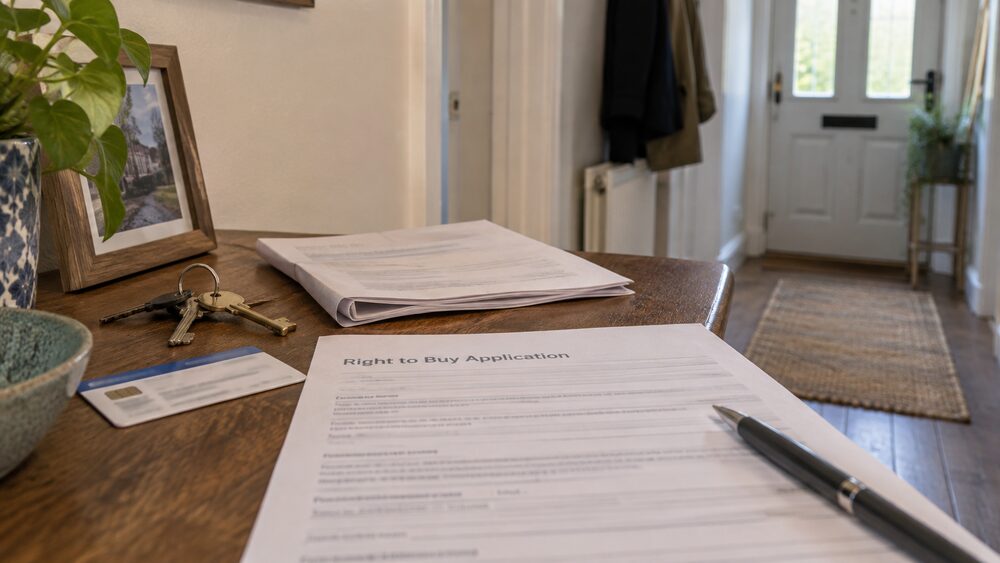
Right to Buy relief: tax on the discounted price
Right to Buy lets eligible council and housing association tenants buy their home at a discount. The SDLT position follows the price actually paid: the tax is worked out on the discounted price the buyer pays, not on the property's market value, and not including additional payments which may become due1. The relief is claimed with code 22 in box 9 of the return1.
The discounts can be substantial. The Right to Buy guide states the discount for a house or flat can be up to a maximum of 70% of the property value, or £16,000 to £38,000 depending on where you live, whichever is lower7. Because SDLT is charged on the price after that discount, many Right to Buy buyers owe little or no tax, and where the discounted price falls below the SDLT threshold, no tax is due at all, though a return may still be needed to claim relief1.
Eligibility for Right to Buy itself has its own rules, separate from the tax relief. A tenant is not eligible, for example, if they are an un-discharged bankrupt, have a bankruptcy petition pending against them, or have obtained a debt relief order7. There is also a transition rule: applications for the Right to Buy received by social landlords before 21 November 2024 from eligible tenants will be eligible for the current discounts7. The full scheme, including who qualifies and how to apply, is covered on the Right to Buy page.
A Right to Buy buyer may also qualify for first-time buyer relief, since most are buying their first property. First-time buyer relief exempts the first £300,000 of the price, provided the total purchase price does not exceed £500,0008. Which relief gives the better result depends on the discounted price, and the conditions for each are different, so both are worth checking before the return is filed.
When a building company buys your old home in part exchange
Part exchange works like this: you buy a new build home from a house building company, and the same company buys your old home, so you have no chain. Without relief, the company would pay SDLT on its purchase of your old home, and that cost could be reflected in the price offered for it. The relief removes SDLT from the company's purchase of your home when the conditions are met.
The conditions are about you and your old home. You must have lived in the property as your main or only home at some time during the 2 years before the building company or property trader bought it, you must be buying a new home from that company, and you must intend to live in the new home as your main or only home. The relief does not apply to house swaps1. The area of land the company buys along with the old home must not go above certain limits, normally 0.5 hectares1. The company claims the relief with code 08 in box 9 of its return1.
Scotland has an equivalent relief within Land and Buildings Transaction Tax (LBTT). Where a house building company buys a home from a person who is buying a new home from that company, the purchase by the company is relieved from LBTT if certain conditions are met, including that the person buys a new home from the company9. The same 0.5 hectare permitted area applies, or a larger piece of ground if it is in keeping with the size and character of the home9.
There is a partial relief rule where the land condition fails but the others are met. The chargeable consideration for the company's acquisition of your home is calculated by deducting the market value of the permitted area from the market value of the home9. In other words, the company pays tax on the value of the excess land only, rather than losing the relief entirely.
A related Scottish relief covers property traders. A property trader can claim relief when buying a home from a person who is buying a new home from a house building company, if certain conditions are met, and the acquisition must be made in the course of a business that includes or consists of acquiring dwellings from persons who acquire new homes from house building companies10. This relief comes with strings attached: it is withdrawn if the property trader spends more than the permitted amount on refurbishment of the home, grants a lease or licence of the home beyond six months, or permits any principal or employee, or anyone connected to them, to occupy the home10. The same withdrawal triggers appear in the separate Scottish guidance on the relief11. The purpose of these conditions is to stop the relief being used for anything other than a temporary holding of the old home while it is resold.
Employer buys an employee's home on relocation
Some employers buy an employee's home when the employee has to move for work, particularly where the employer needs the move to happen quickly or the employee is struggling to sell in a slow market. SDLT relief is available for the employer's purchase, claimed with code 09 in the SDLT return1.
The conditions mirror the part exchange relief. The employee must have lived in the property as their main or only home at some time during the 2 years before their employer bought it, the move must result from a job relocation, the price paid must not exceed market value, and the land bought is normally within 0.5 hectares1. Each condition does real work: the main home test stops the relief being used on investment or second properties, the relocation test ties it to employment, and the market value test stops an inflated price being used to subsidise the employee.
For the employee, the practical effect is that the employer's purchase of the old home does not carry a SDLT bill that the employer would otherwise pass on. The employee's own purchase of a new home in the new location is a separate transaction, taxed on its own facts, and the employee may qualify for a relief on that purchase, such as first-time buyer relief if the conditions are met8.
Selling to a housebuilder or employer: the 2-year main home rule
The part exchange and employer relocation reliefs share a central test: the property sold must have been the seller's main or only home at some time in the 2 years before the purchase1. This is the condition that most often decides whether the relief is available, so it is worth understanding what it means.
The test is not that the seller must be living there on the day of the sale. It is enough that the property was their main or only home at some point during the 2-year window before the company or employer bought it1. Someone who moved out into temporary accommodation a few months before a relocation, or who spent periods away while the sale was arranged, can still meet the test, provided the property genuinely was their main or only home during the window. What the rule rules out is the sale of a property that was never the seller's home: a buy-to-let flat, a holiday home or an inherited property the seller never occupied cannot qualify.
The land limit is shared too: normally 0.5 hectares, including the site of the home itself1. Where the grounds are larger, the relief can still be available if the land is in keeping with the size and character of the home, and where only the permitted area condition fails, partial relief is calculated by deducting the market value of the permitted area from the market value of the home9.
The 2-year main home rule also echoes the rules on the higher rates of SDLT for additional properties, where the legislation looks at whether the purchaser had a prior interest in the dwelling that was their only or main residence12. The two systems are separate, but both are built around the idea that a genuine home, genuinely occupied, is treated differently from a property held as an investment. The higher rates on second homes and the situations where those rates do not apply are covered on their own pages.
Compulsory purchase relief and development
When land or property is bought under compulsory purchase powers, the buying body can claim SDLT relief. The relief is claimed with code 10 in box 9 of the SDLT return1.
The scope is wider than the name suggests. A body that has the legal power to compulsorily buy land or property can claim the relief when the sale allows development by a third party, even if the sale is not made under those powers1. So the relief is not limited to formal compulsory purchase orders: a sale that enables a development to proceed, made by a body that could have compulsorily purchased the land, can also qualify. The relief belongs to the buying body, not to the homeowner whose property is taken, and it is the buying body that files the return and enters the code.
A related relief covers planning obligations. A developer can claim relief so that they do not pay SDLT on the first sale when complying with planning obligations, claimed with code 11 in the return1. This typically arises where a developer is required, as a condition of planning permission, to provide land or property for a public purpose, such as a school or affordable housing, and the first sale of that property would otherwise be taxed.
For a homeowner whose property is compulsorily purchased, the SDLT position is not usually the main financial concern: the compensation arrangements dominate. But it is worth knowing that the purchase itself is relieved, so no SDLT cost flows back into the compensation offered.
Charities relief, and when HMRC can take it back
Charities can get relief from SDLT when they buy land and property for charitable purposes1. The relief is claimed with code 20 in box 9 of the return1. It can also apply to joint purchases: a charity can claim relief on its share when buying jointly with a non-charity buyer as tenants in common1. This matters for mixed purchases, such as a charity and a housing provider buying a building together, where the charity's share of the purchase is relieved even though the rest is taxed.
The relief is conditional and can be withdrawn after the event. HMRC can withdraw the relief if, within 3 years of the transaction, the charity still owns the property and stops being a charity, or uses the property for non-charitable purposes1. The 3-year window means a charity purchase is not final from a tax point of view until three years have passed without a change of status or use.
For a donor or seller dealing with a charity, this is background rather than something to act on: the tax is the charity's liability, and the withdrawal rules fall on the charity. But it explains why a charity buyer may ask questions about how the property will be used, since the charity's own tax position depends on the property remaining in charitable use.
How the reliefs are claimed, step by step
The claim process is the same whatever the relief. It runs as follows:
- Check the conditions. Each relief has its own tests, whether that is the discounted price for Right to Buy, the 2-year main home rule for part exchange and relocation, or the charitable purpose requirement for charities1.
- File the SDLT return. A return is needed even if no tax is owed1. Your conveyancer normally prepares and submits it.
- Enter the code in box 9. The code identifies the relief being claimed, for example 22 for Right to Buy or 08 for a building company part exchange1.
- If the relief was missed, apply to HMRC for a refund. The refund process requires the property details, the SDLT unique transaction reference number, the amount of tax paid, the amount to be repaid, and bank account details for the payment recipient3.
Timing matters. The deadline for filing and paying is covered on the page on when to pay Stamp Duty, and the consequences of missing it on paying Stamp Duty late. If a conveyancer fails to pay or claim correctly, the page on unpaid property tax explains the steps to take.
Where SDLT reliefs stop: Scotland and Wales
SDLT is a tax on property transactions in England and Northern Ireland only. You do not pay SDLT if you buy a property in Scotland from 1 April 2015, when Land and Buildings Transaction Tax (LBTT) applied instead1. Wales replaced SDLT with Land Transaction Tax (LTT), and the Welsh government sets out the differences between LTT and SDLT in its own guidance14.
The reliefs do not simply carry over. Scotland has its own set of LBTT reliefs, listed in the legislation, which include sale and leaseback, first-time buyer relief, multiple dwellings relief, registered social landlords relief, group relief, charities relief, certain compulsory purchases, planning obligations compliance and others15. The part exchange and property trader reliefs described earlier on this page are the Scottish equivalents, with their own conditions and withdrawal rules9. Scotland also has its own first-time buyer relief, with qualifying conditions including that the buyer is a first-time buyer who has never previously owned residential property anywhere in the world, intends to occupy the dwelling as their only or main residence, and that the transaction is not one to which the Additional Dwelling Supplement applies16. A review of LBTT notes that the relief exempts the first £300,000 of the price from the tax for a first-time buyer, provided the total purchase price does not exceed £500,00017.
Wales sets its own LTT rates and reliefs, and the Welsh guidance confirms first-time buyer relief is available within LTT14. The higher rates rules in Wales have their own conditions and time limits, including an exception period of up to 3 years from the date a taxpayer sells their previous only or main residence in certain sale-before-purchase scenarios18, and the page on LTT higher rates covers those in full.
Where a property straddles a border, special return codes apply: code 6996 for land in England or Northern Ireland in a different tax jurisdiction, and code 6997 for a single property with land in both England and Wales6. The pages on buying a home in Scotland, buying a home in Wales and buying a home in Northern Ireland explain how the process and taxes differ in each nation.
Sources18 cited
- Stamp Duty Land Tax relief for land or property transactions HM Revenue and Customs, 2014-05-06
- Stamp Duty Land Tax transactions that don't need a return HM Revenue and Customs, 2014-01-03
- Apply for a refund of the higher rates of Stamp Duty Land Tax HM Revenue and Customs, 2024-08-29
- Quarterly Stamp Duty Land Tax statistics: commentary HM Revenue and Customs, 2025
- Stamp Duty Land Tax: abolition of Multiple Dwellings Relief from 1 June 2024 HM Revenue and Customs, 2024-03-06
- Stamp Duty Land Tax: cross-border transactions HM Revenue and Customs, 2018-03-21
- Your right to buy your home: a guide HM Government, 2026-04-08
- Stamp Duty Land Tax relief for first time buyers HM Revenue and Customs, 2017-11-22
- LBTT3012: part exchange relief Revenue Scotland, 2020-06-05
- LBTT3013: property trader purchase relief Revenue Scotland, 2021-06-30
- LBTT3014: relief where property trader buys home Revenue Scotland, 2021-06-30
- Finance Act 2003 Schedule 4ZA legislation.gov.uk, 2026
- Apply for a refund of Stamp Duty Land Tax HMRC, 2026-06-26
- Land Transaction Tax: differences from Stamp Duty Land Tax Welsh Government, 2018-04-26
- Land and Buildings Transaction Tax (Scotland) Act 2013, Part 3 legislation.gov.uk, 2026-02-26
- LBTT3048: first-time buyer relief Revenue Scotland, 2025-11-19
- Review of Land and Buildings Transaction Tax: independent external policy analysis 2025-26 Scottish Government, 2026-03
- Review of Land and Buildings Transaction Tax, page 7 Scottish Government, 2026-03-25





 MoneyHelperFree, impartial money and pensions guidance, set up by government
 Citizens AdviceFree advice on money, consumer and legal problems in England and Wales
 ShelterFree housing advice from a charity
 GOV.UKOfficial information on tax, benefits and government services
 Financial Ombudsman ServiceFree, independent help when a complaint about a firm is not put right