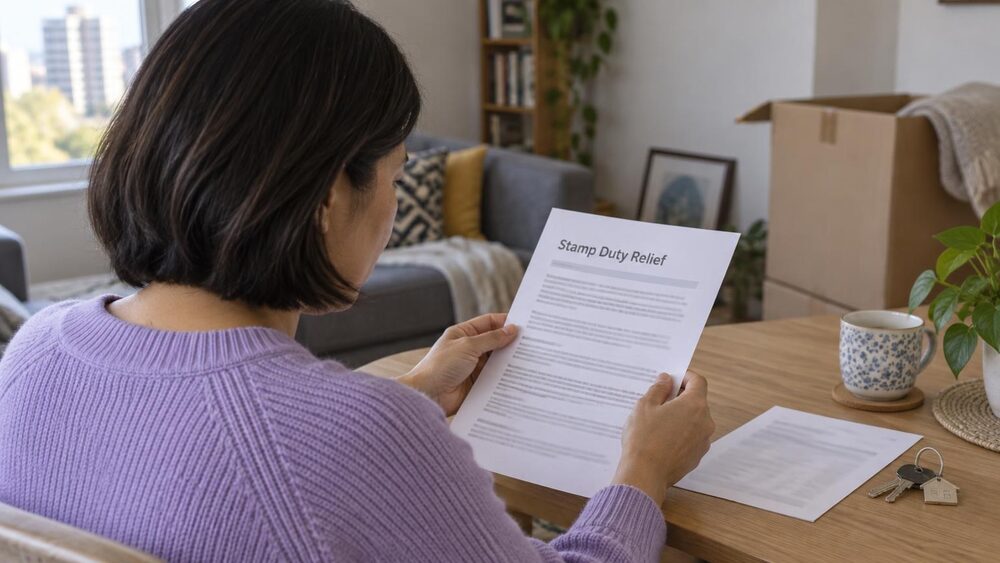
HM Revenue & Customs updated its guidance on Stamp Duty Land Tax relief for land or property transactions to reflect the change in the nil-band threshold that took effect on 23 September 2022. The department's page records that "the consideration for residential properties and standard residential purchases changed on 23 September 2022"1.
The same update states that "the government has temporarily increased the nil rate bands of residential Stamp Duty Land Tax from £125,000 to £500,000"1. The guidance also confirms that First Time Buyers' Relief and multiple dwellings guidance were aligned with the threshold change1.
For first-time buyers, the guidance sets out that relief can be claimed where the buyer, and anyone else buying with them, intends to occupy the property as their main residence and the purchase price is no more than £500,0001. Under those terms the rates are 0% on the first £300,000 and 5% on the remainder up to £500,0001. Where the purchase price is more than £500,000, the relief cannot be claimed and standard rates apply to the total purchase price1. Claims are made by entering relief code '32' in the Stamp Duty Land Tax return1.
For shared ownership purchases, the guidance states that first-time buyer relief can be claimed where the buyer intends to occupy the property as their main residence and the market value of the shared ownership property is £500,000 or less1. The relief also applies to rent payments, so no Stamp Duty Land Tax is payable on the rent1.
On multiple dwellings, the guidance explains that relief could be claimed when purchasing more than one dwelling, with the tax worked out by dividing the total amount paid by the number of dwellings, calculating the tax on that figure and multiplying by the number of dwellings1. The minimum rate of tax under the relief is 1% of the amount paid for the dwellings1. Claims were made using relief code '33'1.
The guidance also notes that Stamp Duty Land Tax does not apply in Scotland from 1 April 2015, where Land and Buildings Transaction Tax applies, or in Wales from 1 April 2018, where Land Transaction Tax applies1.
"The government has temporarily increased the nil rate bands of residential Stamp Duty Land Tax from £125,000 to £500,000."
Why it matters for households
The threshold change affects the point at which residential Stamp Duty Land Tax starts to be charged on a purchase in England and Northern Ireland. For buyers completing on or after 23 September 2022, the nil-band threshold was raised from £125,000 to £500,000 on a temporary basis1. First-time buyers claiming relief face a £500,000 purchase price ceiling, above which the relief is not available and standard rates apply to the whole price1. Shared ownership buyers are assessed against a £500,000 market value limit, and the relief extends to rent payments1.
The guidance as it now stands also records later changes. Multiple Dwellings Relief is abolished and can no longer be claimed for transactions which complete, or substantially perform, on or after 1 June 20241. The thresholds and rates for residential property changed again on 1 April 2025, and buyers who bought their first home before that date are directed to different relief rates for first time buyers1.
What happens next
The page carries a last updated date of 9 July 20251. It states that the thresholds and rates for residential property changed on 1 April 20251. No further dated steps are set out in the guidance.
For more detail, see the guides on Stamp Duty first-time buyer relief, Multiple Dwellings Relief and first-time buyer relief above £500,000, or the home-buying hub and tax hub.
 MoneyHelperFree, impartial money and pensions guidance, set up by government
 Citizens AdviceFree advice on money, consumer and legal problems in England and Wales
 ShelterFree housing advice from a charity
 GOV.UKOfficial information on tax, benefits and government services
 Financial Ombudsman ServiceFree, independent help when a complaint about a firm is not put right