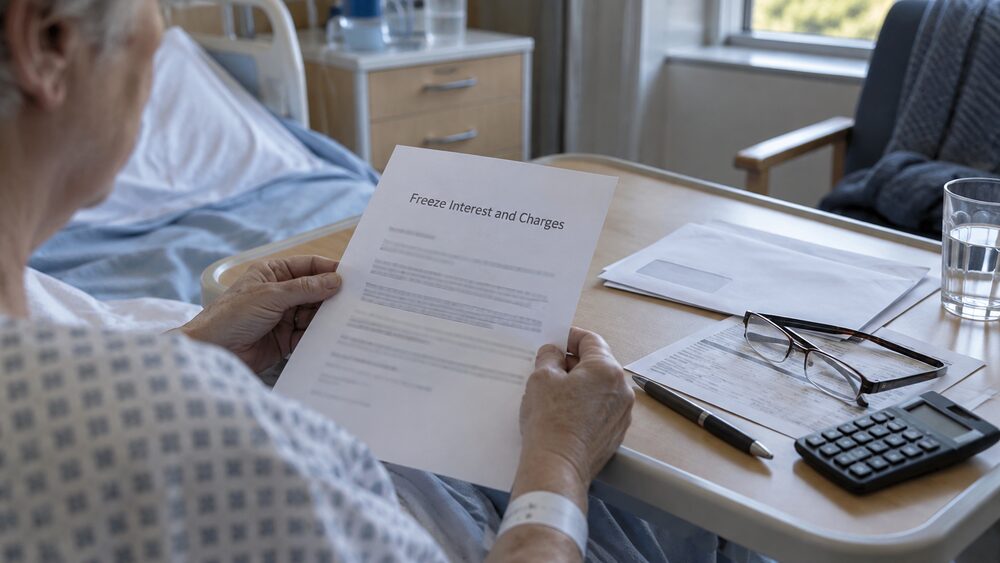
No, creditors are not always required to freeze interest and charges. During an informal arrangement, creditors do not legally have to stop interest and charges, so your level of debt may not reduce at all over that period1. Under a debt management plan, creditors will sometimes agree to freeze any interest charges, but they do not have to agree to this or to the plan at all2. The same is true of a direct request to your bank about an overdraft: it may reduce or waive interest, but it is not obliged to3.
No, creditors are not always required to freeze interest and charges. During an informal arrangement, creditors do not legally have to stop interest and charges, so your level of debt may not reduce at all over that period1. Under a debt management plan, creditors will sometimes agree to freeze any interest charges, but they do not have to agree to this or to the plan at all2. The same is true of a direct request to your bank about an overdraft: it may reduce or waive interest, but it is not obliged to3.
There are routes where interest and charges do stop. Breathing Space, the government scheme in England and Wales, pauses interest and charges on eligible debts for 60 days while you get advice4. An individual voluntary arrangement (IVA) usually stops interest and charges as part of the deal6. In Scotland, the Debt Arrangement Scheme freezes all interest, fees and charges from the date you apply while a debt payment programme is in place7.
The practical question is therefore not whether creditors must freeze interest, but which route fits your situation, what it costs, and what happens to the charges that keep building in the meantime.
Creditors are not always required to freeze interest
The starting point is that freezing interest is a concession, not a right. In an informal arrangement, where you agree reduced payments directly with the people you owe, creditors do not legally have to stop interest and charges, so your level of debt may not reduce at all over this period1. That is the trap in informal deals: the balance can sit still or grow even while you are paying.
Regulators do expect creditors to look at this. The rules say that creditors should look at stopping or lowering charges and interest on a debt if you tell them you are in financial difficulty10. That is a strong expectation rather than an absolute duty, and it depends on you telling them. If you say nothing, nothing changes.
Some debts behave differently. When you get a county court judgment (CCJ), interest on the debt is usually frozen automatically by the court11. A debt relief order works differently again: during the moratorium year your creditors are not allowed to ask you to pay any money to your debts12. And there are limits on what creditors can press you to do: your creditors must not put any pressure on you to use your pension pot to pay your debts13.
Where a creditor refuses to freeze interest, the balance of what you owe can keep climbing, which is why the formal routes below matter. If a creditor turns down your repayment offer, there are steps you can take, covered in what to do when a creditor refuses your repayment offer.
Breathing Space: interest and charges paused while you get advice
Breathing Space is the government scheme in England and Wales that gives you a protected period to get debt advice. It freezes payment demands and legal action by creditors to allow you to get free quality debt advice14. During a standard breathing space, creditors must stop collecting debts you have with them, must not contact you, and must freeze interest and charges on eligible debts5. StepChange describes the effect simply: creditors must "Stop any interest and charges right away"4.
The period is 60 days. It gives people in England and Wales who are struggling with problem debt a 60-day grace period during which interest and charges on their debts will be frozen15. For rent or mortgage arrears, the scheme freezes interest, fees and charges on the arrears14. It also stops most creditors applying interest and charges, for 60 days16.
Two things are worth knowing before you rely on it. First, it is a pause, not a solution: when the 60 days end, the debts are still there and interest can restart. Second, it is arranged through an adviser, not applied for directly by you. That is why the share of registrations made through individual advice charities matters, and why the figures below are worth reading.
How much of Breathing Space is arranged through StepChange?
Because Breathing Space is registered through advisers, one charity accounts for most of it. Between the start of the scheme in May 2021 and 30 June 2026, StepChange Debt Charity registered 54% of breathing spaces17. The figure for the period to 31 July 2026 is 56%18. The two official statistics cover slightly different end dates, which is why the percentages differ.
The volume of applications is not fixed. In November 2025 StepChange updated its suitability criteria for its clients to apply for Breathing Space, which led to a reduction in applications19. That is a reminder that access to the scheme depends partly on how an advice charity assesses your case, not only on whether you qualify.
If you are considering Breathing Space, the practical step is to speak to a free advice service, which can register it for you and check which of your debts are eligible. The full rules, including what it does and does not stop, are set out in Breathing Space: the 60-day protection from creditors.
Debt management plans: asking creditors to freeze interest for free
A debt management plan is an informal agreement, usually arranged by a charity or a fee-charging firm, under which you make one monthly payment that is shared among your creditors. On interest, the position is clear and limited: creditors will sometimes agree to freeze any interest charges, but do not have to agree to this or to the plan at all2. Creditors may agree to freeze interest and charges on your debt and may stop other action like taking you to court, although they do not have to2. StepChange puts it the same way: the people you owe may agree to freeze interest and charges, but there is no guarantee8. Business Debtline states it flatly: creditors do not have to freeze interest under a DMP20.
What you can do is ask, and ask in the right way. Creditors should look at stopping or lowering charges and interest on a debt if you tell them you are in financial difficulty10. When you approach them, the things you may be able to get are reduced payments and a freeze on interest and charges21.
A DMP is not the only informal option. A token payment plan, where you pay a small fixed amount, is another, and the two are compared in token payment plan or Breathing Space. If you want to understand how a DMP is set up and run, see debt management plans explained.
IVAs: when interest and charges stop under a formal deal
An individual voluntary arrangement is a formal agreement with your creditors, supervised by an insolvency practitioner, that typically runs for a set period. On interest, the position is stronger than under a DMP: interest and charges are usually stopped6. As part of an IVA, interest charges are frozen, and creditors are prevented from taking action to retrieve what they are owed22.
The trade-off is that you commit to payments for years. In return for paying back what you can realistically afford each month, typically for a period of 5 years, your creditors will agree to freeze interest and write off the balance of any unpaid debts23. The Debt Advice Foundation describes the same bargain: your creditors will agree to freeze interest and write off any outstanding debts24. Another summary puts it as creditors agreeing to freeze interest and write off any outstanding debt at the end of the arrangement22.
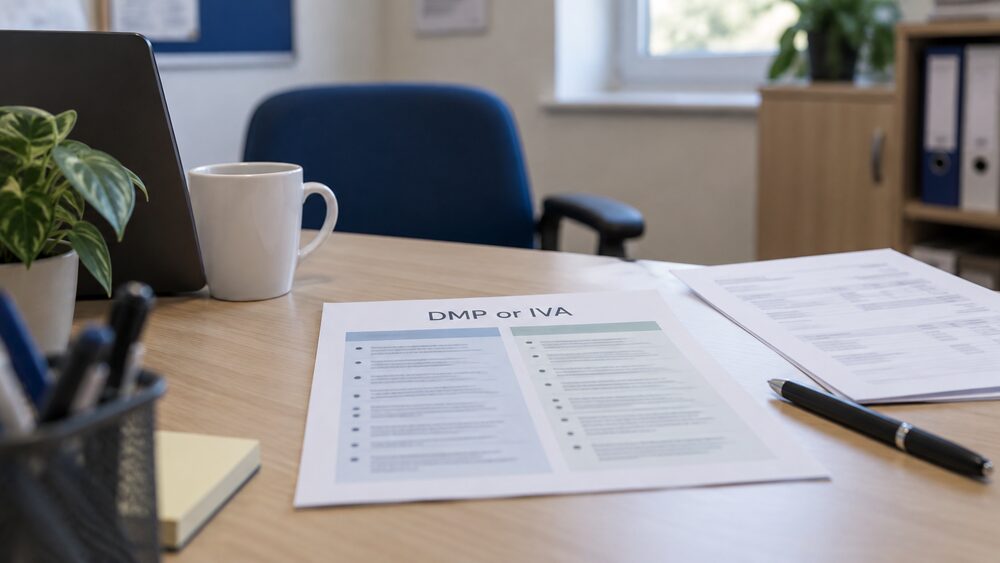
So an IVA does what a DMP cannot guarantee: it stops the interest clock and writes off what you cannot pay, provided you keep to the terms. It is a bigger commitment, it appears on your credit file, and it can affect some jobs. The full picture is in individual voluntary arrangements explained, and the choice between the two informal and formal routes is set out in debt management plan or IVA.
Overdraft and council tax debts: where charges keep building
Some debts are harder to freeze than others, and two come up repeatedly.
Overdrafts carry high interest and charges25. If you are living in your overdraft, the balance can grow even when you are not spending. There is one specific tactic worth knowing: if the overdraft is interest-free, you could treat such debts as priorities so that you keep the overdraft, because if the bank starts charging interest, your overdraft could increase very quickly26.
If you are worse off because of the April 2020 overdraft rule changes, you can contact your bank. Banks might, for example, reduce or waive interest, offer a continuation of overdraft borrowing at the current rate of interest, or agree on a repayment programme possibly including a personal loan3. That is a negotiation, not an entitlement.
Council tax is different again. Council Tax is a priority debt27, which means it should be dealt with ahead of credit cards and other unsecured borrowing, and the consequences of not paying can escalate quickly. Where you cannot pay, the route is to contact the council about a payment arrangement rather than to let arrears build. See council tax arrears and priority and non-priority debts.
Free debt advice: StepChange and how to get a reference number
Free advice is the route into most of the protections above, and it costs nothing. StepChange offers free debt advice online28, free and impartial debt advice29, and independent and non-judgemental debt advice30. Its service is free, flexible and based on a comprehensive assessment of your situation, with practical help and support for however long it is needed31.
On cost, the position is unambiguous. StepChange is a charity and provides free debt management plans32. It provides free debt management plans and does not charge any set up or maintenance fees33. It does not charge any fees for this service, and all the money you pay goes toward paying off your debts34. It can set up a free debt management plan for you, handling payments and negotiating with the people you owe money to35.
Two concerns stop people asking for help, and both have clear answers. On credit files: getting debt advice has no impact on your credit file or credit score9, debt advice has no impact on your credit score36, getting debt advice will not impact your credit score37, and getting advice will not affect your credit file or impact your credit score38. On privacy: StepChange states that it will not share your details with anyone39, and it can stop post from coming to your home if you do not want people to know you are getting debt help40.
If you are in Scotland, the Scottish Government supports organisations to give free debt advice41, there are free advice services that can help42, and StepChange Debt Charity Scotland states that its debt advice is free43. Scotland also has the Debt Arrangement Scheme, where all interest, fees and charges on your debt will be frozen from the date that you apply whilst a debt payment programme is in place7, and once your debt payment plan is applied for, interest and charges are frozen and will be written off if you keep to the programme44.
Where protection stops
Two limits are worth stating plainly.
First, debt advice itself is not covered by the Financial Services Compensation Scheme. The scheme's list of what it does not cover includes debt advice45. That protection covers deposits, insurance and investments, not the advice. If a debt management plan provider closes, the plan does not simply vanish, and there are steps to take to keep it running or move it; Citizens Advice sets these out35. Money you have already paid across to creditors is not held by the adviser.
Second, a freeze is not a write-off unless the arrangement says so. Breathing Space pauses interest and charges for 60 days15; when it ends, they can restart. A DMP freeze depends on creditors agreeing and can be revisited2. Only the formal solutions, an IVA or the Debt Arrangement Scheme, combine a freeze with writing off what you cannot pay, and only if you keep to the terms22.
If a creditor or a debt adviser treats you unfairly, the Financial Ombudsman Service can look at complaints involving the cost of living, including how firms have handled people in financial difficulty31. Free and impartial help is available from MoneyHelper, from charities such as StepChange and Citizens Advice, and from the National Debtline and Business Debtline services. If you are dealing with debt and your mental health is affected, there is specific support at debt and mental health.
Sources45 cited
- Options for dealing with debt Advice NI, 2026
- Debt management plans nidirect, 2025-11-06
- Overdrafts explained MoneyHelper, 2026-09-25
- During Breathing Space StepChange Debt Charity, 2026-09-25
- Breathing Space National Debtline, 2026-09-25
- Individual voluntary arrangements nidirect, 2025-09-12
- Mortgage shortfalls (Scotland) National Debtline, 2026-09-25
- DMP questions StepChange Debt Charity, 2026-09-25
- Arranging payment with creditors StepChange Debt Charity, 2026-09-25
- Freezing interest and charges StepChange Debt Charity, 2026-09-25
- Replying to a county court claim Business Debtline, 2026-09-26
- Debt relief order Mental Health and Money Advice, 2025-08-08
- Pension freedoms and debts (Scotland) Business Debtline, 2026-09-26
- Breathing Space from your debts Shelter Cymru, 2026-08-30
- Free debt advice contacts Which?, 2025-08-26
- Hire purchase debt Business Debtline, 2026-09-26
- Individual insolvency statistics, July 2026 Insolvency Service, 2026
- Individual insolvency statistics, August 2026 Insolvency Service, 2026
- How does debt affect a credit file StepChange Debt Charity, 2026-09-25
- Debt management plans (Scotland) Business Debtline, 2026-09-26
- Dealing with creditors StepChange Debt Charity, 2026-09-25
- Individual voluntary arrangements R3, 2026-07-20
- How much will I have to pay into my IVA Debt Advice Foundation, 2025-08-15
- What is an IVA Debt Advice Foundation, 2025-08-15
- How can I stop living in my overdraft StepChange Debt Charity, 2026-09-25
- Student money and debt (England and Wales) Business Debtline, 2026-09-26
- If you cannot pay your council tax mygov.scot, 2026-09-25
- Debt and my career StepChange Debt Charity, 2026-09-25
- Pay off or reduce debt StepChange Debt Charity, 2026-09-25
- Helping friends in debt StepChange Debt Charity, 2026-09-25
- Complaints involving cost of living Financial Ombudsman Service, 2026-09-26
- Setting up a debt management plan StepChange Debt Charity, 2026-09-25
- Debt solution costs StepChange Debt Charity, 2026-09-25
- Debt management plan StepChange Debt Charity, 2026-09-25
- Your debt management plan provider has closed Citizens Advice, 2026-09-25
- Debt and mental health support StepChange Debt Charity, 2026-09-25
- Bailiff help and advice StepChange Debt Charity, 2026-09-25
- Credit confidence StepChange Debt Charity, 2026-09-25
- Additional support StepChange Debt Charity, 2026-09-25
- Debt and money Scottish Government, 2026-09-25
- Debt advice Shelter Scotland, 2026-01-16
- Debt advice Scotland StepChange Debt Charity, 2026-09-25
- Income tax debt (Scotland) Business Debtline, 2026-09-26
- Debt management Financial Services Compensation Scheme, 2026-09-25
- Check if a previous energy supplier owes you money Citizens Advice, 2026-09-25








 StepChangeFree debt advice and solutions from a charity
 National DebtlineFree debt advice by phone, webchat and online
 MoneyHelperFree, impartial money and pensions guidance, set up by government
 Citizens AdviceFree advice on money, consumer and legal problems in England and Wales
 Citizens Advice ScotlandFree advice across Scotland