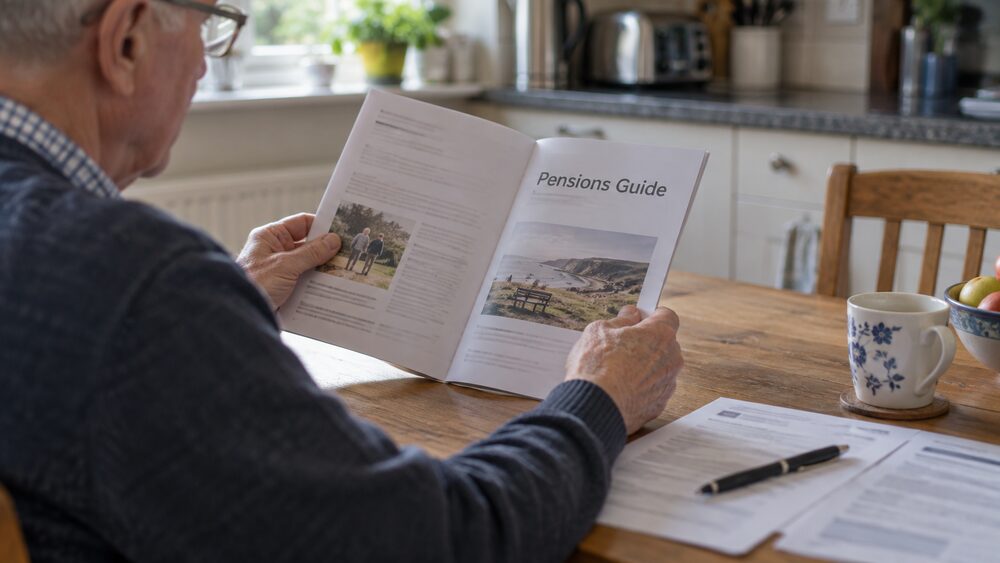
Public sector pension schemes cover NHS staff, teachers, civil servants, local government workers, the police, the armed forces and other public service employees. They are statutory defined benefit pensions: the income you get in retirement is worked out from the scheme rules, based on how much you earned and how long you were a member, not on how investments perform1. Most major public sector schemes are also unfunded, meaning the pensions being paid today come from current tax revenue rather than from a pot of investments1.
In most cases your employer adds money into the scheme for you, on top of your own contributions, and the government pays in as well through tax relief2. The earliest age at which you can take a private or workplace pension is currently 55, rising to 57 from April 20283. The State Pension age, which several schemes use as their normal pension age, is currently 66 and increasing gradually until it reaches 674. Once in payment, public sector pensions are increased in line with the Consumer Price Index every April5. If you want to transfer a defined benefit pension worth over £30,000 into a defined contribution pension, you must pay for financial advice first6.
How public sector pensions work: a guaranteed income paid from taxes
A public sector pension is a promise set out in legislation rather than an investment product. These schemes are statutory defined benefit pensions, which provide an income in retirement based on how much you earned and how long you were in the scheme1. That is the key difference from a defined contribution pension, where the outcome depends on how much was paid in and how the investments performed. The rules of each scheme, not the stock market, decide what a public sector pension pays.
The funding side works differently from almost any other workplace pension. Most major public sector schemes are unfunded: they are paid from current tax revenue, rather than from dedicated investment funds1. There is no pot of money with your name on it. Instead, today's contributions from employees and employers, topped up by taxation, pay today's pensioners, and the same arrangement is expected to carry on paying future pensioners. The Local Government Pension Scheme is the exception among the big schemes, as it holds invested funds, but the benefit is still defined by the scheme rules.
What you and your employer pay in matters, but it does not decide what you get. In most cases your employer also adds money into the pension scheme for you2, and the government pays in too, in the form of tax relief on your contributions8. Employers do not pay National Insurance contributions on pension contributions, although employees and self-employed people do9. If you want to see how this compares with a private scheme, the guide to workplace pensions explains the duties employers have under automatic enrolment.
Once the pension is in payment, it is protected against inflation. Public sector pensions are increased in line with the Consumer Price Index (CPI) every April, under the provisions of the Pensions (Increase) Act 1971 and the Social Security Pensions Act 19755. Ill-health pensions receive the same protection10.
Tax works much as it does for any other pension income. The rest of the pension, after any tax-free lump sum, is paid as regular income on which you pay tax11. People pay tax on payments from pensions like other income, and can access up to 25% of their pension savings tax-free12. The guides to pension tax relief and how pension income is taxed cover the detail, including the position for Scottish taxpayers.
Final salary or career average: the sections of the NHS and Teachers' schemes
Public sector schemes have been reformed over the years, and many members now have benefits built up in more than one part of their scheme. The NHS Pension Scheme is the clearest example. The 1995 and 2008 Sections of the NHS Pension Scheme pay a final salary pension, meaning the pension is based on your salary near the end of your membership1. Later service builds up differently, under the reformed scheme introduced from 2015, where benefits are linked to your earnings across your career rather than a final salary. The NHS Pension Scheme guide covers the sections in detail, and the Teachers' Pension Scheme works on the same split between older final salary service and reformed service.
The 2015 reforms, and the court case that followed them, affect almost everyone with long public sector service. The McCloud remedy deals with the period between 2015 and 2022, when younger members were moved to the reformed schemes while older members stayed in the legacy schemes, which the courts found to be unlawful age discrimination. NHS Scotland consulted on the implementation of the 2015 remedy, including how members' service for that period is treated13, and the Scottish Teachers' Pension Scheme ran a parallel consultation14.
One practical effect shows up in divorce valuations. For pension sharing arrangements on or after 1 October 2023, two cash equivalent transfer values are calculated for eligible active and deferred members: one based on legacy scheme benefits for the remedy period and one based on reformed scheme benefits, and the higher value is used as the basis for the arrangement14. If you have public sector service from before 2015 and are going through a divorce, the remedy may change the number that matters.
Normal pension age: 60, 65 or your State Pension age
Your normal pension age is the age at which you can take your scheme pension in full, without a reduction for early payment. It varies by scheme and by which part of the scheme your service sits in. Members of the Scottish Public Pensions Agency schemes who receive pension credits following a divorce have a retirement age of 60, 65 or State Pension age, depending on the scheme, the implementation date and their date of birth7, and the same three ages run through the UK public sector schemes generally.
The State Pension age matters because several schemes use it as their normal pension age. It is currently 66, increasing gradually over the next two years until it reaches 674. More broadly, State Pension age can be between 61 and 68 depending on when someone was born15. The guide to State Pension age explains how to find yours.
Taking your pension before your normal pension age is usually possible, but the pension is reduced to reflect the longer time it will be paid. In the Civil Service Pension Scheme you can take your pension before your normal pension age, with a minimum age of 55, or 50 for some older schemes, although your benefits will be reduced1. The Civil Service Pension Scheme guide covers its rules in full.
What you pay in: contribution rates set by salary band
Most public sector schemes set your contribution rate by salary band, so higher earners pay a higher percentage. The Scottish Teachers' Pension Scheme structure from 1 April 2024 shows how this works: members with pensionable pay of £46,156 to £54,728 pay 9.90%, those with £67,976 to £92,693 pay 11.73%, and those with £92,694 and above pay 12.14%16. Each band saw a small increase that year, of between 0.20 and 0.24 percentage points16. Other schemes, including the NHS Pension Scheme, use a similar tiered approach, with the rates set out in scheme regulations and reviewed periodically.
Your employer pays in as well. In most cases your employer also adds money into the pension scheme for you2, and the government contributes through tax relief8. On the National Insurance side, employers pay a secondary Class 1 rate of 15% above the Secondary Threshold on their employees' earnings, but not on pension contributions17.
Because the schemes are unfunded, the employer contribution is not building an investment pot for you; it is helping to pay the pensions currently in payment, with your own pension to be paid the same way when your turn comes1. What you get is set by the scheme formula, not by how much was contributed. If you want to see how the tax relief on your contributions works, including the difference between relief at source and net pay, the pension tax relief guide covers it.
The minimum pension age rises from 55 to 57
The earliest age at which you can take a private pension, including some workplace pensions, is currently 55, and this increases to 57 from April 20283. The change applies across the public sector schemes too: members planning to take benefits early need to be aware that the age gate moves up in April 2028.
In practice this means someone who expected to access a pension at 55 or 56 after April 2028 will have to wait until 57. The rules on taking benefits early because of ill health are separate, and the guide to taking your pension early because of ill health covers them. The normal pension age of your scheme, whether 60, 65 or your State Pension age, is unchanged by this rise; it only affects the earliest point at which reduced early benefits can be taken3.
Leaving early: refunds, deferred pensions and transfers
What happens when you leave a public sector scheme before retirement depends on how long you have been a member and what you decide to do. If you opt out within one month of joining, your employer must let you leave the scheme and refund the money you have paid18. Beyond that point, the options widen.
The Scottish Police pension scheme shows the pattern. If you leave within three months of being enrolled into the scheme, your employer will automatically refund any contributions you have made, less deductions19. If you leave between three months and two years, you can apply for a refund of contributions less a deduction for tax, transfer your benefits to another public service pension scheme, or defer taking a refund until you have decided what you are doing next19. A refund ends your membership: the money comes back to you, but the pension rights built with it are given up. The guide to what happens to your workplace pension when you leave a job covers the alternatives, including leaving the pension preserved in the scheme.
Members who have bought extra pension face an extra consideration. If you leave NHS employment but return within 12 months and have not received a refund of your contributions, you may be able to restart your Additional Pension payments on your original terms. If your break in service is more than 12 months, or you received a refund, the agreement is terminated and you are credited with the proportion of the Additional Pension you have paid for20.
Transferring out is a bigger decision. To transfer your pension, you usually need to check your current scheme allows transfers out, make sure you will not lose any benefits, decide which scheme to transfer into, check if you need to pay for financial advice, ask your current provider for a transfer value, and ask the new scheme to start the transfer6. If your defined benefit pension is worth over £30,000, you must pay for financial advice before you can transfer it into a defined contribution pension6. A transfer usually cannot be undone, so always make sure you will be better off before committing6.
Complaints about transfers are common enough that the Financial Ombudsman Service publishes guidance on them. Typical issues include an adviser not disclosing the higher charges you might have to pay as a result of redirecting your pension contributions, the loss of guarantees such as guaranteed annuity rates, market value adjustments on with-profits funds, unsuitable risk checks or investments, and the loss of workplace pension benefits21. Records of a pension transfer must be kept indefinitely, so there is a trail to check if something goes wrong later22. The guides to transferring out of a final salary pension, transfer risks and pension scams cover the warnings in full.
Ill-health retirement and what it pays
Public sector schemes provide for members who cannot work because of ill health, and the benefits can be substantially higher than a normal early retirement. In the NHS Scotland Pension Scheme, you can only apply for ill-health retirement if you are under your normal pension age, or if you are over your normal pension age with a life expectancy of less than 12 months10. Active members with at least two years' qualifying service apply by completing an Application for Ill Health Benefits form with their employer, submitting it to the Scottish Public Pensions Agency with a Medical Report form completed by Occupational Health and supporting medical evidence, through the employer10.
The enhancement depends on the tier awarded. Upper-tier ill-health retirement in the 2015 Scheme brings an enhancement of up to half your prospective service to State Pension age, and in the 1995 and 2008 Sections up to two thirds of your prospective service to normal pension age10. The principle that a scheme may enhance the pension of someone retiring early through ill health is not unique to the NHS: nidirect notes that if you retire early through ill-health there may be special terms in the scheme rules that allow for the pension to be enhanced23.
Ill-health pensions are protected against inflation and are increased annually in line with the Consumer Price Index10. Two conditions are worth knowing. First, if you are awarded ill-health retirement but then return to NHS employment before your 50th birthday, you are eligible to re-join the pension scheme10. Second, your benefits may be reduced if you take up further employment, a rule known as abatement, which only applies until normal retirement age10.
The rules are not always settled. A Scottish consultation proposed that police officers previously deemed ineligible for ill-health benefits should be given a retrospective option to establish full entitlement by paying the balance of contributions due to cover pension accrued up to 1 April 202524. If you were refused ill-health benefits, it is worth checking the current position with your scheme.
Death benefits are part of the same picture. Under the NHS Injury Benefit Scheme, surviving partners and dependants may receive a percentage of the former employee's average pay as a top up to another payment such as an NHS adult dependant's pension10. The inheritance tax treatment of death benefits is changing. From 6 April 2027, all death in service benefits payable from a registered pension scheme will be excluded from the value of an individual's estate for inheritance tax purposes25. This brings death in service benefits paid by non-discretionary pension schemes such as the NHS and other public sector schemes, which are currently in scope of inheritance tax, out of scope26. Separately, there is a complete exemption from inheritance tax on the estate of armed forces, certain associated services and emergency services personnel whose death was caused by injury or disease on active service, though the exemption does not cover lifetime gifts27. The guides to death benefits, pensions and inheritance tax and nominating a beneficiary cover the detail.
Pensions on divorce: valuations, sharing orders and fees
A public sector pension is often one of the most valuable assets in a marriage, yet pensions are often not considered during divorce28. Research published by the Money and Pensions Service found only 44% of men and 41% of women were aware that a pension forms part of a divorce settlement29. A public sector defined benefit pension, with its guaranteed, inflation-proofed income, can be worth more than the family home.
The Scottish Public Pensions Agency administers NHS and Teachers' pensions in Scotland and provides a valuation service for divorce or dissolution of a civil partnership, along with help implementing pension sharing arrangements30. If you are paying into a pension with the agency, or have in the past, you must complete and send a Cash Equivalent Transfer Value (CETV) application form to get a valuation; if you are already receiving your pension, you send a Pension Equivalent Transfer Value (PETV) application form instead30. Requests must be made in writing, and a CETV request must state the date of marriage or civil partnership and the date of separation30.
The valuation depends on which legal system applies. In divorce or dissolution under the law of England and Wales, the CETV covers the whole period from the date of joining the pension scheme to the date of the calculation. Under Scots law, only membership relating to the period of marriage or civil partnership, from the date of marriage or civil partnership to the date of separation, is counted7. The guides to pensions on divorce or dissolution, divorce in Scotland and sharing or offsetting explain the different ways a pension can be split.
The process takes time, because the agency needs information from third parties such as employers and HMRC to calculate pension values, and the process can take up to three months to complete30. The agency has three months to supply the shareable rights value7. After the divorce, the information required under Section 5 of the Pensions on Divorce etc. (Provision of Information) Regulations 2000 must be provided within two months of the date of the Divorce Decree or Dissolution Order, and the agency then has four months from receiving the documents and the administration charge to implement the order7.
Implementing a sharing order costs money, and the member or the former spouse pays it. The agency's charges, effective from 1 April 2026 and reviewed annually, include the following7:
| Service | Charge | VAT | Total |
|---|---|---|---|
| Standard CETV pension sharing order implementation | £3,600 | £720 | £4,320 |
| Complex CETV requests | £5,288 | £1,057.60 | £6,345.60 |
| Standard PETV request (member already receiving benefits) | £3,600 | £720 | £4,320 |
| Standard earmarking order | £1,688 | £337.60 | £2,052.60 |
| Complex earmarking order | £3,600 | £720 | £4,320 |
| Second CETV estimate, standard cases within 12 months | £900 | £180 | £1,080 |
| Second CETV estimate, complex cases within 12 months | £1,800 | £360 | £2,160 |
Any additional work not specified in the fee schedule is charged at £900 per hour plus VAT7. To implement an order, the agency needs a copy of the Extract Decree or Dissolution Order, the Pension Sharing Order with the information required by the regulations, and payment of the administration charges30. Submitting a draft copy of the Pension Sharing Order or Qualifying Agreement before finalising the divorce can save considerable time and costs, because the agency can review the document and make sure its terms are enforceable30. If a third party such as an independent financial adviser requests information, the member must provide a signed mandate before anything is released30.
Where to get help with a public sector pension
Your first port of call for any question about your benefits is the scheme administrator itself. For NHS and Teachers' members in Scotland that is the Scottish Public Pensions Agency; in England and Wales, NHS Pensions and the Teachers' Pension Scheme perform the same role. The agency is legally obliged to provide basic information about a member's shareable pension rights on request from the member, their legal representatives or in response to a Court Order30. But the administrators cannot advise you: SPPA cannot give you financial advice, so you may wish to contact an independent financial adviser before transferring your pension19.
If you have a complaint about your pension scheme that the administrator cannot resolve, The Pensions Ombudsman can help31. The guide to The Pensions Ombudsman and complaining about a pension explains the process and the time limits. If someone has died, the Pension Tracing Service can find details of the person's personal or workplace pension32, and the guide to what happens to pensions when someone dies covers the practical steps.
Help with the State Pension, which sits alongside your scheme pension, depends on where you live. In England, Scotland or Wales you claim online through GOV.UK or by phone or post through the Pension Service; in Northern Ireland you claim through nidirect or the Northern Ireland Pension Centre, which provides information on the State Pension and other benefits you may be eligible for on retirement3. Outside the UK, claims go through the International Pension Centre3. The guides to the new State Pension, the State Pension in Northern Ireland and claiming from abroad cover each route.
Free, impartial guidance is available for your options at retirement through Pension Wise, and the pensions section of this site explains every part of the system.
Pensions dashboards will eventually bring all this together. A pensions dashboard is an online tool where people can access their pension information, showing information about pensions from different providers and the State Pension securely and in one place34. The legislation, the Pension Schemes Act 2021, allows for both public and private sector dashboards, and all dashboards will connect to a single digital ecosystem developed by the Pensions Dashboards Programme34. They are not available yet34, so until they launch, your scheme administrator remains the source of truth about your public sector pension.
Sources34 cited
- What is a public sector pension? Which?, 2026-04-10
- Workplace pensions GOV.UK, 2026-09-26
- State Pension Pension Wise, 2026-09-28
- Unfulfilled eligibility in the benefit system, financial year ending 2026 estimates GOV.UK, 2026-05-14
- Annual pension increase Scottish Public Pensions Agency, 2026
- Pension transfer: defined contribution Financial Conduct Authority, 2026-09-25
- SPPA Pensions on Divorce: NHS and Teachers, 1 April 2026 Scottish Public Pensions Agency, 2026-04
- Enrolling in a pension at work nidirect, 2026-07-07
- National Insurance contributions: an introduction House of Commons Library, 2026-07-08
- I am ill or injured: NHS Scotland Pension Scheme Scottish Public Pensions Agency, 2026
- Types of workplace pension schemes nidirect, 2025-07-31
- Defined benefit pension scheme surplus payments to members GOV.UK, 2026-07-13
- NHS Scotland Pension Scheme: consultation on the implementation of the 2015 Remedy Scottish Public Pensions Agency, 2023-05
- Scottish Teachers' Pension Scheme: consultation on the implementation of the 2015 Remedy Scottish Public Pensions Agency, 2023-05
- Working past State Pension age nidirect, 2026-06-26
- Proposed changes to member contributions from 1 April 2024: consultation response Scottish Public Pensions Agency, 2024-03
- Budget 2025: rates and allowances HM Treasury, 2025-12-05
- Employers' workplace pension rules GOV.UK, 2026-09-26
- Leaving the Police Pension Scheme (Scotland): what happens to your pension Scottish Public Pensions Agency, 2026
- Increasing your NHS pension Scottish Public Pensions Agency, 2026
- Transfers from personal pension arrangements Financial Ombudsman Service, 2026-09-26
- COBS 15.3: exercising a right to cancel FCA Handbook, 2020-10-01
- Early retirement: the effect on your pension nidirect, 2025-07-31
- Consultation on amendments to the Police Pension Scheme (Scotland) Regulations Scottish Public Pensions Agency, 2025-12
- Reforming Inheritance Tax: unused pension funds and death benefits HM Treasury, 2025-07-21
- Inheritance Tax on pensions: liability reporting and payment: summary of responses GOV.UK, 2025-07-21
- IHT400 notes HM Revenue and Customs, 2026
- Pensions on divorce House of Commons Library, 2026-07-08
- Just four in ten aware that pensions can be part of a divorce settlement Money and Pensions Service, 2026-01-05
- Getting divorced: NHS Scotland Pension Scheme Scottish Public Pensions Agency, 2026
- Report concerns about your workplace pension The Pensions Regulator, 2026-09-26
- Report a death: Tell Us Once GOV.UK, 2026-09-28
- Getting information and help with pensions nidirect, 2026-06-26
- Pensions dashboards House of Commons Library, 2026-09-27



 Pension WiseFree guidance on your options for a defined contribution pension, from age 50
 FSCSProtects your money if a bank, insurer or investment firm fails
 GOV.UKOfficial information on tax, benefits and government services