
The new State Pension is the regular payment from the government that most people now build up towards retirement. It was introduced by the Pensions Act 2014 and applies to people who reach State Pension age on or after 6 April 2016: in practice, men born on or after 6 April 1951 and women born on or after 6 April 19531. It replaced the previous system of a basic State Pension plus a State Second Pension with a single payment based on your own National Insurance record1.
The full rate is £241.30 a week in 2026/273. You need at least 10 qualifying years on your National Insurance record to get any new State Pension at all, and at least 35 years to get the full amount1. Between those two points, the payment is worked out proportionally, so most people land somewhere below the headline figure4.
What the new State Pension is and who gets it
The new State Pension is a regular payment from the government that replaced the basic State Pension and the State Second Pension4. It was brought in by the Pensions Act 2014 and first applied to people reaching State Pension age from 6 April 20162. One pension now replaces the former basic and Additional State Pensions, which simplifies the system but also removes some of the add-ons the old system allowed, such as pensions based on a spouse's contributions8.
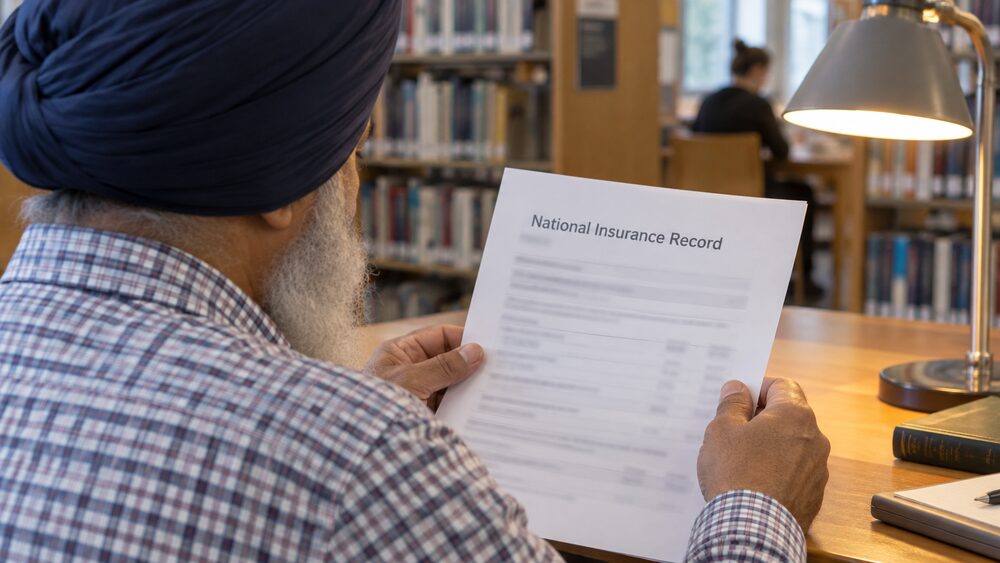
Who gets it is defined by your date of birth and your National Insurance record. You claim the new State Pension if you reach State Pension age on or after 6 April 2016, which means men born on or after 6 April 1951 and women born on or after 6 April 19531. Your payment is usually based on your own National Insurance record alone, built up from working, from certain benefits, or from credits such as those for carers1. The National Insurance record and the State Pension page explains how years become qualifying years.
The scale is large. The National Audit Office reported that 1.9 million pensioners received the new State Pension as of February 2021, and the number has grown every year since as more people reach State Pension age under the new rules8. People who reached State Pension age before 6 April 2016 stay on the old system and keep the State Pension they built up there, including any Additional State Pension8.
Full new State Pension: £241.30 a week
The full new State Pension is £241.30 a week in 2026/279. That is the rate for someone with at least 35 qualifying years who was never contracted out of the old Additional State Pension. The rate rose from £230.25 a week in April 2026, an increase Which? reported as taking the full yearly amount to £12,5475.
Not everyone gets the full rate, and the averages show how much the actual payments vary. Department for Work and Pensions statistics for March 2026 put the mean weekly payment at £217.99 for men and £214.54 for women3. The gap between those averages and the £241.30 maximum reflects two things: people with fewer than 35 qualifying years receive a proportionate amount, and many people who were contracted out before 2016 have a starting amount below the full rate.
For comparison, the old basic State Pension pays a full rate of £184.90 a week, but people on the old system may also receive Additional State Pension on top, so the two headline figures are not directly comparable11. The basic State Pension, SERPS and Additional State Pension page covers the old system in full.
Qualifying years: 10 to get anything, 35 for the full amount
The new State Pension is earned through qualifying years on your National Insurance record. You need 10 qualifying years to get any new State Pension, and at least 35 years to get the full amount1. If you have more than 10 but fewer than 35 qualifying years, you receive a pro rata amount: each qualifying year above the minimum buys a thirty-fifth of the full payment4.
Qualifying years do not have to come only from paid work. Years can count when you are receiving certain benefits, or when you receive National Insurance credits, for example because you are a carer. Carers UK notes that one pension now replaces the former basic and Additional State Pensions, and that carers can build qualifying years through credits rather than earnings8.
One important exception affects people who were contracted out of the old State Second Pension before April 2016, usually through a workplace pension. Pension Wise warns that you might need more than 35 years of qualifying National Insurance contributions to get the full State Pension if you were contracted out, because your starting amount was reduced to reflect the pension you built up privately instead12. Age UK makes the same point: 35 years may not be enough for everyone13. If your record has gaps, it may be possible to fill them by paying voluntary contributions, which the voluntary National Insurance page explains.
If you built up National Insurance under the old system
Many people reaching State Pension age now paid National Insurance for years before the new system started in April 2016. Their new State Pension is calculated from a starting amount, which works out what they would have got under the old rules and under the new rules, and uses the higher figure1.
The old State Pension had two parts: a basic amount based on your National Insurance contributions, and an additional amount also based on your contributions14. When the new system began, those old-system rights were folded into the starting amount. Where the old rules would have given you more than the new rules, the excess is paid as a Protected Payment on top of your new State Pension1.
Two features of the old system did not carry over. First, the old system allowed some people to claim a pension based on the contributions of a current or former spouse or civil partner; under the new State Pension, your payment is based on your own record only14. Second, the rules on sharing pensions on divorce differ between the systems: the basic State Pension cannot be shared on divorce, but the Additional State Pension and the Protected Payment can be shared with a court order15. The pensions on divorce page covers this in detail.
If you were contracted out of the old State Second Pension, your workplace pension may include a Guaranteed Minimum Pension. Nidirect notes that the increases that used to cover living costs through the Additional State Pension ended when the new State Pension started, with the position on Guaranteed Minimum Pensions handled separately16. The contracting out and the Guaranteed Minimum Pension page explains how this works.
Checking what you will get: the State Pension forecast
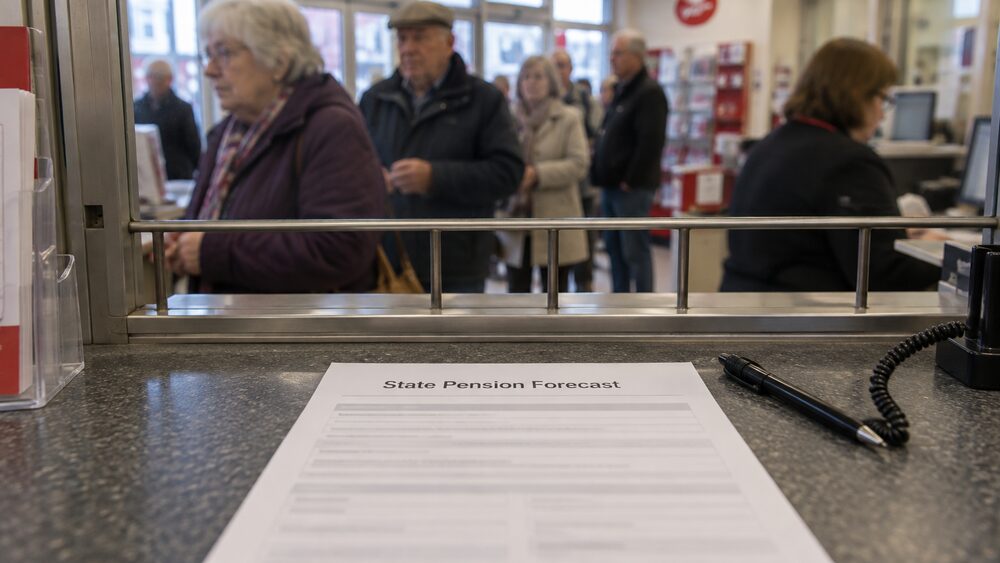
The amount you will get depends on your National Insurance record and when you reach State Pension age17, so the only way to know your own figure is to check your forecast. A State Pension statement gives you an estimate of how much State Pension you may get, based on your National Insurance contribution records up to now18. The statement is built from your work history and National Insurance contributions19.
The online forecast service shows three things: how much State Pension you could be entitled to, when you can claim it, and how to increase the amount if you can20. In Northern Ireland the equivalent service is available through nidirect20. The official booklet "Your new State Pension explained", last updated 6 April 2026, sets out the same information in print21.
The forecast is an estimate, not a guarantee. It is based on your record so far, so it can change if you have gaps filled, if you stop accruing years, or if the rules change. The how to check your State Pension forecast page walks through the process step by step, including what to do if the forecast looks wrong.
State Pension age is rising from 66 to 67, then 68
You can claim the new State Pension only when you reach State Pension age, and that age is increasing. Between April 2026 and March 2028, the State Pension age is rising from 66 to 676. The rise is being phased in over two years, so the exact date you reach State Pension age depends on your date of birth, and the Work and Pensions Committee has reported that the increase will reach 67 by April 202822.
The move to 67 comes from the Pensions Act 2014, the same Act that created the new State Pension3. A further increase is legislated but further away. Current law allows State Pension age to rise from 67 to 68 between 2044 and 2046, though this timetable could change24. The Office for Budget Responsibility notes that the first independent review of State Pension age proposed bringing the increase to 68 forward to 2037 to 2039 rather than 2044 to 2046, and that rescheduling has been described in official statistics, but the legislated timetable remains 2044 to 204625.
Because the rise is phased month by month, two people born a few months apart can have different State Pension ages. The what is my State Pension age page has the date tables, and the State Pension age changes for women born in the 1950s page covers the earlier rises that affected women's pension ages.
How to claim the new State Pension
The State Pension is not paid automatically: you have to claim it. You will usually receive a letter from the Pension Service around four months before you reach State Pension age, telling you how to claim and including an invitation code for the online service26. There is no time limit on making a claim, so you will not lose entitlement by claiming later, but payments only start once the claim is made12.
In England, Scotland or Wales you can claim online through the Get your State Pension service on GOV.UK, or by phone or post through the Pension Service12. To claim by post you need to phone the Pension Service to have a claim form sent to you, then return the completed form27. If you cannot collect the pension yourself, you can contact your account provider to nominate someone to collect it for you28.
Once claimed, the pension is usually paid every four weeks rather than on the same date each month12. Your payment day depends on the last two digits of your National Insurance number: 00 to 19 means Monday, 20 to 39 Tuesday, 40 to 59 Wednesday, 60 to 79 Thursday and 80 to 99 Friday26. People living outside the UK claim through the International Pension Centre instead, which the claiming from abroad page covers.
Deferring: around 5.8% more for each year you wait
You do not have to claim your State Pension the moment you reach State Pension age. If you put off claiming, your weekly payments increase by 1% for every 9 weeks you delay, which works out at just under 5.8% for each full year7. The minimum deferral period is 9 weeks: anything shorter has no effect7.
The official example shows what a year of waiting is worth. If you defer for 52 weeks, you get an extra £13.99 a week, which is 5.8% of the full £241.3029. The trade-off is time: it will take over 15 years of receiving the higher amount to get back 52 weeks of deferred pension, and that payback period increases by around one year for each additional 52 weeks deferred29.
Deferring and backdating interact in a particular way. If you start your claim up to 12 months after you reach State Pension age, you can ask for it to be backdated to when your entitlement started, with a maximum backdating period of 12 months26. If you start your claim more than 12 months after State Pension age, you are treated as having deferred instead, so you get the higher weekly payments rather than the arrears26. Nidirect gives a combined example: deferring the full new State Pension for 78 weeks, then backdating the claim by 12 months, produces a one-off arrears payment of £12,547.60 plus £6.97 a week extra for the remaining 26 weeks9.
The deferral rules are more generous on the old system. People who reached State Pension age before April 2016 could get an extra 10.4% for each year deferred, since the basic State Pension increases by 1% for every 5 weeks rather than every 930. The extra amount from deferring a new State Pension usually increases each year in line with the Consumer Price Index, although it will not increase for some people living abroad29. The deferring your State Pension page works through the sums.
The State Pension is taxable but paid without tax taken off
The State Pension is taxable income, but it is paid without tax taken off at source12. Instead, your tax code is usually changed so that you pay the extra tax through your other income, such as a workplace or personal pension, or your earnings if you are still working12.
How the taxable amount is worked out has a quirk. HMRC uses the amounts you were entitled to get over the tax year, rather than the payments you actually received31. This matters if you claimed partway through a year or deferred, because the figure on your tax calculation can differ from the money that arrived in your account.
You only pay tax if your total taxable income, including your State Pension, is higher than your personal allowance31. The government has announced that from April 2027, if the State Pension is your only income, you will continue not to pay any Income Tax even though the maximum State Pension is expected to be higher than the standard Personal Allowance12. State Pension rates usually change in April each year31. The how pension income is taxed page explains how the tax code adjustment works in practice.
How it goes up each year: the triple lock
Once in payment, the State Pension increases every April under the triple lock. The commitment is to uprate the basic and new State Pension every year by the highest of earnings growth, inflation, or 2.5%2. There is also a statutory requirement to uprate both pensions every year at least in line with earnings, which sits underneath the triple lock as a legal floor2.
The three measures are specific. The increase matches the highest of inflation as measured by the previous September's Consumer Prices Index, average wage growth between May and July of the previous year, or 2.5%12. The triple lock was announced in the June 2010 Budget25. In April 2024, for example, both the basic and new State Pension increased by 8.5%, in line with the earnings growth measure32.
The old system's pensions are also protected. People who reached State Pension age before 6 April 2016 stay on the old system and their State Pension continues to be uprated each year8. One difference: the Additional State Pension increases in line with CPI rather than the triple lock, so people on the old system can see their different pension components rise by different percentages12. The triple lock page covers how each measure is calculated and the debates around the policy.
Living abroad, working on and other situations that change what you get
You can claim the State Pension abroad if you have paid enough National Insurance contributions to qualify, and the amount might be affected by retiring or moving abroad33. You must choose which country you want your pension to be paid in: it cannot be paid in one country for part of the year and another for the rest34. Payments can also arrive late for practical reasons: if a payment is due in the same week as a US federal holiday, it could arrive one day late34.
Whether the pension keeps rising depends on where you live. Some benefits payable abroad are not normally increased when pension rates go up in the UK35. The extra amount from deferring is treated the same way: it usually rises with CPI each year, but will not increase for some people living abroad, and if you move to a country not on the uprating list, the extra payment stays the same29. If you paid into another country's social security system, this may help you get a UK State Pension or increase the amount, and you may also get a pension from that country36. Working abroad before State Pension age is different again: you might not gain qualifying years for those years, depending on circumstances such as whether you worked for a UK or a foreign company35. An easy read guide from the government covers who can get a State Pension, how to claim from abroad and how the pension is paid37.
Working past State Pension age is increasingly common and the rules are favourable. You do not pay National Insurance once you reach State Pension age, even if you keep working38. One exception is self-employed people who pay Class 4 contributions39. You are still entitled to the National Minimum Wage for any paid work you do after State Pension age38, and you can claim your State Pension while continuing to work, as the claiming while still working page explains.
Other income does not reduce the pension itself. Any money you earn will not affect your State Pension, though it may affect entitlement to other benefits13. Saving in a personal pension does not affect your State Pension entitlement either: you can save as much as you like into a personal pension without reducing it41. The interactions matter elsewhere: an occupational pension or part-time earnings may reduce the amount of New Style Jobseeker's Allowance, for example42. Moving into a care home will not affect your State Pension, but it will be counted as income when your contribution to your fees is assessed43. The how pensions affect Pension Credit and other benefits page covers these interactions.
Free help with the State Pension
Several free, official services can help you make sense of your State Pension. The Pension Service handles claims and queries about payment, and nidirect's pension pages provide the same information for people in Northern Ireland, including how to get a State Pension statement18. The government publishes an easy read guide to claiming from abroad for people who find plain English guides easier37, and an easy read guide to the State Pension abroad36.
For wider retirement planning, Pension Wise offers free guidance on your pension options, and the Pension Wise page explains what the service covers and how to book. The official booklet "Your new State Pension explained" is available free from GOV.UK and is updated as rates change21. If something goes wrong with your State Pension, including underpayments, the Department for Work and Pensions has a complaints process, and the Pensions Ombudsman can look at complaints that are not resolved. The pensions section brings together guides on every part of retirement saving, from workplace pensions to what happens to your pension when you die.
Sources43 cited
- New State Pension GOV.UK, 2026-09-25
- State Pension uprating and the triple lock House of Commons Library, 2026-07-08
- Annual DWP benefits statistics compendium 2026 Department for Work and Pensions, 2026
- The new State Pension Entitledto, 2026-09-26
- How new rules could affect your State Pension if you live abroad Which?, 2026-04-02
- How the State Pension works HMRC Tax Confident campaign, 2026
- Increase your retirement income GOV.UK, 2026-09-28
- Investigation into underpayments of State Pension National Audit Office, 2021-09
- Deferring State Pension and what you will get Nidirect, 2026-06-26
- Benefit and pension rates 2026 to 2027 Department for Work and Pensions, 2026
- Qualifying for the basic State Pension Nidirect, 2026-09-09
- State Pension Pension Wise, 2026-09-28
- The new State Pension Age UK, 2026-05-26
- The basic State Pension Age UK, 2026-04-06
- Caring and your State Pension Carers UK, 2026-09-26
- Pensions and divorce Advicenow, 2026-09
- Early retirement and pensions GOV.UK, 2026-09-26
- Getting information and help with pensions Nidirect, 2026-06-26
- Number of people receiving a new State Pension statement Department for Work and Pensions, 2014-11-18
- Check your State Pension forecast Nidirect, 2026-09-01
- Your new State Pension explained Department for Work and Pensions, 2026-04-06
- Report backs benefit boost for 66-year-olds amid State Pension age rise Work and Pensions Committee, 2026-07-11
- Inquiry launched on pre-pension income gap support Work and Pensions Committee, 2025-11-10
- Changes to State Pension age Entitledto, 2026-09-26
- Welfare spending: pensioner benefits Office for Budget Responsibility, 2024-01-19
- How do I claim the new State Pension? Turn2us, 2026-03-05
- Get your State Pension GOV.UK, 2026-09-25
- Nominate someone to collect your State Pension GOV.UK, 2026-09-26
- Deferring your State Pension if you reach State Pension age on or after 6 April 2016 GOV.UK, 2026-09-28
- Deferring your State Pension Which?, 2026-04-07
- How your State Pension is taxed GOV.UK, 2026-07-07
- Family Resources Survey quality and methodology report 2024/25 NISRA, 2024
- State Pension GOV.UK, 2026-09-25
- State Pension if you retire abroad GOV.UK, 2026-09-26
- Guidance on social security abroad (NI38) GOV.UK, 2026-07-07
- State Pension abroad: easy read Department for Work and Pensions, 2026
- How to claim your State Pension if you live outside the UK: easy read Department for Work and Pensions, 2026-02-05
- Working past State Pension age Nidirect, 2026-06-26
- National Insurance and after State Pension age Nidirect, 2026-04-28
- Working, retirement and pension age GOV.UK, 2026-09-26
- Introduction to workplace, personal and stakeholder pensions Nidirect, 2026-09-25
- New Style Jobseeker's Allowance Nidirect, 2026-09-10
- Residential care and nursing homes and benefits Nidirect, 2026-08-05

 Pension WiseFree guidance on your options for a defined contribution pension, from age 50
 FSCSProtects your money if a bank, insurer or investment firm fails
 GOV.UKOfficial information on tax, benefits and government services