
A pension scam is an attempt, successful or not, by someone to get hold of your pension savings by misleading you about the investment they are pushing, or about the risks attached to it, or about whether it suits you at all1. The typical route is persuasion to transfer your pension into a new scheme, from which the money is invested in things that are inappropriate or simply stolen2. Since the pension freedoms of 2015 gave people the ability to access large sums from their pots, scammers have focused on exploiting that freedom, and contact is normally made by telephone3.
Pensions are an attractive target because many people do not engage with their savings until later life, and it can be many years before someone realises they have been scammed3. By then the money is often gone. The Financial Conduct Authority (FCA), the UK's financial services conduct regulator, runs the ScamSmart campaign to inform consumers of the dangers of pension and investment scams4, and Parliament has strengthened the transfer rules to help trustees of occupational pension schemes ensure transfers are made to safe, and not fraudulent, schemes5.
What a pension scam is and why pensions are targeted
The Pensions Regulator, which polices workplace pension schemes, defines a pension scam as the marketing of products and arrangements, and successful or unsuccessful attempts by a party to release funds from an HMRC-registered pension scheme, to persuade people over the normal minimum pension age to flexibly access their savings in order to invest in inappropriate investments, or to persuade them to transfer their savings for the same purpose, where the scammer has misled the individual about the nature of the investment, its risks, or its appropriateness for that person1. The regulator says it is primarily, though not solely, concerned with seven kinds of pension scam1.
Two features make pensions unusually vulnerable. The first is disengagement: pension savings can sit untouched for decades, so many people do not engage with them until later life, and it can be many years before someone realises they have been scammed3. The second is access: since the pension freedoms were introduced in 2015, retirees have been able to access large sums of money from pension pots, and scammers have concentrated on exploiting that greater freedom, normally making first contact by telephone3. The FSCS, the body that compensates customers of failed financial firms, has warned that scammers bombard people aged 55 and over with bogus investment opportunities to try to get hold of their pension savings10.
The industry's own figures give a sense of scale: despite concerns from industry that 5% of pension transfers could have features of a scam, according to The Pensions Regulator's strategy document1. The same document notes that scammers' methods include attempts to gather information for future scams, false or unrealistic promises, and acting without the consent of the pension saver1. The wider response is set in law: the Pension Schemes Act 2021 introduced regulations stipulating destinations and circumstances for transfers, protecting members from pension scams by helping trustees of occupational pension schemes ensure transfers of pension savings are made to safe and not fraudulent schemes5.
Warning signs: free reviews, 'loopholes' and early access before 55
The Pensions Regulator's campaign against pension scams begins with one instruction: know the warning signs11. Its 2026 press release summarises them as unexpected offers, promises of early access to pensions, or guaranteed high returns12. The Pensions Ombudsman, which handles complaints about pension schemes, groups the common types of pension scam as those that offer access to a pension before the age of 55, those that offer an unrealistically high return on the investment of pension savings, and those where high charges or high fees are applied2.
Scams are promoted in recognisable ways. Official guidance lists the come-ons as offers of "unique investment opportunities", free pension reviews, legal loopholes, cash bonuses and government endorsed schemes13. Age UK adds the most important one of all: scammers may say they will help you access your pension pot before the age of 55 in exchange for a fee, but unless you meet very limited exceptions this is not possible, and the offer itself is the scam6. Scammers may also claim to have found a loophole that lets you get more than the usual 25% of your pension pot tax free6.
Contact can come by phone, in a text message, or in person, door to door13. A threat assessment by The Pensions Regulator lists the channels as phone, pension review websites, investment comparison websites, email, social media platforms and advertisements14. One long-running example, highlighted by the Scottish Public Pensions Agency, used recorded phone messages claiming that people born after 1952 were due a bonus or might lose part of their pension, prompting recipients to press a number between 1 and 915.
Where scams happen: transfers, early retirement and taking benefits
Pension scams can occur at three moments: when members seek to transfer their benefits to a different arrangement, when they take early retirement, or when they take their benefits16. The transfer is the scammer's usual goal. Typically, a scam involves a scammer persuading you to transfer your pension savings to a new pension scheme2. Once the money arrives, it is often invested in unusual and high-risk investments like overseas property, renewable energy bonds, forestry or storage units, or simply stolen outright17.
The guidance that applies at the moment of access is blunt. Pension Wise, the free government guidance service, warns: do not access your pension or transfer any money to a pension provider because of a cold call, visit, email or text, because it is likely a scam7. The FCA goes further for transfers: do not transfer your money to a new pension provider or invest any money because of a cold call, visit, email or text, because it is likely a scam, and you could lose your money and face a large tax bill18. The same warning applies when taking your whole pot in cash: do not withdraw or transfer your pension because of a cold call, visit, email or text19.
Two further threats sit alongside the transfer scam itself. The first is cloned firms: scammers use the name and details of a genuine, authorised firm to appear legitimate, a threat the Pensions Regulator's assessment links directly to the growth of pension scams14. The second is recovery fraud, where victims are targeted a second time with false promises of assistance in retrieving their lost funds, usually for another fee14. Anyone who has already lost money to a scam should treat any later offer to recover it with the same suspicion as the original approach.
Transferring a final salary pension: why caution is built in
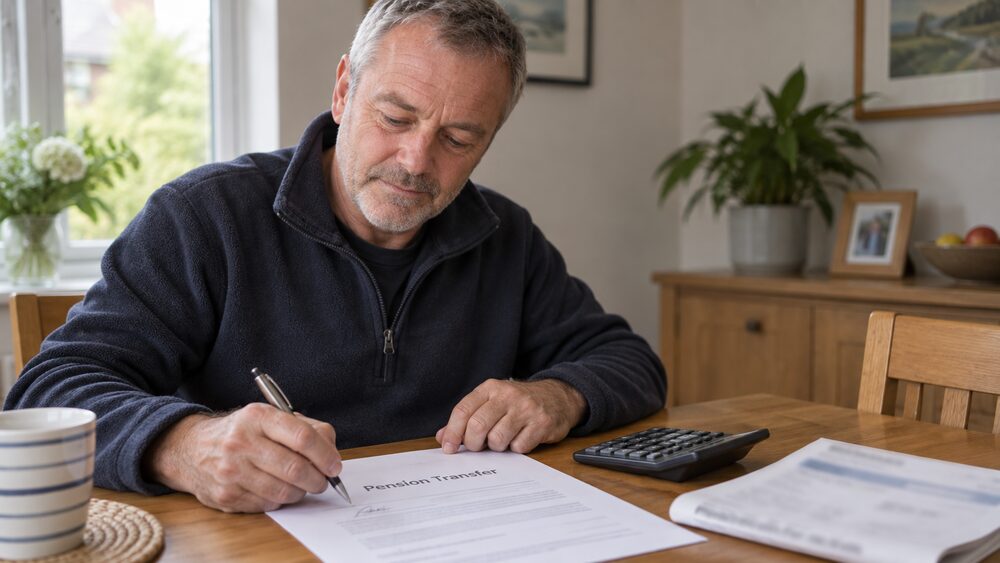
A transfer is the moment of greatest risk because it is, in practice, irreversible. The FCA states that a pension transfer usually cannot be undone, so a saver needs to be sure they will be better off before committing18. The Pension Schemes Act 2021 and the regulations made under it protect members from pension scams by helping trustees of occupational pension schemes ensure transfers of pension savings are made to safe and not fraudulent schemes20. In practice this means restrictions on transfers of pensions overseas, transfers that might not be in the saver's best interest, and transfers where there are signs of a pension scam3.
The complaints the Financial Ombudsman Service sees show what goes wrong when advice is poor or absent: an adviser who did not check the customer's attitude to risk or capacity for loss, who recommended unsuitable investments, or who advised transferring workplace pension benefits with the loss of employer contributions or guaranteed final salary, defined benefit, benefits21. Transferring out of a final salary pension means giving up a guaranteed income for life, which is why the rules around it are deliberately cautious; the dedicated page on transferring out of a final salary pension explains what is given up and when advice is required.
Even a legitimate transfer has costs. Guidance for Northern Ireland savers lists what can be lost: you may have to make payments to the new scheme, pay a fee to make the transfer, lose any right you had to take your pension at a certain age, lose any fixed or enhanced protection, or lose any right you had to take a tax free lump sum of more than 25 per cent of your pension pot22. The page on transferring pensions and investments to another provider covers the ordinary process, and what are the risks of transferring my pension? covers the downsides in detail.
Checking a firm on the FCA Firm Checker before you act
Before dealing with any firm that contacts you, or that you find online, check it. The FCA's Firm Checker is the tool for this: the FSCS, which runs the compensation scheme, directs anyone worried about a suspected investment or pension scam to check the details of the investment and whether the provider is genuine on the FCA's website23. The FSCS's pension protection guide sets out the same steps for the two moments that matter: when considering financial advice about your pension, search the FCA register to check it authorises your adviser, and when switching your pension or taking out a new one, search the register to check it authorises your new pension provider24.
The Financial Ombudsman Service gives the same instruction to people complaining about scams: use the FCA's Firm Checker to confirm the firm is authorised and help avoid scams25. But authorisation alone is not enough, because scammers clone real firms. The FCA's own guidance is to check that the contact details match those listed on Firm Checker, to avoid scammers pretending to be a real firm27. The Payment Systems Regulator has issued the same warning about its own name being abused: scammers may contact you by email, post or a phone call and claim to be from the PSR, or use the name of an employee, to appear genuine28.
What you can lose: your pension and a possible tax bill
The loss from a pension scam is usually total. There is no guarantee of the savings being returned, and there may be little or no opportunity to rebuild pension savings, particularly for people approaching retirement3. The money is often moved into high-risk or worthless investments abroad, or stolen outright17, and official guidance for Northern Ireland notes that pension scams are on the increase29.
A tax bill can follow the loss. Money released from a pension before age 55 through a liberation scam is normally an unauthorised payment, and the FCA warns that victims of transfer scams can lose their money and face a large tax bill18. There is, however, an important relief. HMRC has stated that where it accepts that a pension scheme member is defrauded of their tax-privileged pension savings as part of a pension scam, they are not taxed on the money they have lost as a result of the fraud8. This is HMRC's policy position, published in 2021, and it applies to the money lost, not to sums the victim managed to keep.
Beyond the scam itself, a badly judged transfer carries its own losses: fees to the new scheme, the loss of a protected pension age, the loss of fixed or enhanced protection, and the loss of any right to a tax free lump sum above 25 per cent of the pot22. The pages on the tax free lump sum and how pension income is taxed explain the ordinary tax rules, and emergency tax on pension withdrawals covers the temporary over-deduction that can occur when money is first taken.
Reporting a pension scam: Action Fraud, Police Scotland and the FCA
Scams should be reported to three places: your pension provider, the Financial Conduct Authority, and Action Fraud3. The first step matters most for protecting what is left. The Pensions Ombudsman's guidance is to contact your pension scheme immediately and advise them not to permit anyone to access your pension funds without your written permission2.
Where the fraud itself is reported depends on where the person lives. In England, Northern Ireland and Wales, fraud or concerns about a potential scam are reported to Report Fraud, the national fraud reporting service11. In Scotland, the position is different: The Pensions Ombudsman directs people in Scotland to contact Police Scotland on 1019, and the Information Commissioner's Scottish office gives the same instruction for anyone who lives in Scotland or whose fraud happened there30. The National Crime Agency, which leads on fraud and economic crime, likewise refers complaints about fraud and scams in Scotland to Police Scotland31.
The FCA is the go-to contact if you want to check whether a firm is legitimate or report a possible scam32. Its Consumer Helpline is 0800 111 6768, and the same number can provide information in large print, Braille or audio format33.
Concerns about a workplace pension: when to contact The Pensions Regulator
Not every pension problem is a scam, and workplace pensions have their own regulator and reporting routes. You can contact The Pensions Regulator if you are concerned about the way your employer is dealing with automatic enrolment or managing your workplace pension34. The regulator asks to be told about any concern that relates to your workplace pension, including dishonesty or fraud in your workplace pension scheme, or significant concerns about how the scheme is being run35.
The process is straightforward. The regulator's guidance is to raise the concern with the employer or scheme directly first, and to report it to the regulator if a person feels unable to do this or still has concerns after speaking to them36. A concern can be reported online, or by phone, email or post if online reporting is not possible, and concerns can be reported in confidence where the employer or scheme is thought to be involved in wrongdoing in an area the regulator covers36. Missing payments to a workplace pension, and an employer not complying with their pension duties, are reported using a different form35.
For missing contributions specifically, the regulator asks for the name and address of your employer, your employer's PAYE number if they have one, how much money you think is missing and when, and any evidence37. A specific trigger for reporting is when your pension contributions have not been paid into your scheme for 90 days or more37. Employers also have duties they cannot escape: they cannot encourage or force you to opt out of the scheme, cannot unfairly dismiss or discriminate against you for staying in it, cannot imply someone is more likely to get a job if they opt out, and cannot close a workplace pension scheme without automatically enrolling all members into another one34. In a defined benefit scheme, the employer must make sure the scheme has enough money to pay employees' pensions and cannot spend the pension fund if they have financial problems38. The pages on workplace pensions and automatic enrolment explain how these schemes normally work.
Getting help and complaining after a scam
If you have been targeted, free help exists. Pension Wise offers free government guidance on your pension options7, and MoneyHelper and The Pensions Ombudsman both handle complaints about how a workplace pension is managed38. The Pensions Ombudsman can help if you have a complaint about your pension scheme36, and if you are unhappy with how your employer or workplace pension scheme dealt with your situation, you can make a complaint to it37.
For scams involving investments, banks or payments, the Financial Ombudsman Service is the complaints body. It can consider complaints about fraud and scams26, about pensions and annuities25, and about banking and payments, including where a bank is asked to refund a payment made to a fraudster39. Its guidance for people who have been scammed includes using the FCA's Firm Checker to confirm whether a firm was authorised26, which matters because the FSCS can only compensate in relation to firms it authorised24. The FSCS's own guidance for fraud victims sets out what to do first, including reporting to the FCA and Action Fraud23.
One warning applies to the aftermath as much as the scam. The Pensions Ombudsman has warned about scams that impersonate it, so treat any unexpected contact claiming to be from an ombudsman or regulator with the same caution as any other approach9. Recovery fraud, where victims are targeted again with false promises of help retrieving lost funds, is a recognised development in this area14. The wider site section on scams and fraud covers the other routes fraud takes, and consumer protection in UK financial services explains the safety nets as a whole.
Sources39 cited
- Our strategy to combat pension scams The Pensions Regulator, 2026
- Common topics factsheet: pension scams The Pensions Ombudsman, 2022
- Pension scams research briefing CBP-8643 House of Commons Library, 2026
- Our approach to consumers Financial Conduct Authority, 2025
- Pension Schemes Act 2021 legislation.gov.uk, 2021
- Pension scams Age UK, 2026
- Adjustable income Pension Wise, 2026
- HMRC policy statement on pension scam victims HM Revenue and Customs, 2021
- Protecting yourself from scams that impersonate TPO The Pensions Ombudsman, 2026
- Top 5 financial scams Financial Services Compensation Scheme, 2019
- Pledge to combat pension scams The Pensions Regulator, 2026
- Fraud minister calls on trustees to use every touchpoint to protect savers from pension scams The Pensions Regulator, 2026
- Pension scams guidance Companies House, 2020
- Pension scams threat assessment summary The Pensions Regulator, 2022
- NHS circular: telephone scam Scottish Public Pensions Agency, 2012
- Code of Practice: information to members, scams The Pensions Regulator, 2026
- Protect yourself from pension scams Financial Services Compensation Scheme, 2018
- Pension transfer: defined contribution Financial Conduct Authority, 2026
- Take your whole pot Pension Wise, 2026
- Pension Schemes Act 2021 explanatory notes legislation.gov.uk, 2021
- Transfers from personal pension arrangements Financial Ombudsman Service, 2026
- Transferring your pension nidirect, 2026
- What if you're a victim of fraud? Financial Services Compensation Scheme, 2026
- Guide to pension protection Financial Services Compensation Scheme, 2026
- Complaints we can help with: pensions and annuities Financial Ombudsman Service, 2026
- Complaints we can help with: fraud and scams Financial Ombudsman Service, 2026
- Complaints we can help with: insurance Financial Ombudsman Service, 2026
- Warning: fraudsters posing as PSR employees Payment Systems Regulator, 2026
- How your personal pension is paid nidirect, 2026
- Credit: reporting fraud in Scotland Information Commissioner's Office, 2026
- Fraud and economic crime National Crime Agency, 2026
- Getting a bank account Citizens Advice, 2026
- Employers' workplace pensions rules GOV.UK, 2026
- Report a concern relating to your workplace pension scheme The Pensions Regulator, 2026
- Report concerns about your workplace pension The Pensions Regulator, 2026
- Report missing payments to your workplace pension The Pensions Regulator, 2026
- Report that your employer is not complying with their workplace pension duties The Pensions Regulator, 2026
- Safety of workplace pension schemes nidirect, 2025
- Complaints we can help with: banking and payments Financial Ombudsman Service, 2026




 Pension WiseFree guidance on your options for a defined contribution pension, from age 50
 FSCSProtects your money if a bank, insurer or investment firm fails
 GOV.UKOfficial information on tax, benefits and government services