
Normally a private or workplace pension cannot be touched until you reach the minimum pension age, which is 55. But the rules recognise that illness does not wait. You may still be able to take your pension before age 55 in certain circumstances, for example if you are unable to work due to ill health1. And if you have serious ill health and your life expectancy is less than a year, you can retire at any age2.
The exceptions are real, but they are narrow and each pension scheme applies its own test. Someone who takes money out before the minimum age without qualifying faces a tax charge of up to 55 per cent3, so it matters to get this right rather than guess. The minimum age itself is also moving: the Normal Minimum Pension Age is currently 55 and is set to rise to 57 in 20284.
Ill health can open your pension before the minimum age
The default rule is simple: money in a pension stays there until the minimum age. The exception for ill health exists precisely because a long-term illness or disability can end a working life years, sometimes decades, before any normal retirement date. Official guidance is that you may still be able to take your pension before age 55 in certain circumstances, for example if you are unable to work due to ill health1.
How this works depends on the type of pension. In the NHS Scotland Pension Scheme, for instance, you can only apply for ill-health retirement if you are under your normal pension age, or if you are over it and your life expectancy is less than 12 months5. Even people who are not active members can benefit: a credit member, someone who holds pension benefits earned in a scheme, can receive those benefits earlier than the normal scheme retirement age if they have a terminal illness and a life expectancy of not more than one year6.
The government has also looked at how the rules around early access are policed. A consultation on the conditions for pension transfers noted that savers seeking to access their pension savings early before age 55, the Normal Minimum Pension Age, is one of the situations the transfer rules are designed to guard7. In other words, the early access that schemes grant on genuine ill-health grounds is a scheme decision, not something an outside firm can arrange for you.
The normal minimum pension age: 55 now, 57 from April 2028
The Normal Minimum Pension Age is currently 554. It is set to rise to 57 in 20284, which matters for anyone planning around a long-term condition: the age at which ordinary access becomes possible moves, while the ill-health exception remains. Public sector schemes already reflect the current position: in the NHS Pension Scheme you can retire early and claim your pension once you reach the minimum pension age of 558.
The ill-health route is separate from that age altogether. Independent guidance on pension access notes that you can get access to your pot once you reach 55, or earlier in special circumstances9. Ill health is the main special circumstance, and it is the scheme itself, not the tax rules, that decides whether you meet its test.
Who qualifies: each scheme sets its own test of ill health
There is no single national definition of ill health retirement. Ill health retirement is when you leave work before the age of 55 due to disability or illness10, but each scheme decides for itself whether your condition qualifies, and on what evidence.
The tests are usually about capacity to work, not about a named diagnosis. To get ill health retirement, you must provide medical evidence that you cannot do your own job, any other job for your employer, a similar job until State Pension age, or that you cannot have treatment that would allow you to do your job10. Some schemes grade the outcome. In the NHS Scotland scheme, lower-tier ill health retirement applies if you are permanently unable to efficiently carry out your current job due to an illness or injury, while upper-tier awards, which pay more, depend on being unable to do a wider range of work5.
Where a scheme's history is complicated, reviews can reach back into old decisions. NHS Scotland has consulted on a requirement for the scheme manager to review an original ill-health application along with the supporting medical evidence, and decide whether the member would have qualified for an ill-health pension in their alternative scheme, for applications made during the remediable period11. Disability benefits run their own tests too. Under Scottish legislation, an individual who has a terminal illness is treated as satisfying the conditions for the higher rate of Pension Age Disability Payment, regardless of how long they have had the terminal illness12. Statistics for that payment show backdating under the special rules for terminal illness to the date of diagnosis, up to a maximum of 26 weeks before the date of application13, and it is paid weekly in advance for people who are terminally ill14.
Cancer is a common reason people ask. Macmillan's guidance is that if you retire due to cancer, you may be able to get your personal or workplace pension early, depending on the rules of your pension scheme or employer15. The diagnosis alone is not the trigger: it is whether your scheme's test, applied to your medical evidence, is met.
Defined benefit schemes: a guaranteed income, usually reduced if taken early
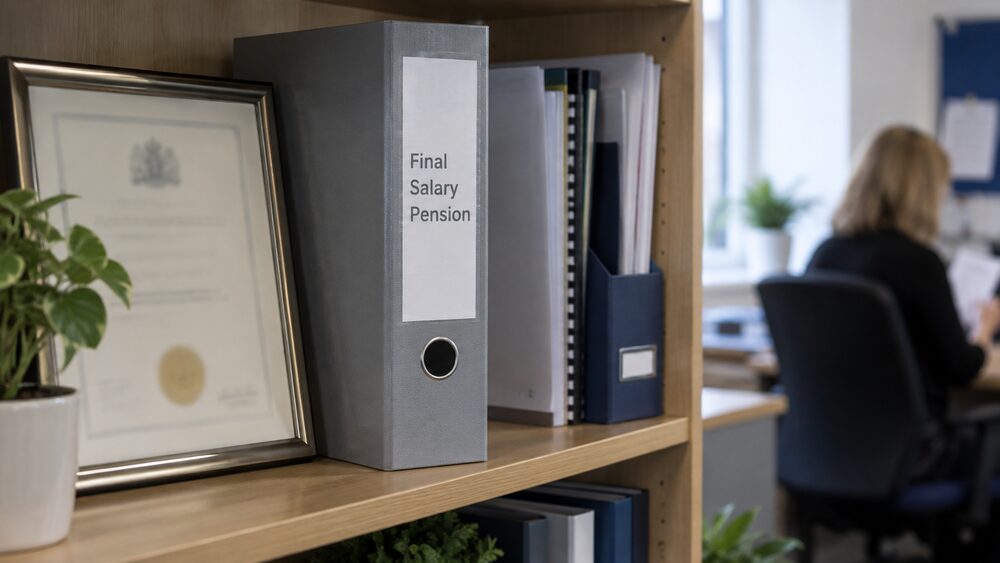
A defined benefit pension, sometimes known as a final salary or career average scheme, is a workplace pension based on your salary and how long you have worked for your employer16. These schemes pay a promised pension based on factors such as salary and length of service17, and the employer is responsible for making sure there is enough money at retirement to pay a secure income for life16. They were the most common type of pension until the 1980s18, and public sector schemes are statutory defined benefit pensions providing an income in retirement based on how much you earned8.
Taking a defined benefit pension early usually costs you part of the income. The pension scheme reduces the annual rate of pension by five per cent for each year if a pension is taken early2. The pension itself is usually based on a fraction of your salary, multiplied by the number of years you were a member of the scheme2. A worked example from official guidance: Michael, whose scheme retirement age is 60, retired at 58, so his pension of 35/80ths of final salary is reduced by 10 per cent because it is paid two years early2.
Ill health changes this in two ways. First, if you retire early through ill health there may be special terms in the scheme rules that allow for the pension to be enhanced2. Second, some schemes pay ill-health awards without the early retirement reduction at all: in the NHS Scotland scheme, lower-tier awards are based on all your accrued service, with no reduction for early retirement, at the time the award is made5. Former members with preserved benefits who are too ill to undertake any employment may qualify for early retirement on a preserved pension, receiving their benefits immediately, again with no reduction for early retirement and no enhancement5.
When the pension comes into payment, the options include taking a scheme pension, a secured pension for life paid out of the scheme assets or purchased from an insurance company1. The defined benefit pensions page explains how these schemes work in full.
Defined contribution pensions: what your pot can pay, and when a provider may boost it
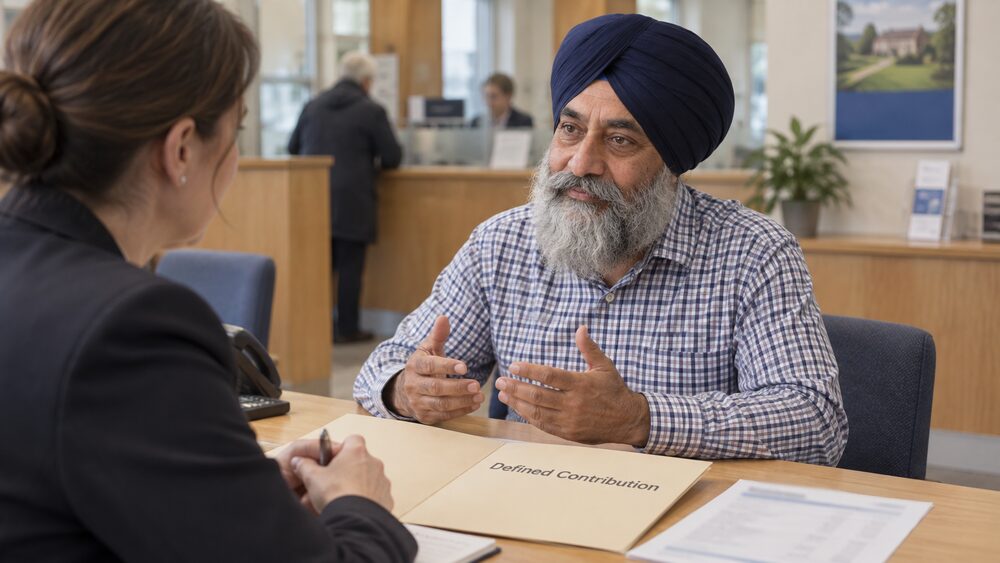
A defined contribution pension works differently: the money paid in by you or your employer is used to buy investments, and the amount you end up with depends on how much was paid in and how the investments perform19. The value of the pot can increase or decrease depending on factors including investment returns and contributions made20. Charges also bite: the provider investing your pension may charge you, often an amount based on the value of the pension21.
Early retirement shrinks a defined contribution pot from both ends. You have had fewer years to pay in, so your pension fund will be smaller, and the fund must provide income over a longer period, so the pension will be smaller2. The scale of the difference can be large. Independent modelling of a pot built on minimum contributions, 5 per cent from the employee and 3 per cent from the employer, on a salary of £25,000 from age 22, gives a total pot value by the age of 68 of £210,000, rising to £262,000 with employee contributions of 7 per cent22.
There is one ill-health upside. If you are retiring early due to an illness that is likely to affect your life expectancy, then some providers may boost your pension2. This is a provider's own decision, not a legal right, so it has to be asked about, and the answer will depend on the medical evidence.
Access to a defined contribution pot normally starts at 559, or earlier in special circumstances. Small pots have their own rule: you can take a whole pension pot worth up to £10,000 as a lump sum, tax free23. The defined contribution pensions page covers how these pots are built and drawn on.
Tax-free cash, and how the rest of your pension is taxed
The tax treatment of money taken from a pension follows one pattern whatever age you take it. When you take a lump sum from your pension, 25 per cent is usually paid tax free, as long as the total amount of tax-free cash taken stays within the limits24. The other 75 per cent counts as earnings for Income Tax24. Independent guidance puts the same rule another way: the first 25 per cent of your pension will be tax free, but you then pay tax on the rest in the same way as other income18. For defined contribution pots, you can take up to 25 per cent of your pot tax free, up to a maximum of £268,275 across all your pensions25. Defined benefit schemes also allow you to take some of your pension as a tax-free cash lump sum when you retire21.
The serious ill-health rule goes further. If you have serious ill health and your life expectancy is less than a year, you can take up to 100 per cent of your pension fund as a tax-free lump sum2. This applies to defined contribution funds, and it is the one route that can put the whole pot in your hands without an Income Tax bill.
Taking money before the minimum age without qualifying is where tax turns punitive. The charge for an unauthorised early withdrawal can be up to 55 per cent3, and savers may also be liable to pay additional tax if their pension is accessed before the age of 5526. If you are in poor health, you may be able to access your money earlier than 55 without facing punitive tax charges3, which is exactly why the scheme's ill-health decision matters so much.
What is left in a pension can pass on. If you die before age 75, your pension can usually be inherited tax free, subject to conditions27, and death benefits including lump sums and inherited drawdown pensions are typically taken free of Income Tax where the member died before 7528. The tax on pension income and death benefits pages cover these rules in detail.
How to apply for ill health retirement
Applications are made to the scheme, usually through your employer, and they turn on medical evidence. The NHS Scotland process is a good illustration of the shape of it. An active member with at least two years' qualifying service completes an Application for Ill Health Benefits form with their employer and submits it to the scheme, with a Medical Report form completed by Occupational Health and supporting medical evidence, through the employer5. If Occupational Health will not support the application and complete the Medical Report form, it can be completed by a GP or specialist clinician instead5.
Other schemes follow the same pattern. In the Armed Forces pension, if you are unable to work full time due to permanent physical or mental ill health, you can apply to receive your pension early29. The evidence test is the one described above: medical evidence that you cannot do your job, or a similar one, or that treatment would not make that possible10.
If the scheme says no, there is a formal next step. In the NHS Scotland scheme, the Internal Dispute Resolution Procedures allow a member to ask SPPA to review the application5. If a complaint about a personal pension is not resolved, the Financial Ombudsman Service offers a free, independent service and will look at how a pension provider or adviser handled a complaint30.
Working again after an ill health pension
Ill health retirement does not ban you from working. If you leave your job because of ill health retirement, you are allowed to get a different job if you feel able to10. The test was about whether you could keep doing your old job, not about whether you can ever work again.
Two things need checking before you do. First, some schemes reduce pension payments if you take up further employment, a rule known as abatement, and in the NHS Scotland scheme the reduction only applies until normal retirement age5. Second, returning to work can affect your position in the scheme itself: if you are awarded ill-health retirement in the NHS but then return to NHS employment before your 50th birthday, you are eligible to re-join the pension scheme5. There is also a route back to a higher award: in the NHS Scotland scheme you are allowed one opportunity to move back to upper-tier benefits before your normal pension age if you are once again unable to work, within 12 months of new employment and with further medical evidence5.
Extra pension bought on top can be affected too. If you retire before your normal pension age and claim your pension, your Additional Pension will be reduced for early payment, and monthly instalment benefits may be reduced further because you will not have completed your expected contract31.
Early release offers that are really pension scams
Ill health is one of the few genuine ways to get pension money before 55, and scammers exploit exactly that. Fraudsters may contact you offering a free pension review and say that they can use a "loop hole" to help you release your pension before age 5532. The same warning is repeated across debt and fraud guidance33, because it is the single most common pitch. Scammers may say they will help you access your pot before the age of 55 in exchange for a fee, and may promise loopholes that get you more than the usual 25 per cent of your pot tax free35.
The consequences are severe. You could lose your pension and in some cases also be left with a tax bill34. There is no guarantee of the savings being returned, and there may be little or no opportunity to rebuild pension savings36. Pension savings are an attractive target for fraud because many people do not engage with them until later life, and it can be many years before someone realises they have been scammed36. The Pensions Regulator warns that scams can occur when members seek to transfer their benefits to a different arrangement, take early retirement or take their benefits37, and that warning signs include unexpected offers, promises of early access to pensions, or guaranteed high returns38. Websites promising tax-free access to pension pots before the age of 55 have been taken down after seeking to deceive and exploit savers38.
The pension scams page covers the warning signs in full.
Where to check a firm, report a scam and get free guidance
Cold calling about pensions is banned. It is illegal to make cold calls in relation to pensions in most circumstances40, and the ban covers emails and text messages as well36. The exceptions are narrow: the caller is a trustee or manager of a pension scheme or a firm authorised by the Financial Conduct Authority, you have consented to receiving the calls from that organisation, or you are an existing customer, expect to receive pension calls from them and have been given the chance to withhold your contact details for that purpose40. Nuisance calls about pensions are illegal35, so an unexpected pension call is itself a red flag.
If you are worried about an approach, there are clear routes:
- The Financial Conduct Authority's register can be used to check whether a firm is genuine before speaking further39.
- Scams can be reported to the pension provider, the Financial Conduct Authority and Action Fraud36. In England, Northern Ireland and Wales, fraud or concerns about a potential scam are reported to the national fraud reporting service41.
- Scheme trustees and managers are expected to give clear information on how to spot a scam in all relevant communications to members, including the retirement wake-up pack and annual benefit statements, and may place scam warnings on the scheme's website42. A pension scams leaflet is sent to any member who requests a pension transfer43.
- The Financial Ombudsman Service provides a free, independent service for complaints about how a pension provider or adviser handled things, and if it cannot investigate a complaint it will tell the complainant about an organisation that might be able to help30. It has publicly warned savers to keep their pension safe from scammers26.
Free guidance is available before any decision: Pension Wise offers guidance on your options, and charities such as Macmillan and Scope publish guidance on ill health retirement and money15.
If your employer goes bust
Ill health often strikes when a career is cut short, and sometimes the employer fails too. The protection depends on the type of scheme. If your employer goes bust, you will not lose your pension fund in a defined contribution scheme44. In a trust-based defined contribution scheme you will get your pension, but your pot might be reduced because administration costs are paid by members' pots44.
For defined benefit schemes the protection is the Pension Protection Fund. If the employer sponsoring your defined benefit pension scheme becomes insolvent, the PPF assesses the scheme to see if it can come into the Fund45. When your employer becomes insolvent and your scheme transfers into the PPF, you become a PPF member46. The level of compensation matters for ill-health retirees: the PPF generally pays 100 per cent compensation to those who have retired on ill-health grounds, regardless of age, as well as to members who have reached their scheme's normal pension age and those receiving a pension in relation to someone who had passed away47. The Pension Protection Fund page explains how assessment works.
Transfers, advice and disability benefits alongside an ill health pension
Depending on your scheme, you may have the option to transfer your savings to a defined contribution scheme, as long as you are not already receiving payments25. Transferring a final salary pension is a major decision at the best of times; the final salary transfers and transfer advice rule pages cover when regulated advice is required. The Financial Conduct Authority's warning on transfers is blunt: do not transfer your money to a new pension provider or invest any money because of a cold call, visit, email or text, because it is likely a scam and you could lose your money and face a large tax bill39.
Disability benefits interact with an ill-health pension in ways worth checking before you commit. In Scotland, Pension Age Disability Payment treats a person with a terminal illness as satisfying the conditions for the higher rate under the special rules12, pays terminally ill claimants weekly in advance14, and can be backdated to the date of diagnosis of terminal illness up to a maximum of 26 weeks before the date of application13. Pension income can affect means-tested benefits, so the how pensions affect benefits page is worth reading alongside this one.
Finally, keep the whole picture in view. An ill-health pension is one part of what may replace a lost income: the State Pension, any protection insurance, and any compensation entitlements all count. The pensions section guide sets out the full range, and free guidance from Pension Wise, plus specialist charity support for your condition, can help you weigh the options before money moves.
Sources47 cited
- Introduction to workplace, personal and stakeholder pensions nidirect, 2026-09-25
- Early retirement and its effect on your pension nidirect, 2025-07-31
- Should I take a lump sum from my pension? Which?, 2026-07-31
- Treasury Committee report on pension costs and charges UK Parliament, 2025-06-30
- NHS Scotland pensions: I am ill or injured SPPA, 2026
- SPPA Pensions on Divorce, NHS and Teachers SPPA, 2026-04
- Protecting pension savers: conditions for transfers, options assessment GOV.UK, 2026-06-09
- What is a public sector pension? Which?, 2026-04-10
- Pension freedoms and debts Business Debtline, 2026-09-26
- Stopping work: ill health retirement Scope, 2025-12-31
- NHS Scotland Pension Scheme: consultation on the 2015 Remedy SPPA, 2023-05
- Disability Assistance for Older People (Scotland) Regulations legislation.gov.uk, 2024-06-06
- Pension Age Disability Payment statistics to 31 July 2026 Social Security Scotland, 2026-09
- Pension Age Disability Payment: payments mygov.scot, 2026-09-26
- Money FAQs: cancer information and support Macmillan Cancer Support, 2026-04
- Who we protect Pension Protection Fund, 2026-09-26
- Defined benefit pension schemes (Commons briefing CBP-10139) House of Commons Library, 2026-07-08
- How and when should you take your pension? Which?, 2026-03-02
- How pensions work Which?, 2026-04-07
- Defined contribution pension schemes (Commons briefing CBP-10146) House of Commons Library, 2026-07-08
- Types of workplace pension schemes nidirect, 2025-07-31
- How to boost your pension Which?, 2026-08-10
- How your personal pension is paid nidirect, 2026-09-25
- Take your whole pot in cash Pension Wise, 2026-09-28
- Options for cashing in your pension: overview Which?, 2026-07-09
- Keep your pension safe from scammers, warns Financial Ombudsman Service Financial Ombudsman Service, 2025-09-18
- Adjustable income Pension Wise, 2026-09-28
- Inheritance tax on pensions: summary of responses GOV.UK, 2025-07-21
- Understanding your Armed Forces pension GOV.UK, 2024-09-12
- Complaints we can help with: personal pensions Financial Ombudsman Service, 2026-09-26
- Increasing your pension SPPA, 2026
- Pension freedoms and debt National Debtline, 2026-09-25
- Dealing with fraud National Debtline, 2026-09-25
- Dealing with fraud National Debtline, 2026-09-25
- Pension scams Age UK, 2026-04-13
- Pension scams (Commons briefing CBP-8643) House of Commons Library, 2026-09-26
- Code of practice: information to members, scams The Pensions Regulator, 2026-09-26
- Fraud minister calls on trustees to use every touchpoint to protect savers The Pensions Regulator, 2026-04-16
- Pension transfer: defined contribution Financial Conduct Authority, 2026-09-25
- Consumer advice: pension cold calls Anglesey County Council, 2025-10
- Pledge to combat pension scams The Pensions Regulator, 2026-09-28
- Code of practice: information to members, scams The Pensions Regulator, 2026-09-26
- Warn members about pension scams The Pensions Regulator, 2026-09-26
- Safety of workplace pension schemes nidirect, 2025-12-03
- If my employer becomes insolvent Pension Protection Fund, 2026-09-26
- What it means to be in the PPF Pension Protection Fund, 2026-09-26
- What is the PPF? (member booklet) Pension Protection Fund, 2026-01


 Pension WiseFree guidance on your options for a defined contribution pension, from age 50
 FSCSProtects your money if a bank, insurer or investment firm fails
 GOV.UKOfficial information on tax, benefits and government services