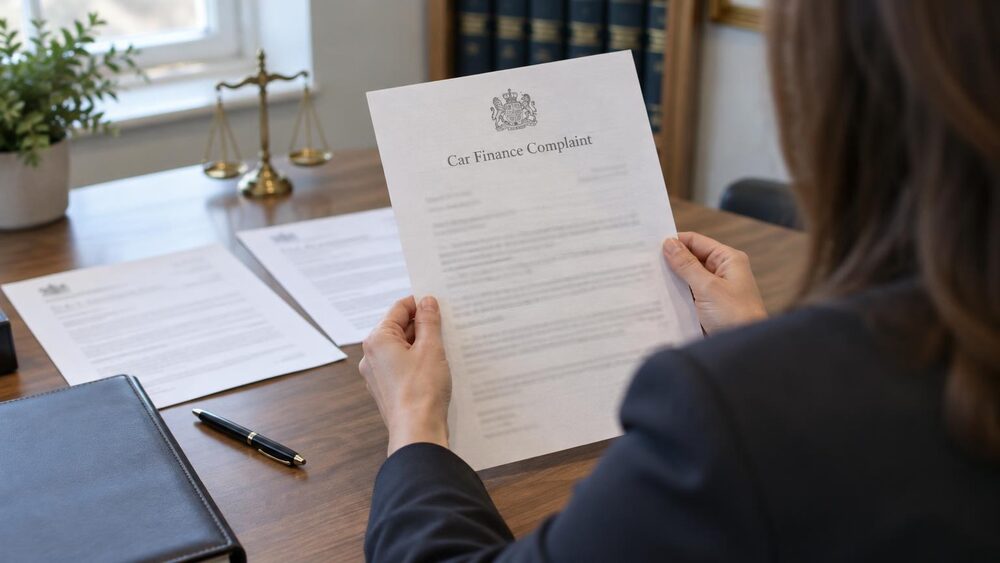
When you buy a car on finance, the money almost never comes from the dealership. The finance is normally from a company separate to the garage or dealership1, and that company is one of three kinds of firm: a carmaker's own finance arm, a bank-owned motor lender, or a specialist lender that focuses on customers with weaker credit histories. The Financial Conduct Authority (FCA) publishes a list of the firms behind car finance in the UK, and it shows how many separate brands sit behind a handful of lenders: Volkswagen Financial Services (UK) Limited appears under names including Volkswagen Financial Services, Audi Financial Services, Skoda Financial Services, Porsche Financial Services and many more, while Santander Consumer (UK) Plc appears under names including Vauxhall Motor Finance, Volvo Car Financial Services, Hyundai Car Financial Services and Kia Financial Services2.
The dealer is usually acting as a credit broker, not a lender. Credit brokers must tell you that they are a credit broker and not a lender3, and every firm that offers credit to consumers, from banks to payday lenders, must be authorised by the FCA4. This page explains who the lenders are, how the main agreements work, what finance costs beyond the monthly payment, and what your rights are if things go wrong.
The three kinds of car finance company
Car finance in the UK is provided by three broad groups of company, and knowing which one holds your agreement matters, because it decides who you pay, who you complain to, and what happens if you fall behind.
The first group is manufacturer finance, sometimes called captive finance. These are finance companies owned by, or tied to, the carmakers themselves. The FCA's list of car finance lenders shows how this works in practice: Volkswagen Financial Services (UK) Limited lends under the Volkswagen, Audi, Seat, Skoda, Porsche, Bentley, CUPRA and Lamborghini finance brands, among many others, while Santander Consumer (UK) Plc lends under Vauxhall Motor Finance, Volvo Car Financial Services, Hyundai Car Financial Services and Kia Financial Services2. When a dealer offers you finance arranged in the showroom under the carmaker's own brand, the lender behind it is usually one of these firms. The FCA's redress rules recognise this link: a dealer working only with one lender is not treated as a problem where there was a clear, visible link between the lender and the car manufacturer7.
The second group is bank-owned and independent motor lenders. These firms lend for cars without being tied to one manufacturer, and their names appear on finance agreements arranged through brokers, dealers and comparison services. Halifax, for example, offers car refinance on a personal contract purchase basis for people looking to refinance an existing car finance agreement8.
The third group is specialist lenders, which focus on customers with poor credit histories or unusual circumstances. Guarantor lenders, where a friend or family member guarantees the repayments, sit in this space: the lender runs checks on both the borrower and the guarantor, and the guarantor's check is a soft search that other companies cannot see and that does not affect their credit score9. Credit unions are another option for smaller amounts: a credit union provides loans, savings, bank accounts and other services to its members10, and borrowing from one is covered in our guide to credit union loans.
Whatever the group, the rules are the same. The Consumer Credit sourcebook must be followed by all companies which offer some form of credit to consumers, and they must be authorised by the FCA4. You can check a lender yourself on the FCA's register: search the firm by name, select borrowing money, and check the firm is authorised with permission to lend you money on an unsecured basis11. Our lenders directory lists the main firms.
Buying through a dealer: the dealer is usually a broker, not your lender
The single most common confusion in car finance is who you actually owe. When you sign finance paperwork in a dealership, the dealer is nearly always arranging the loan rather than providing it. The finance is normally from a company separate to the garage or dealership1, and the credit broker must tell you that they are a credit broker and not a lender3.
The ombudsman sets out what a broker should tell you before you sign. The information expected from a credit broker includes whether they are a broker or lender, their legal name, the fees you have to pay and when and how, the details of the loan offered, and whether your details might be passed to other companies12. In practice this disclosure appears in the finance documentation, and it is worth reading it before signing, because the lender named there is the firm you will deal with for years afterwards.
Brokers are paid for arranging finance, usually by the lender. Two commission structures have mattered a great deal recently. A flat fee arrangement means the finance provider pays the car dealer a fee for every finance agreement they process or arrange7. A discretionary commission arrangement (DCA) is when the finance provider pays the car dealer commission based on the interest rate paid in the car finance agreement7, which meant the dealer could set a higher rate to earn more. In August 2025 the Supreme Court judged that certain commissions paid to car dealers by lenders, and passed on to borrowers, could be unfair under the Consumer Credit Act13. The consequences of that ruling are covered in the complaints section below.
If you cannot remember who your finance was with, the FCA suggests three routes: check old bank statements, contact the dealer where you got the car, or check your credit file, which you can access for free through Experian and TransUnion2. Our guide to finding your car finance provider walks through this in detail.
PCP, hire purchase and conditional sale: how each agreement works
The three main agreements sold by car finance companies differ mainly in who owns the car and what happens at the end.
Hire purchase (HP) and conditional sale work in a straightforward way: you pay a deposit plus monthly instalments, and the finance company owns the car until you have made the last payment1. Vehicles bought using a hire purchase or conditional sale agreement do not belong to you until the last payment to the finance provider has been paid14. Conditional sale is essentially the same structure with the ownership transfer written into the agreement from the start.
Personal contract purchase (PCP) lowers the monthly payments by financing only part of the car's value. You might pay an initial deposit and make monthly payments much like HP, but these are typically lower because you are only financing a part of the car's value; at the end of the term you can either return the car, pay a final payment to keep it, or trade it in15. At the start you agree a guaranteed future value with the dealer, based on the car type and how many miles you think you will drive1. The Motor Finance Redress Scheme confirms that PCP agreements are hire purchase agreements for these purposes16.
A worked example shows the mechanics. A car worth £20,000 that the dealership works out will be worth £15,000 after a three-year PCP means you pay £5,000 over three years, with interest on top1.
Leasing (personal contract hire) is different again: you never have an option to buy. With a car leasing agreement you give the car back at the end of your deal, and you may have to pay a fee if you go over the mileage limit or damage the car17.
Because the finance company owns the car on all of these, you cannot sell it without the permission of the finance company, and this also applies to lease or hire agreements1. A private sale is not legally permissible while payments remain15. Our guides to hire purchase, PCP and personal contract hire cover each agreement in full.
Who can get car finance: age, income and credit checks
The basic entry requirement is age: everyone over 18 has a credit score, and lenders will not lend below that age18. Beyond that, every authorised lender must assess whether the credit is affordable, which means looking at your income, outgoings and credit history before agreeing the loan.
Credit checks are a normal part of the process, and the results vary by lender. Some manufacturers and brokers offer eligibility checkers before you apply: Experian's car finance search is free, takes a few minutes and won't affect your score17. A full application, by contrast, leaves a record on your credit file, and several full applications in a short period can count against you. Our guide to loan affordability checks explains what lenders must look at, and how loans affect your credit file covers the difference between soft and full searches.
Deposit requirements also shape who can get finance. It is possible to get car finance without paying a deposit, for both new and used cars, but fewer lenders offer zero deposit agreements, and it is harder to get approved on more expensive cars without one17. Our page on car finance with no deposit covers this in detail.
If your circumstances are unusual, the options narrow but do not disappear. Self-employed applicants and people on benefits can get finance where the lender is satisfied the repayments are affordable, though expect to provide evidence of income. Guarantor arrangements are one route for people with thin or damaged credit files: the lender runs a soft check on the guarantor, which is not visible to other companies and does not affect their credit score9. Our guides to getting a loan while on benefits and guarantor loans set out the options.
Bad credit car finance: what specialist lenders accept
Specialist car finance companies exist to lend to people whose credit history would see them refused by mainstream lenders. They work with defaults, county court judgments and insolvency records on file, and they price the extra risk into the interest rate, which means the total cost of credit is typically much higher than on a mainstream agreement.
The boundary of this market matters for one specific reason at the moment: commission redress. The FCA has set out plans to award compensation for drivers who were charged too much due to discretionary commission arrangements on car finance loans sold between 2007 and 202419. Car finance loans taken out between 6 April 2007 and 1 November 2024 are covered by the FCA compensation scheme if you were not clearly told that your dealer or broker was allowed to set a higher interest rate just to earn a bigger commission, that the commission was very high, meaning at least 10% of your loan or 39% of the total cost of credit, or that your dealer only worked with one specific lender and didn't look for other deals for you5. Because discretionary commission was more common in the bad credit part of the market, customers of specialist lenders are disproportionately represented among potential claimants.
If you are currently looking for bad credit car finance, the practical points are these. Check the lender is authorised on the FCA register before signing anything11. Expect the affordability assessment to be as thorough as any mainstream lender's, because the rules on affordability apply to all authorised firms4. And compare the total amount payable, not just the monthly figure, because a longer term at a higher rate can multiply the interest. Our guides to getting a loan with a poor credit history, near-prime and subprime lenders and guarantor loans versus bad credit loans cover the alternatives, including credit unions and community lenders.
What car finance costs beyond the monthly payment
The monthly payment is only part of the cost of a car on finance, and several charges sit outside it.
Interest is the obvious one: on PCP you pay interest on top of the amount financed1, and the rate you are offered depends on your credit history and, historically, on the commission arrangement the dealer had with the lender7. Our guide to how loan interest is calculated explains the mechanics.
At the end of the agreement, return charges can apply. Excess mileage charges may apply if you exceed the agreed mileage limit and want to return the car8, and damage beyond fair wear and tear is charged separately. The finance company might attempt to add extra charges based on your car's mileage, especially if it exceeds what they expected; however, if you've maintained your car well, they legally can't impose such penalties15.
Insurance costs belong in the picture too. Black box (telematics) car insurance can involve interest if you pay monthly, mid-term amendment fees and early cancellation charges20, and some mileage-based policies charge per mile plus an annual or monthly fee to cover your car while it's parked20.
Tax can also bite on more expensive cars. Cars with a list price of over £40,000 in the registration year pay an additional rate of £425 per annum on top of the standard rate, for the second to sixth years after first registration21. That charge applies regardless of how the car is financed, but it adds to the running cost of the premium cars that PCP is often used to buy.
Finally, settling early can carry its own charge: Halifax advises customers to check the terms and conditions of their current car finance agreement, as early-settlement fees may apply8. The next section covers early settlement in full.
Handing the car back: return fees, mileage and condition charges
There are two very different ways to hand a financed car back, and the charges differ accordingly.
Returning the car at the end of the agreement is built into PCP and leasing. With a leasing agreement you give the car back at the end of your deal, and you may have to pay a fee if you go over the mileage limit or damage the car17. On PCP, excess mileage charges may apply if you exceed the agreed mileage limit and want to return the car8. The condition standard is fair wear and tear: if you've maintained your car well, the finance company legally can't impose mileage penalties15.
Ending the agreement early is a different route with different rules. On hire purchase and conditional sale, the car can be returned, ending the agreement, with no payments made returned; if more than half of the agreement has been paid, nothing more is owed1. More precisely, if the lender has not already terminated the agreement, voluntary termination is available at any time before the last payment is due4. If the agreement is ended by the borrower, up to half the agreement is owed, plus any arrears and reasonable charges if the car is damaged4. Our guide to voluntary termination covers this right in detail.
Returning a faulty car reverses the flow of money. If you reject a car bought on PCP, HP or lease, the dealer will have to refund the finance company rather than you directly; the finance company will then have to terminate your agreement and pay you back your deposit plus any payments you've already made, minus any deductions made for fair usage22. If you traded in your old car as part of the deal, you'll be entitled to the full invoice price of the car, including road tax and VAT22. Our guide to faults on a used car bought on finance covers this route.
Paying early: settling or refinancing your agreement
Settling a car finance agreement early means paying off everything you owe, and the rules differ by agreement type. On hire purchase and conditional sale, once you have paid half the total you can return the car and owe nothing more1; settling in full instead transfers ownership to you immediately. On PCP, settling early means paying the settlement figure, which includes the remaining balance and the guaranteed future value1.
Two cautions apply. First, early-settlement fees may apply, so Halifax advises checking the terms and conditions of your current car finance agreement before settling8. Second, the settlement figure is not simply the remaining monthly payments added up; how it is worked out is covered in our guide to car finance settlement figures.
Refinancing is the other early route: replacing an existing agreement with a new one, sometimes to lower the payments or to release the car's value. Halifax offers car refinance on a personal contract purchase basis, and notes that excess mileage charges may apply under the existing agreement if you exceed the agreed mileage limit and want to return the car8. Our comparison of voluntary termination versus early settlement sets the two routes side by side.
One thing you cannot normally do is sell the car privately while finance is outstanding. You cannot sell the car without the permission of the finance company, and this applies to lease or hire agreements as well1. With a personal loan, by contrast, you can sell the car at any time, because the loan is not secured on it1. Our guide to selling a car that is on finance covers the exceptions.
Your responsibilities while you owe money on the car
While the agreement runs, the car is the finance company's asset but your responsibility. You must keep it insured, roadworthy and, on PCP and leasing, within the agreed mileage. You are responsible for making all the agreed repayments and keeping your creditors up-to-date about your finances1, and lenders must treat you fairly and send you regular statements to keep you informed about your current arrears position if you fall behind1.
Insurance deserves particular attention on finance. Most motor insurance policies for new vehicles will provide the owner with a new car if theirs is written off within a certain time, or if the cost of the repair is more than 60-70% of the current list price23. On PCP or hire purchase, the ombudsman says your insurer should provide a new vehicle replacement as long as it was agreed with the finance company23. This matters because a standard payout of the car's market value can leave a gap against what you owe. Our guide to if your financed car is written off covers this.
Bankruptcy is a special case. The hire purchase or conditional sale agreement may include a clause ending the agreement if you go bankrupt; if this happens the lender can repossess the vehicle and sell it, though some lenders may allow you to keep the car14. Our guide to car finance when the borrower dies covers what happens to the debt then.
If you are struggling with payments
Missed payments on car finance are serious because the lender can take the car. The lender will contact you after you miss one or two payments, and at this point they should discuss ways for you to catch up with payments and pay the arrears1. Talking to the lender early is the single most useful step, because the FCA's rules require firms to be flexible and find ways to support vulnerable customers1.
If the arrears cannot be resolved, the repossession rules depend on how much you have paid. The finance company can take the car back if you miss payments, and they can do this without going to court if you have paid less than a third of the agreement1. Once you have paid a third or more, the car becomes protected goods: the lender needs a court order to repossess it15, and any additional court and recovery costs will be added to your outstanding debt15.
Free help is available before things reach that point. StepChange, National Debtline and Citizens Advice all advise on car finance debt, and an informal arrangement with the lender, where you agree reduced payments, leaves you responsible for making all the agreed repayments and keeping your creditors up-to-date about your finances1. Our guides to what to do if you can't repay a loan and what happens if you can't pay car finance set out the options, and the debt section lists the free advice charities.
Complaints and the commission redress scheme
Complaints about car finance follow a set order. First complain to the company involved; if they don't send you a final response within eight weeks, or you're unhappy with their response, you can complain to the Financial Ombudsman Service using its complaint form6. The ombudsman can look at problems with a bank, insurance company, pension, credit card or loan24. If you aren't getting help from the car finance provider, you can take your case to the free Financial Ombudsman Service25. Where a credit broker receives a complaint in relation to the motor finance commission scheme, it must forward the complaint to the lender and inform the consumer that it has been forwarded26.
The commission issue is the largest consumer redress exercise in this market for years. The FCA launched a scheme to compensate eligible car finance customers who may have been treated unfairly2. Loans between 6 April 2007 and 1 November 2024 are covered if you were not clearly told about the dealer's power to set a higher interest rate, about very high commission, or that your dealer only worked with one specific lender and didn't look for other deals for you, unless there was a clear, visible link between the lender and the car manufacturer7. The scale is visible in the ombudsman's data: in the first quarter of 2025/26 it processed 21,500 new complaints about motor finance commission across all financial products27.
Claims management companies offer to pursue these claims for a fee. If you choose to use one for this type of complaint, they should fully explain the temporary complaint handling rules and make sure their advertising is not misleading28. You can complain to the FCA if you're unhappy with the conduct of a claims company, and to the Financial Ombudsman Service if you're unhappy with the service you've received from one, for example the results of your claim or the fees charged25. Making the complaint yourself is free. Our guides to complaining about a lender, the motor finance redress scheme and using a claims firm cover the process step by step.
Sources28 cited
- Car finance debt StepChange, 2026-09-25
- Car finance complaints: list of lenders Financial Conduct Authority, 2026-09
- Credit broking Financial Ombudsman Service, 2026-09-27
- Car repossession: what happens and what you can do about it National Debtline, 2026-09-25
- Car finance: FCA investigation, what you need to know Which?, 2026-05-06
- How to complain to the Financial Ombudsman Service Financial Ombudsman Service, 2026-09-26
- Complaints about commission Financial Ombudsman Service, 2026-09-26
- Car refinance Halifax, 2026-09-27
- Guarantor loans explained MoneyHelper, 2026-09-25
- Credit union current accounts MoneyHelper, 2026-09-25
- Buy now pay later Financial Conduct Authority, 2026-02-11
- Credit broking: what we look at Financial Ombudsman Service, 2026-09-26
- Car finance commission: Supreme Court ruling House of Commons Library, 2025-08
- Bankruptcy and my car StepChange, 2026-09-25
- Car finance Advice NI, 2026-09-26
- Motor Finance Redress Scheme Consumer Council, 2026
- Car finance with no deposit Experian, 2026
- Credit scoring Consumer Council, 2026
- I think I've been mis-sold a financial product, what can I do? Which?, 2026-08-18
- How black box car insurance works Which?, 2026-01-22
- Autumn Budget 2024: rates and allowances HM Government, 2024-11-11
- Is there a 14-day cooling off period when buying a car? Which?, 2026-09-27
- Vehicle valuations and write-offs Financial Ombudsman Service, 2024-12-04
- Who we can help Financial Ombudsman Service, 2026-09-28
- How to complain about a car dealer Which?, 2026-03-10
- CONRED 6.1.9 credit broker complaints FCA Handbook, 2026-03-31
- Quarterly complaints data Q1 2025/26 Financial Ombudsman Service, 2025-08-07
- Claims management companies National Debtline, 2026-09-25





 MoneyHelperFree, impartial money and pensions guidance, set up by government
 StepChangeFree debt advice and solutions from a charity
 National DebtlineFree debt advice by phone, webchat and online
 Financial Ombudsman ServiceFree, independent help when a complaint about a firm is not put right
 Citizens AdviceFree advice on money, consumer and legal problems in England and Wales