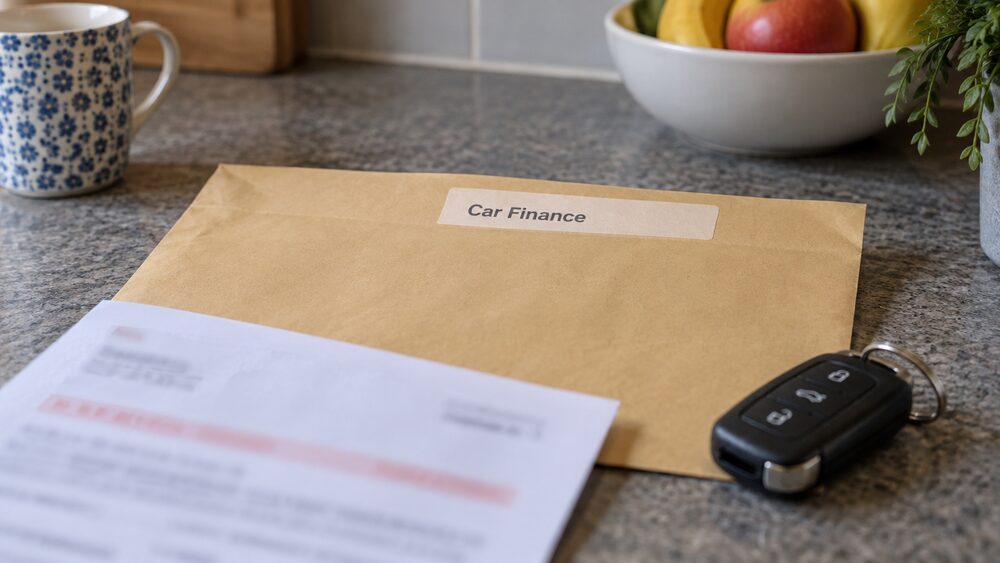
Missing a car finance payment does not mean losing the car straight away. The lender will contact you after you miss one or two payments, and at that point it should discuss ways for you to catch up with payments and pay the arrears1. If payments keep being missed, the picture changes: continuous non-payment can result in formal notices of arrears and, after three or four missed payments in a row, a default notice2.
Missing a car finance payment does not mean losing the car straight away. The lender will contact you after you miss one or two payments, and at that point it should discuss ways for you to catch up with payments and pay the arrears1. If payments keep being missed, the picture changes: continuous non-payment can result in formal notices of arrears and, after three or four missed payments in a row, a default notice2.
What happens next depends on the type of agreement and how much you have paid. Under hire purchase (HP) or conditional sale, the finance company can take the car back without going to court if you have paid less than a third of the agreement1. Once you have paid half the total amount payable, you have a legal right to hand the car back and end the contract early, which is called voluntary termination3.
The most useful thing you can do is talk to the lender before it acts. Lenders are expected to provide support if you are struggling to make repayments, and if you miss a repayment, firms need to contact you to let you know and explain what this means4. Free, independent debt advice is available, and it does not cost anything5.
What happens when you miss a car finance payment
The first missed payment triggers contact, not repossession. The lender will contact you after you miss one or two payments and should discuss ways for you to catch up with payments and pay the arrears1. Under the rules for deferred payment credit, if you miss a repayment, firms need to contact you to let you know and explain what this means, and lenders need to provide support if you are struggling to make repayments4.
If payments continue to be missed, the lender may issue a default notice, then take further action to collect the debt and recover the car, possibly using a debt collection agency or applying for a county court judgment (CCJ)1. Continuous non-payment can result in formal notices of arrears and, after three or four missed payments in a row, a default notice2.
The credit file consequences start with the first missed payment. The provider and credit reference agencies count a missed payment as exactly that, recorded on your credit file, and several missed payments put your account at risk of defaulting6. More broadly, failing to pay debts, whether secured or unsecured, can affect your credit rating7. Missing payments can also lead to extra charges and make it harder to get credit in the future8, and missed payments could affect your credit rating, making it more difficult to get credit in the future9.
A lender may charge a penalty fee, default your account or even take legal action if you miss a payment10. That is why the timing of your contact with the lender matters: the earlier you raise the problem, the more options remain open.
Talk to your lender early: the help it should offer
Contacting the lender before arrears build up is the step that keeps the most options available. Official guidance for borrowers in difficulty is to contact the lender immediately11. The same principle applies once court action is threatened: before the court date, the route is to contact the lender directly or through an advice worker or your solicitor, to make a proposal to pay the instalments and pay off the arrears within a reasonable time, and to let them know if the house has been put up for sale or is planned to be sold shortly12. Lenders also have their own duties: if a repayment is missed, firms need to contact the borrower to explain what this means, and lenders need to provide support where repayments are a struggle9.
Lenders have their own obligations. If you miss a repayment, firms need to contact you to let you know and explain what this means, and lenders need to provide support if you are struggling to make repayments4. The lender will contact you after you miss one or two payments and should discuss ways for you to catch up with payments and pay the arrears1.
If you are getting help from a debt adviser, tell your lender13. Advisers can negotiate on your behalf, and some debt solutions require you to have taken advice first: in Scotland, you need to get advice from an approved money adviser before you can apply for some debt solutions14. A temporary repayment plan, where you make reduced payments for an agreed period, is one option, though making reduced payments towards a debt can impact your credit file and could make it hard for you to take out more credit15.
Voluntary termination: handing the car back once half is paid
Voluntary termination (VT) is a legal right under the Consumer Credit Act for HP or PCP agreements. You will need to have paid 50% of the total amount payable under the agreement, otherwise you will need to make up the difference if you want to hand the car back2. If you have made at least half of your payments, you have a legal right to return the car and end a hire purchase contract early3.
There is a technical point that catches people out. You do not need to have actually paid the 50% to be able to terminate the agreement, only give notice in writing16. In practice, if you have paid less than half, you will owe the difference up to half the agreement, plus any arrears and reasonable charges if the car is damaged17. If the lender has not already terminated the agreement, you can voluntarily terminate at any time before the last payment is due17.
When you use VT, you give the car back and there are no further payments or penalties, and it will not hurt your credit score, so it is a relatively clean break2. You will not get any payments you have made back1. The finance company might attempt to add extra charges based on your car's mileage, especially if it exceeds what they expected, though if you have maintained your car well, they legally cannot impose such penalties2.
Can the lender take the car back?
The answer depends on the agreement and how much you have paid. Under HP or conditional sale, the finance company can take the car back if you miss payments, and can do this without going to court if you have paid less than a third of the agreement1. If you have paid less than a third, your lender can repossess the car if it is on a public road, or from any premises where you have given permission to enter17.
Under a lease or hire agreement, the finance company can take the car back if you miss payments1. With a logbook loan, the position is different again: you can still use your vehicle, but the lender takes ownership of it from the start of the loan until it is paid back, and can take and sell the vehicle if you do not repay18. A logbook loan cannot be ended early1.
A personal loan taken out to buy a car works differently. The loan provider cannot take the car back if you miss payments, because the car is not security for the loan1. That does not make the debt disappear: the lender can still pursue the money through the usual routes, including debt collection and court action.
Selling the car or settling the finance early
Selling a car that still has finance on it is not straightforward, and in most cases it is not allowed. It is against the law to sell it until you pay off the finance in full20. You cannot sell a car on PCP as it does not belong to you1, and you cannot sell a car under a lease or hire agreement1. With a logbook loan, you cannot sell the car while the loan is outstanding1.
The reason is ownership. With hire purchase, PCP and conditional sale, the vehicle is not fully owned by you until you have made the last payment to the finance agreement21. As one lender puts it, you may not own the car until the end of your agreement22, or not until the end, or after an optional final payment23.
Settling early is possible on most agreements, but check the terms. You cannot use a credit card to pay off a loan24. Some promotional offers are lost if you settle early: with one Lloyds Bank car finance offer, you lose eligibility if you settle your agreement in full before making your first scheduled repayment25. If you are considering settling rather than terminating, the two routes have different costs and different effects on your credit file, so it is worth comparing them directly.
What happens if the car is repossessed and sold for less than I owe
Repossession does not wipe the debt. If the car sells for less than what you owe, you will be liable for that shortfall2. The lender sells the vehicle to recover what it is owed, and any gap between the sale price and the outstanding balance remains owed by you.
This is the same principle that applies to other secured lending. When a property is repossessed, it is usually sold as quickly as possible, often for less than the market value, meaning you would owe the bank even more than you would have if you had sold the property yourself26. The same logic applies to a car: a forced sale tends to raise less than a sale you control.
The shortfall is a debt in its own right, and the lender can pursue it through debt collection, and potentially through the courts. If you are dealing with a shortfall alongside other debts, free advice services can help you work out what to do5. If you are in Scotland, there are free advice services that can help27, and in Wales, missed payments could affect your credit rating, making it more difficult to get credit in the future9.
Is PCP treated differently from hire purchase if you can't pay?
The repossession and voluntary termination rules are broadly the same for both, because both are regulated credit agreements where the car secures the debt. The difference is in how the payments work and what happens at the end.
With PCP, you might pay an initial deposit and make monthly payments much like HP, but these are typically lower because you are only financing a part of the car's value. At the end of the term, you can either return the car, pay a final payment to keep it, or trade it in2. With HP, the vehicle is not fully owned by you until you have made the last payment to the finance agreement21.
The practical consequence if you cannot pay is that PCP and HP both expose you to repossession if you have paid less than a third, and both give you the voluntary termination right at half the total amount payable1. The lower monthly cost of PCP does not change the underlying security: the car can still be taken back.
| Agreement type | Can the lender take the car? | Can you sell the car? | Early ending |
|---|---|---|---|
| Hire purchase | Yes, without court order if less than a third paid1 | No, until finance is paid off20 | Voluntary termination at half paid2 |
| PCP | Yes, on the same basis1 | No, it does not belong to you1 | Voluntary termination at half paid2 |
| Lease or hire | Yes, if you miss payments1 | No1 | Not covered by the same VT right |
| Logbook loan | Yes, lender owns it from the start18 | No, while the loan is outstanding1 | Cannot be ended early1 |
| Personal loan for a car | No, the car is not security1 | Yes, subject to the loan terms | Settle the loan early |
Free debt advice and complaints to the Financial Ombudsman
Free help exists and it does not cost anything. There are free advice services that can help27, and if you want to speak to someone about your debts you can get free, confidential and independent advice from a debt adviser28. In Scotland, you need to get advice from an approved money adviser first before you can apply for some debt solutions14. Some charities also run helplines that can provide details of both national and local debt advice services, and may put families in touch with a specialist debt counselling service for families with disabled children5.
If the lender is not helping, you can escalate. If you are not getting help from the credit card company or the car finance provider, you can take your case to the free Financial Ombudsman Service29. The ombudsman can help if you have made a complaint to the financial business and you are not happy with their answer30. It sees complaints about unaffordable lending across a range of credit products, from car finance to payday lending31.
The ombudsman deals with common complaints including not being the person who owes the debt, an incorrect amount, repeated contact, unhelpful treatment in financial difficulty, and debt that is not enforceable32. It can also help with complaints about bank accounts and bank cards, insurance for your home, car or travel, and problems with loans30. If you are unhappy with a claims company, for example the results of your claim or the fees they have charged you, you can complain to the Financial Ombudsman Service about that too33.
"We can help if you have made a complaint to the financial business and you aren't happy with their answer."
If you are dealing with a lender that is not licensed, or you have borrowed from an illegal money lender, there is separate help available19. If you owe money to HMRC as well as car finance, there is guidance on what to do28.
Sources33 cited
- Car finance debt StepChange, 2026-09-25
- Car finance Advice NI, 2026-09-26
- Hire purchase car finance Halifax, 2026-09-27
- Buy now pay later Financial Conduct Authority, 2026-07-15
- Dealing with debt Contact, 2025-10-21
- Credit card payment holidays StepChange, 2026-09-25
- What do I need to know about debt Bank of England, 2025-08-19
- Same day loan debt StepChange, 2026-09-25
- Cost of living Welsh Government, 2026
- Car finance no deposit Experian, 2026
- Help to buy mortgage guarantee scheme nidirect, 2025-08-26
- When a lender takes action against you nidirect, 2025-09-05
- Managing your mortgage and income Housing Rights, 2026
- Debt and money Scottish Government, 2026-09-25
- Temporary repayment plan StepChange, 2026-09-25
- Hire purchase debt Business Debtline, 2026-09-26
- Car repossession: what happens and what you can do about it National Debtline, 2026-09-25
- Logbook loans Financial Ombudsman Service, 2026-09-26
- Dealing with loan sharks nidirect, 2026-09-23
- Selling assets to pay debts StepChange, 2026-09-25
- What can bailiffs take StepChange, 2026-09-25
- About borrowing Lloyds Bank, 2026-09-27
- Guide to car finance Post Office, 2026-08-12
- Early loan repayments first direct, 2026
- Car finance calculator Lloyds Bank, 2026-09-27
- Negative equity Which?, 2025-12-10
- Debt advice Shelter Scotland, 2026-01-16
- Find out what to do if you owe money to HMRC GOV.UK, 2025-08-18
- How to complain about a car dealer Which?, 2026-03-10
- Consumer leaflet easy read Financial Ombudsman Service, 2026-09-26
- Unaffordable lending Financial Ombudsman Service, 2026-09-26
- Debt collecting Financial Ombudsman Service, 2026-09-26
- Complain about a claims company GOV.UK, 2026-09-26








 MoneyHelperFree, impartial money and pensions guidance, set up by government
 StepChangeFree debt advice and solutions from a charity
 National DebtlineFree debt advice by phone, webchat and online
 Financial Ombudsman ServiceFree, independent help when a complaint about a firm is not put right
 Citizens AdviceFree advice on money, consumer and legal problems in England and Wales