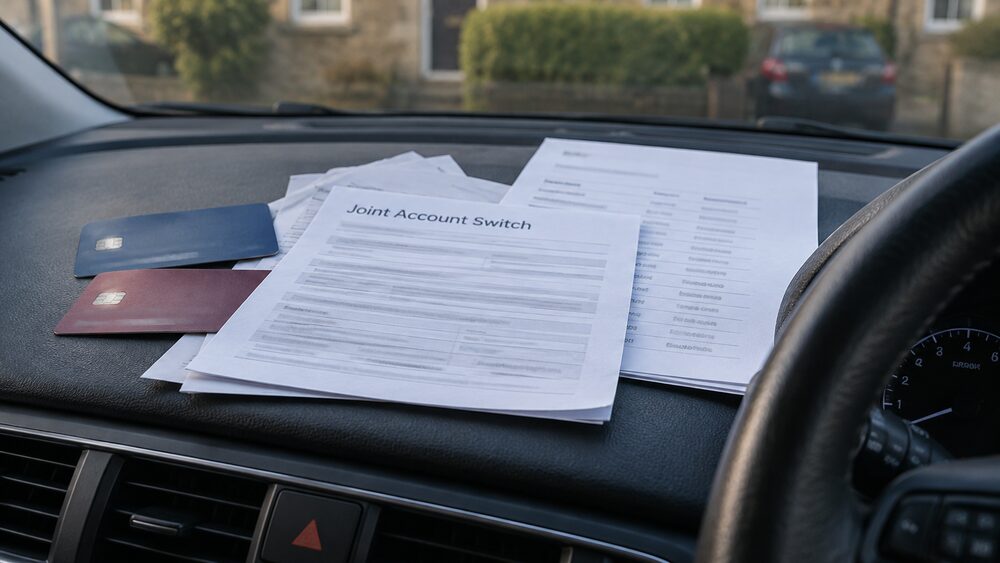
Yes, a joint bank account can be switched, but only to another joint account. The Current Account Switch Service works for joint accounts provided you are switching to another joint account and all account holders agree1. It is not possible to use the service to switch a joint account to a sole account2.
Yes, a joint bank account can be switched, but only to another joint account. The Current Account Switch Service works for joint accounts provided you are switching to another joint account and all account holders agree1. It is not possible to use the service to switch a joint account to a sole account2.
The names on the new account have to match the names on the old one. Ulster Bank puts it plainly: "If you are moving a joint account, this can only be switched to a joint account in the same names"3. HSBC says the account holders must be the same for both accounts4. So a couple moving their joint account to a new bank keeps the same two names on it.
What you can do is go the other way. A sole account can be switched into a joint account, and Halifax confirms you can switch either a solo or joint account from a previous bank into a joint account with it, as long as both people's names are on the new account before the switch5. The switch service itself is free to use, and you choose and agree your switch date with the new bank6.
What both account holders need to agree and provide
A joint account normally lets two or more people receive payments, pay by debit card, transfer money and manage the account, depending on the bank1. That shared control is why switching one takes more than one person's say-so.
The switch service requires permission from any other account holders before you switch9. Bank of Ireland's terms are firmer still: requests to close or switch a joint bank account must be authorised by both or all parties to the account10. Starling asks both of you to confirm the switch in the app11.
In practice, what each bank asks for varies. Nationwide, for example, asks both the existing and new account holders to be on the call together, either in person or by conference call, when adding someone to a sole account12. Halifax asks for details of the account you are switching from, such as your debit card, home address, income details and any arranged overdrafts on the account5.
Two things follow from this. First, both of you need to be contactable and willing at the point of switching, so it is worth agreeing the plan before either of you starts an application. Second, because each holder can withdraw money without asking the other, a switch is also a moment to check that you both still want the same thing from the account13.
How to switch a joint account, step by step
The mechanics are the same as any switch: you apply for an account with a new bank or building society, and it moves your accounts and payments for you14. The difference is that both holders are part of the process.
- Open the new joint account first. TSB's process is to open a joint account, then tell the bank the details of your old bank and it does the rest15. Halifax asks for the same details up front5.
- Both holders confirm. Depending on the bank, this is done in the app, on a call together, or by giving permission11.
- Ask for the switch. You can use the Current Account Switch Service, or apply for a new joint account that includes a switch option4. You can also ask your new provider to transfer your balance and all your incoming and outgoing payments over16.
- Agree the switch date. The service is free, and you choose and agree the date with the new bank6.
- Let the payments move. Under the service, standing orders and Direct Debits are transferred automatically, your money moves, incoming payments are redirected, and the old account is closed17.
If you move accounts without using the switch service, you have to do more yourself: open the new account before closing the old one, cancel or move standing orders and Direct Debits, return unused cheques and cut up old cards, and leave enough money to cover uncleared cheques if you are transferring a balance19.
Switching with an overdraft on the joint account
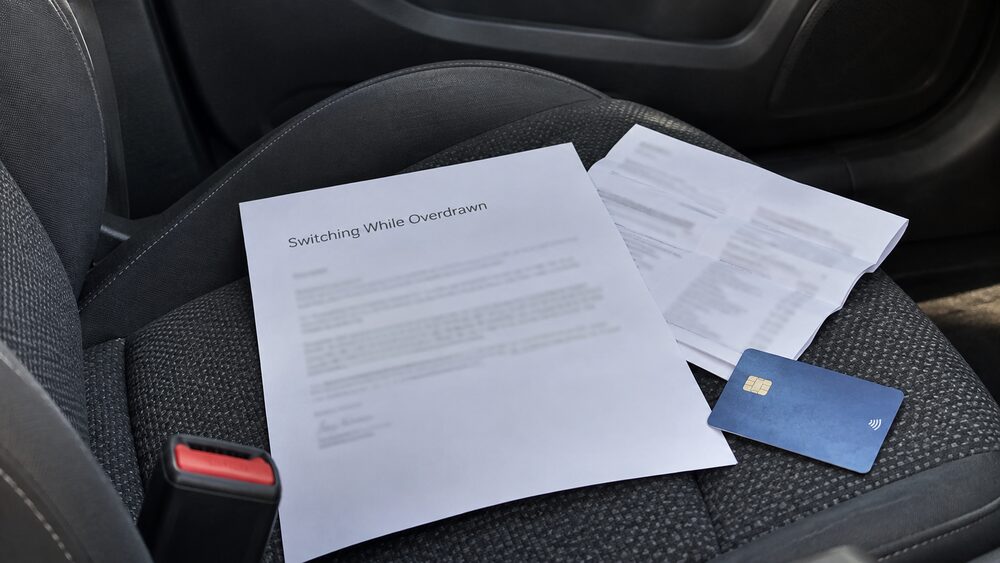
You can switch using the Current Account Switch Service even if you are overdrawn7. What happens to the overdraft depends on whether the new bank will give you one.
If the new overdraft covers what you owe, the funds are sent to your old bank and you owe the overdraft balance on the new account instead. If it is a lower amount, or you cannot get one, you need to arrange to pay off the remainder separately before you can switch or close your old account16.
There is a second point that matters more on a joint account than a sole one. Everyone named on the account is equally responsible, and the bank could ask you to repay overdraft borrowing run up by another holder1. StepChange states it directly: "You are both responsible if the account is overdrawn"20. Independent Age notes that if you are currently overdrawn, you might not be able to switch bank accounts until you have paid off the overdraft21.
Where a joint switch does not work: joint to sole and changed names
The hard limit is joint to sole. Triodos states it is not possible to use the service to switch a joint account to a sole account22, and Which? confirms you can only switch to another joint account held by the same people6. Nationwide cannot transfer a joint account to a sole account abroad as part of its process23, and OakNorth says transfers between joint and sole accounts are not possible right now24.
If you want the account in one name, the route is different. Halifax's position is that you cannot switch a joint bank account into a solo account until the second party is removed from the account5. RBS, dealing with bereavement, updates a joint account to be in the surviving holder's name only, and the account keeps working as before25. That is a change to the existing account, not a switch.
There are also limits on how many people can hold certain accounts. No new National Savings Bank account may be opened in the names of more than two persons26.
A related trap sits on the savings side: you cannot change a sole savings account into a joint savings account27. If you want a joint savings account, it has to be opened as one.
Will switching a joint account mean a credit check on both of us?
Opening a joint account adds a financial link to the other person1. That link means lenders look at both credit histories when either of you applies for credit, and a poor history on one side might lower the chances of acceptance1.
The risk runs both ways. MoneyHelper warns that a joint account should only be opened with someone you trust, because it could damage your credit score if they have poor credit, and you could be responsible if they run up debt28. The bank will usually run a credit check when you open an account, looking at your credit history, including whether you have had problems paying money back16.
Closing the account does not undo the link. Closing a joint account will not remove the link to the other person from your credit file1. If there is no other financial connection between you, you can write to the credit reference agencies to request a disassociation from that individual once the joint account is closed29.
Can we get a switching offer when moving a joint account?
You can qualify for a switching offer on a joint account, but the bonus is not doubled. Cash incentives are usually limited to one payment per account, so a couple does not receive double the bonus for switching31.
The conditions are the usual ones. Some deals require a minimum number of direct debits or a certain amount to be deposited each month to qualify, so it is worth checking the terms carefully before making the move31. Because a joint account can carry both people's Direct Debits, a couple may find it easier to meet a direct debit condition than a single holder would, but the payment itself is still one per account.
FSCS protection: up to £240,000 on a joint account
If a bank fails, money in a joint account is protected by the Financial Services Compensation Scheme. A joint account with two holders is protected up to £240,000, because the £120,000 limit applies to each eligible person8. MoneyHelper puts it the same way: two account holders could deposit £240,000 safely1, and the current account guidance gives £240,000 for any joint accounts32.
The FSCS confirms joint accounts are eligible for protection up to the same limit of £120,000 per eligible person33, and its leaflet states FSCS would protect up to £240,000 of savings in a joint account35. Which? gives the same total: coverage of £240,00036.
That last point is the one couples most often miss. Two people with a joint account and two individual accounts at the same banking group do not get three separate pots of protection. The individual and joint balances are added together and measured against the limit.
If the switch goes wrong
If the two of you disagree about the account, you can ask your bank to register a dispute and cancel the mandate, which freezes the account until everyone agrees how to split the money1. That is the mechanism to use when a relationship has broken down and one holder wants to move or empty the account.
If the problem is with the bank rather than between you, complain to the bank first. If it is not resolved, the Financial Ombudsman Service can look at it. Where a joint account is closed, you can write to the credit reference agencies to request a disassociation from the other person29.
For free, impartial help with money problems, MoneyHelper offers guidance on joint accounts, switching and overdrafts1. StepChange provides free debt advice, including on how joint debts affect you20.
Sources36 cited
- Joint accounts MoneyHelper, 2026-09-25
- Current account switch guide Triodos Bank, 2025-09
- Switch to Ulster Bank Ulster Bank, 2026-09-25
- Joint bank accounts HSBC UK, 2026
- Joint bank accounts Halifax, 2026-09-27
- How to switch your bank account Which?, 2026-09-07
- Overdrafts explained MoneyHelper, 2026-09-25
- What is the Financial Services Compensation Scheme? Bank of England, 2025-12-01
- Switching to HSBC HSBC UK, 2026
- Personal current account guide Bank of Ireland UK, 2026
- Switch current account Starling Bank, 2026
- Get a joint current account Nationwide, 2026
- Dementia and managing money nidirect, 2026-09-03
- Manage and maximise your money Consumer Council for Northern Ireland, 2026
- Switching bank account TSB, 2026
- How to open, switch or close your bank account MoneyHelper, 2026-09-25
- Making changes to your mortgage Cambridge Building Society, 2026-09-26
- Salary sorter Monzo, 2026-09-25
- Getting a bank account Citizens Advice Scotland, 2026-09-26
- How joint debts affect me StepChange, 2026-09-25
- Making the most of your bank account Independent Age, 2026-09-26
- Current account help Triodos Bank, 2026-09-25
- Moving current account abroad Nationwide, 2026
- Moving money OakNorth Bank, 2026-09-02
- Bereavement Royal Bank of Scotland, 2026-09-25
- The National Savings Bank (Amendment) Regulations 2015 legislation.gov.uk, 2015-03-10
- Joint savings accounts Nationwide, 2026
- Choosing a bank account for your Universal Credit payment MoneyHelper, 2026-09-25
- Credit Information Commissioner's Office, 2026-09-25
- Credit Information Commissioner's Office, 2026-09-25
- 6 ways couples can cut taxes and maximise their savings Which?, 2025-02-15
- Current account MoneyHelper, 2026-09-25
- What we cover FSCS, 2026-09-25
- Check your money is protected FSCS, 2026-09-25
- FSCS protected leaflet FSCS, 2025-11
- FSCS: are my savings safe? Which?, 2025-12-01





 MoneyHelperFree, impartial money and pensions guidance, set up by government
 FSCSProtects your money if a bank, insurer or investment firm fails
 Financial Ombudsman ServiceFree, independent help when a complaint about a firm is not put right
 Citizens AdviceFree advice on money, consumer and legal problems in England and Wales