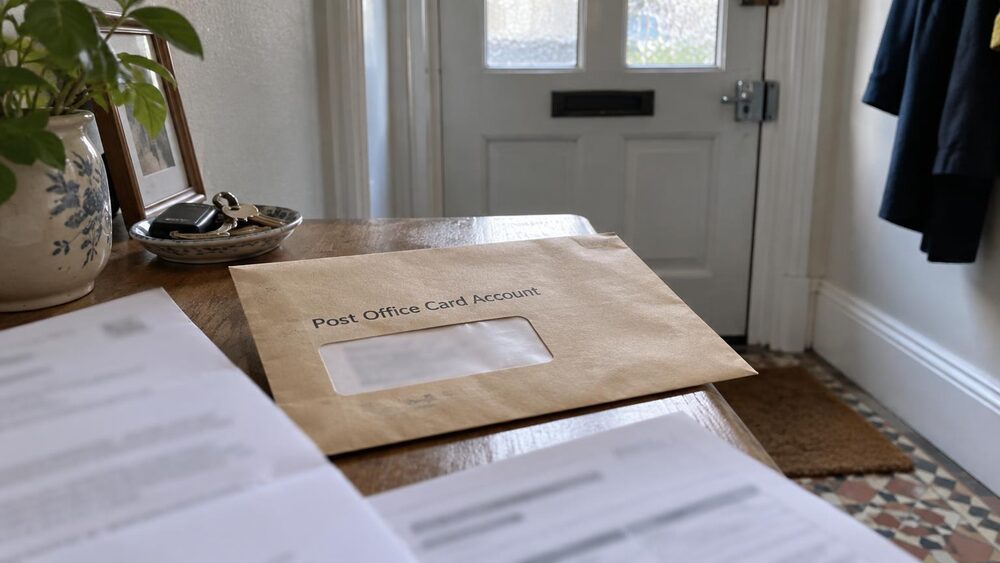
The Post Office card account has closed. The Post Office states plainly that "The Post Office card account (POca) service has now ended, and all customer accounts have been closed"1. If you were still using one to collect benefits or your State Pension, the card no longer works and no further payments can be taken into it.
The Post Office card account has closed. The Post Office states plainly that "The Post Office card account (POca) service has now ended, and all customer accounts have been closed"1. If you were still using one to collect benefits or your State Pension, the card no longer works and no further payments can be taken into it.
The account was a narrow product from the start. It was introduced in 2003 to replace paper pension order books, and it took deposits of benefits and State Pensions that could be withdrawn at a Post Office counter2. It was never a bank account: it could not be used as a debit card, and it could not run Direct Debits or standing orders4.
What replaces it is not another Post Office account. The Post Office says it does not offer current accounts of its own5. Instead, benefits and pensions now go into an ordinary bank, building society or credit union account, and you can still take cash out and pay cash and cheques in at Post Office counters if your bank is part of the arrangement6.
The Post Office card account has closed: what it means for you
The practical effect is that any payment still being sent to a Post Office card account has nowhere to land. The account cannot receive deposits, the card cannot be used to withdraw money, and there is no balance to spend. Anyone who was still using one needs a different account for their benefit or State Pension payment.
The account was already being wound down well before the final closure. In Northern Ireland, the Department of Communities Post Office Card Account was recorded as coming to an end in November 202110. The wider service has since ended entirely, with all customer accounts closed1.
If you cannot open or use a bank account, the closure does not leave you without options. The Payment Exception Service exists as a way to pay benefits to people who cannot use bank, building society, credit union or Post Office card accounts11. Under it, you can collect your benefit or State Pension payment in cash by visiting a Post Office or PayPoint outlet12.
It is worth being clear about what the Post Office card account was never able to do, because some of those limits still apply to whatever replaces it. It could not act as a debit card, and it could not pay bills by Direct Debit or standing order4. A basic bank account fixes both of those, but not every basic bank account can be accessed at the Post Office, so the two features are separate choices13.
What the Post Office card account offered and what it could not do
The account did one job: it took deposits of benefits and State Pensions that could be withdrawn at a Post Office3. For people who wanted cash in hand and did not want or could not get a bank account, that was enough. It was free to hold4.
What it could not do is the longer list. It could not be used as a debit card, so no spending in shops or online. It could not pay bills by Direct Debit or standing order, so recurring payments had to be made another way4. It was not a route into the banking system in the way a current account is.
A current account, by contrast, usually lets you receive benefits and wages, spend in shops, withdraw cash, manage the account online or by mobile app, and set up Direct Debits and standing orders14. That gap is the reason the card account was always a stopping point rather than a destination.
The Post Office itself has never been a current account provider. The financial regulator records that the Post Office has not been designated as a relevant current account provider and cannot be, because it is not one15. That matters to a reader only in one way: there is no Post Office current account to move to, and there never was one to fall back on.
Where benefits and pension payments go now
Benefits and State Pensions now go into a bank, building society or credit union account. Pension Credit payments, for example, go directly into your bank, building society or post office account16. The same principle applies across the benefit system: the payment needs an account in your name that can receive it.
If a bank account is not possible, the Payment Exception Service is the fallback. It pays benefits to people who cannot use bank, building society, credit union or Post Office card accounts, and you collect in cash from a Post Office or PayPoint outlet11.
For anyone who has been refused a standard account, a basic bank account is the usual route. These are designed for people who would not pass a credit check, and some give you a cash card but do not let you set up Direct Debits17. That last point matters if you have bills to pay by Direct Debit, so it is worth checking before you choose one. Alternatives include a credit union current account, which may carry a monthly fee, and a prepaid card account, which usually does not require ID but usually cannot set up payments18.
If you are in Northern Ireland, the same broad picture applies, though the account there was wound down on its own timetable10. Current account rules and the practical options differ in places across the four nations, and it is worth checking what is available locally.
Getting your money at the Post Office with a bank account
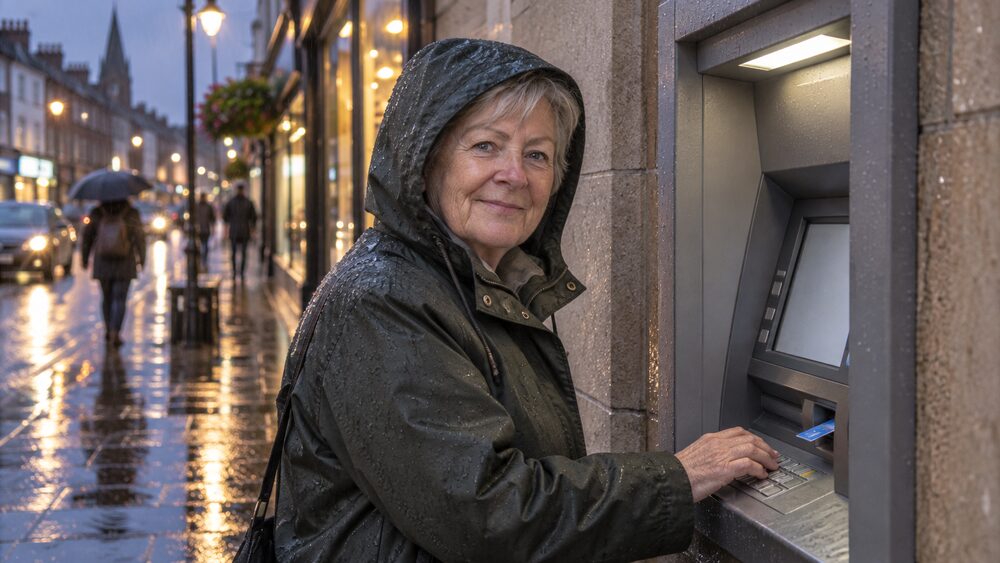
The Post Office counter still works as a way to reach an ordinary bank account. The service works with most UK personal and business bank accounts6, and Post Office branches offer banking services for personal and business accounts with no appointment needed5. Consumer Council guidance describes the same thing: Post Offices offer simple banking facilities, such as withdrawing and depositing cash and cheques for customers of nearly all banks7.
What you can do at the counter includes withdrawing money, paying in cash and cheques, and checking your balance19. Cash deposits made using a card will normally show in your account on the same day5.
There is a limit worth knowing about, and it is not the Post Office's. Each bank sets its own limits for cash withdrawals and deposits20, and the Post Office repeats the point: your daily cash deposit limit is set by your bank5. So the amount you can pay in over the counter depends on your bank's rules, not on the branch you walk into.
Cash and cheque deposits at the Post Office: limits and charges
Cheque deposits are the simpler half of the picture. The Post Office states there is no limit to cheque deposits at its branches, and the service covers personal and business accounts at most major UK banks8. You need your cheque, your sort code and account number, your bank's paying-in slip and a branded bank envelope8. The receipt you are given will only include your sort code and account number, so keep your own record of what you paid in8.
One warning applies to cheque envelopes. The Post Office asks customers not to enclose cash or foreign currency inside the envelope, because it will delay processing6.
Cash is where the limits bite, and they come from your bank. The Post Office says each bank sets its own limits for cash withdrawals and deposits20, and that your daily cash deposit limit is set by your bank5. The Post Office does not publish a coin-by-coin rule for counter deposits, so the practical answer on which coins you can pay in is to ask your bank before taking a large amount of coin to a branch.
Charges vary too. Some banks let you cash a current account personal cheque or use your cash card at the Post Office free of charge13. The Post Office advertises fee-free cash withdrawals and deposits for selected banks, with restrictions applying6, and says some banks may charge for selected services, so customers should speak to their bank6. For bill payments made at a Post Office counter, the Post Office does not charge for paying with a debit or credit card, but your bank may charge its own fees21.
Why the Post Office card account closed
The account was a product of its time. Post Office Card Accounts were introduced in 2003 to replace the old paper state pension order books2. They gave people without bank accounts a way to receive benefits and pensions in cash at a Post Office counter3.
That design left it outside the mainstream banking system. It could not be used as a debit card and could not run Direct Debits or standing orders4, and the Post Office has never been a designated current account provider15. As more people moved to bank accounts, the case for a separate benefit-only card narrowed, and the service has now ended with all customer accounts closed1.
The wind-down was gradual rather than sudden. In Northern Ireland the Department of Communities Post Office Card Account was recorded as coming to an end in November 202110, and the wider service has since closed entirely1.
Where to get help
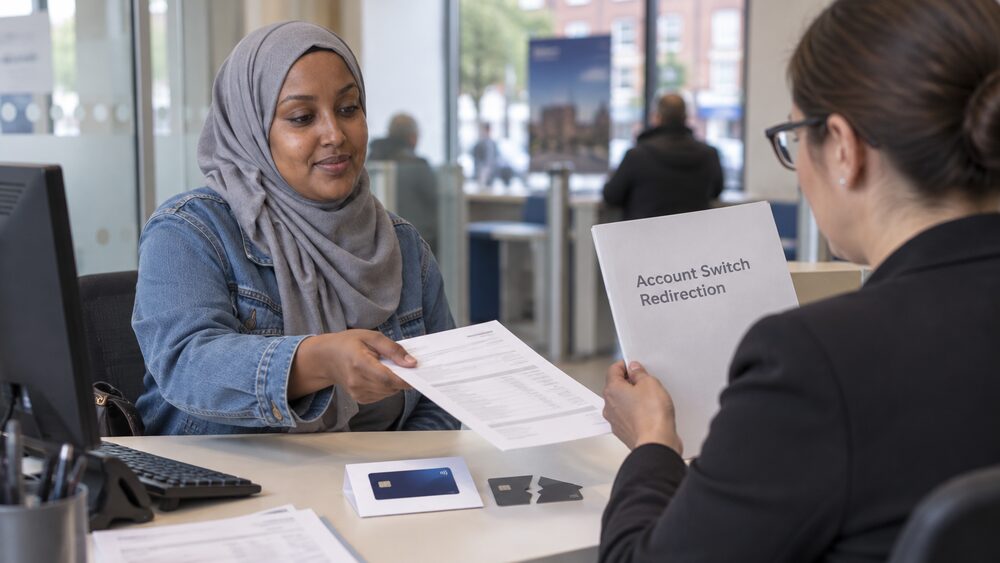
If you are struggling to open an account or to work out where your payments should go, free and impartial help exists. MoneyHelper publishes guidance on choosing a bank account for your Universal Credit payment and on what to do now that the Post Office card account is closing14. Citizens Advice can help with getting a bank account and with benefit problems13. Turn2us explains the Payment Exception Service for people who cannot use a bank account11.
If you are in debt and worried about a bank account, free debt advice services can explain how an account is treated. StepChange covers bank accounts after bankruptcy4. If you are in Northern Ireland, Advice NI has published evidence on the banking landscape there10.
For problems with a bank rather than with benefits, the Financial Ombudsman Service can look at complaints that a firm has not resolved. Its decisions turn on the evidence available, and it will not uphold a complaint it cannot establish22.
Sources22 cited
- Post Office card account Post Office, 2026
- Two million facing new State Pension payment headache Which?, 2017
- Banking with benefits Citizens Advice, 2016
- Bank accounts after bankruptcy StepChange, 2026
- Everyday banking help and support Post Office, 2026
- Everyday banking Post Office, 2026
- Ways to bank Consumer Council, 2022
- Where can I pay in cheques Post Office, 2026
- The UK's ATM network Payment Systems Regulator, 2026
- Banking in Northern Ireland briefing Northern Ireland Assembly, 2025
- Payment Exception Service Turn2us, 2026
- What to do now your Post Office card account is closing MoneyHelper, 2026
- Getting a bank account Citizens Advice, 2026
- Choosing a bank account for your Universal Credit payment MoneyHelper, 2026
- PS24/8 Financial Conduct Authority, 2024
- Pension Credit Which?, 2026
- Basic bank accounts with no credit check Shelter, 2025
- Basic bank accounts MoneyHelper, 2026
- Bank and building society accounts Macmillan Cancer Support, 2022
- Cash deposit guide Post Office, 2026
- Bill payments Post Office, 2026
- How the ombudsman assesses disputes Financial Ombudsman Service, 2026




 MoneyHelperFree, impartial money and pensions guidance, set up by government
 FSCSProtects your money if a bank, insurer or investment firm fails
 Financial Ombudsman ServiceFree, independent help when a complaint about a firm is not put right
 Citizens AdviceFree advice on money, consumer and legal problems in England and Wales