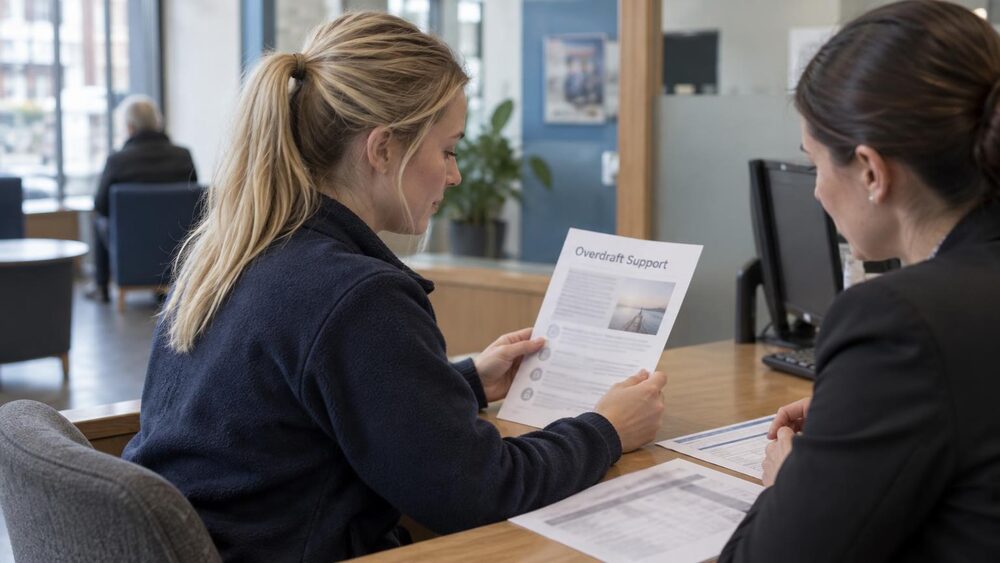
An overdraft is a way of borrowing money through your current account. The bank lets you spend more than you have in the account, up to a limit it sets, and charges you interest for as long as you are overdrawn1. Interest rates from banks and building societies on their overdrafts range from 19% to 40% or more1, so an overdraft is a very expensive way to borrow compared with most other forms of credit2.
Since rules that took effect in April 2020, the cost of an overdraft must be a single annual interest rate, a percentage of the amount you borrow, with fixed daily and monthly fees banned3. Banks can no longer charge more for an unarranged overdraft than for an arranged one4. That made overdrafts cheaper for people who dip in occasionally and clear the balance quickly, but more expensive for some people who borrow larger amounts for longer5.
An overdraft is a form of debt, and it is not guaranteed. It is repayable on demand, meaning the bank can ask for the whole amount back in one go if it chooses to4. MoneyHelper's guidance is that overdrafts should only be used for emergencies or as a short-term option1.
How an overdraft works: borrowing through your current account
An overdraft is a type of loan that often has interest, borrowed through your current account1. When a payment takes your balance below zero, the bank is lending you the difference. You only pay interest on the overdraft money you use, so if you have a £500 limit and go £100 overdrawn, interest is charged on the £100, not the £5006.
Interest is charged on a daily basis for as long as you stay overdrawn8. Because the rate is high, the cost builds steadily: a balance left untouched for months keeps accruing interest every day, which is why guidance bodies describe overdrafts as unsuitable for long-term borrowing2. There are usually fees or interest if you spend more than you have in your account, including where there is not enough to cover a Direct Debit or standing order9.
The limit itself is set by the bank, not by you. It is based on the bank's assessment of your circumstances when you apply, and it can be changed later, in either direction. An overdraft is not part of your money, even though research for the FCA found many consumers thought of it as an extension of their bank account and therefore very much "their money"10. That belief matters, because it leads people to treat an overdraft as spare cash rather than as a debt that costs interest every day and can be withdrawn.
Arranged and unarranged overdrafts: what each one means
There are two kinds of overdraft, and the difference is whether the borrowing was agreed in advance.
- Arranged (or authorised) overdrafts are arranged in advance: you agree a limit with your bank and can spend money up to that limit1. The bank charges you interest for using the overdraft, and there are no other charges2.
- Unarranged (or unauthorised, or unplanned) overdrafts happen when you spend more than you have in your account without agreeing it in advance, including going over the limit of an authorised overdraft1.
The regulator's definition of an unarranged overdraft is a regulated credit agreement that arises as a result of a personal current account becoming overdrawn in the absence of an arranged overdraft, or the firm making available to the customer funds which exceed the limit of an arranged overdraft11. In plain terms: you end up overdrawn without a limit, or you blow through the limit you have.
Before 2020, unarranged overdrafts were punished with fees that could far exceed the cost of arranged borrowing. That is no longer allowed: banks and building societies cannot charge more for an unauthorised overdraft than they charge for an authorised one4. A firm is not prevented from charging a customer who borrows using an unarranged overdraft less than for an arranged facility, or from not charging at all12, so some banks simply refuse payments instead of letting accounts slip into unarranged borrowing.
If a payment would take you past your limit, the bank decides whether to pay it. If it does, you are in an unarranged overdraft and interest runs at the same rate as your arranged one. If it refuses, you may face charges for the returned Direct Debit or cheque, and the bank may freeze the account until the overdraft is paid off6. The detailed comparison is on arranged vs unarranged overdrafts, and the rules on overdraft alerts are covered under when your bank must alert you about overdrafts.
Overdraft costs: one interest rate, often 19% to 40% or more
Interest on all overdrafts is charged at a single annual interest rate (APR), making it easier to compare charges between accounts1. Rates from banks and building societies range from 19% to 40% or more1, and MoneyHelper notes that current account overdrafts normally charge daily interest up to 40%13. Credit union current accounts can also offer overdrafts, normally with daily interest up to 42.6%14.
The House of Commons Library records what happened when the rules changed: nearly every mainstream bank subsequently decided to charge an interest rate of approximately 40%3. The Bank of England groups overdrafts with credit card revolving credit and payday loans as types of borrowing that charge higher interest15.
Two features of the current rules are worth knowing:
- No fixed fees. Rates must now be calculated as a percentage of the amount borrowed, and fixed fees and charges were banned3. A firm may not have a graduated overdraft charging structure, where different rates of interest apply to specified tiers or bands of arranged overdraft balance16. Where a firm indicated no interest is payable on a balance or tranche of it, it must not have a contractual right to impose interest on it anyway17.
- No unarranged premium. The same price applies whether the borrowing was arranged or not4.
The 2020 change made overdrafts cheaper for people who do not use them often or who use them in small amounts, and more expensive for some who borrow heavily5. Guidance from Northern Ireland's public service notes that banks also charge a monthly fee and a setting up fee on some overdrafts, so it can be an expensive way to borrow money6; where such fees exist they must be shown in the account's terms. How the interest is actually calculated day to day is covered in full on how overdraft interest and charges work.
What an overdraft costs in practice: worked examples
StepChange gives a worked example of what a month of overdraft use costs. Borrowing £100 of an arranged overdraft for a month at 40% EAR means paying £2.87 in interest, so you pay back a total of £102.87 if you clear it quickly18. That looks small, but the same rate applied to a larger balance, left in place month after month, is what makes overdraft debt hard to shift.
The same example shows the contrast with other debts. In National Debtline's worked example of listing debts, an overdraft of £400 at 20% has a minimum payment of £0, because overdrafts have no contractual minimum payment19. Nothing forces the balance down, so interest keeps running until you actively pay money in. That is why an overdraft can quietly grow while a credit card, with its minimum payments, at least shrinks a little each month.
Two things follow from the daily interest and the absence of a minimum payment:
- Clearing the balance, even briefly, stops the clock. Halifax states that if a customer goes into their arranged overdraft in the course of a day, repaying it by the end of that day means no daily arranged overdraft interest is charged for that day, and that online transfers from other accounts count up to midnight20.
- Cheques paid in take several days to reach the account, so funds from a cheque may not clear in time to stop a day's interest being charged20.
For a worked example of negotiating repayments, StepChange shows a payment arrangement offer on an overdraft with a £300 balance calculated as £30 a month21. The general guide to overdraft vs personal loan compares the two costs side by side.
Repayable on demand: when a bank can reduce or remove your overdraft
Overdrafts are repayable on demand. This means a bank can ask you to pay the whole amount back in one go if it chooses to4. The bank could also take the overdraft away if it thinks you are over-using it and you are in financial difficulty, because an overdraft is not guaranteed1.
This is the single most important risk of overdraft borrowing, and it is what separates an overdraft from a loan. A personal loan has fixed instalments over a fixed term; an overdraft can be reduced or removed at the bank's decision. If that happens while you are overdrawn, the whole balance can become due at once.
The FCA's rules on repeat use require a firm that identifies a customer repeatedly using an arranged overdraft or repeatedly borrowing beyond their limit, where that suggests possible financial difficulty, to promptly communicate with the customer, encourage them to make contact, explore the reasons for the pattern of use, identify and set out suitable options to reduce overdraft use and provide support, and warn that failure to engage may lead to suspension or removal of the overdraft facility or a reduction in the credit limit22. In practice this means a letter or message from the bank asking you to get in touch, and it is worth responding, because ignoring it can end with the facility being cut.
If you are worse off after the April 2020 pricing changes, MoneyHelper advises contacting your bank, which might reduce or waive interest, offer a continuation of overdraft borrowing at the current rate of interest, or agree a repayment programme, possibly including a personal loan1. The narrow guide can my bank reduce or remove my overdraft? covers the notice a bank must give, and overdraft repeat use: the FCA rules covers the intervention rules in detail.
How to apply for, change or remove an overdraft
Applying for an arranged overdraft is done through your bank, usually in the app or online banking. Halifax, for example, lets customers sign into Online Banking and select "Overdrafts" from the products menu, or select "More actions" then "Overdraft" from their account page20. Existing arranged overdraft customers can apply to increase, decrease or remove their arranged overdraft from the same place20.
The process, in order:
- Check the overdraft rate and terms for your account, which the bank must show as a single annual interest rate1.
- Apply in the app, online, by phone or in a branch, asking for the limit you want.
- The bank runs a credit check and sets the limit it is willing to offer, which may be lower than you asked for or nothing at all.
- If accepted, the overdraft is attached to the account and available up to the limit; you only pay interest on what you use6.
- To change or remove it later, apply again through the same route20.
A banking customer should be able to opt out of arranged overdraft alerts regardless of the other alerts they choose to receive, under the FCA's banking conduct rules24. Updating your mobile number means the bank can text you when daily arranged overdraft interest is being charged20, which helps catch balances that drift below zero unnoticed. Your balance can be checked 24 hours a day online, by phone or from a cash machine20.
If you cannot get an overdraft, or you want an account where you cannot go overdrawn at all, a basic bank account has no overdraft facility, so no interest is charged and there are no fees for returned Direct Debits or standing orders8. See basic bank accounts explained and who can get a basic bank account.
Switching bank with an overdraft
You can switch using the Current Account Switch Service even if you are overdrawn1. The switch works by your new bank offering you an overdraft on the new account. If this covers what you owe, the funds will be sent to your old bank and you will owe the overdraft balance on the new account instead. If it is a lower amount, or you cannot get one, you will need to arrange to pay off the remainder separately before you can switch or close your old account25.
Whether the new bank will match your existing overdraft varies. Nationwide has said you may be able to switch while overdrawn if the amount you owe is within the arranged overdraft limit it is willing to offer you; if your existing overdraft is higher, your application may be declined26. Santander has said an overdraft with your previous bank would not move to your new Santander account, and you would remain responsible for repaying the old provider26. Some providers will even let you switch with a large overdraft debt outstanding, but there may be a charge to do this27.
Two cautions from debt charities:
- If you open a basic bank account at the same bank as an overdrawn account, the bank may use the money in the new basic account to pay off debts in the old one. If you get benefits, tax credit or state pension, consider opening the basic account at a different bank28.
- An overdraft is repayable on demand, so money in an account with an overdraft is not entirely safe from being taken for the debt23.
The full process is on switching while overdrawn and the Current Account Switch Service. Graduate accounts are a special case: the overdraft limit goes down every 12 months after graduation27, which is covered on graduate bank accounts.
Overdrafts and your credit file
Overdraft usage shows up on your credit report29. The FCA has said it would expect that customers' access to, and use of, an overdraft facility will be reported on their credit file in the usual way7. So the fact you have an overdraft, and how much of it you use, are both visible to lenders.
Your credit rating can be affected if you often go over your overdraft limit, or if you owe too much on your overdraft5. Going over the limit means unarranged borrowing, which lenders read as a sign of financial strain. A balance that sits permanently close to the limit can weigh on your score even if you never exceed it.
What this means in practice:
- Applying for an overdraft involves a credit check, and repeated applications leave marks on your file.
- Living permanently in your overdraft is visible to any lender you apply to for other credit.
- Clearing the balance, or keeping well within the limit, avoids the two behaviours that damage a rating5.
The wider picture, including how current accounts themselves affect your file, is on how current accounts affect your credit file.
Ways to clear an overdraft you rely on
StepChange sets out the main routes out of a permanent overdraft30:
- Reduce your overdraft use over time, by finding savings in your budget and talking to the bank about monthly payments30.
- Use savings to clear the balance, which saves money in the long term because the overdraft rate is almost certainly higher than any interest your savings earn30.
- Repay the balance using credit with a lower interest rate, such as a balance transfer to a credit card or an affordable loan30.
- Separate your overdraft from day-to-day banking, by setting up a new account with no overdraft, so your income lands somewhere the overdraft cannot absorb it30.
*A budget with a fixed monthly amount assigned to shrinking the overdraft is the simplest route out of repeat use.]
The last of those matters more than it sounds. If your income is paid into the overdrawn account, the overdraft swallows it and reappears during the month. A bank can help here: it may be able to separate any overdrafts from your existing account, set up a new "clean" basic bank account, and help you reduce your overdraft at a rate you can afford31.
For the mechanics of repayment, the two standard methods are the debt avalanche, which targets the highest interest rate first, and the debt snowball, which targets the smallest balance first. In National Debtline's example, the overdraft's £400 balance at 20% with a £0 minimum payment sits alongside other debts to be ordered by whichever method you choose19. Because overdrafts have no minimum payment, they can be easy to leave untouched, which suits neither method; a deliberate monthly payment, like the £30 a month on a £300 balance in StepChange's payment arrangement example21, is what actually reduces it.
Free help is available: StepChange, National Debtline and MoneyHelper all advise on overdraft debt at no cost, and the options are gathered on struggling to repay an overdraft and in the debt section.
When an overdraft is not the right way to borrow
Guidance is consistent on this point: overdrafts should only be used for emergencies or as a short-term option1, because they are an expensive way to borrow30. The interest rate, often around 40%3, charged daily on the balance, with no minimum payment to shrink it19, makes an overdraft left in place for months one of the more expensive ways to carry debt.
Circumstances where an overdraft tends to be the wrong tool:
- Long-term borrowing. The balance never reduces by itself, and the bank can demand it back at any time4.
- Large amounts. At 40% EAR, £100 for a month costs £2.8718; scaled up and left in place, the cost grows proportionally.
- Borrowing you cannot repay quickly. A personal loan has fixed instalments and a fixed end date; an overdraft has neither.
- Income you cannot afford to lose. Because the overdraft is repayable on demand, money in the account is not fully safe23.
Alternatives worth knowing about include a basic bank account with no overdraft at all8, a credit union current account, whose overdrafts normally charge daily interest up to 42.6%14, and, for people considering a payday loan to clear an overdraft, debt charity guidance on the costs involved32. The comparison pages overdraft vs personal loan and overdraft or payday loan: which costs more? set the options side by side.
Complaining about an overdraft
If your bank cancels your overdraft with no warning, you might have grounds to complain1. Complaints also arise over interest and charges, refused payments, and how the bank has treated repeat use. The ombudsman's data shows the scale: 1,528 overdraft complaints were opened in Q1 2026/27, of which 22% were upheld33, up from 1,100 in Q1 2025/2634. Business overdrafts drew a further 55 complaints in the same quarter33.
The route, in order:
- Complain to your bank, setting out what went wrong and what you want it to do.
- The bank investigates and replies.
- If you are not satisfied with the outcome, take the complaint to the Financial Ombudsman Service, which is free1.
- If the complaint involves an error on your credit file, complain to the credit reference agency as well, then to the ombudsman if it is not fixed.
The ombudsman's case studies show the kinds of disputes it resolves. In one, a customer's bank transferred money between his accounts without telling him: when the overdraft reached £40,000, Glenn's bank wrote to tell him it would only extend his overdraft facility for a further period, and the dispute over how that was handled went to the ombudsman36. Cases like that turn on whether the bank communicated properly before acting.
If you believe past overdraft charges were unfair, including charges from before the 2020 rule change, the process is on how to reclaim unfair bank charges, and the old fee structures are explained on the 2020 overdraft changes.
Sources36 cited
- Overdrafts explained MoneyHelper, 2026-09-25
- Overdraft debt StepChange, 2026-09-25
- Overdraft charges and the 2020 price cap House of Commons Library, 2026-07-08
- Debt consolidation National Debtline, 2026-09-25
- Overdrafts: things to consider StepChange, 2020
- Overdrafts and other bank debts nidirect, 2025-11-07
- Finalised guidance: overdrafts, coronavirus updated temporary guidance for firms Financial Conduct Authority, 2020-07
- Basic bank accounts Advice NI, 2026
- Choosing a bank account for your Universal Credit payment MoneyHelper, 2026-09-25
- Consumer credit: overdrafts and credit cards research Financial Conduct Authority, 2014-04-07
- CONC 5C.5 FCA Handbook, 2020-04-06
- CONC 5C.3 FCA Handbook, 2020-04-06
- Current account MoneyHelper, 2026-09-25
- Credit union current accounts MoneyHelper, 2026-09-25
- What do I need to know about debt Bank of England, 2025-08-19
- CONC 5C.2 FCA Handbook, 2020-04-06
- FCA Policy Statement PS19/06 instrument Financial Conduct Authority, 2019-05-30
- Understanding interest charges StepChange, 2026-09-25
- What is the debt avalanche method and how does it work National Debtline, 2026-09-25
- Keeping your overdraft interest as low as possible Halifax, 2026-09-27
- Arranging payment with creditors StepChange, 2026-09-25
- CONC 5D: overdraft repeat use FCA Handbook, 2024-11-04
- Safe bank accounts National Debtline, 2026-09-25
- BCOBS 8 FCA Handbook, 2026-09-25
- How to open, switch or close your bank account MoneyHelper, 2026-09-25
- Can you switch your student bank account after the first year Which?, 2026-08-06
- Graduate overdrafts StepChange, 2026-09-25
- Getting a bank account Citizens Advice Scotland, 2026-09-26
- What's the best way to borrow money at Christmas Which?, 2023-12-10
- How can I stop living in my overdraft StepChange, 2026-09-25
- Banking and borrowing StepChange, 2026-09-25
- Considering a payday loan StepChange, 2026-09-25
- Quarterly complaints data Q1 2026/27 Financial Ombudsman Service, 2026
- Quarterly complaints data Q1 2025/26 Financial Ombudsman Service, 2025
- How does debt affect a credit file? StepChange, 2026-09-25
- Bank transferred money but didn't tell me Financial Ombudsman Service, 2026-09-26


 MoneyHelperFree, impartial money and pensions guidance, set up by government
 FSCSProtects your money if a bank, insurer or investment firm fails
 Financial Ombudsman ServiceFree, independent help when a complaint about a firm is not put right
 Citizens AdviceFree advice on money, consumer and legal problems in England and Wales