
Yes. Your bank can decide to cancel or lower your overdraft limit at any time, and it does not need your agreement to do it. The one thing it must do is warn you first1. An arranged overdraft is not a fixed loan with a fixed end date: it is repayable on demand, which means a bank can ask you to pay the whole amount back in one go if it chooses to2.
Yes. Your bank can decide to cancel or lower your overdraft limit at any time, and it does not need your agreement to do it. The one thing it must do is warn you first1. An arranged overdraft is not a fixed loan with a fixed end date: it is repayable on demand, which means a bank can ask you to pay the whole amount back in one go if it chooses to2.
That sounds alarming, and for anyone living permanently in their overdraft it is the single most important thing to understand about how the product works. In practice banks usually give notice, often work with customers who are struggling, and frequently reduce a limit in stages rather than pulling it overnight. But the right to withdraw the facility exists, and it is written into the terms of every arranged overdraft3.
The other side of the coin is that you can ask for your own limit to be cut or removed at any time, and several banks run formal reduction plans that let you pay the balance down gradually while still using the account4. What follows covers the notice you are entitled to, what happens to money you already owe, how to reduce your own limit, what overdrafts cost, and how to complain if a bank gets it wrong.
Your bank can cut or remove your overdraft at any time
The starting point is that an overdraft is a borrowing facility the bank can withdraw, not a sum it has promised to lend for a set period. Your bank can decide to cancel or lower your limit at any time, and this becomes more likely if you keep going over the limit1. Halifax puts the same point in its own words: your bank or building society could change or cancel your overdraft at any time and it may be repayable on demand3.
Because the balance is repayable on demand, a bank can ask you to pay the whole amount back in one go if it chooses to2. That is the legal shape of the product, and it applies whether the overdraft is arranged or unarranged. It is why an overdraft is a poor substitute for a loan if you need certainty about how long you can borrow for: a personal loan has a fixed term and a fixed repayment schedule, while an overdraft can be pulled.
In practice, banks rarely demand the full balance the moment a limit is cut. Where there are signs that you are in financial difficulty, your bank must work with you to help reduce your overdraft use and address the problem, while following other FCA rules such as communicating clearly and treating you fairly8. That obligation is the main protection a regular overdraft user has, and it is worth knowing it exists before you ring the bank.
If a limit is cut and you cannot cover the shortfall, the options are to ask the bank to reduce or remove the overdraft on a timetable you can manage, or to move to a basic bank account with no overdraft facility at all9. Basic accounts come with no overdraft, which removes the risk of the facility being withdrawn but also removes the buffer10.
Notice: what your bank must tell you first
A bank cannot simply remove an overdraft without telling you. Where a firm proposes to change a term or condition, a charge, or a material change to an interest rate that disadvantages you, it should provide reasonable notice on paper or in another durable medium before the change takes effect11. That is the rule that turns "the bank can do this" into "the bank must tell you first".
How much notice varies by bank and by what is changing. Bank of Scotland says it will usually give 30 days notice before making any changes to an arranged overdraft limit5. First direct says it will give at least 14 days notice before any overdraft interest or charges come out of the account12. Those are the banks' own stated practices, not a single legal minimum, so the notice you get depends on your provider and on whether the change is to the limit, the rate or the charges.
Banks also have to keep you informed about your overdraft use as it happens. Bank of Scotland, for example, says it will let you know by text when you are about to use or have started using your arranged overdraft, and when it has started to charge you for using it13. There is a catch worth knowing: if you opt out of receiving some or all alerts, the firm must warn you that you will not receive alerts about your overdraft use and that as a result you may incur avoidable charges14. Turning alerts off does not turn the charges off.
What happens to the money you already owe
Cutting a limit does not wipe out the debt. If your limit is reduced below what you owe, the balance above the new limit is immediately repayable, and if the facility is removed altogether the whole balance becomes repayable on demand2. What happens next depends on whether you can clear it.
If you cannot, the consequences escalate. You may be blocked from spending money until you pay off what you owe, your credit score could go down, and your bank might close or default your account and tell you to pay it back15. Going into an unarranged overdraft can also mean a penalty charge and a high rate of interest, charges for reminder letters and for direct debits or cheques put through the account, and the bank may freeze the account until the overdraft is paid off7.
There is a rule that limits how much worse an unarranged overdraft can be than an arranged one. For personal current accounts, banks and building societies can no longer charge more for an unauthorised overdraft than for an authorised overdraft2. That does not make an unarranged overdraft cheap, but it stops it being a separate, harsher tariff.
If you have other debts with the same bank, the order in which you deal with them matters. Where an overdraft is interest-free, it can be sensible to treat debts such as a credit card with the same bank as priorities so that you keep the overdraft, because if the bank starts charging interest your overdraft could increase very quickly16. The same logic applies to student and graduate overdrafts, which are often interest-free for a set period17.
Reducing or removing your own overdraft limit
You do not have to wait for the bank to act. You can ask to reduce or remove your limit at any time, though the new limit cannot be less than what you already owe18. First direct states the same position for its own customers: if your overdraft is with first direct, you can ask it to reduce or remove the overdraft at any time19. Hampden Bank says clients can request the reduction or removal of an overdraft limit at any time by contacting their banker20.
Some banks make it a self-service task. The Nationwide banking app, for example, lets you choose to increase or decrease your arranged overdraft limit21. Others run formal reduction plans. Royal Bank of Scotland and Ulster Bank both describe a plan where the minimum reduction amount is £5 and you can reduce your limit by up to the full amount of your overdraft22. NatWest says you can reduce your limit in one go as long as you have enough money in your account and you are not currently in a debit position23.
Santander describes a monthly reducing overdraft, where the bank can make a plan to help you gradually pay off your overdraft balance while you are still using the account, with interest charges possibly put on hold for a while24. More generally, a bank might say it will reduce the amount of overdraft you can have gradually, for example over 3 months25. Lenders could also agree to reduce the overdraft limit over time or stop interest and charges for a while9.
There is a practical catch with reducing your own limit. TSB states that to reduce or remove any overdraft you must have paid back any money you owe, or your account must be within your new arranged overdraft limit26. In other words, you can only set a lower limit if the balance already fits inside it, unless the bank is running a staged plan that lets you pay down over time.
Overdraft costs: often up to 40% APR
Overdrafts are an expensive way to borrow, and the cost is usually expressed as a daily interest rate rather than a monthly fee. Interest rates from banks and building societies on their overdrafts range from 19% to 40% or more6. MoneyHelper puts the everyday figure plainly: you will normally pay daily interest of up to 40% on an overdraft27. Credit union current accounts offer access to borrowing through an overdraft, normally with daily interest up to 42.6%28.
The concentration around 40% is not a coincidence. Nearly every mainstream bank decided to charge an interest rate of approximately 40% after the overdraft rule changes of 202029. Before that, many banks charged a daily or monthly fee instead, which made the cost harder to compare. The move to a single interest rate made overdrafts easier to compare with each other, and harder to mistake for cheap money.
There is one piece of good news. Some arranged overdrafts have an agreed amount you pay no interest on, for example the first £50 of your overdraft30. That is not universal, and it is usually a small buffer rather than a meaningful borrowing facility. It also does not apply once you go over the arranged limit: with a specific overdraft arrangement you will pay interest on anything you borrow, and the rate will be higher if you go over the amount agreed31.
The cost of an overdraft is also driven by how long you stay in it. Daily interest compounds against you, and an overdraft that is cleared each payday costs far less than one that is never cleared. If you are borrowing to cover a gap that keeps reappearing, the overdraft charges page sets out how the interest is worked out, and struggling with an overdraft covers the options when the balance will not go down.
What happens if a payment goes out after your overdraft is removed
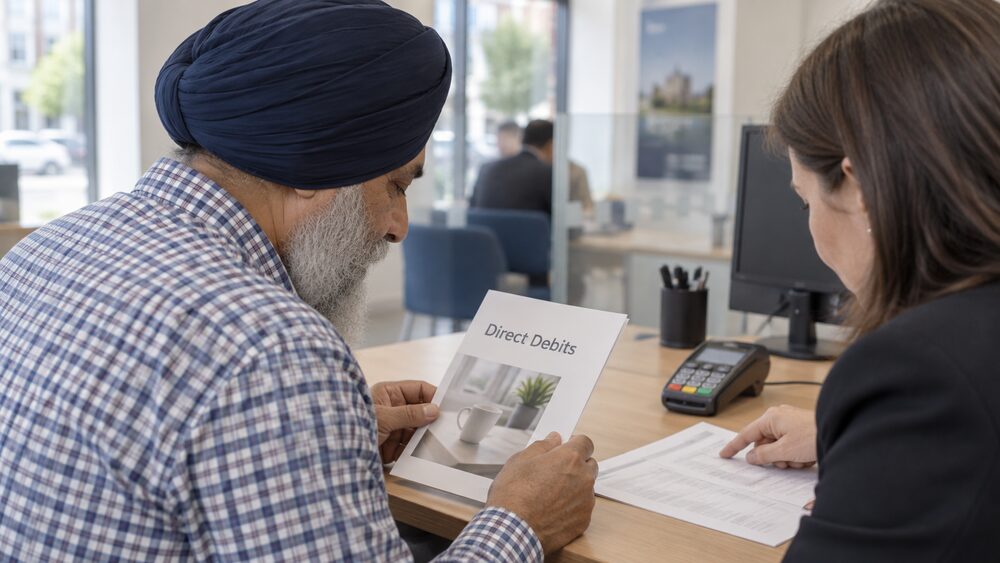
Removing an overdraft does not stop payments leaving the account. Direct Debits, standing orders and card payments still arrive, and if there is no money to cover them they will either be returned unpaid or push the account into an unarranged overdraft. Either way there is a cost.
If a payment takes you into an unarranged overdraft, you may have to pay a penalty charge and a high rate of interest, and your bank may also charge for sending a reminder letter and for direct debits or cheques put through the account. The bank may freeze the account until the overdraft is paid off7. You may also be blocked from spending money until you pay off what you owe15.
The knock-on effects can reach beyond the bank. If a payment is missed, the recipient may charge you, and if wages are paid into your account late and your bank charges you for going overdrawn, that is a loss the bank can be asked to cover32. The Financial Ombudsman Service has ordered banks to refund overdraft fees or interest, pay out a cheque the bank did not honour, return money paid to the wrong person, and pay compensation for distress or inconvenience33.
The practical step is to check what is due out before a limit changes. If a Direct Debit is about to take you over, the Direct Debits and standing orders page explains how to move or cancel one, and the unpaid transaction fees page covers what a bank can charge when a payment is returned.
Complaints and where to get help
If your bank cancels your overdraft with no warning, you may have grounds to complain, and if you are not satisfied with the outcome you can take the complaint to the Financial Ombudsman Service6. The ombudsman is free to use and its decisions are binding on the bank.
Start with the bank. Complain to customer services, then make a formal complaint, which gives the bank eight weeks to investigate and give a final response34. Give the bank at least eight weeks to try to resolve your complaint; it should then send a final decision letter telling you how to contact the Financial Ombudsman Service7. If the complaint is related to payments, the bank has 15 days to investigate and give a final response34.
What can a bank offer? Where customers were left worse off by the April 2020 overdraft changes, banks might reduce or waive interest, offer a continuation of overdraft borrowing at the current rate of interest, or agree a repayment programme possibly including a personal loan6. Those are examples of the kind of remedy available, not an entitlement in every case.
If you are in financial difficulty, the bank has a duty to work with you. Where there are signs that you are in financial difficulty, your bank must help you reduce your overdraft use and address the problem, while communicating clearly and treating you fairly8. Free, impartial help is available from MoneyHelper and from debt advice charities such as StepChange, and the debt section covers the full range of options. If the problem is that the balance will not shift, negotiating with creditors is a route many people use, and reduced payments agreed with a creditor will be marked on your credit file35.
Complaints about overdrafts sit inside a wider picture. In the first quarter of 2026/27 the Financial Ombudsman Service recorded 55 complaints about business overdrafts36. The ombudsman also sees complaints about reduced in-person services, including access to cash withdrawals due to ATM withdrawal limits, services only available in branch face to face such as removing a security block, verifying identification or depositing cash, and access limited to specific branches with customer advisers37. If your bank has cut its branch network and you cannot do in person what you need to do, that is a complaint the ombudsman recognises.
Sources37 cited
- What is an overdraft? Experian, 2026
- Debt consolidation Business Debtline, 2026-09-26
- Loan or credit card or overdraft Halifax, 2026-09-27
- Overdraft limit reduction plan Ulster Bank, 2026-09-25
- Managing your overdraft limit Bank of Scotland, 2026-09-27
- Overdrafts explained MoneyHelper, 2026-09-25
- Overdrafts and other bank debts nidirect, 2025-11-07
- Overdraft debt StepChange, 2026-09-25
- How can I stop living in my overdraft? StepChange, 2026-09-25
- How to save for an emergency StepChange, 2026-09-25
- BCOBS 4: Communications with banking customers FCA Handbook, 2026-09-26
- Overdraft first direct, 2026
- Bank of Scotland FAQs Bank of Scotland, 2026-09-27
- BCOBS 8: Overdrafts FCA Handbook, 2026-09-25
- Student overdrafts Experian, 2026
- Student money and debt Business Debtline, 2026-09-26
- Graduate overdrafts StepChange, 2026-09-25
- Overdrafts explained HSBC, 2026
- Overdraft first direct, 2026
- Overdrafts Hampden Bank, 2026
- Banking app support Nationwide, 2026
- Overdraft limit reduction plan Royal Bank of Scotland, 2026-09-26
- Overdraft limit reduction plan NatWest, 2026-09-25
- Overdraft repeat use Santander, 2026
- Bank overdrafts Citizens Advice, 2023-01-10
- Overdrafts TSB, 2026
- Current account MoneyHelper, 2026-09-25
- Credit union current accounts MoneyHelper, 2026-09-25
- Overdraft regulation House of Commons Library, 2026-07-08
- Understanding interest charges StepChange, 2026-09-25
- Loans for bad credit with no guarantor Experian, 2026
- IT problems at banks Financial Ombudsman Service, 2026-09-25
- Cheques and bankers drafts Financial Ombudsman Service, 2026-09-26
- Joint accounts MoneyHelper, 2026-09-25
- Basic bank accounts MoneyHelper, 2026-09-25
- Quarterly complaints data Q1 2026/27 Financial Ombudsman Service, 2026
- Our response to HMT's call for evidence for the Access to Banking Review Financial Ombudsman Service, 2026-07


 MoneyHelperFree, impartial money and pensions guidance, set up by government
 FSCSProtects your money if a bank, insurer or investment firm fails
 Financial Ombudsman ServiceFree, independent help when a complaint about a firm is not put right
 Citizens AdviceFree advice on money, consumer and legal problems in England and Wales