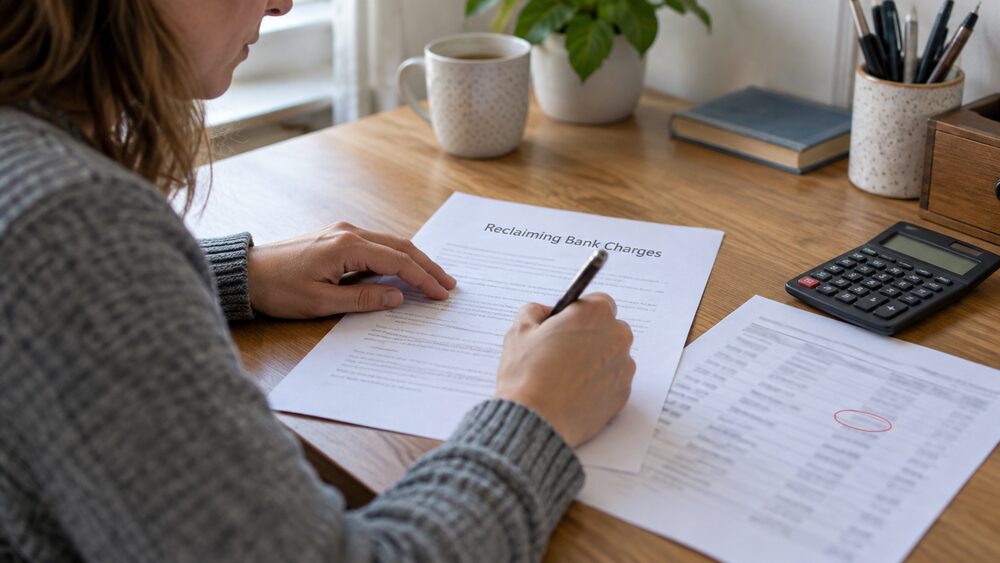
If a bank charge looks wrong or disproportionate, you can challenge it. The route is a complaint to the bank first, then, if you are still unhappy, the free Financial Ombudsman Service. The bank has eight weeks to give a final response on most complaints, and 15 days if the complaint is about payments1.
If a bank charge looks wrong or disproportionate, you can challenge it. The route is a complaint to the bank first, then, if you are still unhappy, the free Financial Ombudsman Service. The bank has eight weeks to give a final response on most complaints, and 15 days if the complaint is about payments1.
What you can realistically recover depends on why the charge was applied. Where a payment was taken without your permission, the rules are firm: the bank must refund the unauthorised payment and restore your account to the state it would have been in had the payment not gone through, which includes any interest or charges added because of it3. Where the charge is for something you did authorise, such as an overdraft you used or a card payment abroad, there is no automatic refund, and the question becomes whether the charge was fair.
It is worth knowing the odds. Of current account complaints decided by the ombudsman in the first quarter of 2025/26, 28% were upheld in the customer's favour5. That is not a promise, but it shows complaints about current accounts are far from hopeless.
Charges you might be able to challenge
Three kinds of charge come up most often: overdraft interest, fees for payments the bank refused, and fees for using your card abroad.
Overdraft interest is the biggest. Banks and building societies charge between 19% and 40% or more APR on overdrafts, and interest is usually charged daily until the balance is paid back2. Credit union current accounts can charge daily interest up to 42.6%6. The shift to this model was near-universal: nearly every mainstream bank decided to charge an interest rate of approximately 40%7. The Bank of England notes that overdrafts, revolving credit on credit cards and payday loans charge higher interest than other borrowing8.
Unpaid transaction fees arise when the bank refuses a payment, for example a Direct Debit, because there is not enough money. Going into an unarranged overdraft can mean a penalty charge and a high rate of interest, charges for reminder letters and for direct debits or cheques put through the account, and the bank may freeze the account until the overdraft is paid off9. Banks also charge a monthly fee and a setting-up fee for an overdraft, which makes it an expensive way to borrow9.
Card fees abroad are the third. A spending or cash machine charge abroad is typically between £1 and £3 each time you use your card, except for Euros in the EU1. One high street bank charges a 2.99% non-sterling transaction fee for using its debit card abroad on purchases, cash withdrawals and refunds, and whenever you do not pay in sterling, for example shopping online at a non-UK website10. The cost can be out of proportion to the purchase: spending just £5 with a card that charges fees could set you back £1.15, an additional 23%11.
Overdraft interest of up to 40% APR and how it builds up
Overdraft interest is charged daily on the amount you are overdrawn, which is why a balance that looks small can generate a charge that looks large. MoneyHelper puts the range across banks and building societies at 19% to 40% or more APR, and describes current account overdrafts as often up to 40% APR until paid back2. Its current account guidance says you will normally pay daily interest up to 40%12.
That is a wide range, and the reason it matters is compounding: interest added today is part of the balance interest is charged on tomorrow. An overdraft is also repayable on demand, which means a bank can ask you to pay the whole amount back in one go if it chooses to13.
If you are struggling with the cost rather than disputing it, there is a separate route. For customers left worse off by the April 2020 overdraft changes, banks might reduce or waive interest, offer a continuation of overdraft borrowing at the current rate of interest, or agree a repayment programme possibly including a personal loan2. That is a conversation about affordability, not a complaint about fairness, and it can run alongside one.
How to complain to your bank: eight weeks for a final response
Start with the bank's customer services. If that does not resolve it, make a formal complaint: the bank then has eight weeks to investigate and give a final response14. MoneyHelper sets out the same sequence for current accounts, ending with the free Financial Ombudsman Service if you still do not agree1.
The deadline is shorter for one category. If the complaint is related to payments, the bank has 15 days to investigate and give a final response12. The ombudsman's own guidance to firms says they must get back to you within 15 days for a first response16.
When the bank finishes, it should send a final decision letter telling you how to contact the Financial Ombudsman Service9. Keep that letter: it is the document that opens the next stage.
- Contact the bank's customer services and explain the charge you are disputing.
- If that does not settle it, make a formal complaint.
- Give the bank eight weeks for a final response, or 15 days if the complaint is about payments.
- If you disagree with the outcome, or the bank has not replied in time, take the complaint to the Financial Ombudsman Service.
Taking your complaint further if your bank says no
The Financial Ombudsman Service is free to consumers and decides complaints about banking and payments. Its powers are practical rather than symbolic. It may ask a bank to refund any payments you did not authorise, refund charges and interest the bank has applied to your account, compensate you for any money you lost, and pay compensation for distress or inconvenience3.
In cases involving unfair or unauthorised fees, the ombudsman will usually tell the firm to refund the fee, sometimes with interest, refund additional costs incurred, and pay compensation for distress or inconvenience17. That is the shape of a typical outcome: the charge back, plus anything it caused, plus a modest sum for the trouble.
The ombudsman also looks at how the bank handled the complaint, not just the original charge. Parliament's scrutiny of the service recorded a recommendation that the case handling fee should not apply to banks where the ombudsman finds the bank has managed a customer's complaint fairly in the first instance18. In other words, a bank that deals with a complaint properly is treated differently from one that does not.
The uphold rate is the number to hold on to when deciding whether to bother. Current account complaints decided in Q1 2025/26 had a 28% uphold rate5. In Q3 2025/26 the rate was 27%19. In Q1 2026/27, business current accounts had a 30% uphold rate, debit cards 28% and packaged bank accounts 18%20.
Around 28% of current account complaints are upheld
The ombudsman publishes uphold rates by product, and they are the best available guide to how often a complaint succeeds. For current accounts the rate was 28% in Q1 2025/26, on 7,803 complaints5, and 27% in Q3 2025/26, on 8,542 complaints19. In Q1 2026/27, business current accounts were upheld at 30%, debit cards at 28% and packaged bank accounts at 18%20.
| Complaint subject | Uphold rate | Period | Source |
|---|---|---|---|
| Current accounts | 28% | Q1 2025/26 | 5 |
| Current accounts | 27% | Q3 2025/26 | 19 |
| Business current accounts | 30% | Q1 2026/27 | 20 |
| Debit cards | 28% | Q1 2026/27 | 20 |
| Packaged bank accounts | 18% | Q1 2026/27 | 20 |
An uphold rate is not a prediction about your case. It tells you that roughly one in four current account complaints that reach a decision goes the customer's way, which is high enough that a well-evidenced complaint is worth making and low enough that it is not a certainty.
Closing or switching an account while you owe charges
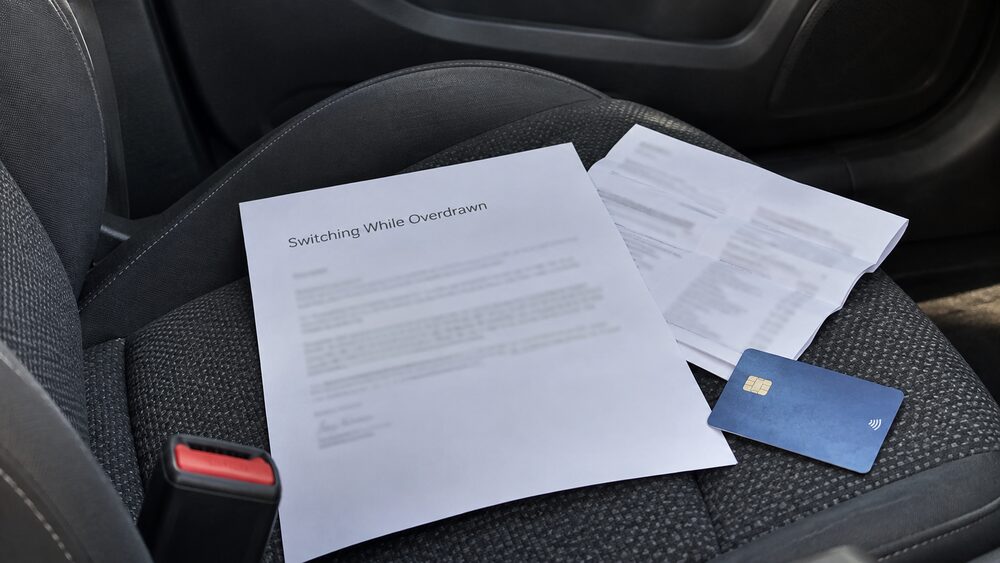
Owing money changes what you can do with the account. If you are using your overdraft, you have to pay it back before you can close the account, and you lose access to statements when you do, so take copies if you need them1. Closing the account does not cancel the debt: you may still be sued for money you owe if you do not pay it when you close the account22.
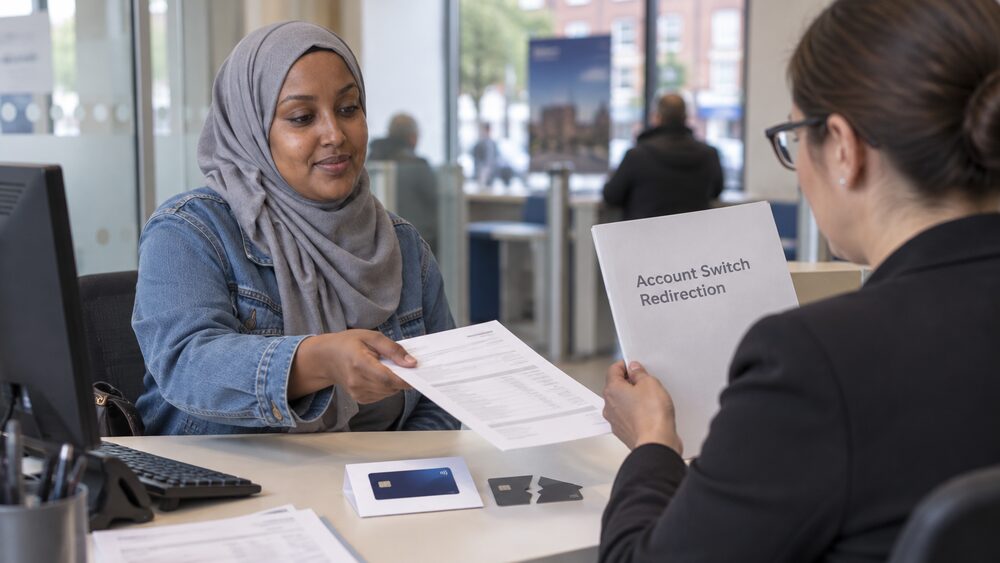
Switching is more flexible than closing. You can switch using the Current Account Switch Service even if you are overdrawn2. What happens to the balance depends on the new bank: if the new overdraft covers what you owe, the funds are sent to your old bank and you owe the overdraft balance on the new account instead; if it is a lower amount, or you cannot get one, you need to arrange to pay off the remainder separately before you can switch or close your old account1. Some guidance warns that if you are currently overdrawn you might not be able to switch until you have paid off the overdraft, so the two positions differ and it is worth asking the new bank directly24.
The switch service also protects you against charges caused by the move itself. The new bank must refund you for any charges incurred as a result of a direct debit or standing order not having been successfully transferred to the new account21.
Where to get free help
Complaining about a charge and being unable to pay are different problems, and the second has its own support. MoneyHelper explains how overdrafts work and how to open, switch or close an account2. StepChange and National Debtline advise on overdraft debt and on what creditors can and cannot do, including that overdrafts are repayable on demand13. Citizens Advice covers the costs and charges of credit cards and what to do when a payment card is used without your permission25.
If a complaint is about a payment you did not authorise, the ombudsman's guidance sets out what it can order a bank to do: refund the payments, refund the charges and interest applied, compensate for money lost, and pay compensation for distress or inconvenience3. If the problem is a payment taken by a third party through open banking, your bank must refund you immediately unless it has grounds to suspect fraud or negligence, and if the third party was at fault the bank can recover the funds from them16.
For a payment taken without your permission on a card, you may have a right to get your money back where the purchase was made over the internet, by telephone, TV or teletext26. For a recurring card payment you did not authorise, your card issuer should give you a refund, including any interest or charges added to your account because the payment was taken27.
Sources27 cited
- How to open, switch or close your bank account MoneyHelper, 2026-09-25
- Overdrafts explained MoneyHelper, 2026-09-25
- Regular payments Financial Ombudsman Service, 2026-09-26
- The Payment Services Regulations 2017, Part 7 legislation.gov.uk, 2026
- Quarterly complaints data Q1 2025/26 Financial Ombudsman Service, 2025-08-07
- Credit union current accounts MoneyHelper, 2026-09-25
- Overdraft regulation research briefing House of Commons Library, 2026-07-08
- What do I need to know about debt Bank of England, 2025-08-19
- Overdrafts and other bank debts nidirect, 2025-11-07
- Default notices and missed payments StepChange, 2026-09-25
- Managing money abroad Barclays, 2026
- Current account MoneyHelper, 2026-09-25
- Getting a bank account Citizens Advice, 2026-09-25
- Joint accounts MoneyHelper, 2026-09-25
- Basic bank accounts MoneyHelper, 2026-09-25
- Open banking: sharing your financial data Which?, 2026-03-06
- Credit broking complaints Financial Ombudsman Service, 2026-09-26
- Parliamentary report on the Financial Ombudsman Service Parliament, 2026-09-26
- Quarterly complaints data Q3 2025/26 Financial Ombudsman Service, 2025
- Quarterly complaints data Q1 2026/27 Financial Ombudsman Service, 2026
- Types of scam MoneyHelper, 2026-09-25
- How to switch your bank account Which?, 2026-09-07
- Getting a bank account (Scotland) Citizens Advice Scotland, 2026-09-26
- Debt consolidation National Debtline, 2026-09-25
- The costs and charges of credit cards Citizens Advice, 2026-09-25
- Your payment card was used without your permission Citizens Advice, 2026-09-25
- Buy now pay later National Debtline, 2026-09-25


 MoneyHelperFree, impartial money and pensions guidance, set up by government
 FSCSProtects your money if a bank, insurer or investment firm fails
 Financial Ombudsman ServiceFree, independent help when a complaint about a firm is not put right
 Citizens AdviceFree advice on money, consumer and legal problems in England and Wales