
If you work for the NHS in Scotland, you do not have to decide whether to join a pension. You are automatically enrolled into the NHS Scotland Pension Scheme from the start of your NHS Scotland employment, or re-employment, and your employer contributes an amount equal to 22.5% of your pensionable pay into the scheme on your behalf1.
If you work for the NHS in Scotland, you do not have to decide whether to join a pension. You are automatically enrolled into the NHS Scotland Pension Scheme from the start of your NHS Scotland employment, or re-employment, and your employer contributes an amount equal to 22.5% of your pensionable pay into the scheme on your behalf1.
What you pay yourself depends on how much you earn. From 1 April 2026 the member contribution rates run from 5.7% on pensionable earnings up to £13,330, through 6.4%, 7% and 8.7%, to 9.8% on earnings of £41,483 to £43,5021. The scheme is a defined benefit arrangement: the 2015 scheme replaced the previous schemes on 1 April 2015 and builds up benefits on a Career Average Revalued Earnings basis at 1/54th of pensionable earnings each year1.
Membership is not compulsory. You can opt out if you choose, and you qualify for benefits once you have contributed continuously for two calendar years1. Scotland runs its own scheme, administered by the Scottish Public Pensions Agency (SPPA), and its rules and contribution structure are separate from the NHS scheme in England and Wales2.
What the scheme pays out
The NHS Scotland Pension Scheme 2015 is a defined benefit scheme, which means the pension is worked out from a formula rather than from how investments perform. Each year of membership adds 1/54th of that year's pensionable earnings to your pension, and the total is revalued over time1. For active members, benefits are revalued each year using the Consumer Prices Index plus 1.5%; for preserved members, those no longer paying in but not yet retired, benefits are increased using the CPI each year1.
Your normal pension age is the same as your State Pension Age, so the date you can take the pension unreduced moves with the State Pension age rather than being fixed at 60 or 651. If you retire from age 65 and before State Pension age, the scheme gives you the option to buy out the actuarial reduction, which is the adjustment normally made for taking a pension early1. There is also the option to take some of your pension as a tax-free lump sum1.
The scheme is a public service scheme, so it sits alongside others in the same family. Public sector pension schemes explained sets out how these are structured and governed, and Defined benefit and final salary pensions explained covers how a formula-based pension differs from a pot of invested money.
Who the scheme covers
The main scheme covers people employed by NHS Scotland. Alongside it sits the NHS Injury Benefit Scheme, which covers most people employed by the NHS in Scotland before 31 March 2013, with a few exceptions. It also covers GP and dental practice staff, GP and dental locums, most Direction Body employees, reservists, and staff of private or public limited companies providing a service to the NHS, but not agency staff3.
That injury benefit scheme is closing to new applications. It will be closed to new injury benefit applications from 31 March 20383.
The scheme is devolved. The NHS Pension Scheme (Scotland) is administered by SPPA on behalf of Scottish Ministers, and its consultations and rule changes are made in Scotland2. The rules themselves differ from those elsewhere in the UK: the NHS Scotland Pension Scheme 2015 builds benefits on a Career Average Revalued Earnings (CARE) basis, with a normal pension age the same as your State Pension Age, and active members’ benefits revalued each year using the Consumer Prices Index (CPI) plus 1.5%1.
If you have moved between NHS jobs in different parts of the UK, or between the NHS and another public service, the McCloud remedy for public sector pensions explains how past service is being corrected. The NHS Pension Scheme page covers the scheme as it operates for members elsewhere in the UK.
What you pay, and how the bands work
Member contributions are tiered by pensionable pay. The rates in force from 1 April 2026 are set out below1.
| Pensionable earnings (2025/2026) | Member contribution rate |
|---|---|
| Up to £13,330 | 5.7% |
| £13,331 to £27,940 | 6.4% |
| £27,941 to £33,062 | 7% |
| £33,063 to £41,482 | 8.7% |
| £41,483 to £43,502 | 9.8% |
The structure has been through several changes. An earlier consultation set out that members are required collectively to contribute 9.8% across the whole scheme membership, and that contribution rates for all members needed to increase by around 0.5% compared with the rates then in force, to ensure the required yield was met2. That consultation also noted that in Scotland, but not in England and Wales, a further 0.2% was added to each contribution tier to allow for the contribution changes2.
Protection was built in for lower-paid staff. Contribution increases for all staff in Agenda for Change bands one to five were limited to a maximum of 1% in the first year of implementation, and the proposal included a discounted rate for members earning less than £13,331 a year in order to retain affordability2. The scheme also moved to seven pensionable earnings bands, with contribution tables 1 to 7 under regulation 302.
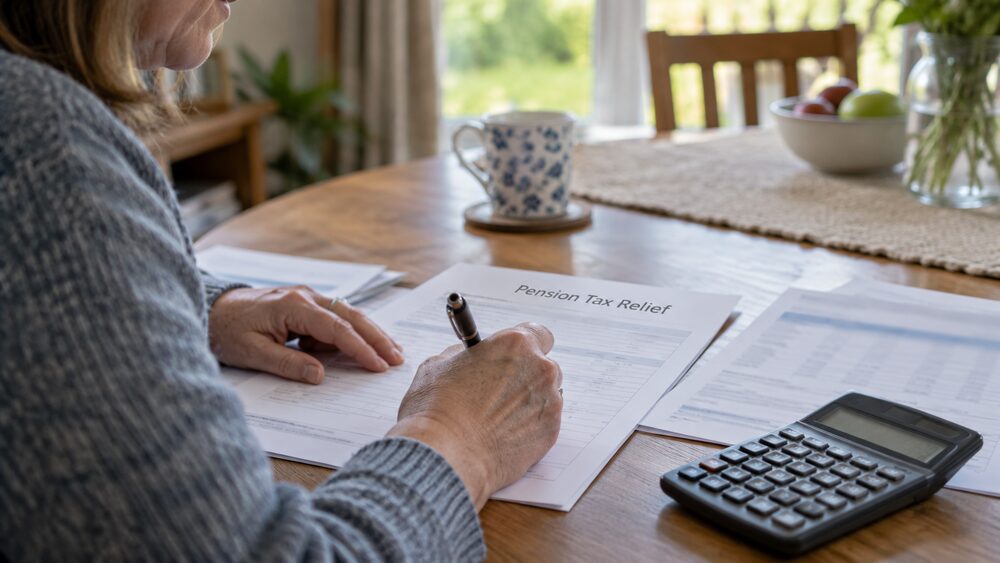
The employer side is separate from what you pay. Employers contribute 20.9% of each member's pensionable pay towards the cost of scheme benefits under the earlier structure2, and the current employer contribution is 22.5% of pensionable pay1. If you want to understand how contributions attract tax relief, Pension tax relief: how it works and how to claim it covers the mechanics, and Pension tax relief for Scottish taxpayers deals with the Scottish rates specifically.
Opting out, and what it costs you
Enrolment is automatic but membership is not compulsory, and you can opt out if you choose1. The decision has a long tail, because the employer contribution of 22.5% of pensionable pay stops going in on your behalf once you leave the scheme1.
There are also rules that affect members who take their pension and then return to NHS work. Under the scheme rules consulted on, if a pensioner enters NHS employment of more than 16 hours per week, the pension must cease to be paid for a period2. Abatement for Special Class Status holders in the 1995 Section of the scheme was to remain suspended until 31 March 20252, and retire-and-return restrictions had been suspended since March 20202.
For members of the 1995 Section returning to NHS employment, a change giving effect to the move into the 2015 scheme was made retrospectively from 1 April 20232. Revaluation changes took effect from 1 April 20232, and new contribution tables came in from 1 October 2023, replacing the existing contribution table with two new tables used to assess members' contribution rates2.
If you are thinking about leaving the scheme, How do I opt out of a workplace pension and get a refund? sets out how opting out and refunds work generally, and What happens to your workplace pension when you leave a job covers what happens to a workplace pension when employment ends.
Ill health, partial retirement and the remedy
The scheme has ill health provisions, and the remedy work has changed how some past applications are handled. Where an ill health application falls in the remediable period, the scheme manager is required, through Part 7 of the scheme regulations, to review the original application along with the supporting medical evidence and decide whether the member would have qualified for an ill-health pension in their alternative scheme5.
Partial retirement is available to members of the 2008 section of the legacy scheme and members of the reformed scheme, who are entitled to take a percentage of their benefits whilst continuing in employment, where certain qualifying conditions are met5. That option applied prior to 1 October 20235.
The 2015 remedy has also touched the rules on how pensionable earnings are worked out. The twelve case descriptions in paragraph 2 of Schedule 9, which set out how a member's pensionable earnings should be determined, were replaced by five new case descriptions2. On final pay control, where CPI is nil or negative the allowable amount is 4.5%2.
There is also a live question about salary sacrifice. A consultation proposed amending regulations to give powers to the scheme manager, SPPA on behalf of Scottish Ministers, to determine whether salary sacrifice schemes are pensionable2. If you use salary sacrifice for other benefits, Salary sacrifice for pension contributions explains how the arrangement normally works.
For the wider picture on leaving work early because of health, Taking your pension early because of ill health covers the general rules.
Divorce, dissolution and getting a valuation
If you are dealing with the break-up of a marriage or civil partnership, SPPA can help by providing a pension valuation and helping with implementing pension sharing arrangements6. Requests for valuations must be made in writing6, and the process can take up to three months to complete6. To calculate pension values, SPPA will need information from third parties such as employers and HM Revenue and Customs6.
Which form you use depends on where you are. If you are paying into a pension with SPPA, or have in the past, and need a valuation, you must complete and send a Cash Equivalent Transfer Value (CETV) application form6. If you are already receiving your pension, you need to complete and send a Pension Equivalent Transfer Value (PETV) application form instead6. For a CETV request you will need to provide the date of marriage or civil partnership and the date of separation6.
SPPA is legally obliged to provide basic information about a member's shareable pension rights on request from the member, their legal representatives, or in response to a Court Order6. If the request comes from a third party, such as an independent financial adviser, the member must provide a signed mandate authorising release of information before anything is released6.
To implement a pension sharing order, SPPA needs a copy of the Extract Decree or Dissolution Order, the Pension Sharing Order including the information required by the Pensions on Divorce (Provision of Information) Regulations 2000 Section 5, and payment of the administration charges for implementing the Order6. Producing valuations and creating pension sharing agreements attract a range of fees payable to SPPA, detailed in the current fee schedules in the application forms, and full details of all SPPA administration costs are provided in the Pension Sharing on Divorce leaflet6.
One practical point can save time and money: submitting a draft copy of the Pension Sharing Order or Qualifying Agreement before finalising the divorce can save considerable time and costs, as SPPA can review the document and ensure its terms are enforceable6.
Pensions on divorce in Scotland covers the Scottish process in full, and Sharing or offsetting on divorce compares the two main ways of dividing pension rights.
Where the rules differ across the UK
The NHS Scotland Pension Scheme is one of four separate NHS pension arrangements in the UK, and the differences are not cosmetic. The Scottish scheme is administered by SPPA on behalf of Scottish Ministers, and its consultations, contribution tables and rule changes are made under Scottish regulations2. Its 2015 scheme builds benefits on a Career Average Revalued Earnings (CARE) basis, with a normal pension age the same as your State Pension Age, and active members’ benefits revalued each year using the Consumer Prices Index (CPI) plus 1.5%1.
The contribution structure reflects that separation. The additional 0.2% added to each contribution tier applied in Scotland but not in England and Wales2. The tiered bands, the discounted rate for members earning less than £13,331, and the protection limiting increases for Agenda for Change bands one to five to a maximum of 1% in the first year were all Scottish decisions2.
For a member, the practical effect is that a move between NHS jobs in different parts of the UK can mean a different contribution rate and a different set of scheme rules, even at the same salary. The Money in Scotland, Wales and Northern Ireland guide covers how devolved rules differ more broadly, and Public sector pension schemes explained sets out how the UK's public service schemes fit together.
If something goes wrong
SPPA administers the scheme and can answer questions about your own record, but it cannot give financial advice4. If a decision about your pension is wrong, or you are unhappy with how a complaint has been handled, the The Pensions Ombudsman and complaining about a pension page explains the route. Complaining about a pension provider, platform or fund manager covers complaints about providers more generally.
Two things are worth checking before you act on anything. First, a valuation is not the same as a transfer: a CETV tells you what your benefits are worth on a given date, and it is the starting point for a decision, not the decision itself. Transferring out of a final salary pension and What are the risks of transferring my pension? set out what is involved, and When advice is required to transfer explains when you must take regulated advice before a transfer can go ahead.
Second, be wary of anyone who contacts you about your pension. Pension scams: warning signs, transfers and getting help covers the approaches to watch for. Free, impartial guidance is available from Pension Wise for anyone with a defined contribution pension, and MoneyHelper offers free guidance across pension questions.
Sources6 cited
- How your NHS pension works Scottish Public Pensions Agency, 2026
- NHS Pension Scheme: consultation on proposed changes to member contributions Scottish Public Pensions Agency, May 2023
- I am ill or injured Scottish Public Pensions Agency, 2026
- Leaving or opting out: what happens to your pension Scottish Public Pensions Agency, 2026
- NHS Scotland Pension Scheme: consultation on the implementation of the 2015 Remedy Scottish Public Pensions Agency, May 2023
- Getting divorced Scottish Public Pensions Agency, 2026








 Pension WiseFree guidance on your options for a defined contribution pension, from age 50
 FSCSProtects your money if a bank, insurer or investment firm fails
 GOV.UKOfficial information on tax, benefits and government services