
If you opt out of your workplace pension, your employer has to put you back in at least every 3 years, as long as you are still eligible for automatic enrolment1. This is called re-enrolment, and it happens whether or not you asked for it. You can opt out again each time, but you cannot stop the re-enrolment itself.
If you opt out of your workplace pension, your employer has to put you back in at least every 3 years, as long as you are still eligible for automatic enrolment1. This is called re-enrolment, and it happens whether or not you asked for it. You can opt out again each time, but you cannot stop the re-enrolment itself.
The rule is designed so that opting out is a decision you keep having to make, rather than a one-off. Your employer will write to you to explain how the changes affect you2, and when you are enrolled you must be told the start and end dates of your one-month opt-out period3. If you do nothing, you stay in and contributions start coming out of your pay.
The exact date you are re-enrolled is not fixed to the anniversary of your opt-out. It will be anything from 1 year to 4 years after you come out of the scheme4, depending on where your employer's re-enrolment cycle falls. That is why the timing can feel unpredictable, and why it is worth knowing what happens next.
Re-enrolment: roughly every three years after you opt out
The three-year rule is a duty on your employer, not a choice. Employers must enrol you back in at least every 3 years if you have opted out and you are still eligible for automatic enrolment1. The same duty is described by providers as re-enrolling you approximately every 3 years8, and by another as every three years9.
What varies is the date. Because re-enrolment runs on your employer's cycle rather than yours, the gap between opting out and being put back in can be anything from 1 year to 4 years after you come out of the scheme4. Someone who opts out just before their employer's re-enrolment date is back in within months; someone who opts out just after waits close to the full period.
Automatic enrolment itself began in 201210, and the policy requires employers to auto-enrol workers into a workplace pension and make minimum contributions11. The government phased the rollout in by employer size between October 2012 and February 201812, which is why older workers may remember being enrolled at different times from colleagues at other firms.
Re-enrolment is not the same as a new job. It happens in the background while you stay with the same employer, and it does not require you to sign anything. If you are unsure when your next re-enrolment date falls, your payroll or pension provider can tell you.
Who gets re-enrolled: the age, earnings and UK work conditions
Re-enrolment only applies if you still meet the eligibility criteria for automatic enrolment. Those are: aged between 22 and State Pension age, earning at least £10,000 per year, and working in the UK under a contract of employment or a work arrangement6. Most employees who earn more than £10,000 a year are eligible13.
If you fall outside those conditions, your employer does not have to re-enrol you, but you may still have the right to join. The rules differ by circumstance:
- Aged 16 to 21, earning over £10,000: your employer will not automatically enrol you, but you have the right to join if you want, with both you and your employer contributing and possible tax relief14.
- State Pension age or older but under 75, earning over £10,000: again, no automatic enrolment, but you have the right to join on the same terms14.
- Earning under £10,000: you do not get automatically enrolled. This affects more women than men because of working patterns15.
- Self-employed: you are not eligible for automatic enrolment at all6.
There is one wrinkle worth knowing. If additional earnings, such as paid overtime, push your pay in a single pay packet over the threshold, your employer will automatically enrol you14. That can bring you in ahead of the normal re-enrolment date.
If you are not eligible but want to save, a personal pension is open to you regardless of earnings, and the self-employed have their own options.
What you give up by staying opted out
Opting out is not free. The clearest cost is your employer's contribution, which you only receive if you are in the scheme. At the minimum rates, that is 3% of band earnings paid by your employer on top of your own 5%5. Opt out and you lose that 3%, and you would need to save it yourself to stand still.
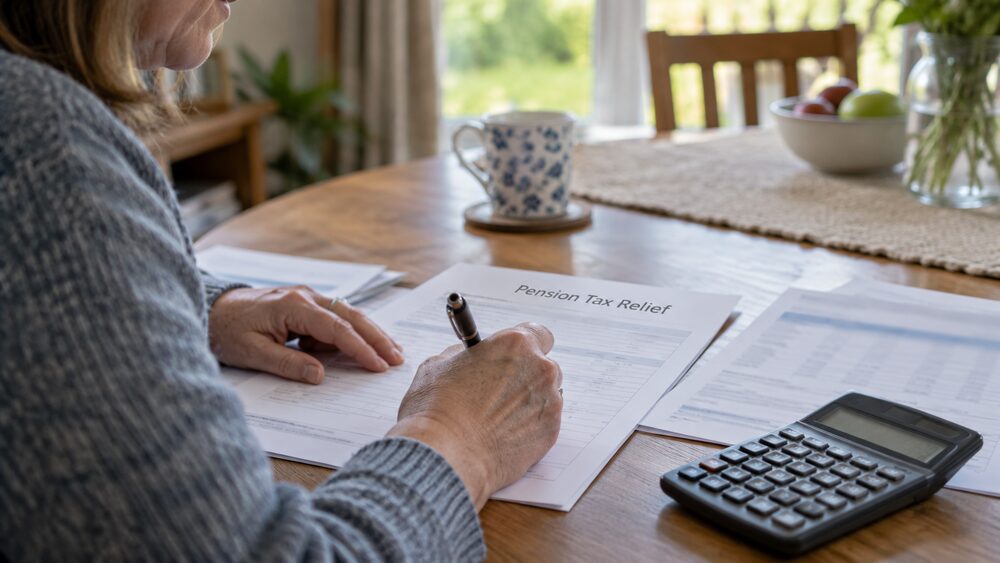
You also lose tax relief. If you are a taxpayer you get tax relief from the government on your contributions16, which effectively tops up what you pay in. Higher-rate taxpayers usually need to claim the extra relief above 20% themselves, through HMRC or a Self Assessment tax return17. There is more on this in our guide to pension tax relief.
There is a longer-term effect too. Money not paid in during an opt-out period is money that is not invested and not growing for your retirement. The Pensions and Lifetime Savings Association has argued that minimum contribution levels should rise from 8% of band earnings to 12% of total salary18, which gives a sense of how far current minimums are from what retirement income typically needs.
One specific risk applies to a small group. If you have enhanced protection or fixed protection and you are automatically enrolled into a workplace pension, you may lose that protection3. If that applies to you, it is worth taking advice before the re-enrolment date rather than after.
Opting out again or pausing contributions instead
You can opt out of the pension scheme at any time, usually by filling in a form and returning it to your employer or pension provider19. Each re-enrolment gives you a fresh one-month period in which you can choose to opt out of the scheme20, and if you opt out within that month your employer must refund money you have paid1.
The timing matters more than it looks. If you leave the scheme after the opt-out period has finished, your contributions will not be refunded to you, and any contributions paid, by you or your employer, stay in your pension until you take your pension benefits20. So the difference between opting out in week three and week six is the difference between getting your money back and leaving it invested.
There is a legal backstop on refunds. There is no return of contributions if the person becomes an active member again within one month and one day of ceasing active membership, or before the date a return of contributions has been issued, whichever is the later21. In practice this means a quick change of mind can cancel the refund.
If what you want is to reduce what you pay rather than stop entirely, the options are narrower than they look. Auto-enrolment contributions are set by the scheme rules and the statutory minimums, so there is usually no dial to turn down. The realistic choices are to stay in at the minimum rate, opt out and save elsewhere, or ask your employer whether the scheme allows a different contribution level.
Joining your workplace pension before re-enrolment comes round
You do not have to wait three years. Your employer must automatically enrol you into a workplace pension scheme unless you are already in a suitable scheme13, and you can ask to join at any point. If you are eligible, your employer has to enrol you.
If you are not eligible for automatic enrolment, you may still have a right to join. Employees aged 16 to 21 earning over £10,000, and those at or over State Pension age but under 75 earning over £10,000, have the right to join if they want, with both sides contributing and possible tax relief14. The same applies to many people earning under £10,000, depending on the scheme.
Rejoining is usually a matter of telling your employer or pension provider. There is no waiting period to serve, and no penalty for having opted out before. Your employer's payroll team can confirm what the scheme allows and what the contribution rate would be.
If you have opted out and want to understand the wider picture, our guides to automatic enrolment and workplace pensions set out how the scheme works, what your employer must pay in, and what happens if you leave your job.
What happens to the pension you built up before you opted out
Nothing is lost. When you change jobs your pension belongs to you7, and opting out does not remove the pot you have already built up. It stays invested in the scheme until you take your benefits or transfer it.
If you leave the scheme after the opt-out period has finished, your contributions will not be refunded to you, and any contributions paid, by you or your employer, stay in your pension until you take your pension benefits20. That pot continues to be invested according to the scheme's default arrangement unless you choose otherwise.
If you are thinking about moving an old pot, there is a check worth doing first. Before transferring an Auto-Enrolment pension, double check that you will not lose any guaranteed benefits or be charged a costly exit fee22. Our guide to transferring between providers covers how transfers work and when advice is required.
You can also nominate who receives your pension if you die, and you can change your nomination at any time7. That is worth reviewing after any change in circumstances, including a re-enrolment.
When you can take money out
You cannot usually take money from your pension scheme until you are at least 55, unless you are seriously ill7. The minimum age is set to rise from 55 to 57 from 6 April 2028, unless you have a protected pension age or are retiring because of ill health23.
That means a re-enrolment in your fifties does not give you access to the money. Contributions paid after re-enrolment are locked in on the same terms as the rest of your pot, and taking money before the minimum age normally triggers a tax charge.
If you retire early through ill-health there may be special terms in the scheme rules that allow for the pension to be enhanced24. Our guide to taking your pension early because of ill health explains how that works.
If something goes wrong
Most re-enrolment problems are administrative: a letter not sent, a contribution not paid, or an opt-out not processed. Your first step is your employer's payroll or pension provider, who can confirm your enrolment status and contribution record.
If that does not resolve it, the Pensions Ombudsman can look at complaints about how workplace pensions are run25. The Financial Ombudsman Service also handles complaints about pensions organised by employers in some circumstances25. Both are free to use.
For free, impartial guidance on your options, MoneyHelper is the government-backed service17. If you are struggling with debt and considering opting out to free up money, debt advice charities can help you look at the whole picture before you give up an employer contribution.
Sources25 cited
- Employers' workplace pensions rules GOV.UK, 2026-09-26
- Enrolling in a pension at work nidirect, 2026-07-07
- Deciding if a workplace pension is right for you nidirect, 2026-09-25
- Pension education Halifax, 2026-09-27
- Who should bear the cost of a fairer pension system? Work and Pensions Committee, 2026-09-16
- Family Resources Survey: financial year 2023 to 2024 Department for Work and Pensions, 2026-01-15
- Workplace pensions: changes in personal circumstances nidirect, 2025-09-11
- Auto-enrolment Aviva, 2026-09-26
- What are the different types of pensions? Canada Life UK, 2026-09-26
- You might not be making the most of your workplace pension Which?, 2026-09-18
- Automatic enrolment inquiry Work and Pensions Committee, 2022-09-30
- Automatic enrolment and pensions House of Commons Library, 2026-07-08
- Introduction to workplace, personal and stakeholder pensions nidirect, 2026-09-25
- How your situation affects your workplace pension nidirect, 2025-09-11
- Automatic enrolment and pensions House of Commons Library, 2026-07-08
- Automatic Enrolment BCF Pension Trust, 2026-09-27
- Personal pensions MoneyHelper, 2026-09-25
- Hitting the target: a vision for retirement income Pensions and Lifetime Savings Association, 2026-09-26
- Workplace pensions Age UK, 2026-03-25
- Auto-enrolment: do I have a choice? Aegon, 2026
- The Occupational and Personal Pension Schemes (Automatic Enrolment) (Miscellaneous Amendments) Regulations 2018 legislation.gov.uk, 2018-05
- What is auto-enrolment? PensionBee, 2026-05-12
- What changes are being made to the normal minimum pension age? Smart Pension, 2026
- Early retirement and your pension nidirect, 2025-07-31
- Pensions organised by employers Financial Ombudsman Service, 2026-09-26







 Pension WiseFree guidance on your options for a defined contribution pension, from age 50
 FSCSProtects your money if a bank, insurer or investment firm fails
 GOV.UKOfficial information on tax, benefits and government services