
Pension drawdown is a way of taking money from a defined contribution pension while leaving the rest invested. Instead of using your whole pot to buy a guaranteed income (an annuity), you move some or all of it into a drawdown plan, take up to 25% as tax-free cash, and then withdraw as much or as little as you want, when you want. The money you take beyond the tax-free cash is taxed as income in the year you take it1.
Drawdown is one of several ways to take money from a pension, and it is the most flexible of them. You can keep your savings invested when you reach retirement and take money out as you wish, alter how much you withdraw depending on your circumstances, and pass on anything left to loved ones when you die2. The trade-off is that nothing is guaranteed: your pot stays invested, so its value can rise and fall, and if you take out too much too soon you could run out of money1.
The earliest you can usually move a pension into drawdown is age 55, rising to 57 from April 2028, unless you have to retire early because of poor health or your pension has a protected earlier age1.
What pension drawdown is and who can use it
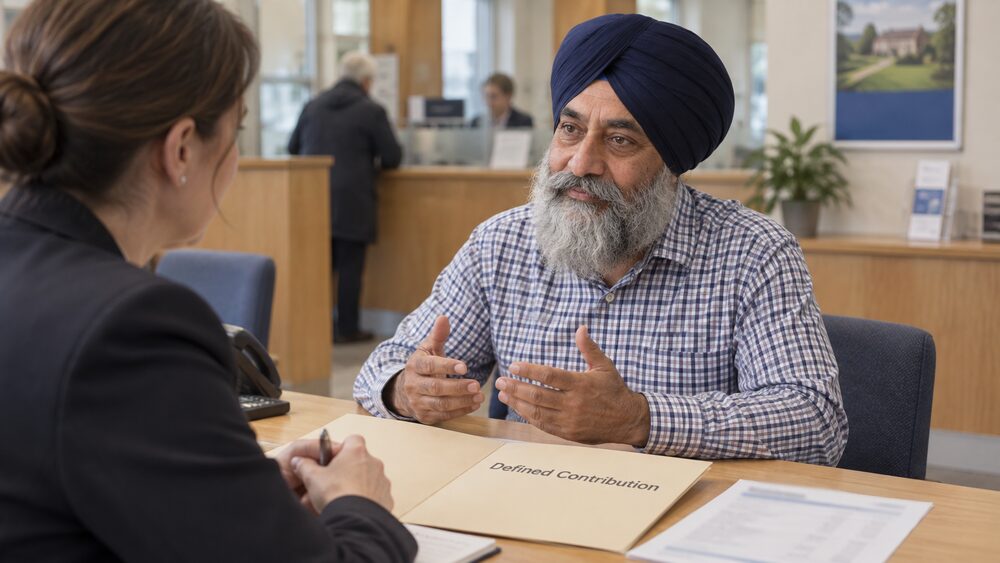
When you retire with a defined contribution pension, a pot of money built up from your own and your employer's contributions, the law gives you a choice about what to do with it. You can take a scheme pension, buy an annuity, or draw an income directly from your pension fund as a drawdown pension4. Drawdown is the option that keeps your money invested.
The mechanics are straightforward. You designate some or all of your pot as available for drawdown, take your tax-free cash, and leave the remainder invested in funds. From then on you draw money from the pension fund itself to give you an income3. There is no limit on how much money you can take out of your pension fund each year3, and because the pot stays invested it can continue to benefit from investment growth5.
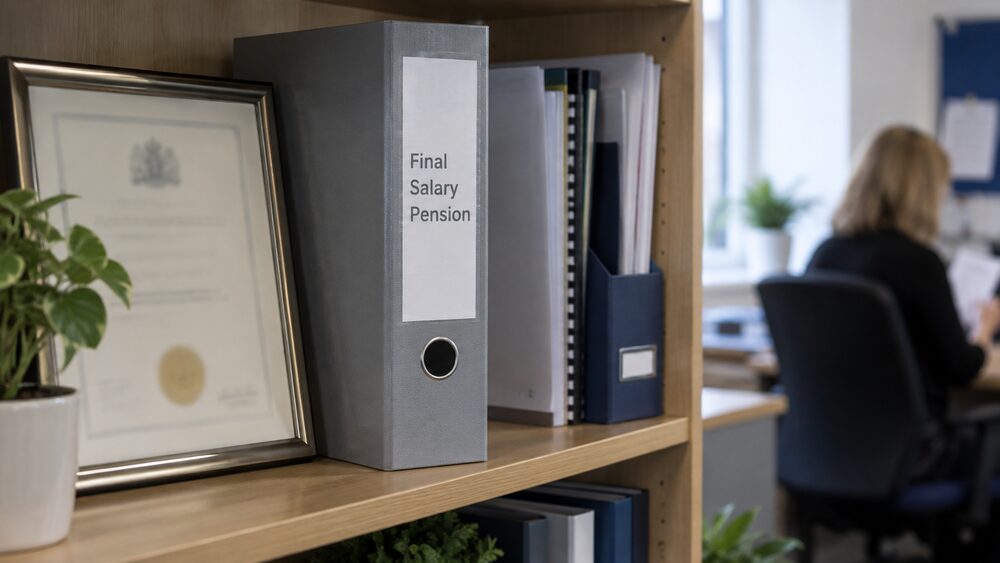
Drawdown is for people with defined contribution pensions, the pot-based type used in most workplace pensions and personal pensions. It does not apply to defined benefit (final salary) pensions, which pay a guaranteed income from the scheme itself, although people with defined benefit pensions can in some cases transfer out first, a decision that carries its own risks and usually requires regulated financial advice.
Not every provider offers it. Some pension providers do not offer income drawdown, so availability is something to check with the provider holding the pot6. Some workplace pension providers may insist you change your pension to a personal pension before you can take the drawdown option3. Some pensions might also need a minimum amount saved before drawdown is available7.
Drawdown tends to suit people who want flexibility and are comfortable taking investment risk. Independent guidance suggests you will probably only want to consider income drawdown if you have a large (six figure) pension fund, or you will have enough other regular income during your retirement, for example from a State Pension, a defined benefit pension or continuing work3. Free guidance from Pension Wise covers all the options before you commit.
Tax-free cash: up to 25% of your pot
When you move your pension into drawdown you can take up to 25% of the pot as a tax-free lump sum1. This is the same tax-free share available across the pension rules: you can take up to 25% of your pot tax-free, up to a maximum of £268,275 across all your pensions2. The detailed rules, including the lump sum allowances that replaced the old lifetime allowance, are covered in the guide to tax-free cash from your pension.
You can take the tax-free cash in stages rather than all at once. Pension Wise explains that as well as the upfront lump sum, 25% of other lump sums you take later counts as tax-free within certain limits1. Taking it in stages can spread the benefit, though the overall 25% share of your savings does not change.
The remaining 75% of your pot stays in the drawdown plan, invested and available to withdraw. Everything you take from that portion is taxable income in the year you take it1. That is the core deal of drawdown: a quarter of your pot tax-free, the rest taxed like any other income.
Some people choose to take the tax-free cash and leave the rest untouched for now, which is sometimes described as a "phased" approach. Others take the full 25% upfront and start drawing an income straight away. Both are allowed, and the tax-free element is the same either way8.
How drawdown income is taxed
All pension drawdown income is counted when calculating how much Income Tax you will pay each tax year, which runs from 6 April to 5 April, apart from the upfront lump sum worth up to 25% and 25% of other lump sums within limits1. In other words, drawdown income is taxed in the same way as your earnings and any other sources of income you receive, such as savings interest10.
The tax is charged at your marginal rate: all pensions, whether scheme pensions, annuities or drawdown, are taxable in the hands of the individual as pension income at their marginal rate11. So if you have £30,000 of income from other sources and draw £20,000 from your pension, the drawdown money is taxed at the rates that apply above £30,000, not from zero. The guide to how pension income is taxed explains the bands in detail.
Because you control how much you withdraw, you also control, within limits, how much tax you pay. Spreading withdrawals across tax years can keep each year's income within lower bands, while one large withdrawal can push a year's income into higher bands.
Emergency tax on first withdrawals
The first payment often goes wrong. Pension providers typically use temporary or emergency tax codes when you take your first lump sum, which may mean you overpay tax12. If your provider does not have your tax code and other income details, withdrawals are taxed using a higher-rate emergency tax code, calculated on what is known as a Month 1 basis13. This treats the payment as if you would receive the same amount every month, so a £10,000 withdrawal could result in you being taxed as though your annual income is £120,00013.
The overpaid tax can be reclaimed from HMRC, and there is a set process for claiming a refund on pension tax14. Until the position is corrected, a large one-off withdrawal can leave you temporarily out of pocket, so it is worth knowing this before you take one15. HMRC may also send a Simple Assessment letter if tax is due on pension income, and it urges customers not to ignore these letters16. The sub-guide on emergency tax on withdrawals covers the refund routes.
The effect on future saving
Taking taxable income from drawdown triggers the money purchase annual allowance: the amount you can pay into defined contribution pensions and still get tax relief drops to £10,000 a year1. Taking only your tax-free cash does not trigger it. If you plan to keep contributing while drawing an income, read the page on the money purchase annual allowance first.
Choosing investments: pathways, your own choices or an adviser
Once your pot is in drawdown, the money stays invested, and someone has to decide where. Pension Wise sets out three routes: choose your own investments, ask your provider to choose for you based on your preferences, or pay a financial adviser to manage the investments for you1.
The provider-chosen route has a standard form. Since February 2021, defined contribution drawdown providers have had to offer non-advised consumers a choice of investment pathways depending on how they plan to use their money17. These ready-made options were introduced for contract-based schemes in 202117. There are four pathways, each matching a stated intention18:
- Option 1: "I have no plans to touch my money in the next 5 years"
- Option 2: "I plan to use my money to set up a guaranteed income (annuity) within the next 5 years"
- Option 3: "I plan to start taking my money as a long-term income within the next 5 years"
- Option 4: "I plan to take out all my money within the next 5 years"
Pathways are not universal. They are currently only a feature of FCA regulated contract-based schemes, not the trust-based ones regulated by the Pensions Regulator17, so a member of a trust-based workplace scheme may not see them. A pathway is also a broad starting point rather than personal advice: it matches a stated plan, not your full circumstances.
Choosing your own funds, typically through a SIPP or platform, gives full control but puts the investment decisions, and the risk, on you. Paying a regulated adviser to manage the investments brings professional judgement, but advice costs money and access is uneven: a policy review by the Pensions and Lifetime Savings Association told the Work and Pensions Committee that savers face risks such as longevity risk and decision risk, and are unable to access affordable, appropriate advice19. The page on pension providers, platforms and fund managers explains who does what.
Fees and charges: what drawdown costs
Drawdown is not free, and the charges compound against a pot that is no longer being topped up by contributions. You will pay charges on the investments you hold, as well as those levied by your drawdown provider2. There will also be ongoing charges for managing your investments and charges for regular reviews of the income taken out3. Some providers charge a fee for each withdrawal you make20.
The scale of the variation between providers is large. In a 2025 survey, the average drawdown pot among customers surveyed was worth £350,000, and annual fees for a pot of that size varied from around £1,000 (Interactive Investor) to £3,200 (Pru/M&G)21. An earlier 2024 analysis, based on drawdown fees and fund fees for investment pathway 3 across 14 providers, put the range for the same pot size at around £1,000 (Interactive Investor) to £4,000 (Prudential/M&G)22.
Fees are usually charged as a percentage of the pot, often on a tiered basis, for example 0.4% on the first £100,000, 0.3% between £100,001 and £250,000, and so on22. Because the percentage applies to a shrinking or growing pot, the cash amount you pay changes over time.
| Charge | What it is | When it applies |
|---|---|---|
| Platform or drawdown fee | Ongoing percentage of your pot, sometimes tiered | Every year the pot is invested22 |
| Fund fees | Charges on the investments you hold | Every year, on top of the platform fee2 |
| Withdrawal fee | A charge per withdrawal | Each time you take money out20 |
| Review charges | Charges for regular reviews of the income taken | As set by the provider3 |
The long-run effect is substantial. Over 10 years, paying the higher level of charges compared with the lowest could mean you end up with £35,000 less in your drawdown fund, based on a £350,000 pot22. Because of this, it can be possible to save by switching: independent analysis suggests you could save as much as £35,000 over 10 years by switching to a cheaper provider22.
Flexi-access or capped drawdown: how each one behaves
Most drawdown today is flexi-access drawdown, the form introduced by the pension freedoms. It has no annual limit on withdrawals: you can take out as much money as you want from your pension fund each year, although the taxable part is subject to income tax3.
Capped drawdown is the older form, and it behaves differently. Your pension provider sets a maximum amount you can take out every year20. The statutory cap is set by formula: the maximum that can be paid is 150% of the amount of an equivalent single life annuity that the member's drawdown pension fund could buy, known as the basis amount, for drawdown years beginning on or after 27 March 201411. Capped drawdown closed to new entrants in April 2015, so it now applies only to people already in it.
The two forms also differ in their tax consequences for future saving. Taking income under capped drawdown within the cap does not trigger the money purchase annual allowance, whereas any taxable income from flexi-access drawdown does, reducing the amount you can pay in with tax relief to £10,000 a year1. Exceeding the capped limit converts the arrangement to flexi-access, with the reduced allowance following.
If you are already in capped drawdown, you can keep it as it is or convert to flexi-access. The dedicated page on capped drawdown covers the rules in full, and the comparison of drawdown versus an annuity sets out the wider choice.
Drawdown income is not guaranteed: the risks
The defining feature of drawdown, an invested pot that you draw from, is also its main risk. As your pension remains invested, its value can rise and fall until you take the money, which means your retirement income is not guaranteed1. Citizens Advice describes income drawdown as a high risk choice because the stock market can go up or down, and you could end up with far less income than you planned3.
The risks come from several directions:
- Investment risk: the value of your pot could take a hit if your investments underperform2.
- Withdrawal risk: take out too much, too soon and you could run out of money2.
- Longevity risk: the risk of living longer than your pot lasts, which no one can predict for themselves.
- Decision risk: choosing withdrawal rates and investments without support. The Pensions and Lifetime Savings Association told the Work and Pents Committee that savers face longevity risk and decision risk that put them in harm's way, and are unable to access affordable, appropriate advice19.
How long your pension lasts depends on three things you partly control: how much you withdraw, how your investments perform, and how the charges eat into the pot. Independent drawdown calculators let you model how long your money might last at different withdrawal rates, showing the trade-off between a higher income now and a pot that lasts longer5.
There is no insurance against these risks within drawdown itself. The protections that exist are about conduct and compensation, not income: providers must be regulated by the Financial Conduct Authority, and the Financial Ombudsman Service handles complaints. If a guaranteed income matters more than flexibility, an annuity pays a set amount for life, and the two can be combined, for example using part of a pot for an annuity and leaving the rest in drawdown.
What happens to your drawdown pot when you die
Money left in drawdown does not die with you. You can pass on any remaining money to loved ones after you die2, and you can usually choose someone, such as your spouse, a family member or a friend, who will get your pension pot if you die, with the choice usually made in writing and changeable later24. The guide to nominating a beneficiary explains how to do it.
The tax your beneficiaries pay depends on your age when you die. If you die before the age of 75 and leave money in pension drawdown, your beneficiaries do not have to pay income tax on the money they withdraw25. If you die at 75 or over, your beneficiaries will have to pay income tax on any income they take from your drawdown plan, at their own marginal rates25. A beneficiary can typically keep the pot in drawdown and draw from it, or use it to buy an annuity25.
Inheritance tax is the other half of the picture. Under the current rules, money left in a pension normally sits outside your estate. That is set to change: from April 2027, any unspent funds will count towards your estate for inheritance tax purposes, meaning they could be subject to inheritance tax if the total value of your estate exceeds the tax-free allowances26. Which? describes the same change: from April 2027, this money will be added to the rest of your estate2. The pages on pensions and inheritance tax and death benefits cover the detail.
How to start drawdown and avoid scams
Starting drawdown is a sequence of decisions, and the order matters. The steps below reflect the process Pension Wise guides people through, covering when you can access your pension pots, the different ways to take money, how each option is usually taxed, and how to spot and avoid scams27.
In practice the steps look like this:
- Reach the minimum age. Usually 55, rising to 57 from April 2028, unless ill health or a protected age applies1.
- Check your provider offers drawdown. Some do not, and some workplace providers will insist you move to a personal pension first3.
- Get free guidance. A Pension Wise appointment covers your options, the tax treatment and scam awareness, at no cost27.
- Choose your investments. A provider pathway, your own choices, or an adviser1.
- Take your tax-free cash. Up to 25% of the pot1.
- Draw your income. Taxed as income in the year you take it1.
Avoiding scams
Pension scams remain a live threat, and the official advice is blunt. Do not access your pension or transfer any money to a pension provider because of a cold call, visit, email or text: it is likely a scam designed to steal your money1. If a cold caller contacts you to give you pension advice, saying they have your details and have Government backing, hang up, as this is likely to be a scam9.
The warning signs to know are unexpected offers, promises of early access to pensions, or guaranteed high returns28. Cold calling about pensions is itself a red flag, since unsolicited pension contact is banned. The Pensions Regulator runs a pledge under which more than 650 organisations have committed to follow three principles for good anti-scam practice, starting with knowing the warning signs29, and it requires governing bodies to put clear scam information in communications to members, including the retirement wake-up pack and annual benefit statements30. The government's wider fraud programme, aligned with the Fraud Strategy 2026 to 2029, includes the Stop! Think Fraud campaign, which provides advice on how to protect yourself from pension fraud31. The guide to pension scams lists the warning signs in full.
Moving later, or changing your mind
Drawdown is not a one-way door. In some cases it is possible to transfer to a new pension provider after you have started to draw retirement benefits32, which matters because charges vary widely and switching to a cheaper provider could save as much as £35,000 over 10 years22. Stakeholder pensions must let you switch to a different pension provider without penalty charges33. Check exit fees and whether the receiving provider will accept a drawdown pot before moving, and see transferring pensions between providers.
You can also use money still in drawdown to buy an annuity later. You do not have to buy an annuity from your pension provider and should shop around, but be aware that when you buy a lifetime annuity, you cannot change it later34. The page on buying an annuity after drawdown covers that route.
Sources34 cited
- Adjustable income (Pension Wise) Pension Wise, 2026
- Options for cashing in your pension Which?, 2026
- Pensions income drawdown Citizens Advice, 2026
- Introduction to workplace, personal and stakeholder pensions nidirect, 2026
- Income drawdown calculator: making your money last Which?, 2026
- What you can do with your pension pot Citizens Advice, 2026
- New data signals landmark shift from savings system The Pensions Regulator, 2026
- Personal pensions MoneyHelper, 2026
- Annuities Age UK, 2026
- Working in retirement Which?, 2026
- Pensions Act 2014, explanatory notes legislation.gov.uk, 2026
- Take your whole pot Pension Wise, 2026
- Overpaid pension tax: are you owed a refund? Which?, 2026
- How to claim a refund on pension tax TaxAid, 2025
- 5 questions for pension savers filing their 2024-25 tax return Which?, 2025
- HMRC urges customers not to ignore Simple Assessment letters HM Revenue and Customs, 2026
- Select Committee report on pension freedoms House of Commons Work and Pensions Committee, 2022
- FCA Handbook COBS 19.20 (investment pathways) Financial Conduct Authority, 2026
- Five years on from the Pension Freedoms (PLSA submission) Pensions and Lifetime Savings Association, 2026
- How your personal pension is paid nidirect, 2026
- Pension drawdown sales soar Which?, 2025
- Watch out for high charges when accessing your pension Which?, 2024
- Capped drawdown interactive investor
- Workplace pensions Age UK, 2026
- What happens to my pension when I die? Which?, 2026
- Will my pension be subject to inheritance tax? Which?, 2026
- Pension Wise celebrates a decade of empowering pension choices Money and Pensions Service, 2025
- Fraud minister calls on trustees to use every touchpoint to protect savers The Pensions Regulator, 2026
- Pledge to combat pension scams The Pensions Regulator, 2026
- Scams: information to members (Code of Practice) The Pensions Regulator, 2026
- Protecting pension savers: consultation on transfer regulations HM Government, 2026
- Transferring your pension nidirect, 2026
- Stakeholder pensions nidirect, 2025
- Private pensions Independent Age, 2026


 Pension WiseFree guidance on your options for a defined contribution pension, from age 50
 FSCSProtects your money if a bank, insurer or investment firm fails
 GOV.UKOfficial information on tax, benefits and government services