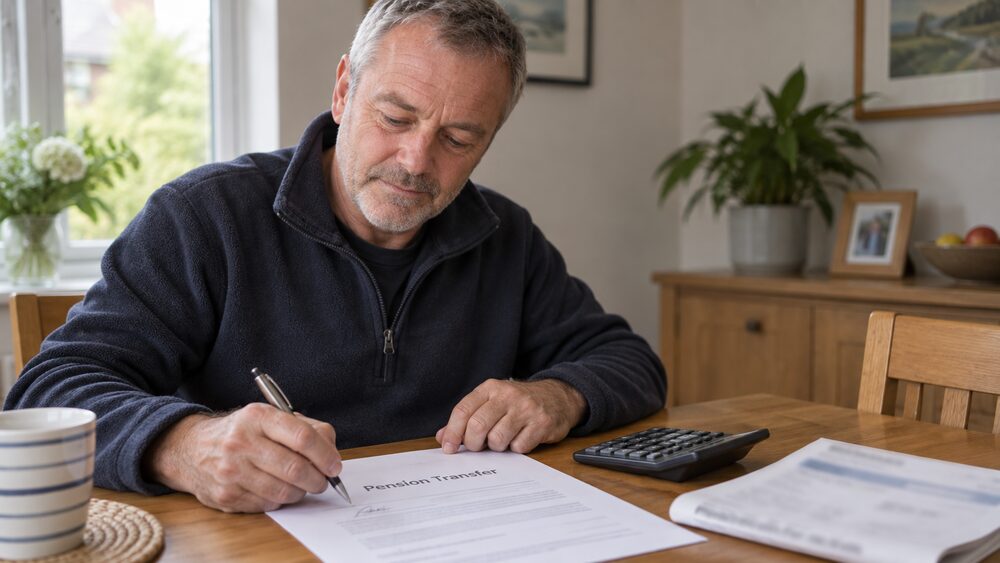
A pension transfer means moving the money in your existing pension to a different scheme or provider, often to get a better deal1. With a defined contribution pension, the pot is yours to move: transferring it might save you money if the other scheme has lower fees, give you access to different investment options, or give you more choice in how you take your money1. You can transfer your UK pension pot to another registered UK pension scheme, and you can usually do it at any point unless the scheme rules list restrictions1.
The two big things to hold in mind before starting are time and irreversibility. A transfer often takes between two and six weeks, but your provider has up to six months to action your request1. And once the money has gone, a pension transfer usually cannot be undone, so the FCA's advice is to make sure you will be better off before committing1. Some pensions charge exit fees that could wipe out any savings from switching3.
What a pension transfer is and when it can make sense
A pension transfer moves your pension savings from one scheme to another. The common routes are from one personal pension to another, or from a personal or workplace pension to a self-invested personal pension (SIPP), a small self-administered scheme (SSAS) or a qualifying recognised overseas pension scheme7. People transfer for practical reasons as well as price: to bring several small pots together in one place, to get a wider choice of investments, or to have more options for taking money out.
Combining pensions can make a pot easier to manage and keep track of, and smaller pots can carry charges that eat into them over the years3. But consolidation is not automatically a win. Some providers charge fees for transferring out, which can cancel out the benefits of consolidation8. The FCA's own framing is blunt: a transfer usually cannot be undone, so always make sure you will be better off before committing1.
When you ask for a transfer, your current scheme gives you a transfer value: the amount it would pay over. By law this must be fair to you5. Free, impartial information about transferring is available from official sources, including Pension Wise for people aged 50 and over, and it is worth using before you start rather than after2. The comparison between combining pension pots or keeping them separate sets out the trade-offs in more detail.
Which pensions can move, and which may not
Most UK pension pots can be moved to another registered UK scheme2. You can usually transfer or consolidate at any point, unless the scheme rules say otherwise, and generally up to one year before the date you are expected to start drawing retirement benefits1. In some cases it is even possible to transfer after you have started to draw retirement benefits2.
Some pensions are harder or impossible to move:
- Unfunded public sector schemes, such as the NHS or Teachers' Pension Schemes, generally cannot be transferred out1.
- Defined benefit schemes may not allow transfers out after the pension has started paying out, or within a year of reaching normal retirement age1. If you are already receiving payments from a defined benefit scheme, you will not be able to switch to a defined contribution one5.
- A share of an ex-partner's pension following a divorce can be a barrier, as can schemes with special features or guarantees like a Guaranteed Minimum Pension6.
- Scheme rules: some schemes will not accept transfers in without advice whatever the value5.
Where a pension has been shared on divorce, a transfer may still be possible, but the benefits will be reduced to take account of the Pension Sharing Order, and a copy of the order is sent to the new provider9. The rules on when a transfer can be stopped or refused, introduced to counter scams, apply across the UK: the Occupational and Personal Pension Schemes (Conditions for Transfers) Regulations 2021 cover Great Britain, and equivalent regulations made by the Department for Communities cover Northern Ireland, in force from 30 November 202110.
Guarantees you could give up by transferring
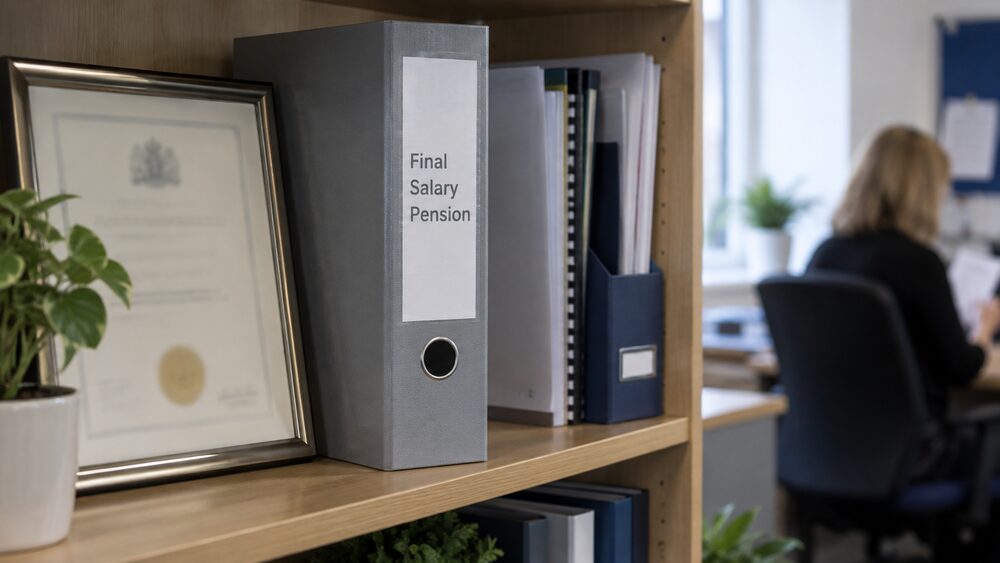
The most valuable things a pension can contain are often the things that do not survive a transfer. If you move a defined benefit (final salary) pension into a defined contribution scheme, you lose the promise of a guaranteed retirement income for life with automatic annual increases1. That is a one-way trade: the security of a known income for the rest of your life is exchanged for a pot whose value depends on investments.
Older personal pensions can carry their own buried benefits. Complaints to the Financial Ombudsman about transfers commonly involve the loss of guarantees in the former personal pension plan, such as guaranteed annuity rates (GARs)7. Defined benefits such as guaranteed annuity rates or protected tax-free cash can be lost when you move pots8. The dedicated pages on guaranteed annuity rates and contracting out and the Guaranteed Minimum Pension explain what these are.
The official checklist of what a transfer can cost you goes beyond guarantees2:
- payments you may have to make to the new scheme
- a fee to make the transfer
- the right to take your pension at a certain age
- any fixed or enhanced protection
- the right to take a tax-free lump sum of more than 25 per cent of your pot
That last item matters more than people expect: some older policies protect a higher tax-free entitlement, and moving the pot ends it. Before requesting a transfer value, ask the current scheme in writing what benefits, guarantees or protections would be lost. The scheme must tell you, and trustees of defined benefit schemes must provide members with a link to FCA information on considering a transfer out13.
Exit fees and other costs of moving
The costs of a transfer come in several forms, and they can cancel out the reason for moving. Some pensions charge exit fees, which could wipe out any savings from switching3. Some providers charge fees for transferring out, which can cancel out the benefits of consolidation8.
For investments held outside pensions, the FCA's rules require firms to disclose one-off exit costs, which can include proportional fees, the bid-mid spread to sell the product, any explicit costs, charges or penalties for early exit, and exit penalties that depend on how long you have held the investment14. On investment platforms, you might be charged for transferring investments from one platform to another, though many platforms have scrapped these fees and some will cover switching costs as an incentive to join15. Personal pensions themselves typically carry an annual management fee, and a switching charge if you change funds16.
How the money moves also affects cost. A transfer can be done in cash, where the old provider sells your investments and moves the money, or in specie, where the existing investments are moved across as they are5. A cash transfer can mean being out of the market while the transfer completes, and the new scheme's fund range may differ from the old one. An in-specie transfer avoids selling, but only works if the receiving scheme holds the same investments.
One route has its own tax wrapper: shares taken out of a Share Incentive Plan can be transferred directly into a stakeholder or personal pension within 90 days of leaving the plan, if the scheme allows, with HMRC treating the account as if basic rate tax had been paid17. Note that investments cannot be transferred directly into an Isa: you have to sell them, move the money, and buy them back inside the Isa18.
Advice is required for guaranteed pensions over £30,000
If your defined benefit pension is worth over £30,000, you must pay for financial advice before you can transfer it into a defined contribution pension1. This is a legal requirement, not a suggestion: where the transfer value of a defined benefit scheme is £30,000 or above, you have to take advice from a regulated financial adviser before the transfer can proceed19. The rule is often described as applying to "safeguarded benefits" generally, so a personal pension containing a guaranteed annuity rate can also be caught20.
The advice has to be taken, but you do not have to follow it: if the adviser concludes the transfer is not in your interests, you can still decide to go ahead, though the scheme will need the advice confirmation to release the money. The cost is the practical obstacle: pension transfer advice can often cost thousands of pounds1, which has to be weighed against the size of the pot and what the transfer would achieve. Some schemes will not accept transfers without advice whatever the value5.
The Pensions Regulator and the FCA have both taken the view that most people are better off keeping a defined benefit pension, and a parliamentary committee reported that people with a DB pension valued over £30,000 have to take paid-for advice before transferring precisely because giving up a guaranteed income is so consequential21. The narrow page on when advice is required to transfer covers the rule in detail, and the main guide to defined benefit and final salary pensions explains what you would be giving up.
How to transfer a pension, step by step
The FCA sets out the usual sequence1:
- Check your current scheme allows transfers out.
- Make sure you will not lose any benefits.
- Decide which scheme to transfer into.
- Check whether you need to pay for financial advice.
- Ask your current provider for a transfer value.
- Ask the new scheme to start the transfer.
In practice, the last two steps often merge: once you have chosen a receiving scheme, it usually contacts the old provider and requests the money, and the old provider sends a transfer value quotation for you to confirm. Keep records of everything you are told about benefits and charges at this stage, because that is the evidence you would need if a complaint later arose about, for example, losing the guarantees in your former personal pension plan7.
If you are consolidating old pots and cannot find the paperwork, the Pension Tracing Service can help locate lost schemes; to use it you need the name of an employer or pension provider, plus your full name and home address8. You usually have 30 days to cancel the transfer once you have asked for it5, but after the money moves, the transfer cannot be reversed22.
How long a pension transfer takes: weeks, up to six months
A transfer often takes between two and six weeks, but your provider has up to six months to action your request1. The six-month limit comes from the Pension Schemes Act: the law allows six months for a pension transfer to happen4. Your existing company must move your pension within six months of the start of the transfer process20.
The spread is wide because the process varies. Providers using electronic transfer methods can move pensions in five to 10 days4. At the other end, transfers have been reported taking the full six months, which is why the delay question matters: if a provider misses the deadline, you can complain, first to the provider and then to the Pensions Ombudsman. Separately, it can take up to three months for money to be paid into a pension, which affects contributions rather than transfers but shows how slow the back office can be24. The narrow page on what to do if a transfer is delayed covers the escalation steps.
Risks while your money is moving, including inheritance tax
A transfer is a window during which your money is between two sets of arrangements, and the risks in that window are worth understanding. If the transfer is done in cash, your investments are sold and you are out of the market until the new scheme invests the money; if markets move in that time, the pot you end up with can differ from the one you left5. An in-specie transfer avoids this but depends on the receiving scheme holding the same investments.
Transferring a pension overseas carries its own tax implications depending on your circumstances and the type of scheme you transfer to2, and the rules on pensions if you move abroad set these out. Inheritance tax is a live issue for pensions generally: draft regulations would require pension providers and personal representatives to share information with each other, with beneficiaries and with HMRC about a deceased person's pension assets25. Where a pension sits, and whether a transfer completes before death, can change what the estate and beneficiaries face, and the page on pensions and inheritance tax covers the current position.
The other risk in the window is simply losing track. A transfer that stalls leaves money in a scheme you may stop watching, and pension savings are an attractive target for fraud partly because many people do not engage with them until later life, and it can be many years before someone realises they have been scammed26. If your payslip shows pension contribution deductions, check they have been received by your provider and compare them with your annual statement27.
Pension scams, and why a transfer can be paused or refused
The single most important rule: do not withdraw or transfer your pension because of a cold call, visit, email or text. It is likely a scam designed to steal your money6. The same warning applies to moving money in drawdown: do not access your pension or transfer any money to a pension provider because of an unsolicited approach28. You could lose your money and face a large tax bill1.
Since the Pension Schemes Act 2021 and the Conditions for Transfers Regulations, trustees and scheme managers have had powers to stop transfers that show warning signs29. The Act's purpose is to protect members from pension scams by helping trustees of occupational schemes ensure transfers are made to safe and not fraudulent schemes30. The mechanics work through flags:
- Red flags indicate a significant likelihood of a scam, and trustees and scheme managers may refuse the transfer outright31.
- Amber flags do not stop the transfer but require you to take prescribed pension transfer scams guidance from the Money and Pensions Service before it can go ahead32.
Trustees must carry out certain checks and processes when dealing with transfer requests13, including due diligence on the receiving scheme to check whether the transfer can legally be paid, and a check that at least one of the statutory conditions for the transfer is met33. The standard they apply is the balance of probabilities: they must decide that none of the red flags and none of the amber flags are present34. If they refuse, they must notify you within 7 working days of the decision, and if they later realise the decision was incorrect or you provide further evidence, they can remake it without you losing your statutory right to transfer10. The same regulations apply in Northern Ireland, made by the Department for Communities and in operation from 30 November 202111.
These checks are not an insult to your judgement; they exist because the scale of the problem is real. Industry respondents to the regulator's threat assessment estimated that less than 5% of transfers raised concerns, though another indicated up to 50% of transfers may lead to poorer member outcomes36. The regulator's strategy notes concerns that 5% of pension transfers could have features of a scam29. If you have any doubt about a firm, check the details of the investment and whether the provider is genuine on the FCA's website, and if you have already paid money to a scammer, the FSCS explains what victims of fraud can do37. The full guide to pension scams lists the warning signs in detail.
Sources37 cited
- Pension transfer: defined contribution Financial Conduct Authority, 2026-09-25
- Transferring your pension nidirect, 2026-09-25
- Why small pension pots could be costing you Which?, 2025-02-20
- Pension transfers can take ten days, so why are some taking six months? Which?, 2026-04-03
- Should I combine my pensions? Which?, 2026-09-11
- Take your whole pot Pension Wise, 2026-09-28
- Transfers from personal pension arrangements Financial Ombudsman Service, 2026-09-26
- Lost pensions: the tracing services that could help you find them Which?, 2026-03-06
- Warn members about pension scams The Pensions Regulator, 2026-09-26
- The Occupational and Personal Pension Schemes (Conditions for Transfers) Regulations (Northern Ireland) 2021 legislation.gov.uk, 2021-11-09
- The Occupational and Personal Pension Schemes (Conditions for Transfers) Regulations (Northern Ireland) 2021 legislation.gov.uk, 2021-11-09
- The Occupational and Personal Pension Schemes (Conditions for Transfers) Regulations (Northern Ireland) 2021, PDF legislation.gov.uk, 2021-11-09
- Warn members about pension scams The Pensions Regulator, 2026-09-26
- FCA Handbook DISC 6.4: one-off exit costs Financial Conduct Authority, 2026-04-06
- How investment platforms work Which?, 2026-03-16
- What pension can you get if you're self-employed? Which?, 2026-09-15
- Share Incentive Plans: a guide for employees GOV.UK, 2025-10-20
- Capital gains tax on shares Which?, 2026-04-06
- Worried about your pension Pension Protection Fund, 2026-09-26
- Should you transfer your pension for points? Which?, 2024-06-28
- Adjustable income Pension Wise, 2026-09-28
- Leaving the police pension scheme: what happens to your pension Scottish Public Pensions Agency, 2026
- Pension transfers explained Royal London, 2026-08-19
- Report missing payments to your workplace pension The Pensions Regulator, 2026-09-26
- Should you get financial advice to help with your pension planning? Which?, 2026-04-25
- Pension scams: research briefing House of Commons Library, 2026-09-26
- How to avoid payslip fraud GOV.UK, 2026-08-25
- Inheritance tax on pensions: information sharing regulations GOV.UK, 2026-05-18
- Our strategy to combat pension scams The Pensions Regulator, 2026-09-26
- Pension Schemes Act 2021, explanatory notes legislation.gov.uk, 2026
- Protecting pension savers: consultation GOV.UK, 2026-06-09
- Protecting pension savers: options assessment GOV.UK, 2026-06-09
- Scams: information to members, code of practice The Pensions Regulator, 2026-09-26
- The Occupational and Personal Pension Schemes (Conditions for Transfers) Regulations (Northern Ireland) 2021, data legislation.gov.uk, 2021-11-09
- The Occupational and Personal Pension Schemes (Conditions for Transfers) Regulations (Northern Ireland) 2021, contents legislation.gov.uk, 2026
- Pension scams threat assessment summary The Pensions Regulator, 2022-06-15
- What if you're a victim of fraud? Financial Services Compensation Scheme, 2026-01-07





 Pension WiseFree guidance on your options for a defined contribution pension, from age 50
 FSCSProtects your money if a bank, insurer or investment firm fails
 GOV.UKOfficial information on tax, benefits and government services