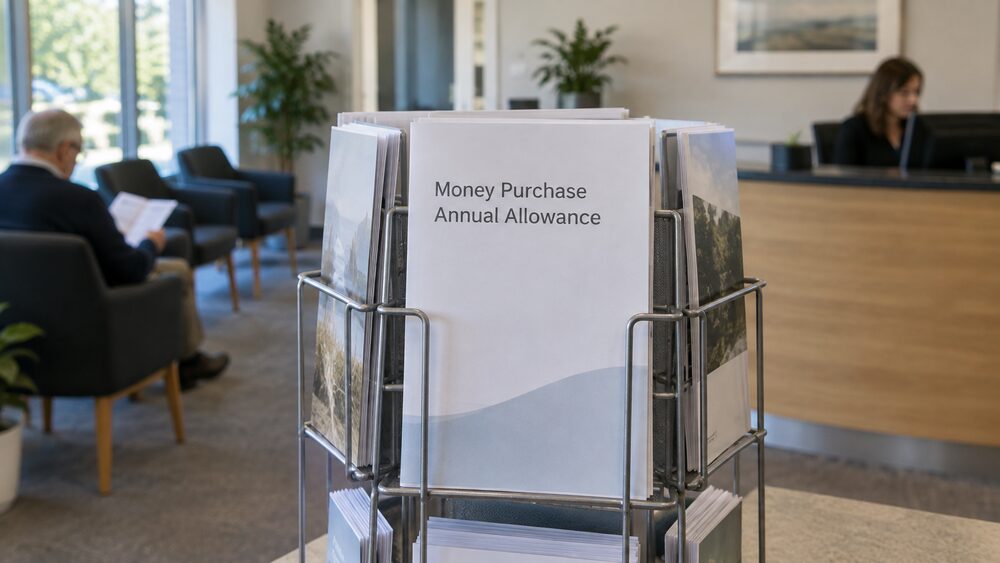
The money purchase annual allowance is £10,000 a year. It replaces the standard pension annual allowance for anyone who has started taking taxable income from a defined contribution pension, and it applies from the moment the first such payment is taken. The standard annual allowance is £60,000, so the change cuts the amount that can be paid in each year while still attracting tax relief from £60,000 to £10,0001.
The money purchase annual allowance is £10,000 a year. It replaces the standard pension annual allowance for anyone who has started taking taxable income from a defined contribution pension, and it applies from the moment the first such payment is taken. The standard annual allowance is £60,000, so the change cuts the amount that can be paid in each year while still attracting tax relief from £60,000 to £10,0001.
The rule exists because pension saving is tax-advantaged on the way in. Once someone begins drawing taxable income out, the reduced limit stops them recycling that money straight back into a pension to collect relief a second time. It was introduced in April 2015 as part of the pension freedoms2.
Two things surprise people most. The first is that taking only the 25% tax-free lump sum does not trigger it, so the full allowance survives that step3. The second is that once the MPAA applies, unused allowance from earlier years cannot be brought forward to top it up4.
Money purchase annual allowance: £10,000 a year instead of £60,000
The figure is set in legislation. The Finance Act 2023 substituted £10,000 for £4,000 with effect from the 2023-24 tax year and subsequent tax years9. The government's own rates and allowances table lists the Money Purchase Annual Allowance at £10,00010.
Before that change the limit had been £4,000, and some older documents still quote that figure6. Where a provider's terms or a guidance page still says £4,000, it is out of date. The current figure is £10,000, and provider terms confirm it: the Transact SIPP terms state that "The money purchase annual allowance is currently £10,000."11
The reduction is from £60,000 to £10,000, not from £40,000. Independent guidance describes the drop as taking the amount that can be paid in each year while still getting tax relief "from £60,000 to just £10,000"1. Some sources describe the standard allowance as £40,000, which reflects the position before the 2023 increase; the current standard figure is £60,0001.
The MPAA is a variation of the annual allowance rules, not a separate tax. It sits alongside the tapered annual allowance, which reduces the standard allowance for higher earners, and the money purchase limit applies on top of whatever the tapered figure would otherwise be12.
What triggers the MPAA, and what does not
The MPAA applies to people who have taken taxable income from a defined contribution pension4. A defined contribution pension is also called a money purchase pension, which is where the allowance gets its name13.
The main trigger events are:
- Taking income from a flexi-access drawdown fund2
- Taking an uncrystallised funds pension lump sum, known as a UFPLS2
- Having been in flexible drawdown before 6 April 2015, which triggered the MPAA automatically on that date2
For someone who has not yet accessed their pension fund, the MPAA is triggered only when the first income payment is taken14. Taking a drawdown income payment for the first time brings the allowance into effect15.
What does not trigger it:
- Taking only the 25% tax-free lump sum3
- Using money in the pension to buy an annuity16
- Drawing an income from a salary-based defined benefit pension scheme17
The distinction is between tax-free cash and taxable income. A UFPLS is part tax-free and part taxable, and it is the taxable element that counts5. A drawdown income payment is taxable income, so it counts18.
Taking only your tax-free lump sum keeps the full allowance
The MPAA will not be triggered if only the tax-free lump sum has been taken3. This is the single most useful distinction on the page, because it means the order in which someone takes money from a pension changes what they can pay in afterwards.
You can take up to 25% of your pension as a tax-free lump sum19. You can still take 25% of your pension pot as a tax-free lump sum when using drawdown20. Pension Wise sets out that later lump sums can be 25% of the amount taken, as long as the total tax-free amount is not higher than 25% of that pension and the lump sum allowance21.
The lump sum allowance is a separate limit from the MPAA. Depending on the type of protection held, someone could be entitled to take a tax-free lump sum of up to £450,000 rather than the standard amount22. That figure applies to people with lifetime allowance protection, and the type of protection determines the exact amount.
The practical effect is that a person can take their tax-free cash, leave the rest invested, and keep the full £60,000 annual allowance for as long as no taxable income is drawn. Once a taxable payment is taken, the £10,000 limit applies from that point.
Tax relief within the £10,000 limit
Contributions up to the MPAA still attract tax relief. The limit reduces the amount that can be contributed to money purchase pensions in any one tax year while still benefiting from relief5. The government's rates table lists the Money Purchase Annual Allowance at £10,00010.
Relief is given at the saver's marginal rate of income tax23. As a basic-rate taxpayer, for every £100 saved into a pension the government adds £25 in tax relief24. Higher-rate taxpayers qualify for relief at 40%, and additional-rate taxpayers at 45%25. Relief is available on contributions up to 100% of annual earnings, so someone with low earnings cannot use the full £10,000 if they earn less than that26.
The £10,000 ceiling applies to money purchase pensions. Someone with both money purchase and defined benefit pensions has £10,000 applying to the money purchase side, with a separate allowance for the defined benefit side27. The MPAA does not affect defined benefit pensions28.
If contributions exceed the MPAA but stay within the annual allowance, an annual allowance charge applies to the amount by which money purchase contributions exceeded the MPAA2. That charge is the mechanism that claws back the relief.
No carry forward once the MPAA applies
Carry forward normally lets someone use unused annual allowance from the previous three tax years. It is not available once the MPAA applies. If the MPAA has been triggered, unused allowances from previous years cannot be carried forward4. The same rule appears across provider guidance: carry forward is not available if subject to the Money Purchase Annual Allowance29.
Carry forward can never be used to increase the MPAA. Once the MPAA is triggered, carry forward can only be applied to the alternative annual allowance31. The alternative annual allowance is the separate figure that covers defined benefit saving, which is why carry forward still has a use for someone with a final salary pension alongside a money purchase pot.
Unused MPAA cannot be rolled into a new tax year either32. Each tax year stands alone: £10,000, no more, and nothing carried over.
For someone contributing to a SIPP, the effect is direct: carry forward cannot be used to contribute to a SIPP once the MPAA applies33. It also cannot be used to reduce contributions that exceed the MPAA34.
Where to get free help
Pension Wise is the government's free and impartial guidance service for people approaching retirement, and it covers the options for taking money from a pension, including drawdown and lump sums21. Citizens Advice also sets out how income drawdown works and what it involves35.
For anyone weighing up whether to take taxable income, the decision has a knock-on effect on how much can be paid in afterwards. Taking advice or guidance before the first withdrawal means the allowance question can be considered alongside the income decision, rather than after it.
Sources35 cited
- When can I retire? Which?, 2026-03-17
- Money purchase annual allowance Nucleus Financial, 2026
- Options for cashing in your pension Which?, 2026-07-09
- How the pensions annual allowance works Which?, 2026-03-19
- Money purchase annual allowance Fidelity, 2026-09-26
- SIPP member fact sheet: contributions and tax relief Options Pensions, 2025
- Bankruptcy and my pension StepChange, 2026-09-25
- What is income drawdown Bestinvest, 2028-04
- Finance Act 2023, Part 1 legislation.gov.uk, 2026
- Budget 2025: rates and allowances GOV.UK, 2025-12-05
- Transact SIPP terms and conditions Transact, 2026-04
- Tapered annual allowance Interactive Investor, 2026-09-26
- MPAA AJ Bell, 2026
- Flexi-access drawdown Interactive Investor, 2026-09-26
- Pension drawdown: what you need to know AJ Bell, 2025-11-09
- Working in retirement Which?, 2026-03-17
- Pension contributions Interactive Investor, 2026-09-26
- Taking your pension benefits: your options Aegon, 2026
- 5 ways to make your pension last Which?, 2026-01-28
- What you can do with your pension pot Citizens Advice, 2026-07-01
- Adjustable income Pension Wise, 2026-09-28
- Lifetime allowance explained Which?, 2026-09-17
- Pension tax relief House of Commons Library, 2026-07-08
- What pension can you get if you're self-employed? Which?, 2026-09-15
- Lifetime ISA vs pension Which?, 2026-03-23
- Tax reliefs Which?, 2026-04-06
- Pensions tax relief ReAssure, 2026
- Money purchase annual allowance PensionBee, 2026-07-09
- Bonus sacrifice Legal & General, 2026-09-26
- Bonus sacrifice Legal & General, 2026-09-26
- Pension annual allowance Standard Life, 2026
- Pension tax relief benefits Legal & General, 2026-09-26
- Saving in your 20s and 30s Fidelity, 2026-09-26
- Carry forward allowance Fidelity, 2026-09-26
- Pensions income drawdown Citizens Advice, 2026-09-26








 Pension WiseFree guidance on your options for a defined contribution pension, from age 50
 FSCSProtects your money if a bank, insurer or investment firm fails
 GOV.UKOfficial information on tax, benefits and government services