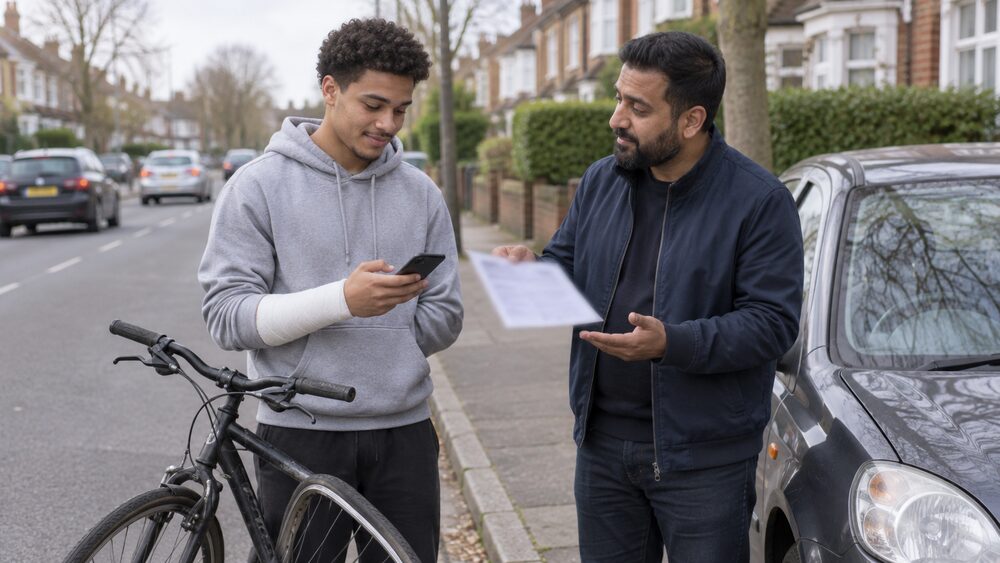
If you are injured in a road accident, the deadline for a compensation claim is usually three years from the date of the injury1. That deadline applies to the claim against the person or insurer responsible, not to your own policy. Your own car insurance rarely pays for your injuries: third party cover exists to compensate other people you injure, not you2.
If you are injured in a road accident, the deadline for a compensation claim is usually three years from the date of the injury1. That deadline applies to the claim against the person or insurer responsible, not to your own policy. Your own car insurance rarely pays for your injuries: third party cover exists to compensate other people you injure, not you2.
What most people actually need to know is which policy pays for what. Third party insurance is the legal minimum, and it covers injuring someone or damaging another car, but not repairs to your own car3. If you want cover for your own injuries, that comes from a separate personal accident add-on, and its deadlines are much shorter, often three months from the injury4.
Claiming after an accident: your insurer or not
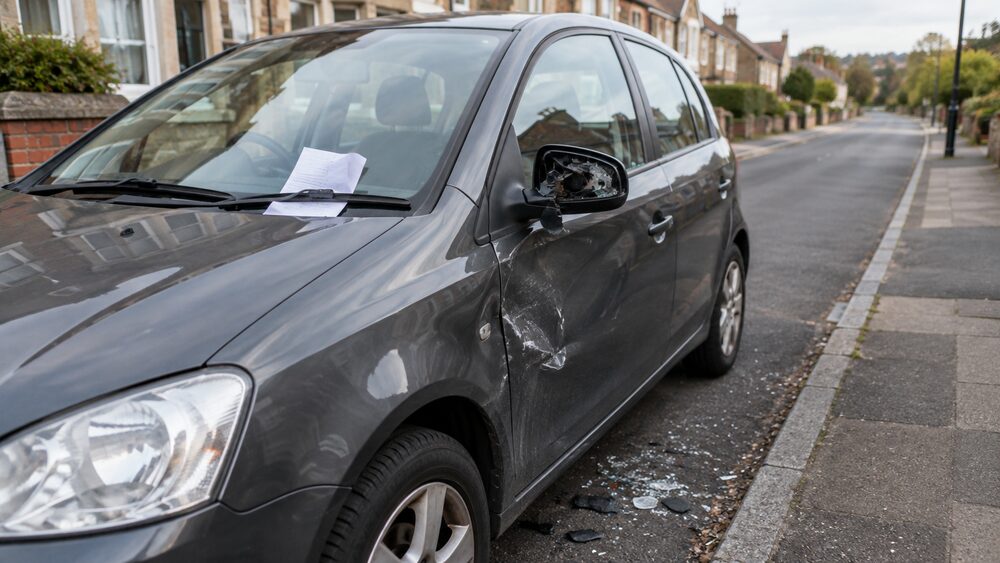
You must tell your insurer you have been in an accident, even if you do not claim7. That is a condition of the policy, and a failure to report can give your insurance company the right to refuse to cover you in the future7. Reporting is not the same as claiming: you do not have to submit a claim if you pay for repairs yourself or recover the cost from the other driver, which is one way to preserve a no claims discount7.
The law sets its own duties at the scene. Under the Road Traffic Act 1988 section 170, if you are involved in an accident as the driver you must give your vehicle registration number, your name, your address, and the name and address of the vehicle owner if different7. If details are not exchanged at the scene, you must report the accident at a police station or to a police officer as soon as you can, and in any case within 24 hours7. Someone who holds you responsible has the right to request your insurance details, and that request can be made later, not necessarily at the time7.
Policies also require you to report the accident to your insurer within a reasonable time, and what counts as reasonable differs between policies7. If you were not at fault, you can pay the excess and then pursue the other driver's insurer to reimburse it once the claim is settled, or take the other driver or their insurer to the small claims court7.
Third party cover: what it pays when someone is injured
Third party insurance is the minimum level of cover required, and it covers injuring someone or damaging another car, but not repairs to your own car3. It means you are covered if you have an accident causing damage or injury to any other person, vehicle, animal or property2. It does not cover any other costs, such as repair to your own vehicle2.
In Northern Ireland the same structure applies: third party only cover makes sure compensation is available for injury to other people, including your passengers, or damage to other people's property resulting from an accident caused by you, but it does not cover any of your costs as the result of an accident8.
The practical effect is that if you are injured by another driver, your claim sits against their insurer, not yours. Expenses your own policy does not cover, such as hiring a car while yours is repaired or compensation for personal injury, might be claimed against a third party9. Third party only insurance covers the cost of fixing the other driver's car, reimbursement for damage to their property, and compensation for injuries they have sustained if you are at fault10. It does not cover you for any damage your car gets in an accident10.
Personal accident cover: injury within three calendar months
Personal accident cover is the part of a car policy that pays you, rather than the other driver. It pays a fixed amount of money for specific injuries, depending on the level of cover12. A policy might pay £10,000 for loss of a limb, £8,000 for loss of an eye, or £100,000 for the death of a policyholder12. It pays out if you suffer a serious injury, die as a result of an accident, or become totally and permanently disabled12.
Cover levels vary widely. Standard levels of cover range between £1,000 and £10,000, but cover can be enhanced to as much as £150,00013. One provider's extended personal accident cover increases cover from £10,000 to £100,000 for you, your partner or a named driver on the policy14. Another provider's personal injury and rehabilitation cover requires that your claim is made within three months of the injury4.
That three-month window is the key difference from a compensation claim. A personal injury claim against a third party usually has three years from the date of the injury1, but a personal accident add-on is a contractual benefit with its own, much shorter, notification period. The ombudsman has dealt with cases where the definition of "accident" in a policy meant a claim was turned down, and Colin's policy covered injury to the body caused by an accident15.
| Cover type | What it pays | Typical deadline |
|---|---|---|
| Third party (legal minimum) | Injury and property damage to others2 | Three years from injury for a claim against the other driver1 |
| Personal accident add-on | Fixed sums for specified injuries12 | Within three months of the injury on one provider's cover4 |
| Legal expenses insurance | Pursuing or defending a claim | Check the policy terms16 |
How your cover level and policy terms affect a claim
The amount you can recover depends on which cover you hold and what the policy says. Personal accident cover pays a fixed amount for specific injuries depending on the level of cover, so the schedule in the policy, not the severity of your loss in the abstract, sets the figure12. Standard levels run between £1,000 and £10,000, with enhanced cover up to £150,00013.
Policy terms also decide whether a claim succeeds at all. The ombudsman has considered complaints where the definition of "accident" in a policy meant a claim was unfairly turned down15. Weather is a common source of dispute: driving during a red weather alert does not mean you cannot make a claim for damage, but it could invalidate your policy if the insurer decides you did not follow travel advice, such as sticking to a lower speed limit17.
Fault matters for your no claims discount. If it has been found that you were not at fault by the renewal date, your no claims bonus will not be affected, regardless of whether the claim is closed or not18. If you were at fault, or fault is unresolved, you could lose some or all of your no claims discount, depending on your insurer's rules11. A small chip in a car windscreen being fixed will not affect your no-claims discount19.
If your claim is refused: complaints, with 43% upheld for roadside assistance
If your insurer turns down your injury claim, you can complain. The Financial Ombudsman Service publishes uphold rates by product, which show how often complaints about a particular type of cover succeed. Personal accident insurance complaints were upheld 17% of the time in Q3 2025/266. Commercial legal expenses insurance complaints were upheld 25% of the time in Q1 2026/27, and critical illness cover 7%21. Whole of life assurance (non-reviewable) complaints were upheld 19%21.
The ombudsman also handles complaints about insurers turning down vehicle theft claims, including claims rejected because the insurer thinks the key was left inside the vehicle, the vehicle was left unattended, an exclusion clause applies, or a family member stole or took the vehicle without consent22. When an insurer receives a complaint involving accidental damage, it should reply to the customer within eight weeks23.
Where a claim is refused because you arranged your own repair without contacting the insurer first, most policies will not let you do this, and insurers usually reject the claim24. If you are unhappy with the outcome, you can take the complaint to the ombudsman, which is free to consumers. For more on the process, see complaining about an insurer and the Financial Ombudsman Service.
Sources24 cited
- Childbirth injuries: rights at work and benefits for new mothers Maternity Action, 2026-03
- Vehicle insurance GOV.UK, 2026-09-26
- Shopping around for insurance Independent Age, 2026-09-26
- Personal injury and rehabilitation cover AXA, 2026-09-26
- Will your travel insurance actually cover you this summer? Which?, 2026-05-22
- Quarterly complaints data Q3 2025/26 Financial Ombudsman Service, 2025
- I've been in a car accident, do I have to claim on my insurance? Which?, 2026-03-31
- Motor insurance explained nidirect, 2026-05-27
- Accident checklist BIBA, 2026-09-26
- Third party only car insurance esure, 2026
- Is your car covered for flood damage? Which?, 2025-11-08
- Personal accident insurance Financial Ombudsman Service, 2026-09-27
- Car insurance add-ons, fees and charges Which?, 2026-01-22
- Multi-cover insurance LV=, 2026-09-28
- A customer complains that the definition of accident in his policy means his claim is unfairly turned down Financial Ombudsman Service, 2026-09-27
- Legal expenses insurance reviews Which?, 2026-01-22
- Does your insurance cover damage caused by bad weather? Which?, 2025-12-08
- Fault claims and no claims bonuses Financial Ombudsman Service, 2026-07-10
- Will claiming for a chipped windscreen make my car insurance cost more? Which?, 2026-03-02
- Bankruptcy and insurance StepChange, 2026-09-25
- Quarterly complaints data Q1 2026/27 Financial Ombudsman Service, 2026
- Vehicle theft Financial Ombudsman Service, 2026-09-16
- Accidental damage Financial Ombudsman Service, 2026-09-27
- Home emergency insurance Financial Ombudsman Service, 2026-09-26


 MoneyHelperFree, impartial money and pensions guidance, set up by government
 Financial Ombudsman ServiceFree, independent help when a complaint about a firm is not put right
 FSCSProtects your money if a bank, insurer or investment firm fails
 Citizens AdviceFree advice on money, consumer and legal problems in England and Wales
 GOV.UKOfficial information on tax, benefits and government services