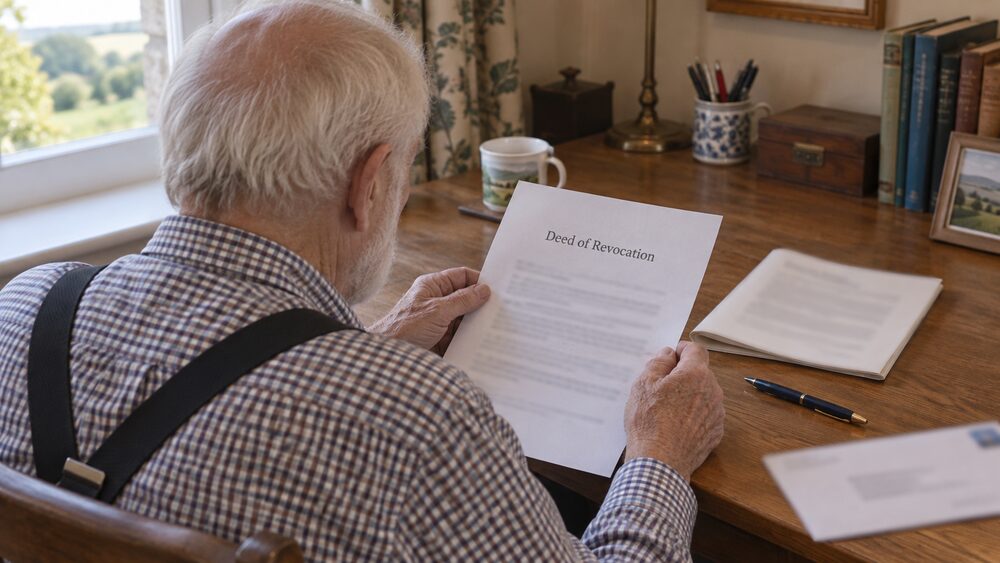
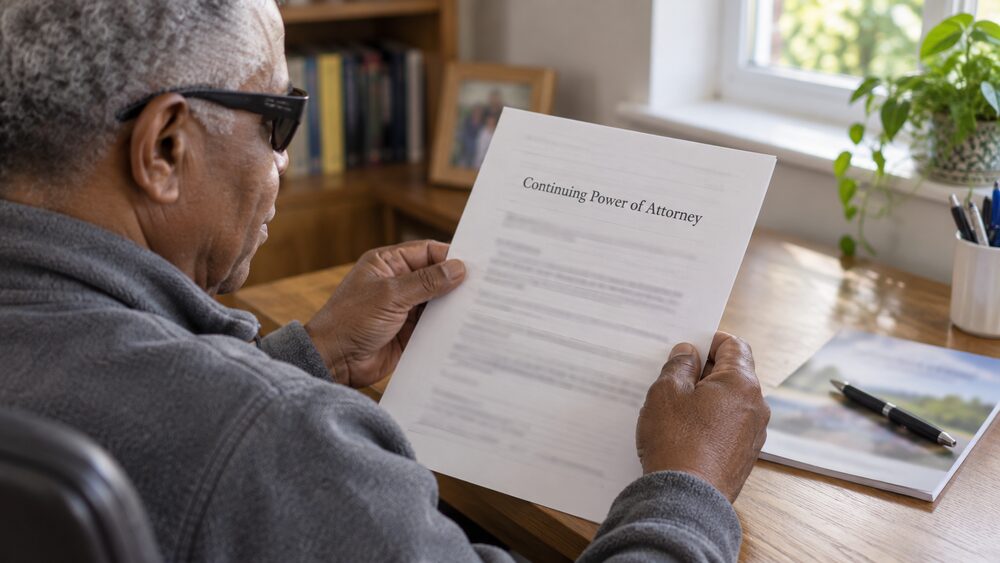
You can cancel a lasting power of attorney (LPA) at any time while you still have mental capacity. The usual route is to write a formal statement called a deed of revocation and send it to the Office of the Public Guardian (OPG) together with the original LPA document1. Once the OPG has it, the LPA is at an end and your attorney can no longer act under it.
You can cancel a lasting power of attorney (LPA) at any time while you still have mental capacity. The usual route is to write a formal statement called a deed of revocation and send it to the Office of the Public Guardian (OPG) together with the original LPA document1. Once the OPG has it, the LPA is at an end and your attorney can no longer act under it.
The rules change depending on whether the LPA has been registered yet. Before registration you can cancel or amend it freely. After registration the OPG must be notified, and the deed of revocation is the document that does it3. If you have already lost mental capacity, you cannot cancel an LPA at all: it is designed to keep working precisely when you can no longer make decisions for yourself4.
This page covers who can cancel and when, how the process differs before and after registration, what a deed of revocation is and how to use one, what happens if you lose capacity, and how to tell your attorneys and your banks so the old document stops being accepted.
You can cancel an LPA while you have mental capacity
The person who made the LPA, called the donor, is the only one who can cancel it, and only while they can still make their own decisions. Age UK's guidance is direct: "You can cancel it at any time while you have mental capacity by sending the original LPA document and a 'deed of revocation' to the Office of the Public Guardian"1. The same rule appears across providers: as long as you still have mental capacity, you can revoke your power of attorney and then create a new one6.
Mental capacity here means the ability to make the decision to cancel, not the ability to manage every part of your finances. The OPG may ask for evidence that you still have capacity after you apply to cancel2. That is a safeguard: it stops someone else cancelling an LPA on your behalf to take control of your affairs.
An LPA is different from an ordinary power of attorney in this respect. An ordinary power of attorney becomes invalid once the donor has lost capacity8, and a general power of attorney is automatically revoked if the donor loses mental capacity9. An LPA, by contrast, is still valid after you lose mental capacity, which is the whole point of making one. You must set it up while you have capacity, but it keeps working afterwards4.
If you are weighing up whether you need an LPA at all, or how it differs from the older arrangements, powers of attorney explained sets out the types side by side.
Before or after registration: how cancelling differs
Registration is the dividing line. Before an LPA is registered, you can cancel or amend it at any time. After registration, the Office of the Public Guardian must be notified3. In practice that means the deed of revocation and the original document go to the OPG, rather than the LPA simply being torn up.
The reason is that a registered LPA is a public record. Once it is registered, banks, building societies and other firms can check it, and the OPG holds the entry. Cancelling it therefore means updating that record, not just changing your mind privately.
| Stage | What you can do | What the OPG needs |
|---|---|---|
| Not yet registered | Cancel or amend at any time3 | Nothing, until you register or cancel |
| Registered | Cancel by deed of revocation1 | The original LPA and the deed of revocation1 |
| After loss of capacity | Cannot be cancelled4 | Not applicable |
There is a separate rule for enduring powers of attorney (EPAs), the older form that LPAs replaced. You cannot make a new EPA1. If you made one that was signed and witnessed before October 2007, you can either continue to use it or cancel it and set up a property and financial affairs LPA2. If the EPA is unregistered, you cancel it by making a deed of revocation and keeping it with the EPA form; you and a witness must both sign it2. If it is registered, an application has to be made to the Court of Protection to cancel it2.
How to revoke an LPA with a deed of revocation
A deed of revocation is a formal document used to cancel a lasting power of attorney or an unregistered enduring power of attorney, depending on the situation12. It is not a court form and it does not need a solicitor. It is a written statement, signed by you and a witness, saying that you are cancelling the power.
The steps for a registered LPA in England and Wales are:
- Write the deed of revocation, stating that you are cancelling the LPA.
- Sign it in front of a witness, who also signs.
- Send the original LPA document and the deed of revocation to the Office of the Public Guardian1.
- Tell your attorney or attorneys, and any banks or financial providers that hold the old document2.
- If a firm still has the LPA on file, contact them to remove your attorney's access13.
Some banks will accept a signed letter instead of a deed of revocation form, provided it is witnessed14. Others ask you to contact the OPG and then call them to remove the attorney's access13. The OPG route is the one that ends the LPA itself; telling the bank is what stops the old document being used day to day.
In Scotland the process is different again. After the document has been registered, you can revoke a power of attorney by giving notice in writing to the Scottish OPG4. If your power was made in Scotland, continuing and welfare powers of attorney in Scotland explains how the two types work.
When you no longer have mental capacity
Once you have lost mental capacity, you cannot cancel your LPA. The document was made to keep working at exactly that point, and the law does not allow it to be undone by the person it protects. A general power of attorney ends when the donor loses mental capacity9, and an ordinary power of attorney becomes invalid once the donor has lost capacity8. An LPA does not.
If you lose mental capacity but signed the LPA while you still had capacity, your attorney can register it for you16. For an EPA, if you lose mental capacity your attorney must register it with the Office of the Public Guardian before they can make any decisions on your behalf1.
There is one type of LPA that only starts at this point. A health and welfare LPA can only be used when the donor has lost mental capacity15. A property and financial affairs LPA can be used as soon as it is registered, with the donor's permission.
If someone is concerned that an attorney is acting improperly, and the donor no longer has capacity to cancel, the route is not revocation. It is a complaint to the Office of the Public Guardian or an application to the Court of Protection. The Financial Ombudsman Service can look at complaints about how a bank or financial firm handled a power of attorney17.
Can I change my attorney instead of cancelling the whole LPA?
You can cancel or amend a lasting power of attorney at any time before it is registered3. After registration, the OPG must be notified3. If what you want is a different attorney rather than no attorney at all, the practical route is usually to cancel the existing LPA and make a new one naming the person you want.
An enduring power of attorney cannot be changed at all. The official guidance is blunt: "You cannot change an existing EPA. Cancel it and set up an LPA instead"2. If you still have the capacity to make decisions, you can cancel the old EPA and register a new LPA18.
If you are replacing a general power of attorney, the donor usually marks the previous document with "revoked" or "cancelled" before replacing it with the new one, and sends a copy of the new document to the firm so it can update its records and remove the old one19.
Does an LPA end automatically when the donor dies?
Yes. A lasting power of attorney automatically ends when the donor dies20, and an enduring power of attorney ends when you die2. The attorney can no longer access the donor's accounts, give instructions or carry out transactions on their behalf19. Control passes to the personal representative or executor, who deals with the estate21.
The attorney should get in touch with the Office of the Public Guardian and send the power of attorney document, any certified copies and a copy of the death certificate22. A power of attorney is no longer valid after the donor has passed away17. If you are dealing with an estate, what to do when someone dies covers the wider steps.
What happens to an LPA if my only attorney loses mental capacity?
An LPA can end for reasons other than the donor cancelling it. It ends if the donor dies, if a sole attorney loses mental capacity and there are no other attorneys or replacements, if an attorney divorces the donor or ends their civil partnership, if a sole attorney becomes bankrupt, is removed by the Court of Protection, dies with no replacements, or disclaims, or if the Court of Protection cancels the LPA23.
The sole attorney point catches people out. If a sole attorney dies and there are no replacement attorneys in the LPA, the LPA comes to an end and an entirely new one must be made if the donor still has mental capacity23. It can continue with multiple attorneys acting jointly and severally, or with replacement attorneys23. Naming replacements when the LPA is first made is what avoids the problem.
An LPA does not expire on a date. It remains in place until you pass away or revoke the authority4, and it can be cancelled by the attorney or by the donor if they still have mental capacity24.
Should I tell my attorneys that I have revoked my LPA?
For an unregistered EPA, you must let your attorney or attorneys and any relevant banks and financial providers know that you are cancelling2. The same principle applies to an LPA: an attorney who does not know the power has been revoked may keep acting on it, and a firm that still holds the old document may keep accepting their instructions.
The steps that stop the old document being used are:
- Tell each attorney in writing, and keep a copy of what you sent and the date.
- Contact every bank, building society, pension provider and savings provider that has the LPA on file, and ask them to remove the attorney's access13.
- If the LPA is registered, make sure the OPG has the deed of revocation and the original document1.
- Check that any joint accounts or savings held with National Savings and Investments are updated separately, as they have their own process for people managing money for someone else8.
If a firm refuses to act on the revocation, or keeps letting the attorney operate the account, that is a complaint about the firm. Writing an effective complaint letter or email sets out how to put it in writing, and free consumer advice when a dispute with a firm stalls explains where to go next.
Sources24 cited
- Power of attorney Age UK, 2026-01-09
- Use or cancel an enduring power of attorney GOV.UK, 2026-09-26
- Can I borrow more money at a later date? Just, 2026-09-26
- What is power of attorney? Which?, 2026-02-26
- Register a legal authority Tesco Bank, 2026-09-25
- Power of attorney Bank of Scotland, 2026-09-27
- Power of attorney Halifax, 2026-09-27
- Manage saving for an adult NS&I, 2026-04-02
- Types of power of attorney HSBC UK, 2026
- Guide to power of attorney Ulster Bank, 2026-09-25
- Enduring power of attorney Age UK, 2026-01-09
- Understanding third party access Zempler Bank, 2026-09-26
- Power of attorney first direct, 2026
- Power of attorney Leeds Building Society, 2026-09-26
- Power of attorney explained Principality Building Society, 2026-02-10
- Power of attorney Kuflink, 2025-07-25
- Power of attorney Financial Ombudsman Service, 2026-09-26
- What is lasting power of attorney? Mental Health and Money Advice, 2025-03-10
- Using a power of attorney Nationwide, 2026
- Bank accounts and finances Marie Curie, 2023-12-20
- Can a joint bank account help me manage a loved one's finances? Which?, 2026-01-19
- What to do when someone dies Age UK, 2026-02-16
- Power of attorney frequently asked questions Coventry Building Society, 2026
- What is power of attorney? Legal & General, 2026-06-23






 Citizens AdviceFree advice on money, consumer and legal problems in England and Wales
 MoneyHelperFree, impartial money and pensions guidance, set up by government
 Financial Ombudsman ServiceFree, independent help when a complaint about a firm is not put right
 GOV.UKOfficial information on tax, benefits and government services
 StepChangeFree debt advice and solutions from a charity