
A private bank is a bank or building society, or an operationally distinct brand of one, where over half of its personal current account customers each had net assets worth at least £250,000 throughout the previous financial year. That is the Financial Conduct Authority's (FCA) definition, and it matters because it decides which banking rules apply to you as a customer1. A private bank is not simply an ordinary bank with a posh name, and it is not the same thing as a paid "premium" current account from a high street brand, although the two are often confused.
The £250,000 figure is a threshold applied to the bank's customer base as a whole, not a deposit you must make to open an account. Individual private banks set their own entry conditions, which can include minimum deposits, minimum income or a requirement to borrow or invest through them. What the FCA definition does is place these banks in a separate category for certain consumer protections: for example, the FCA's rules on overdraft charges in CONC 5D state that they do not apply to a private bank2.
What a private bank is and who it is for
The FCA's Banking Conduct of Business sourcebook sets out the definition in two places, and both say the same thing. BCOBS 7.1 defines a private bank as:
"a bank or building society, or an operationally distinct brand of such a firm, over half of whose personal current account customers each had throughout the previous financial year net assets with a total value of not less than £250,000"
with the definition last updated on 6 April 20202. BCOBS 8 repeats the same threshold when it defines which accounts count as a "personal current account" for its purposes1.
Who is it for, then? In practice, private banking is aimed at people with substantial assets, and the definition is written around that: the bank qualifies as a private bank only if most of its customers are wealthy by this measure. The service model that goes with it usually involves a named relationship manager, more hand-holding on lending and investments, and access to services an ordinary branch network does not offer. The FCA's definition also covers an "operationally distinct brand" of an ordinary bank, which is how several high street groups run their private banking arms as separate brands while sitting inside the same licensed firm.
Two things follow from the definition that a customer should know. First, because the bank is measured on the previous financial year, a brand can move in or out of the private bank category as its customer base changes. Second, the category affects which rules protect you. The clearest example is overdraft pricing: the FCA's CONC 5D rules, which cap and structure what banks can charge for overdrafts, expressly do not apply to a private bank3. Everything else in the retail banking conduct rulebook still applies, including the rules on how you are told about changes and how complaints are handled.
What private banks offer: current accounts, savings and lending
At their core, private bank accounts are still current accounts. The FCA defines a personal current account as "an account, other than a current account mortgage, which is a payment account within the meaning of the Payment Accounts Regulations", and it notes that premium service accounts are not excluded from that definition1. So the everyday functions are the ones MoneyHelper lists for any current account: receiving wages and benefits, spending in shops, withdrawing cash, managing the account online or by app, and setting up Direct Debits and standing orders7.
On top of that base, private banks typically offer:
- Current accounts, often with a relationship manager and international payment services. The Financial Ombudsman Service's remit for banking covers current accounts, savings accounts, Direct Debits, money transfers, electronic payment platforms, cheques and banker's drafts, so all of these sit within its complaint-handling scope5.
- Savings and deposits, including fixed and variable rate accounts. Variable rates can move when the Bank of England base rate changes; NS&I, for example, states its Direct Saver and Direct ISA rates are variable and can change up or down8.
- Lending, from mortgages to bridging finance, often negotiated individually rather than taken off a shelf. Bank of England statistics on lending to individuals cover all sterling lending to the UK household sector, which is the market private bank lending sits within.
- Payments and technology, including open banking, which the FCA describes as "a secure and regulated way for people and businesses to share access to payments data from their bank account with trusted apps and services"10. The Payment Systems Regulator notes open banking lets people link accounts with third parties offering payment services, a secure alternative to card networks11.
Access to cash is part of the picture too. The government's Cash Access Policy Statement covers access to cash deposit and withdrawal services for relevant personal and business current accounts across the UK12. If a private bank has few or no branches, the practical question of where you can pay in a cheque or withdraw cash becomes one to check before opening, and the guide to access to cash covers what replaces branches.
Fees and charges: from monthly account fees to minimum balances
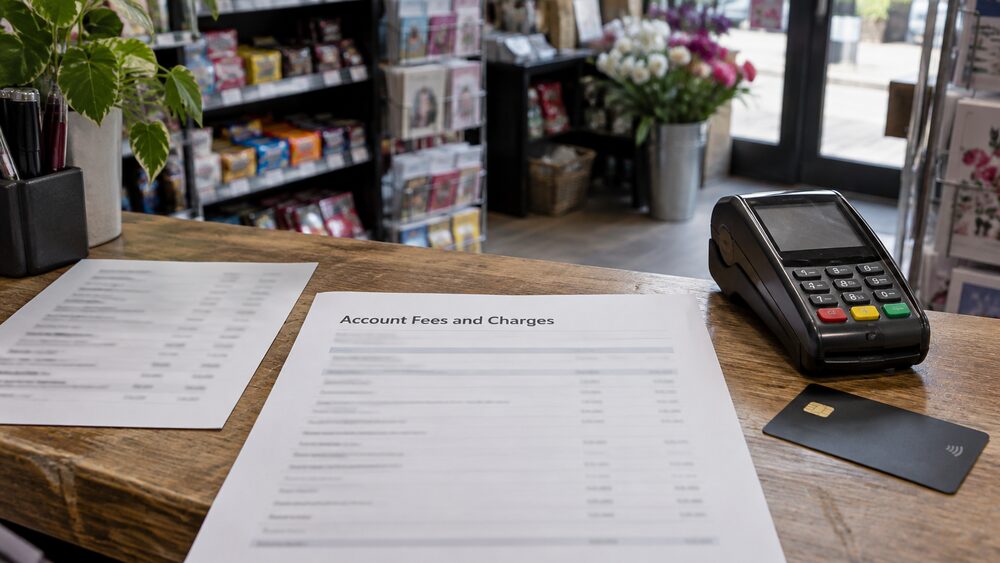
Private banking is not free banking. Fees come in several forms, and the rules on how they can be changed are covered later in this page.
Monthly account fees are common. Two examples show the range and how fees move over time:
| Bank | Account | Monthly fee | What changed |
|---|---|---|---|
| Ulster Bank | ufirst Private | £28 | Fee rose to £28 with expanded travel, lifestyle and wellbeing benefits from 1 October 2025, and the Ticket Booking service was withdrawn13 |
| Santander | Select and Private current accounts | £5 | Fee rose from £4 to £5 from 11 May 202614 |
Minimum balances and minimum deposits are the other main cost of entry. Each bank sets its own, and the FCA's £250,000 net assets figure is a definition of the bank's customer base rather than a published minimum for any account, so the actual requirement to open or keep an account varies by brand1. Some accounts also require a minimum monthly pay-in, a pattern seen elsewhere in the market: some credit union current accounts require a minimum amount each month, such as £8015.
For comparison, the cheapest end of the market is free. MoneyHelper states that basic bank accounts are free to set up and use16, and credit union accounts, while often charging a monthly fee for a debit card, Direct Debits and overdraft access, are run by not-for-profit organisations15. The guide to current account fees and charges covers the fee types across the whole market.
Who can get a private bank account
Entry is set by each bank, not by a public rule. The FCA's definition tells you what kind of firm qualifies as a private bank, but the conditions for opening an account, such as minimum assets, income or borrowing, are commercial decisions made by each brand1.
A few general points from the rules and guidance help frame eligibility:
- Private bank accounts are personal current accounts, so the standard account-opening process applies: proof of identity and address, and the bank's own checks. The guides to how to open a current account and what ID you need cover this.
- Most banks, building societies and other account providers allow a third party access to your account, for example with a second card, which matters where a private client wants a family member or attorney to help manage money17. The guide to third party access explains the arrangements.
- Joint accounts are available across the market: a joint account normally allows two or more people to receive payments, pay by debit card, transfer money and manage the account, depending on the bank18. See joint bank accounts.
- If you cannot open any bank account, there are fallbacks. The nine largest personal current account providers are designated to offer basic bank accounts under the Payment Account Regulations 201519, and people who cannot open an account for benefits to be paid into can use the Payment Exception Service7. The guide to basic bank accounts explains these routes.
MoneyHelper's general guidance on choosing a bank account, which lists the main account types including credit union accounts, is a useful checklist of what to compare before approaching any provider20.
Private banking accounts from high street banks
Several private banking brands sit inside ordinary high street banking groups, run as operationally distinct brands of a licensed bank. That structure matters for two practical reasons: how you bank day to day, and how your protection adds up, which is covered in the final section.
Cater Allen, for example, publishes a Private Bank Account fact sheet with its specific conditions, FSCS information sheet and exclusions list, effective from 28 April 202621. Coutts, the private bank whose June 2023 closure of Nigel Farage's account put "de-banking" in the spotlight, states that updated terms for Private Clients and Commercial Clients take effect from 1 December 2026 unless otherwise stated22. Barclays Private Bank publishes summaries of changes to its GBP and USD variable savings interest rates for UK and Ireland clients, with changes in November and December 202523. Ulster Bank runs its ufirst Private account alongside its ordinary current accounts13.
What this means for a customer is that a private banking brand often shares infrastructure with its high street parent: the same payment systems, the same app technology in some cases, and the same licensed firm behind the name. Open banking applies across all of them, letting you share payments data from your account with trusted apps and services regardless of which brand holds the account10. The guide to banks and building societies covers how these groups are structured.
How to open a private bank account or switch
Opening a private bank account follows the same process as any current account, with an added layer of the bank's own wealth or income conditions. In order:
- Check the entry conditions. Each brand publishes its own requirements, such as minimum assets or income. Cater Allen's fact sheet, effective from 28 April 2026, sets out its specific conditions and exclusions21.
- Gather your documents. Identity and address proof, plus evidence of assets or income if the bank asks for it. The guide to what ID you need lists what banks accept.
- Apply through the channel the bank offers, whether that is a relationship manager, a branch or an online form.
- If switching, use the Current Account Switch Service. The guide to how switching works explains the process and guarantees; partial switching covers moving payments without closing the old account.
One rule worth knowing if you hold savings alongside the account: ISA regulations provide that, on the account investor's instructions, an ISA or agreed parts of it shall be transferred to another account manager in accordance with the relevant regulations24. So a private bank cannot refuse to release an ISA to another provider when you ask. The guide to ISAs covers the tax side.
When a private bank closes your account
Banks, including private banks, can close accounts, and the rules recognise situations where they must. The House of Commons Library summarises the position: banks have to close accounts when unable to complete "know your customer" checks required by money laundering regulations, or when concerned about accounts potentially being used for financial crime25. Its research briefing adds that if a bank suspects fraud, or if the customer is or has been abusive, the bank can give less notice than usual26.
The rules are tighter for basic bank accounts, where banks are more restricted in the grounds on which the account can be closed26. A basic bank account opened under the Payment Account Regulations may only be closed without the customer's consent in limited circumstances, for example if the customer has knowingly used or attempted to use the account for illegal purposes, or if there has been no transaction for more than 24 consecutive months19. Since 2025 the regulations also require firms to give customers a sufficiently detailed and specific reason for closing a basic bank account19. These protections belong to the basic account category, not to private bank accounts, which is one of the practical differences between the two.
An ombudsman case study shows how closure can play out in practice. A customer, Terry, made a high volume of gambling transactions, and the bank told him it was not happy with how he was using the account, defaulted it and closed it straight away27. The ombudsman's role in cases like this is to look at whether the bank acted fairly, not to force it to reopen an account.
Changes to terms, fees and rates, and how you are told
The FCA's conduct rules set out what has to happen before a change that works against you. Where a firm proposes to make a change to any term or condition, a change to any charge, or a material change to any rate of interest that applies to the retail banking service and that will be to the disadvantage of a banking customer, "the firm should provide reasonable notice to the banking customer on paper or in another durable medium before the change takes effect"4. A change to a rate of interest should always be considered material, except where the balance of the account is less than £100 at the time the firm would provide the notice4.
The rules also cover what you can see and ask for day to day:
- A firm should indicate the rate or rates of interest that apply to a retail banking service in each statement of account provided to the customer28.
- A firm should inform a banking customer of the current rate of interest on a savings account on the telephone or in a branch, at the customer's request4.
- The Payment Services Regulations require details of all charges payable, a breakdown where applicable, and details of interest and exchange rates or the method of calculating them29.
There is one exception to the notice requirement. Under the Payment Services Regulations 2017, changes in interest or exchange rates may be applied immediately and without notice where they are based on reference rates provided to the user, or where the change is more favourable to the user30. So a rate improvement can reach your account without a letter, but a rate cut to your disadvantage should come with notice first.
How rates behave in practice matters here. NS&I states its Direct Saver and Direct ISA rates are variable and can change up or down, for example when the Bank of England base rate changes or when rates in the general savings market change8, and its Junior ISA comes with a promise of personal notice in advance if the rate goes down31. Bank Rate changes mainly affect people with variable mortgages32, but they feed through to variable savings rates too. For foreign currency, each bank sets its own exchange rates, and the rates you see online and in newspapers are only a guide33. Real examples of variable rate changes at a private bank include Barclays Private Bank's published changes to GBP and USD variable savings rates in late 202523.
The guide to notice banks must give before changes covers the detail, and interest on current accounts covers the tax treatment.
Complaints and where to get help
The complaint route is the same for a private bank as for any bank. MoneyHelper sets out the sequence: complain to the bank's customer services first, then make a formal complaint, and the bank has eight weeks to investigate and give a final response; if you are still unhappy, take it to the free Financial Ombudsman Service18. The ombudsman's own guidance says the same: explain to your lender what you are unhappy about, and if you are not happy with their response, bring the complaint to the ombudsman with as much information as possible34.
The ombudsman covers banking and payment services including current accounts, savings accounts, Direct Debits, money transfers, electronic payment platforms, cheques and banker's drafts5. Its quarterly complaints data shows the volume of cases by product: personal loans alone generated 2,103 complaints opened in the first quarter of 2026/2735. It has also seen a small number of complaints about lack of access to in-person banking from micro-enterprises and small businesses, including branch closures, problems with banking hubs, and small businesses unable to deposit cheques at the Post Office with no local branch36. The Payment Systems Regulator points to the same route for payment problems: contact your provider first, and you can also contact the Financial Ombudsman Service if still unhappy37.
In Northern Ireland, Consumerline can refer complaints to the Trading Standards Service for investigation or to the Financial Conduct Authority, which authorises lenders38. Free, impartial help is available from MoneyHelper at any stage, before or during a complaint20.
How your money is protected: FSCS and its limits
Deposit protection depends on who holds your money. The FSCS states that it can only protect money held by UK branches of authorised banks and building societies6. A private bank that is a brand of an authorised UK bank is inside that protection; a firm that is not an authorised bank or building society, or money held outside a UK branch, is not.
Two things to check:
- Which licensed firm your brand belongs to. Because the FCA's definition covers an operationally distinct brand of a bank or building society2, a private banking brand can share a banking licence with high street brands in the same group. Protection applies per person per licensed firm, so balances across brands under one licence can count together. The FSCS's own tool for checking a firm it cannot find is the place to verify status6.
- Whether the bank is ring-fenced. Large UK banks have separated or "ring-fenced" some of their services from other parts of their business, which the Bank of England explains is to help protect access to the systems people depend on every day39. Ring-fencing does not change your deposit protection; the guide to ring-fencing and sort codes covers what it did change.
The guide to FSCS protection on current accounts covers the limits and how they apply across accounts and brands. If a bank fails, the FSCS process is the same whatever kind of bank it was, and the consumer protection section explains the wider safety net, including the Financial Ombudsman Service's role in complaints and the FCA's role in regulating the firms themselves.
Sources39 cited
- BCOBS 8: Personal current accounts and private banks FCA Handbook, 2026-09-25
- BCOBS 7.1: Application, definitions and guidance FCA Handbook, 2020-04-06
- CONC 5D.1: Overdraft charges, application FCA Handbook, 2024-11-04
- BCOBS 4.1: Information to be provided to banking customers FCA Handbook, 2026-09-26
- Complaints we can help with: banking and payments Financial Ombudsman Service, 2026-09-25
- Can't find your bank or building society? FSCS, 2026-09-25
- Choosing a bank account for your Universal Credit payment MoneyHelper, 2026-09-25
- NS&I Direct ISA NS&I, 2026-09-04
- NS&I Direct Saver summary NS&I, 2026-08-18
- Open banking and open finance FCA, 2026-06-02
- Account-to-account payments Payment Systems Regulator, 2026-09-26
- Cash Access Policy Statement HM Government, 2023-08-18
- ufirst Private account Ulster Bank, 2025-10-01
- Changes to your current account Santander, 2026-05-11
- Credit union current accounts MoneyHelper, 2026-09-25
- Basic bank accounts MoneyHelper, 2026-09-25
- Nominate someone to collect your State Pension GOV.UK, 2026-09-26
- Joint accounts MoneyHelper, 2026-09-25
- Basic bank accounts, July 2023 to June 2024 HM Treasury, 2025-11-05
- How to choose the right bank account MoneyHelper, 2026-09-25
- Private Bank Account fact sheet Cater Allen, 2026-04-28
- Important banking documents Coutts, 2026-12-01
- Rates and fees Barclays Private Bank, 2025-12
- Individual Savings Account Regulations 1998, regulation 4 legislation.gov.uk, 2026
- Access to banking services and cash House of Commons Library, 2026-09-26
- Research briefing CBP-8574 House of Commons Library, 2026-09-26
- Case study: bank acted irresponsibly after high volume of gambling transactions Financial Ombudsman Service, 2026-09-26
- BCOBS 4.2: Statements of account FCA Handbook, 2026-09-26
- Payment Services Regulations 2017, Schedule 4 legislation.gov.uk, 2026
- Payment Services Regulations 2017, Part 6 legislation.gov.uk, 2026
- NS&I Junior ISA NS&I, 2026-09-24
- What do I need to know about debt? Bank of England, 2025-08-19
- Complaints we can help with: sending money abroad Financial Ombudsman Service, 2026-09-26
- Complaints we can help with: valuations and surveys Financial Ombudsman Service, 2026-09-26
- Quarterly complaints data, Q1 2026/27 Financial Ombudsman Service, 2026
- Response to HMT's call for evidence for the Access to Banking Review Financial Ombudsman Service, 2026-07
- When you make a payment Payment Systems Regulator, 2026-09-26
- Loans nidirect, 2025-09-30
- Why are retail banks being ring-fenced and how will this affect me? Bank of England, 2025-12-03





 MoneyHelperFree, impartial money and pensions guidance, set up by government
 FSCSProtects your money if a bank, insurer or investment firm fails
 Financial Ombudsman ServiceFree, independent help when a complaint about a firm is not put right
 Citizens AdviceFree advice on money, consumer and legal problems in England and Wales