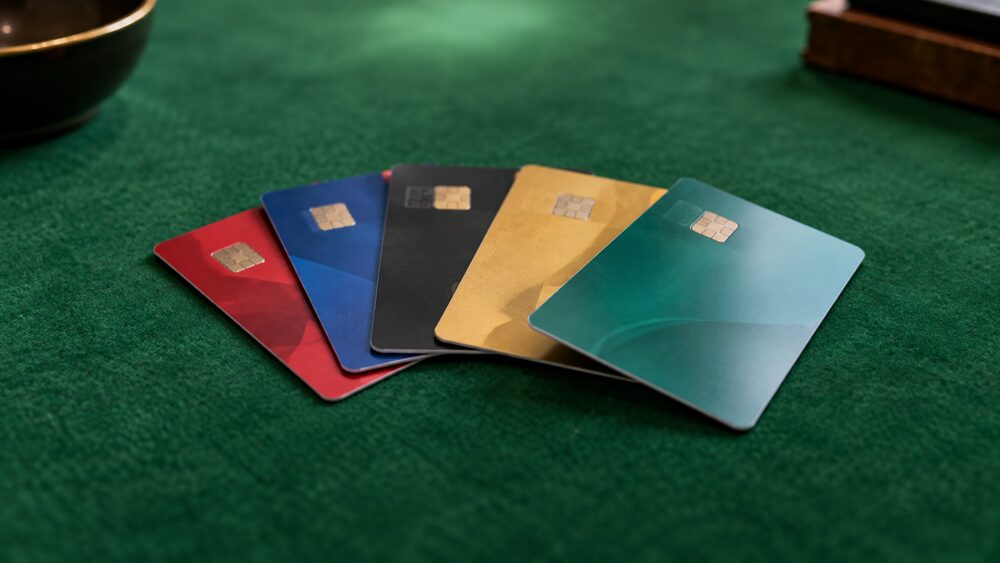
Credit cards are the form of credit people in the UK most often turn to for essential household bills, according to debt charity StepChange1. But "credit card" is really a family of products with very different jobs: one type exists to move existing debt to a 0% rate, another to spread the cost of a purchase, another to earn rewards on spending, and another to help people build a credit history from scratch. Picking the wrong type for the job is one of the most common and most expensive mistakes a cardholder can make.
The headline numbers are worth knowing up front. The longest 0% purchase cards currently offer up to 26 months interest free, while the longest 0% balance transfer deals run to 38 months2. Most balance transfers charge a one-off fee of 2% to 3% of the amount moved3. Every purchase between £100 and £30,000 on a credit card carries legal protection under Section 75 of the Consumer Credit Act4.
The main types of credit card and what each one is for
A credit card is a payment card that lets you borrow money up to a set limit, which you then pay back in the future6. Within that broad definition, the market splits into several distinct types, each designed around a different need:
- Balance transfer cards exist to move existing card debt onto a 0% or low rate so it can be paid off faster.
- 0% purchase cards exist to spread the cost of new spending over an interest-free period.
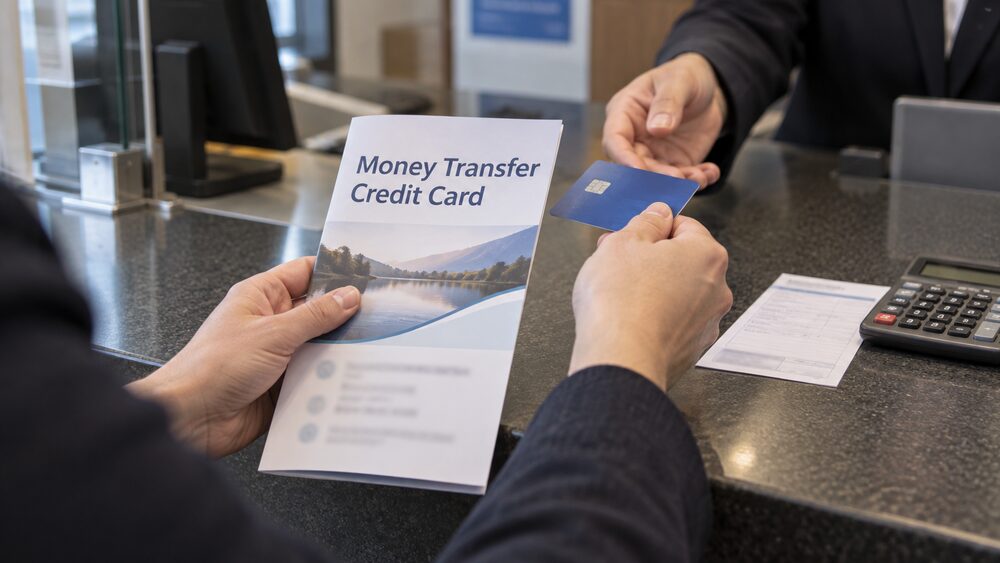
- Money transfer cards move cash from the card into a current account, usually for a fee of around 4%2.
- Rewards, cashback and air mile cards pay something back on spending, and some charge an annual fee.
- Credit-builder cards offer small limits to people with a poor or thin credit history.
- Travel cards are designed for use abroad, with reduced or no foreign transaction fees.
There are also hybrid products. Dual credit cards combine the advantages of balance transfer and purchase cards in a single card7. And the market itself is broader than the big banks: card issuers include banks and building societies, non-bank specialists, and lenders focused on particular groups such as borrowers with poor credit histories8.
The type matters more than the brand. A card designed for balance transfers may charge full interest on new purchases, and a rewards card may charge fees that outweigh what it pays back for someone who does not spend much. The sections below set out what each type does, what it costs and who it tends to suit.
Balance transfer cards: moving debt to a 0% or lower rate
A balance transfer card is taken out to move debt that is already on another credit card. Balance transfer cards typically offer a 0% interest rate for a set period when you move debt onto them from your existing card or cards7. The effect is to freeze the interest for a set period, giving you time to clear the debt without worrying about interest piling up9.
The point of the exercise is speed and cost. Moving the debt to a card with low or 0% interest could help you pay off the debt faster, because every pound repaid reduces the balance rather than being eaten by interest3. Many balance transfer deals offer 0% interest on the amount you move10. The longest 0% balance transfer deals currently on the market run to 38 months2, and other analysis of the market puts the longest interest-free deals at up to 34 months11.
Two limits shape whether this works for a particular person. First, low or 0% interest credit cards are hard to get without a good credit rating3, so this type is generally for people with an established, healthy credit record. Second, you can only transfer a balance that is within the credit limit of the new card7, so a large debt may not fit.
A balance transfer moves the debt, not the habit. If the old card is then run back up, the total debt has doubled rather than moved. Debt charities warn that consolidation of this kind only helps if the underlying borrowing is brought under control, and free debt advice is available from StepChange and other charities before anyone commits to moving debt around12.
The full guide to balance transfer credit cards covers the process in detail, and balance transfer vs money transfer compares the two ways of moving debt.
Balance transfer fees, and what can be moved
The transfer itself usually costs money. Most credit card providers charge 2% to 3% of the amount you are transferring as a one-off fee3. Citizens Advice puts the typical handling fee at around 2% of the balance10, and official guidance from nidirect in Northern Ireland confirms that some credit card companies charge a balance transfer fee to take over your unpaid debt, either as a flat fee or as a percentage of the amount transferred13. Debt advice guidance adds that most companies charge an initial percentage of the debt to make the transfer14.
Not every deal charges. Many credit card companies offer 0% transfer fees as a way to encourage applications12, though these no-fee deals are typically shorter than the longest offers. When comparing deals, the trade-off is usually between a longer 0% period with a fee and a shorter period without one.
| Cost element | What it typically is |
|---|---|
| Balance transfer fee | 2% to 3% of the amount moved, as a one-off charge3 |
| No-fee deals | Offered by many companies, usually with shorter 0% periods12 |
| Interest after the offer | The card's standard balance transfer rate14 |
What can be moved is limited in three ways. The transfer must fit within the credit limit of the new card7. Providers generally will not accept a transfer from another of their own cards, since the purpose is to win debt from rivals. And a balance transfer moves card debt only: to move money into a bank account as cash, a money transfer card is needed, which typically charges around 4%2.
To make a transfer, contact the new provider once the account is open. This can usually be done online via the provider's website or app, or through its customer helpline7. The dedicated page on balance transfer fees explains how the fee is charged and added to the balance.
0% purchase cards: up to 26 months interest-free on spending
A 0% purchase card charges no interest on new spending for a promotional period after the account is opened. The best 0% purchase credit cards currently let you borrow interest free for up to 26 months, although you will need a good credit rating to get the longest deals15. Which?'s September 2026 guide to the market gives the same figure: the longest deals on the market currently offer 26 months interest free2. An earlier guide, from February 2026, put the best interest-free cards at up to 25 months16, which shows how these offers move as providers compete.
This type suits a planned, one-off cost: a home improvement project, an essential appliance, a car repair. It does not suit ongoing spending, because anything still owed when the promotional period ends starts attracting the card's standard rate. Most 0% interest deals only last for a number of months14, and the Financial Conduct Authority's research found that consumers often do not know the APR, credit limit, or in some cases the length of the 0% promotional period they will get before applying8.
Two rules make or break a 0% purchase card. First, the minimum repayment still applies each month, typically around 3% of the balance due or £5, whichever is higher5. Second, most credit cards offer an interest-free period on what you have bought if you pay off your bill in full17, so a cardholder who clears the balance every month gets interest-free borrowing anyway, without needing a promotional offer at all.
For context on cost: purchase cards tend to offer a 0% interest rate for a promotional period, which may last between 3 and 20 months17. A 0% purchase card avoids interest entirely during its offer, which is why the length of the offer and the discipline of the repayment plan matter more than anything else about the card. The page on 0% purchase credit cards goes deeper, and when a 0% offer ends covers what rate you move to.
Rewards and cashback cards: points, cashback and annual fees
Rewards and cashback cards pay something back when you spend on them: points, air miles, or a percentage of the spending returned as cash. Which? compared the fees and interest rates of 137 cards in its analysis of the air mile card market in September 202618, which gives a sense of how crowded this part of the market is.
The cost structure is different from the other types. Some cards charge a fee each year for use of the card, and the fee is added to the amount due5. Some providers charge an annual fee6. Premium cards, often carrying travel and insurance perks, are the most likely to charge one. The calculation for a cardholder is whether the rewards earned on their normal spending exceed the annual fee, and for many spending patterns they will not.
Rewards are usually earned on purchases only. Using the card for anything else is charged differently: a card can have a separate purchase rate, balance transfer rate and cash transaction rate, so taking money out at a cash machine or getting cashback at a till is charged at the cash rate, not the purchase rate19.
Spending abroad is where rewards cards often lose their shine. Most credit cards add a foreign transaction fee of around 3% on non-sterling purchases and cash withdrawals2. You will typically pay up to 2.99% each time you use a credit card abroad, and spending just £5 with a card that charges fees could set you back £1.15, an additional 23%20. A card that earns rewards on spending but charges a foreign transaction fee can cost more abroad than a plain card with no fee. The comparison of cashback vs points reward cards and the guide to rewards and cashback credit cards set out the differences, and using a credit card abroad covers travel use in full.
Credit-builder cards: lower limits of around £100 to £200
Credit-builder cards are designed for people with a poor credit history or no credit history at all. They tend to have a "low and grow" approach, whereby your initial credit limit is very low, say £100 to £200, but increases as you prove you can manage it responsibly2. StepChange describes the same structure from the debt angle: cards for people with a bad credit history tend to have a low limit of around £200 and often have a high interest rate21.
The trade-off is clear. In exchange for accepting a borrower other lenders would refuse, the card charges a high rate and gives a small limit. Used carefully, that is the point: the card exists to generate a record of on-time payments, not to provide cheap borrowing. StepChange's guidance for people with poor credit scores notes that if you cannot pay in full, you must at least make the minimum payments21, because missed payments on a card whose purpose is to build a credit file do the exact opposite.
The catch sits in the application process itself. Any failed application reduces your credit rating, which StepChange calls the "rejection spiral"21: apply for cards aimed at people with better histories, get refused, and the refusal itself makes the next application harder. Cards in this category are also where lenders focused on sub-prime borrowers operate8, so the market is real, but the terms are the least generous of any card type. The guide to credit-builder credit cards covers the category in full.
Fees and charges that apply across card types
Whatever type of card you hold, the same family of charges applies. The FCA's description of the UK card market lists the fees that can include annual fees, balance transfer fees, default fees, fees for cash withdrawals and foreign transaction fees22. Citizens Advice summarises the practical version: you will usually be charged for going over your credit limit, for using the card abroad and for late payments5.
| Charge | What it typically costs |
|---|---|
| Balance transfer fee | 2% to 3% of the amount moved3 |
| Cash withdrawal fee | around 2% of the amount withdrawn23, or around 3% with a £3 minimum20 |
| Foreign transaction fee | around 3% on most cards2, up to 2.99% per use20 |
| Going over the credit limit | the provider may charge a fee6 |
| Late payment | a default fee22 |
| Annual fee | charged by some cards, added to the amount due5 |
Cash is the most expensive thing to put on any credit card. You may be charged a cash handling fee of around 2% of the amount you withdraw23, and you can also expect a fee of around 3%, with a minimum of £3, when you take money out of an ATM with a credit card20. Interest is charged on cash withdrawals straight away20, with no interest-free period, and withdrawals attract a higher APR and are recorded on your credit report2. Abroad, a foreign transaction fee may be charged on top of the usual cash advance fee23.
The amount of interest varies between providers, so the same balance can cost very different amounts on different cards6. The pages on credit card fees and charges, how interest is charged and withdrawing cash on a credit card cover each of these in detail.
Who can get which card: credit score and income
Providers do not have to give you a credit card. Your application may be refused if your credit score is low or you are not on the electoral roll, among other reasons5. Where the refusals bite hardest is at the top of the market: the longest 0% purchase and balance transfer deals are reserved for people with good credit ratings2.
The market is structured around this. The FCA's research identified three broad business models: high-street banks targeting upper and middle-prime consumers, direct-sales issuers targeting all consumer groups, and issuers targeting sub-prime borrowers8. In practice, that means the main types map onto credit histories:
- Good credit history: the longest 0% purchase and balance transfer deals, and most rewards and premium cards.
- Average or thin history: shorter 0% offers, standard-rate cards, and cards from finance companies and larger supermarket and store chains, which are among the places you can get a credit card6.
- Poor or no history: credit-builder cards with limits of around £100 to £2002.
Income matters alongside the score, because affordability is what the provider is assessing. The FCA found that consumers do not know what APR, credit limit, or in some cases the length of the 0% promotional period they will get before applying8, so the deal advertised is the deal the best-qualified applicants get, not necessarily the deal offered. The guides to applying for a credit card and credit scores and credit reports cover the process, and credit card limits explains how the limit is set.
Section 75 protection on purchases over £100 and up to £30,000
Every credit card purchase carries a legal protection that no debit card has. Section 75 of the Consumer Credit Act provides additional protection for credit card purchases costing between £100 and £30,0004. If you paid for what turned out to be bogus goods or services by credit card, and the cost was more than £100 and less than £30,000, the card provider is jointly liable with the seller24. The protection applies even if you only paid for a small part of the cost on the card25.
The limits matter in both directions. A £90 purchase has no Section 75 protection; a purchase of £30,000 or more has none either. The threshold is explained in full on the £100 to £30,000 threshold page.
Where the protection stops:
- It does not apply to charge cards or debit cards26, and Section 75 does not cover goods or services bought with a debit card, charge card or prepaid card27.
- Additional cardholders can lose out: unless the primary cardholder also benefits from the purchase, a family holiday for example, you lose Section 75 protection28.
- Debit cards offer chargeback protection on all purchases, but not Section 7529. Chargeback exists for both credit and debit card purchases30, applies to purchases of any value, but is not enshrined in law and each scheme, run by Visa, Mastercard and Amex, has its own rules31.
This protection is the strongest argument for putting a significant single purchase, a holiday, furniture, a used car, on a credit card rather than another payment method. The full guides are at Section 75, chargeback and Section 75 or chargeback.
Missed payments and repeated applications stay on your credit record
Two behaviours damage a credit file regardless of card type, and both are easy to trigger by accident.
The first is missed payments. The missed payments will be recorded on your credit file, and after three or four missed payments the creditor will soon think about sending a default notice if the debt is something like a credit card, and may consider other recovery steps32. On a promotional card this can be doubly costly: missing a payment during a 0% period can lose the offer itself, as well as adding a late fee.
The second is applications. Applying for too many cards or regularly switching cards can affect your credit rating5. Each application leaves a mark, and any failed application reduces your credit rating, the "rejection spiral"21. Someone who applies for several long 0% deals in quick succession, is refused, and applies again can do more damage in a fortnight than a year of careful repayment repairs.
If payments have already been missed and the debt is unmanageable, free help exists: StepChange, Citizens Advice and other charities provide free debt advice, and the help with credit card debt page sets out the options, with separate pages for debt in Scotland and debt in Northern Ireland. The page on how credit cards affect your credit file covers the record side in detail.
Sources34 cited
- Credit card debts a burden, StepChange, 2026-07-29 stepchange.org
- Should I get a credit card?, Which?, 2026-09-18 which.co.uk
- Paying off credit card debt, StepChange, 2026-09-25 stepchange.org
- Consumer Credit Act, Which?, 2025-06-18 which.co.uk
- Choosing and applying for a credit card, Citizens Advice, 2026-09-25 citizensadvice.org.uk
- Plastic cards, Citizens Advice, 2026-09-25 citizensadvice.org.uk
- Switching credit cards, Experian, 2026 experian.co.uk
- Credit card market study, FCA, 2015 fca.org.uk
- Credit card repayment calculator, Which?, 2026-05-11 which.co.uk
- The costs and charges of credit cards, Citizens Advice, 2026-09-25 citizensadvice.org.uk
- 10 tips on paying off your debts, Which?, 2026-04-06 which.co.uk
- Free debt consolidation, StepChange, 2026-09-25 stepchange.org
- Credit cards and debt, nidirect, 2025-11-06 nidirect.gov.uk
- Debt consolidation, Business Debt Line, 2026-09-26 businessdebtline.org
- Personal loans explained, Which?, 2026-09-18 which.co.uk
- How to pay for home improvements in 2026, Which?, 2026-02-14 which.co.uk
- Credit card interest explained, Which?, 2026-09-18 which.co.uk
- Best air mile credit cards, Which?, 2026-09-02 which.co.uk
- Credit card debt, StepChange, 2026-09-25 stepchange.org
- Spending abroad: the 4 dos and 5 don'ts, Which?, 2024-07-26 which.co.uk
- Credit cards for a bad credit score, StepChange, 2026-09-25 stepchange.org
- Key features of the credit card market, FCA, 2015 fca.org.uk
- The costs and charges of credit cards (Scotland), Citizens Advice, 2026-09-25 citizensadvice.org.uk
- Consumer advice: card protection, Anglesey Council, 2025-10 anglesey.gov.wales
- Buying a used car, Citizens Advice, 2026-09-25 citizensadvice.org.uk
- Consumer advice: Section 75, Anglesey Council, 2025-10 anglesey.gov.wales
- Cancellations, refunds: helping consumers understand their rights, FCA, 2020-10 fca.org.uk
- Are credit cards still the safest way to pay?, Which?, 2025-12-04 which.co.uk
- Shop safely online, MoneyHelper, 2026-09-25 moneyhelper.org.uk
- Chargeback rights and Section 75, UK Finance, 2026 ukfinance.org.uk
- Open Banking: sharing your financial data, Which?, 2026-03-06 which.co.uk
- Debt collection, StepChange, 2026-09-25 stepchange.org
- Credit card payment holidays StepChange, 2026-09-25
- Mortgage payment holidays StepChange, 2026-09-25



 MoneyHelperFree, impartial money and pensions guidance, set up by government
 StepChangeFree debt advice and solutions from a charity
 National DebtlineFree debt advice by phone, webchat and online
 Financial Ombudsman ServiceFree, independent help when a complaint about a firm is not put right
 Citizens AdviceFree advice on money, consumer and legal problems in England and Wales