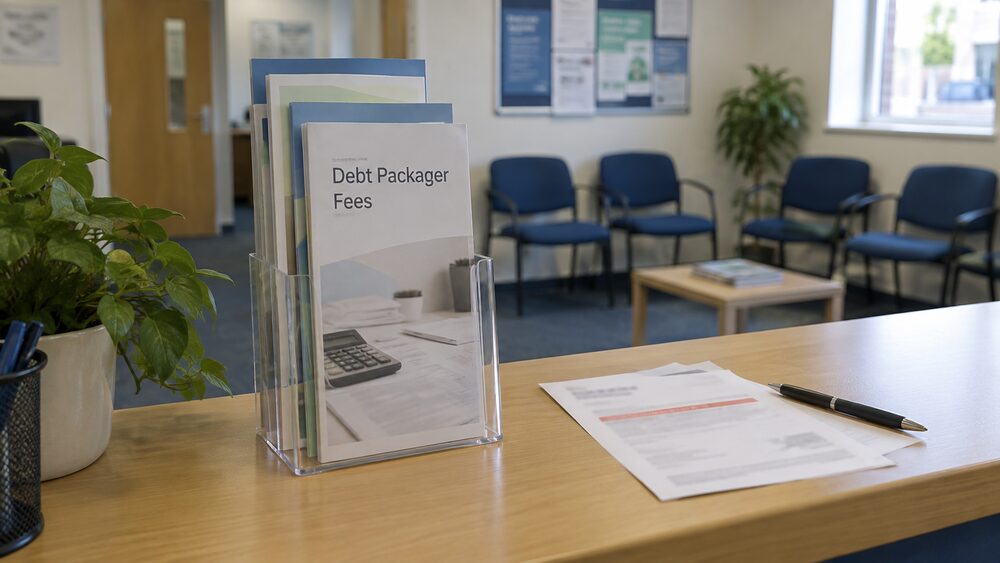
A debt packager is a business that collects your details and passes them to a firm that will handle your debt, and it used to be paid for that introduction. The Financial Conduct Authority introduced a ban on debt packagers receiving remuneration for referrals to IVA firms1. That single rule is the reason a "free debt help" website can be a commercial operation, and the reason the question of who pays for the advice matters more than the word "free" on the page.
A debt packager is a business that collects your details and passes them to a firm that will handle your debt, and it used to be paid for that introduction. The Financial Conduct Authority introduced a ban on debt packagers receiving remuneration for referrals to IVA firms1. That single rule is the reason a "free debt help" website can be a commercial operation, and the reason the question of who pays for the advice matters more than the word "free" on the page.
The ban sits alongside a second rule. The IVA Protocol 2025 requires firms to ensure any third-party referrers or introducers are FCA authorised for debt counselling and, if they are not, to direct the consumer to someone who is2. So a referral can still happen, but the person making it has to meet an authorisation test, and it cannot be paid for in the way it once was.
If you are looking for debt help, the practical question is not whether a site is a packager but who is paying it and what it is being paid to do. Free advice services exist and do not charge you3. Some private companies say they give free debt advice, but they often charge money for their debt solutions3.
What debt packagers are and what they do
A debt packager sits between you and the firm that will actually run your debt solution. You give it your details, it works out roughly what you owe and to whom, and it passes you on. The firm on the other side might set up a debt management plan, propose an individual voluntary arrangement, or do something else.
Debt management plans themselves are managed by companies known as debt management plan operators or providers, who negotiate with your creditors and manage payments6. That is a different role from the packager's: the operator runs the plan, the packager finds the customer.
The wider machinery around debt is regulated. Debt collection is a regulated activity that takes place when a creditor has engaged an external company to recover payments that are past due7. A debt may be sold by the creditor to a debt purchase company, which will get in touch with the customer to try and set up a repayment plan8. Insolvency practitioners have duties to ensure creditors are treated fairly, repay as much as possible to creditors, help rescue businesses and jobs, help individuals find relief from problem debt, and help investigate fraud9.
Where a debt adviser is involved, the options put to creditors can include asking them to stop interest and charges, stop collection agencies recovering debt, accept token payments, or write off the debts10. A packager does not do that negotiating. It moves you to someone who does.
How debt packagers made their money: referral fees
The business model was an introduction fee. A packager gathered enquiries and was paid by the firm that took the customer on. The fee came from the firm, not from you directly, which is why the service could be advertised as free at the point of use.
That structure is not unique to debt. Credit broking complaints the Financial Ombudsman Service sees commonly involve being charged a fee for finding a loan, sometimes without getting a loan, fees not refunded when no loan was taken out or offered, and being misled or not correctly informed about the loan's terms or cost11. The same shape of complaint, a fee attached to an introduction, is what the debt packager ban addresses.
The reason a referral fee matters is that it can tilt the advice. If one outcome pays the referrer and another does not, the route that pays is the one with a commercial pull behind it. The FCA's own research found people held off seeking debt advice because they were embarrassed about seeking help, worried about their credit rating, lacked awareness of how serious their position was, and needed more explanation about debt advice12. Someone in that frame of mind is more likely to accept the first route offered.
The FCA ban on referral fees from IVA firms
The rule is specific: the FCA introduced a ban on debt packagers receiving remuneration for referrals to IVA firms1. It targets the payment, not the existence of packagers, and it targets referrals into individual voluntary arrangements rather than every debt solution.
The IVA Protocol 2025 adds the authorisation condition. Firms must ensure any third-party referrers or introducers are FCA authorised for debt counselling and, if they are not, direct the consumer to someone who is2. Read together, the two rules mean a referral into an IVA has to come from someone authorised to give debt counselling, and cannot be rewarded with a referral fee.
This is one of a series of interventions in consumer credit. The FCA banned interest charges on credit that customers had already paid off during interest-free loan periods1. In rent to own, the recommendation has been to include default fees in the total credit cap, as is in the high cost short term credit (payday loan) cap, to remove incentives13. The packager ban belongs to the same family: removing a payment that rewards one outcome over another.
What the ban means if you are looking for debt help
The ban changes who can be paid for sending you to an IVA firm. It does not change what an IVA is, and it does not make every route free.
An IVA applies to all your creditors once creditors who hold more than 75 per cent of your debts accept it14. While you have one, creditors should stop charging interest on your debts and stop chasing you to pay them6, and creditors stop contacting you once they have accepted payment through the insolvency practitioner15. You can propose an interlocking IVA with a partner by considering both your circumstances and debts and making a joint proposal to all creditors16. There are fee exceptions: if you have a significant windfall during the IVA and are able to pay back your debts in full, or if your IVA fails, your creditors may require you to contribute an amount to cover fees on top of your debts17.
An IVA is not the only route, and the alternatives have their own protections. A debt relief order means creditors must stop all collections activity, are not allowed to add interest and charges, and cannot take further action against you18. In Scotland, the Debt Arrangement Scheme can protect you from creditors making you bankrupt, or using court action against you to enforce your debts19.
If a provider closes, that does not cancel what you owe: if this happens to your provider, this won't cancel your debts20. Debt collection agencies are not bailiffs and have no special legal powers, with the same rights as the original creditor21. Solicitors must follow rules from the Financial Conduct Authority when dealing with debts regulated by the Consumer Credit Act22.
Who pays for debt advice if packagers cannot take referral fees
Free advice is funded in different ways depending on the route and the nation. In Scotland, all fees for a debt payment programme under the Debt Arrangement Scheme are paid for by your creditors23, and a continuing money adviser may not charge the debtor a fee for the adviser's services where the debtor in the programme is an individual24.
Charities provide free help directly. Free IVA help is available from any registered debt charity such as Debt Advice Foundation5. Debt Justice cannot provide debt advice and recommends getting in touch with free services25. There are free advice services that can help3.
Fee-charging debt management companies still exist and are regulated. All fee charging debt management companies have to follow the rules and guidance given by the Financial Conduct Authority in the Consumer Credit sourcebook (CONC)26. Some debt management companies charge for debt management plans27. Where a fee is charged, the FCA's rules require that any fees they charge are fair28.
Are debt packagers regulated by the FCA?
Debt advice is regulated. The FCA regulates financial advice, including debt advice by fee-charging debt management companies and charities3. All debt management companies must be authorised for debt adjusting and debt counselling and adhere to FCA regulations4, and all debt management providers must apply to the FCA for authorisation20. The FCA does have rules in place for debt management plan providers30.
The debts themselves are mostly regulated too. Most types of personal debt, such as credit cards and loans, are regulated by the Financial Conduct Authority22. The FCA regulates credit products including credit and store cards, payday loans, personal loans, overdrafts, mortgages, hire purchase, and any other debts covered by the Consumer Credit Act3. Payday lenders must be authorised by the FCA, which publishes a list of licensed lenders on the FCA register31. Licensed moneylenders are regulated by the FCA and must follow their codes of practice32.
For a debt management plan in Northern Ireland, the provider must be licensed by the FCA6. Debt collection agencies in the UK are mostly regulated by the FCA, hold a valid consumer credit licence, and are members of trade bodies such as the Credit Services Association33.
| Who | What the FCA requires |
|---|---|
| Debt management companies | Authorised for debt adjusting and debt counselling, and adherence to FCA regulations4 |
| Fee-charging debt management companies | Follow CONC, the Consumer Credit sourcebook26 |
| Debt management plan providers | FCA rules apply; in Northern Ireland the provider must be FCA licensed30 |
| Payday lenders | Authorised by the FCA, listed on the FCA register31 |
| Licensed moneylenders | Regulated by the FCA, must follow their codes of practice32 |
Where to get help, and what to do if a referral went wrong
Free and impartial help is available. Your adviser will check if you can claim any benefits and help you apply, and can help with crisis grants and charity funds, budgeting, negotiating with creditors, and recommending formal debt solutions such as a debt management plan21. Debt advisers can help you contact the organisation you owe money to and help you agree a payment plan with the organisation34. Many creditors and debt collection agencies have special teams dedicated to vulnerable customers35.
If you think a firm misled you or charged you unfairly, the Financial Ombudsman Service can look at complaints about credit broking, including being charged a fee for finding a loan, fees not refunded when no loan was taken out or offered, and being misled or not correctly informed about the loan's terms or cost11. The Ombudsman's reach has limits: in some markets, policies may involve insurers, brokers, property managers and others whose firms may not be regulated by the FCA, meaning the Ombudsman cannot investigate the part they played36. That is why checking whether the firm you dealt with is FCA authorised matters before you sign anything.
If you are already in an IVA and want to understand what it commits you to, the starting point is what the arrangement does: creditors should stop charging interest and stop chasing you6, and the arrangement applies to all creditors once more than 75 per cent by value accept it14. If you are weighing up an IVA against other options, the debt guide sets out the alternatives, and how debt advice and debt management firms are regulated explains the rules that apply to the firms you deal with.
Sources36 cited
- Commentary: monthly insolvency statistics, June 2026 GOV.UK, 2026-07-17
- IVA Protocol 2025 GOV.UK, 2025-04-01
- Regulatory bodies StepChange, 2026-09-25
- Debt frequently asked questions Advice NI, 2026
- Where can I get free IVA help? Debt Advice Foundation, 2025-08-15
- Debt management plans nidirect, 2025-11-06
- Debt collection Financial Ombudsman Service, 2026-09-27
- Can debts be sold on? StepChange, 2026-09-25
- The insolvency framework R3, 2026-07-23
- Managing your mortgage and income Housing Rights, 2026
- Credit broking Financial Ombudsman Service, 2026-09-26
- Mixed messages StepChange, 2026-09-25
- FCA rent to own price cap StepChange, 2026-09-25
- Check what an IVA is Citizens Advice, 2026-09-25
- Individual voluntary arrangements (IVAs) nidirect, 2025-09-12
- Individual voluntary arrangements (IVA) Advice NI, 2026
- What is an IVA? Debt Advice Foundation, 2025-08-15
- Debt relief order StepChange, 2026-09-25
- Debt Arrangement Scheme National Debtline, 2026-09-25
- Closed debt management company StepChange, 2026-09-25
- Solicitors' letters about debt StepChange, 2026-09-25
- Debt and mental health Business Debtline, 2026-09-26
- Debt Arrangement Scheme StepChange, 2026-09-25
- The Debt Arrangement Scheme (Scotland) Amendment Regulations 2019 legislation.gov.uk, 2026
- Where to go for debt advice Debt Justice, 2025-10-23
- Debt management plans (England and Wales) Business Debtline, 2026-09-26
- Setting up a debt management plan StepChange, 2026-09-25
- Check if a financial service has followed the rules Citizens Advice, 2026-09-25
- Emergency funding StepChange, 2026-09-25
- Debt Arrangement Scheme or DMP StepChange, 2026-09-25
- Payday loans nidirect, 2026-02-25
- Dealing with loan sharks nidirect, 2026-09-23
- Debt passed to a collection agency StepChange, 2026-09-25
- Debt advice Shelter Scotland, 2026-01-16
- Vulnerability and creditor treatment StepChange, 2026-09-25
- Multiple occupancy buildings insurance Financial Ombudsman Service, 2026-09-26











 Financial Ombudsman ServiceFree, independent help when a complaint about a firm is not put right
 FSCSProtects your money if a bank, insurer or investment firm fails
 FCA Warning ListCheck whether a firm is authorised before you deal with it
 MoneyHelperFree, impartial money and pensions guidance, set up by government
 Citizens AdviceFree advice on money, consumer and legal problems in England and Wales