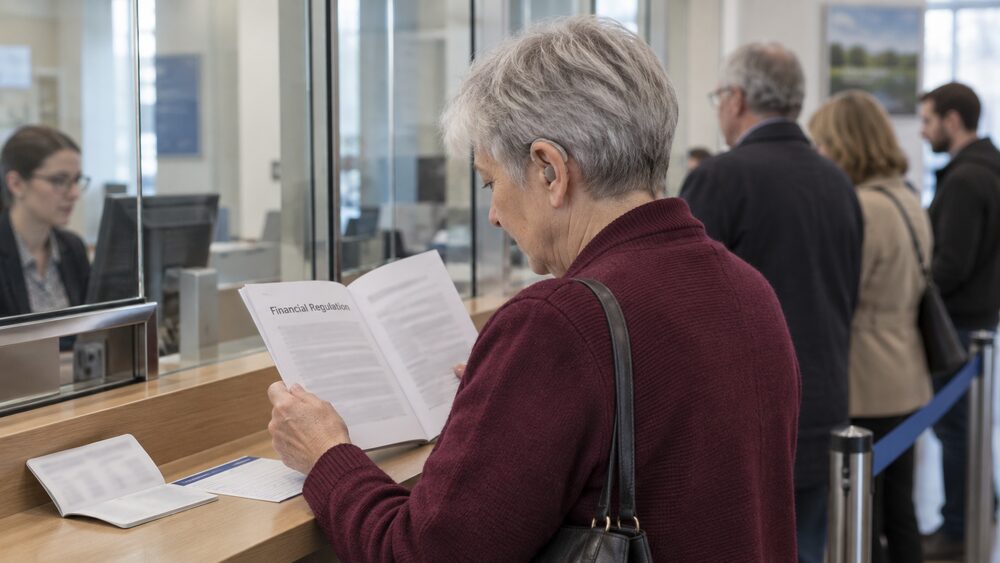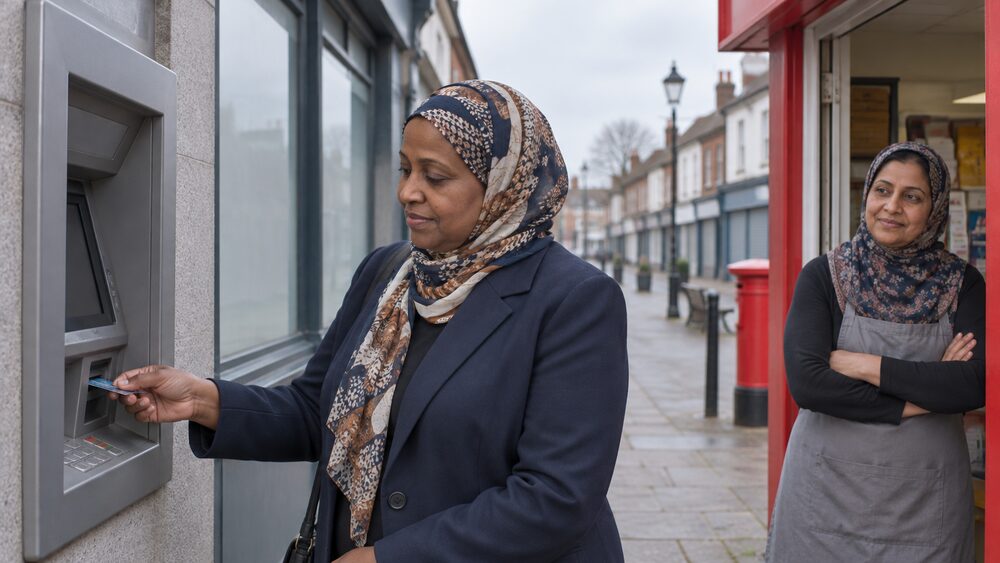
If your local bank branch, cash machine or Post Office counter has closed or changed, you can ask for a review of whether your area still has enough cash access. This is called a cash access request, and it goes to LINK, the body that runs the UK's cash machine network. Anyone can make one if they think it is hard to get cash locally, whether they are an individual, a group or an organisation1.
If your local bank branch, cash machine or Post Office counter has closed or changed, you can ask for a review of whether your area still has enough cash access. This is called a cash access request, and it goes to LINK, the body that runs the UK's cash machine network. Anyone can make one if they think it is hard to get cash locally, whether they are an individual, a group or an organisation1.
The request can lead to a cash access assessment. The 14 largest banks and building societies in the UK must conduct these assessments in response to trigger events, which include closures and material changes to cash services as well as requests from the public2. An assessment can result in new cash machines or a banking hub3.
You do not need to prove you live in the area, and you do not need to be a customer of the bank that is closing. What matters is that you have a sufficient interest in cash access provision there. The sections below set out who can ask, how to do it, what triggers an assessment, how the decision is made, and when a request will not be acted on.
What a cash access request does
A cash access request asks LINK to look at whether your community has enough ways to get cash. LINK runs access to cash reviews when banks plan closures or if local residents ask for a review, and the outcome can be new ATMs or banking hubs3. LINK is a designated cash access coordination body, which means it has a formal role in the system rather than being just a voluntary scheme6.
The policy behind this sits with the Payment Systems Regulator, whose overall aim is to support cash access, including widespread geographic access, which meets the needs of those UK consumers who need or want to use cash as a payment method7. The regulator has also researched how use of cash may evolve in future, the network of cash outlets, alternatives to ATMs for accessing cash, and barriers to using these alternatives8.
For a consumer, the practical effect is that a request is not a complaint and not a petition. It is a formal trigger that can require the biggest banks to examine your area and, if there are gaps, to fund services to fill them. The rules apply across the UK5.
Who can ask: anyone with a sufficient interest in the area
Anyone can make a cash access request if they think it is hard to get cash in their local area. You can ask if you are an individual, a group or an organisation1. That means a charity, a shop, a residents' association or a parish council can all ask, not just a private individual.
The test the rules use is whether the person requesting has a sufficient interest in cash access provision in the area. A request from someone without that interest is one of the grounds on which LINK will not act4. In practice this is a low bar: it is about a connection to the area and its cash needs, not about paperwork.
You do not need to prove you live in the area. There is no residency test in the cash access rules, and no requirement to produce a bill or a council tax statement. The evidence requirements that apply to benefits claims, such as a recent gas or electricity bill or a TV licence, do not apply here9. If you are asking on behalf of a community group, you can say so in the request.
The regulator's own consultations on cash access were written for ATM operators, consumer groups and merchants as well as anyone with an interest in the provision of access to cash, which shows the breadth of who is expected to take part10.
How to request a review through LINK
The route is straightforward. You can ask LINK to review your community's access to cash on its Request Access to Cash Review webpage1. The same page is the route the banks themselves point customers to: you can request an access to cash assessment in your area via LINK's website11.
The process in order:
- Go to LINK's Request Access to Cash Review page and set out where the area is and what has changed or is missing1.
- LINK checks whether the request meets the rules, including whether you have a sufficient interest and whether the same location has already been reviewed in the past year4.
- If it qualifies, an assessment is carried out. LINK will carry out assessments when a cash service closes or changes significantly, when a request is made, or when a review is requested within 28 days of a decision12.
- The assessment looks at the area and decides whether provision is adequate. Designated firms are held jointly accountable for providing cash access services required following an assessment5.
What triggers an assessment: closures, lost counters and new charges
An assessment will usually be carried out where a cash access service in your local area closes or changes materially13. The formal triggers are closures of, or material reductions or changes to, the provision of cash access services at an existing facility, including facilities of non-designated entities, and receipt of a cash access request5.
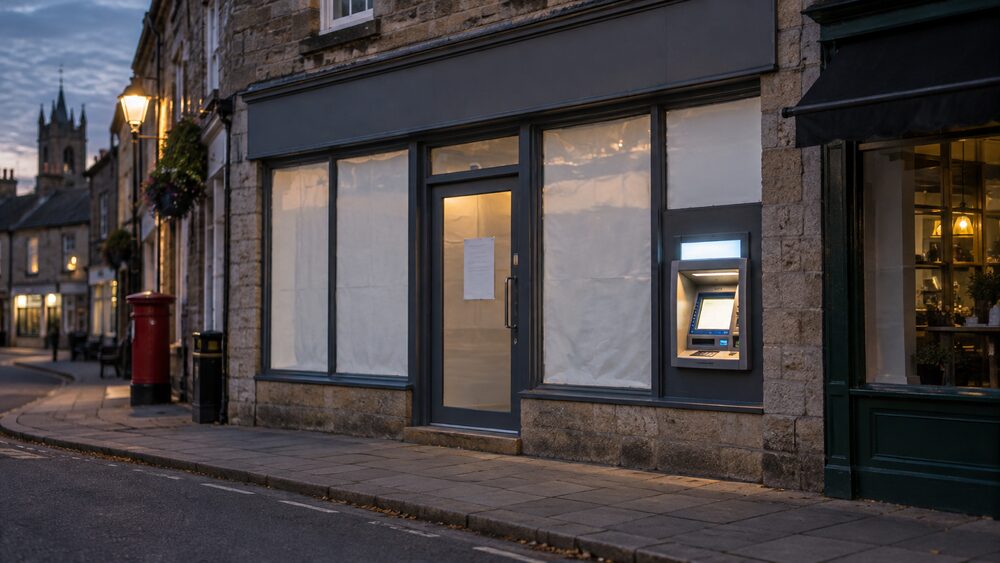
Changes that count include a branch, cash machine or Post Office closing or changing its opening hours, and cash access requests from local residents, businesses and representatives14. The removal of a counter is treated as a material change to a cash access service which should trigger an assessment5. That matters because a branch can stay open while losing the counter service that made it useful.
Some things do not trigger an assessment. The closure of an ATM, including a deposit ATM, for repair, enhancement or replacement at the same location will not trigger one, provided the closure does not last more than 6 months and the same services will remain available via the repaired, enhanced or replaced machine5. Services that are expected to close, cash services for personal current accounts that are not free, cashback with a purchase, and additional services resulting from another assessment on the same trigger are also excluded5.
How the assessment decides whether your area has enough cash access
The assessment looks at a range of factors, including how long it takes and how much it costs for people to travel to get cash14. The FCA's rules say reviews look at where people live and businesses are based, travel time and cost to get cash, ease of taking out and paying in cash after closures or changes, and what services are needed where there are significant gaps14.
Assisted cash services are part of what is measured. The FCA's scheme rules require information to be published about each cash access facility, including the type of facility, its address or location, the specified cash access services available, opening hours, accessibility information including wheelchair access, hearing loop and audio assistance, assisted cash access services, a reasonable mix of coins and banknotes, balance enquiry availability, PIN management services, and whether services for relevant personal current accounts are free of charge and if not the charges16.
The regulator has also looked at how many people keep access. Its analysis showed that, over the COVID-19 period of April to June 2020, 99% of the population maintained their pre-COVID-19 access within a 3-mile and 5-mile radius17. That gives a sense of the scale the assessment works at: it is about whether a whole area retains reasonable provision, not whether one particular machine is convenient.
When a request will not be acted on
LINK will not act on a request in several situations. These are where there are multiple ATMs on the same site and one is removed; where the decision to close a cash service is reversed; where LINK has already conducted a Cash Access Review of the same location within the previous year; where the person requesting does not have sufficient interest in cash access provision in the area; and where the person requesting withdraws their request4.
The FCA's rules add that no assessment is required where an assessment is ongoing or has been completed within the preceding 12 months for substantially the same local area and issues, where a requestor withdraws in writing, where a closure is no longer happening, or where an ATM closes but one or more ATMs offering the same services remain at the same site5.
There is no separate appeal stage if your area is judged to have enough cash access. The rules provide for a fresh request, but the one-year bar on reviewing the same location means a repeat will usually have to wait. If your complaint is about how a bank handled a closure rather than about the assessment itself, the Financial Ombudsman Service can look at complaints about banking and payments, including frozen accounts and blocked payments18. The ombudsman's own evidence to the government's access to banking review set out its role in these cases19.
Reviews will not look at whether local businesses accept cash as payment, because the FCA's powers do not extend to cash acceptance14. A shop's decision to go card-only is outside the assessment, even though it affects how useful cash is locally.
Where to get free help
If you are struggling with money more broadly, free and impartial help is available. MoneyHelper offers guidance on everyday money questions, and debt advice charities can help if closures have left you managing bills without a local branch. The Financial Ombudsman Service is free to use if you have a complaint about a bank or payment service that has not been resolved18.
For anyone acting for someone else, a deputy may be able to offer a card for a donor's account so withdrawals can be made at a cash machine20. That is separate from the cash access rules but relevant if the person you help cannot get to a branch.
Sources20 cited
- Request access to cash LINK, 2026
- Access to banking services and cash House of Commons Library, 2026
- Access to banking services and cash House of Commons Library, 2026
- LINK cash access assessments Danske Bank, 2026
- PS24/8: Access to cash Financial Conduct Authority, July 2024
- Access to cash Payment Systems Regulator, 2026
- First annual review of Specific Direction 8 Payment Systems Regulator, 2026
- CP19/6 Call for views: the PSR's research into cash access, use and acceptance Payment Systems Regulator, 2026
- Evidence requirements Entitledto, 26 September 2026
- CP19/6 responses and roundtable summary Payment Systems Regulator, 2026
- Access to cash Santander, 2026
- Ways to bank Danske Bank, 2026
- Banking hub Bank of Ireland UK, 2026
- Access to cash Financial Conduct Authority, 18 September 2024
- PS24/8: Access to cash Financial Conduct Authority, 24 July 2024
- ATCS 10: cash access facilities FCA Handbook, 18 September 2024
- Access to cash during COVID-19: identifying and managing temporary gaps in provision Payment Systems Regulator, 2026
- Frozen accounts and blocked payments Financial Ombudsman Service, 2026
- Our response to HMT's call for evidence for the Access to Banking Review Financial Ombudsman Service, 2026
- Banking hubs Danske Bank, 2026

 Financial Ombudsman ServiceFree, independent help when a complaint about a firm is not put right
 FSCSProtects your money if a bank, insurer or investment firm fails
 FCA Warning ListCheck whether a firm is authorised before you deal with it
 MoneyHelperFree, impartial money and pensions guidance, set up by government
 Citizens AdviceFree advice on money, consumer and legal problems in England and Wales