
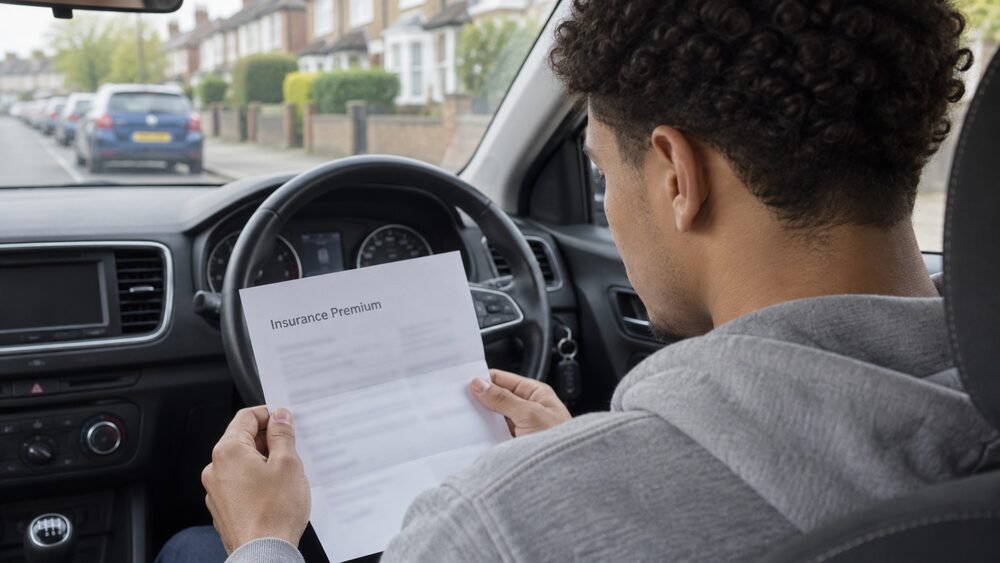
Car insurance is a legal requirement, and the details you give your insurer shape the cover you get and what you pay for it. Occupation is one of the factors insurers use to work out a premium, alongside the type of vehicle, the area you live in, where the car is parked, whether it is used for work, your age and driving experience, your motoring convictions and your accident record1. A change of job can therefore change what your policy should cost, and it can change how the car is used.
Car insurance is a legal requirement, and the details you give your insurer shape the cover you get and what you pay for it. Occupation is one of the factors insurers use to work out a premium, alongside the type of vehicle, the area you live in, where the car is parked, whether it is used for work, your age and driving experience, your motoring convictions and your accident record1. A change of job can therefore change what your policy should cost, and it can change how the car is used.
The short answer is that a job change is the kind of change an insurer expects to be told about. If accurate information is not provided, a subsequent claim may be refused1. An insurer can also change or end an insurance contract if your circumstances change during the policy in a way that significantly alters the risk it is covering2. Telling your insurer is not the same as your premium automatically rising: it depends on whether the new job, or the new way you use the car, looks more or less risky to that insurer.
This page sets out what a job change means for a car policy, what else you must report mid-policy, what happens when details are wrong, how cancellation and refunds work, and where to complain.
What affects your premium, and where a job change fits in
Insurers price car cover on a list of factors, and occupation sits on that list next to the type of vehicle, the area you live in, where the car is parked, whether the car is used for work, garage parking, drivers under 25, age and driving experience, disabilities, motoring convictions and accident record1. A job change can move you on two of those at once: the occupation itself, and the use of the car if the new role means a different commute or driving for work.
Premiums can also be reduced by things within your control, including parking in a garage or driveway, fitting Thatcham-approved security devices, low annual mileage, driving a cheap-to-repair popular model, advanced driving training such as Pass Plus, paying annually, and a no claims discount5. A job change that shortens your commute or removes the need to drive for work can therefore work in your favour, but only if the insurer knows about it.
Some policies adjust the premium during the term rather than at renewal. With telematics or pay-as-you-drive cover, insurers assess driving performance using the number of miles driven, the types of roads used, the time of day the vehicle is driven, and speed and braking patterns6. In some cases premiums are adjusted at set points during the policy to take account of recently observed driving behaviour, in others they stay the same throughout with non-monetary benefits, and in others they adjust only at renewal6. Which applies depends on the insurer.
A job change is not the only life event that touches insurance. Starting a new job, getting a pay rise or a company car, extra income from workplace or private pensions, interest on savings, or changes to work benefits like company healthcare can all affect your tax code7. Those are tax matters rather than insurance ones, but they show how often a change of job ripples through your finances.
Changes you tell your insurer about: mileage, parking and use of the car
Occupation is one entry on a longer list of things that can change mid-policy. The general rule from the Financial Ombudsman Service is that if something changes after the policy has started, the customer will not usually have to tell the insurer about it until renewal7. But that is a default, not a blanket rule, and anything that changes the risk the insurer is carrying can be treated differently.
The clearest examples are the ones that change how the car is used or where it sits. If you modify your car, your insurer needs to know, and not telling it could invalidate your insurance8. Many insurers will insure modified cars as long as you disclose the details of the changes made8. If your vehicle is stolen and later found, tell your insurance company and give them precise details of its whereabouts9.
Home insurance works on the same principle, and the same job change can touch it. If you rent out a room, many insurers will increase your premiums, and you must tell them or your insurance may be invalid3. If you have work done on your home, especially anything that may affect its security, such as scaffolding, tell your insurance provider10. And if you start working from home, that is a change worth checking, because it can affect both your home cover and how your car is used.
What can go wrong if your policy details are wrong
The consequence of inaccurate details is set out plainly: if you fail to provide accurate information, a subsequent claim may be refused1. The same warning appears across insurance types. Failing to provide accurate information could invalidate your policy and prevent you from making a claim11. On an income protection application, incorrect details could invalidate the policy and stop a claim being paid out12.
The Financial Ombudsman Service describes the insurer's powers in this area: an insurer can change or end an insurance contract if your circumstances change during the course of the policy which significantly alters the insured risk2. Where a customer has not told the insurer something, the ombudsman looks at what would have happened if they had. In one travel insurance example, if the insurer would have withdrawn cover entirely, it would usually be asked to pay what the holiday cancellation claim would have been worth if it had been told at the relevant time13.
There is a limit on how far back an insurer can reach. The insurer can only avoid later contracts if you misrepresented again at the later renewals and this would have made a difference to the insurer2. So a single lapse does not automatically void every policy you ever hold, but repeating it at renewal can.
The same principle runs through other financial products. Giving wrong information to a lender can lead to your affordability complaint being refused14. On benefits, you may have to repay money if you did not report a change straight away, gave wrong information, or were overpaid by mistake15. The pattern is consistent: the accuracy of what you tell a provider determines what it owes you.
Cancelling, refunds and paying monthly after a change
If a job change makes your current policy a poor fit, you can move. A policyholder can cancel their policy and set up a new one with a different insurer whenever they want, even if a claim is ongoing, but the claim will affect their no-claims bonus16. That last point matters: switching mid-claim does not make the claim disappear, and the no-claims position follows you.
There is a 14-day cooling-off period, but it is not free of charge. If you decide you no longer want your policy, even within the 14-day cooling-off period, your insurer may charge you a fee3. Outside that window, expect a cancellation charge and a refund calculated on the remaining term.
No-claims bonus is tied to completed years. A full year of no-claims bonus should not be awarded if the customer has not completed the whole year on the policy, for example a 12 month policy cancelled after 11 months16. So cancelling shortly before a policy year ends can cost you the year's discount.
Paying monthly is convenient but usually costs more. People are charged more for paying for things like insurance each month rather than all in one go for the year17. Paying monthly, rather than annually, pushes the average cost of motor insurance up by 10%4. There may also be credit checks when you sign a new agreement18. Most respondents, 53% of car owners and 79% of non-car owners, believe it is unfair to pay extra for monthly insurance payments18.
Complaints: over half of cases upheld against insurers
If an insurer handles a change or a claim badly, there is a route to challenge it. In over half of cases, insurers uphold complaints they receive, meaning they accept that they got something wrong20. The Financial Ombudsman Service publishes upheld rates by product. In the first quarter of 2026/27, 33% of buildings insurance complaints were upheld, 23% of business protection insurance complaints, and 21% of mobile phone insurance complaints21.
Where the ombudsman finds an insurer unfairly accepted liability for an accident, it can tell the insurer to change the way the claim was recorded so the customer's current premium can be recalculated, refund extra money paid, and may award compensation for distress or inconvenience for poor customer service16. On underinsurance, reducing the claim payment (known as applying average), voiding the policy, or adjusting the claim in other ways may not be considered fair if the insurer's questions or guidance were unclear22. Where a customer would have bought a different policy that would have covered their claim, the ombudsman would ask the insurer to pay the claim23.
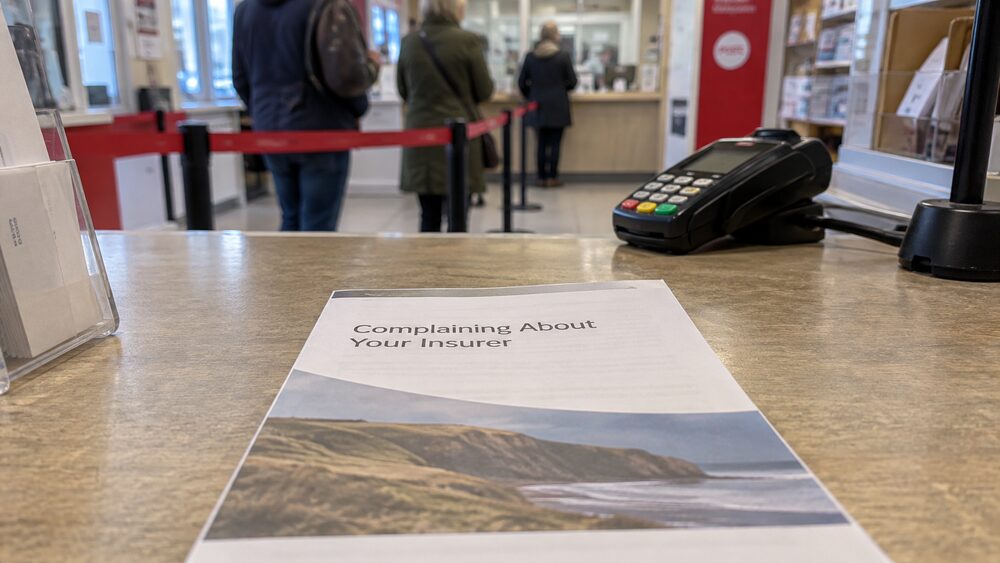
Complaining is free, and the ombudsman is the final step after the insurer's own complaints process. The complaints guide sets out how the process works and how long an insurer has to respond.
Where to get free help
Several organisations give free, impartial help without selling anything. MoneyHelper, the government-backed money guidance service, covers insurance and everyday money questions. The Financial Ombudsman Service handles complaints an insurer has not resolved. Debt advice charities such as StepChange give free help if insurance costs are part of a wider debt problem.
If a job change has affected your income, benefits may be affected too. Turn2us provides information on income-related benefits, tax credits, Council Tax Reduction, Carer's Allowance, Universal Credit and how your benefits will be affected if you start work or change your working hours24. If you are getting income-related Jobseeker's Allowance, you must tell Jobcentre Plus if your circumstances change25. Your working hours dropping from 30 hours a week or more to below 30 hours must be reported as soon as possible26.
Sources26 cited
- How much will it cost? British Insurance Brokers' Association, 2026-09-26
- Misrepresentation and non-disclosure Financial Ombudsman Service, 2026-09-26
- Car insurance add-ons, fees and charges Which?, 2026-01-22
- Poverty Premium 2026 University of Bristol Personal Finance Research Centre, 2026
- Shopping around for insurance Independent Age, 2026-09-26
- Pay-as-you-drive insurance Association of British Insurers, 2026-09-27
- Misrepresentation and non-disclosure: for businesses Financial Ombudsman Service, 2026-09-26
- Modified car insurance Which?, 2026-01-22
- Vehicle theft British Insurance Brokers' Association, 2026-09-26
- Maintaining your home Independent Age, 2026-09-26
- Home insurance National Flood Forum, 2026-09-26
- Income protection insurance Nationwide, 2026
- Change in health Financial Ombudsman Service, 2026-09-26
- Irresponsible lending and affordability checks StepChange, 2026-09-25
- Qualifying basic State Pension nidirect, 2026-09-09
- Fault claims and no-claims bonuses Financial Ombudsman Service, 2026-09-16
- The poverty premium in 2026: payments Fair By Design, 2026-05-28
- The poverty premium in 2026: insurance Fair By Design, 2026-05-28
- Bankruptcy and insurance StepChange, 2026-09-25
- How to claim on your travel insurance Which?, 2026-05-21
- Quarterly complaints data Q1 2026/27 Financial Ombudsman Service, 2026
- Underinsurance and home insurance complaints Financial Ombudsman Service, 2026-09-26
- Mis-sold travel insurance Financial Ombudsman Service, 2026-09-26
- Benefits calculator Epsom and Ewell Borough Council, 2026
- New Style Jobseeker's Allowance Mencap, 2026
- Change of circumstances Entitledto, 2026-09-26









 MoneyHelperFree, impartial money and pensions guidance, set up by government
 Financial Ombudsman ServiceFree, independent help when a complaint about a firm is not put right
 FSCSProtects your money if a bank, insurer or investment firm fails
 Citizens AdviceFree advice on money, consumer and legal problems in England and Wales
 GOV.UKOfficial information on tax, benefits and government services