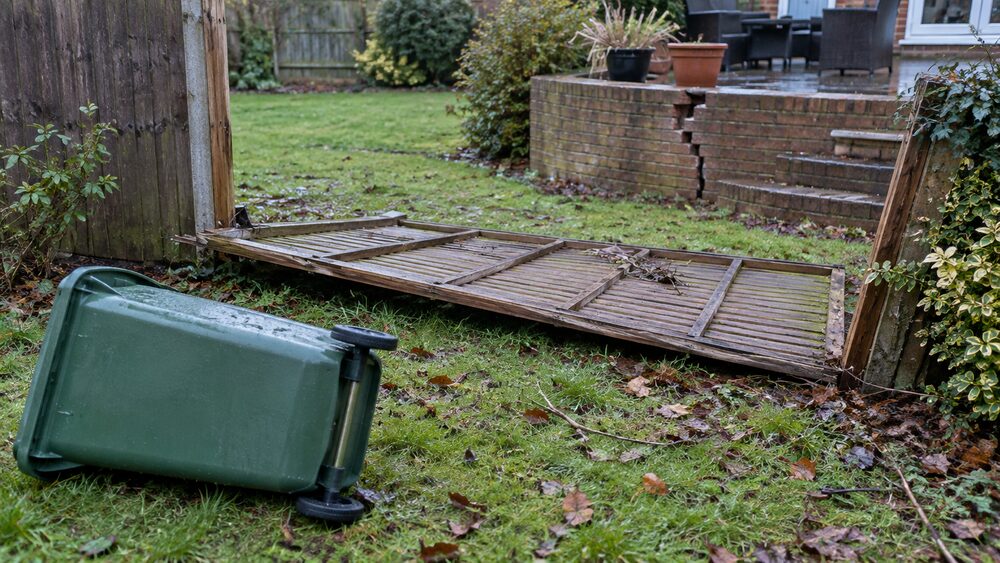
Non-negligent liability cover is the part of a home insurance policy that can respond when damage happens without anyone being at fault. It sits alongside the liability cover that is typically included in standard home insurance, and it matters most in the everyday disputes that follow a storm, a leak or a falling branch: a fence blown down, a neighbour's wall cracked, a garden wall damaged by a vehicle nobody can trace.
Non-negligent liability cover is the part of a home insurance policy that can respond when damage happens without anyone being at fault. It sits alongside the liability cover that is typically included in standard home insurance, and it matters most in the everyday disputes that follow a storm, a leak or a falling branch: a fence blown down, a neighbour's wall cracked, a garden wall damaged by a vehicle nobody can trace.
The phrase describes a gap rather than a single product. Standard home insurance is usually made up of two main parts: cover for the building itself and cover for the contents within1. Liability cover for injury or damage to other people or their property is typically included as standard, but it usually requires negligence, meaning someone failed to take reasonable care. Where nobody was negligent, a claim can fall between the two. Accidental damage cover, usually sold as an add-on, is the part of a policy most likely to respond to a sudden one-off event, but it excludes gradual deterioration, deliberate acts and defective workmanship2.
What follows sets out what standard cover includes, the sudden-event rule that decides most claims, how an insurer settles, when a mortgage lender requires buildings insurance, and what cover costs.
What standard home insurance covers: buildings and contents
Home insurance, sometimes called household insurance, is usually made up of two main parts: cover for the building itself and cover for the contents within1. Buildings cover deals with the structure, fixtures and fittings. Contents cover deals with the things you would take with you if you moved.
Several things that people assume are included are often sold separately. Personal possessions cover, comprehensive accidental damage cover and home emergency cover may not be included as standard6. Legal expenses cover is not the same as liability cover, which is typically included in standard home insurance6.
Where accidental damage is included, the scope varies. Hiscox includes accidental damage for buildings and contents as standard5. NFU Mutual includes some accidental damage cover as standard for glass and sanitary ware under buildings cover7. Nationwide's Essentials policy does not cover students' belongings or matching sets, meaning undamaged items in a suite or set if one part is damaged8.
The practical point is that two policies with the same headline price can differ sharply in what they will pay for. Checking whether accidental damage, personal possessions and home emergency cover are included, and at what limits, is part of comparing cover rather than price.
Sudden events only: wear and tear, groundwater and unoccupied homes
The dividing line in most disputes is whether the damage was sudden or gradual. Standard home insurance will not usually cover damage caused by wear and tear9. Damage caused by wear and tear or that happens slowly over time is not covered, including damp, condensation or rust10.
Accidental damage cover follows the same logic. Generally, accidental damage cover does not include damage caused by wear and tear, the gradual deterioration of something over time, wilful or deliberate acts, or defective workmanship2. One insurer's list of exclusions covers accidents that happen while the property is unoccupied, deliberate destruction or vandalism, general wear and tear, cosmetic damage such as scratches and dents, poor design or workmanship, damage from construction, alteration or repair, and mechanical or electrical faults or breakdowns11.
Other exclusions are specific to the peril. Groundwater flooding is often excluded9. Damage caused by pets, water entering the home, the home moving, settling or shrinking, and a paid maintenance worker or builder is excluded from one insurer's accidental damage cover12. Contents accidental damage cover commonly excludes damage to contents while away from the home or garden unless contents away from home cover has been bought, damage when the home is empty, damage to money, damage to clocks from over-winding, and damage to items normally kept in the garden13.
How an insurer settles a claim: repair, replace or pay cash
When a claim is accepted, the insurer has three main routes: repairing the damage, replacing something lost or damaged, or paying cash to cover the cost of repair or replacement16. Policy wording often reserves the choice to the insurer. One example term reads:
"We will decide whether to repair, replace, pay cash or reinstate the damaged part of the building."
That choice matters to the payout. If the customer insists on cash when the insurer is willing to repair or replace, the insurer will only pay the amount it would cost them, and because insurers get discounts from suppliers and contractors, that is usually less than market rates16. Where a cash settlement is offered for a gadget or phone, it is generally the cost of replacing the item with one of the same age and condition before the insured event, from a reputable source17.
If a claim is handled badly, the ombudsman can require remedies. Where a complaint is about a claim, it may ask the insurer to make necessary repairs, replace the item, offer a cash settlement, or compensate for distress or inconvenience17. Where liability was accepted unfairly, the ombudsman can tell the insurer to change the way the claim was recorded so the customer's current premium can be recalculated, refund extra money paid, and may award compensation for distress or inconvenience17.
When your mortgage lender requires buildings insurance
Home insurance is not a legal requirement2. It becomes effectively compulsory through the mortgage. Most mortgage lenders will require you to hold buildings insurance2. If you own your home, you will need buildings insurance, and it is usually a condition of your mortgage6. Mortgage lenders generally require it from the date of exchange3.
The timing catches first-time buyers out. Buildings insurance needs to be in place on the new home from the day contracts are exchanged, and most mortgage providers make this a condition of lending3. Lenders will require you to have arranged your home insurance and have it in place in time for contracts to be exchanged3. Unlike car insurance, it is not a legal requirement unless you have a mortgage lender, in which case it is usually an obligation of your mortgage contract18.
One related product is worth separating out. Mortgage indemnity insurance protects the lender, not you18. It is not the same as buildings insurance and does not cover your belongings or your liability to others.
What home insurance costs: an average of £383 a year
The average cost of a combined home insurance policy is £383 a year, according to Association of British Insurers figures for April to June 20262. That average hides wide regional and property-type variation.
| Average combined premium | Amount | Period |
|---|---|---|
| UK average | £383 a year | April to June 20262 |
| Wales | £258 | 1 January to 1 July 20262 |
| Northern Ireland | £519 | 1 January to 1 July 20262 |
| Semi-detached house | £266 | 1 January to 1 July 20262 |
| Detached bungalow | £288 | 1 January to 1 July 20262 |
The gap between Wales at £258 and Northern Ireland at £519 is £261, and both figures come from the same table2. Pricing reflects where you live, when your home was built, previous claims, and the value of your contents19. One insurer charges a £14.99 arrangement fee, included in the agreed price for home insurance20.
Underinsurance is the quiet risk behind a low premium. If the sum insured is below the true rebuild cost, a claim can be reduced. Reviewing buildings and contents cover at least once a year, perhaps at renewal, is the standard check5.
Why do long-standing customers pay more than new customers?
Rules protecting renewing customers from being charged more than if they were new do not stop your insurer offering you a cheaper price if you haggle2. In other words, the protection sets a ceiling, not a floor, and the price you are offered at renewal is not necessarily the price the insurer will accept.
The ombudsman has published a case study of a customer who noticed after six years that her premium had increased considerably from when she first bought the policy, and decided to shop around21. That pattern is common enough to be worth planning for: the renewal quote is a starting point, and asking the insurer to requote, or checking the market, is a normal part of the process.
Are fences, gates and garden furniture covered?
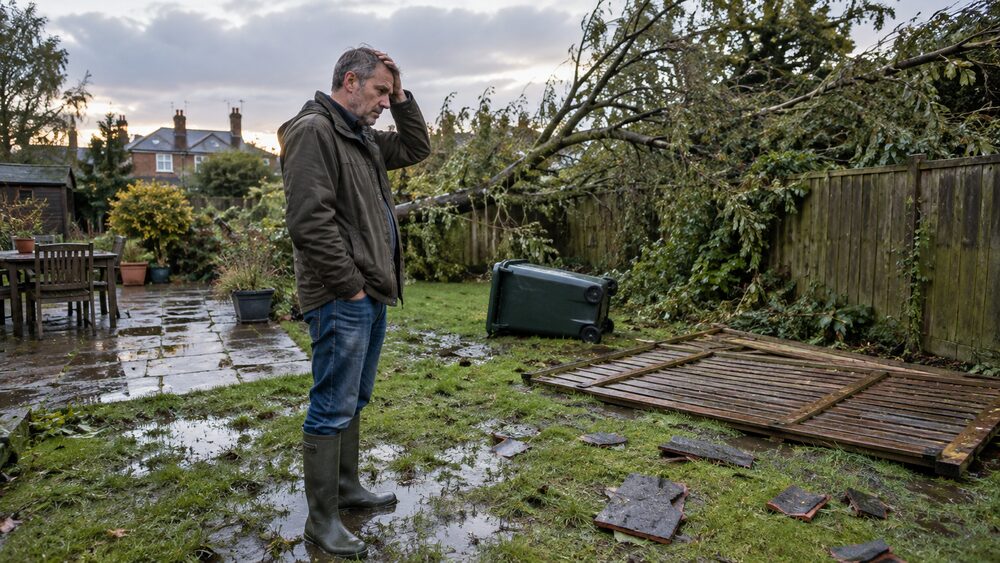
Cover for the things outside the walls varies more than almost anything else in a home policy. Some policies include cover for garden furniture, trees, hedges, lawns and fences, while others do not6. Storm damage is covered, but fences, gates and outbuildings are often excluded3. Many policies do not cover damage to other parts of the property, such as patios, paths and terraces, unless the main residence is also affected22.
This is where non-negligent liability questions most often arise. A fence blown down in a storm, a gate damaged by a delivery van that did not stop, or a garden wall cracked by a neighbour's tree are all cases where fault may be unclear or absent. The answer usually turns on whether the policy includes the item at all, and whether the cause was a sudden event rather than gradual deterioration.
Will my insurer pay for somewhere to stay if my home cannot be lived in?
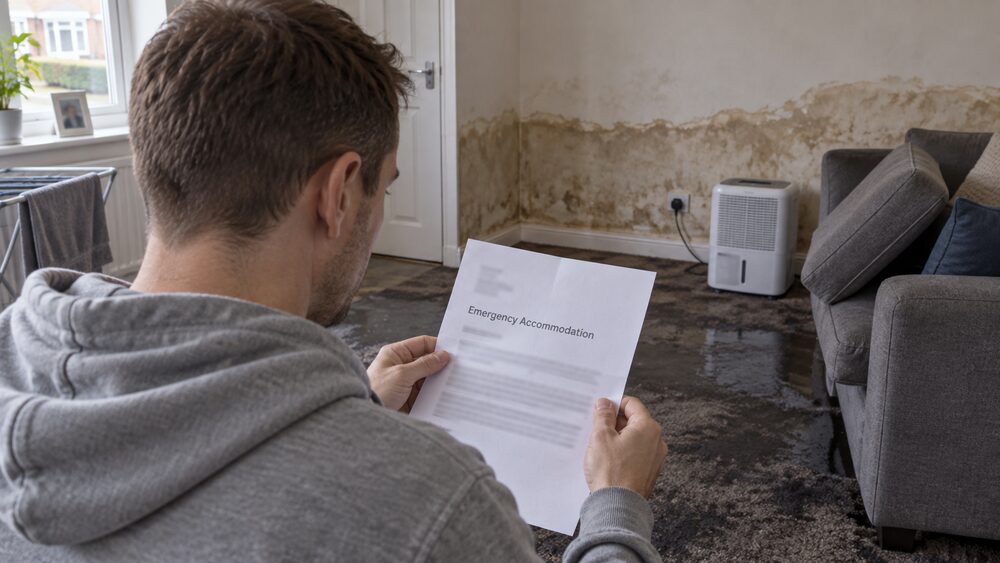
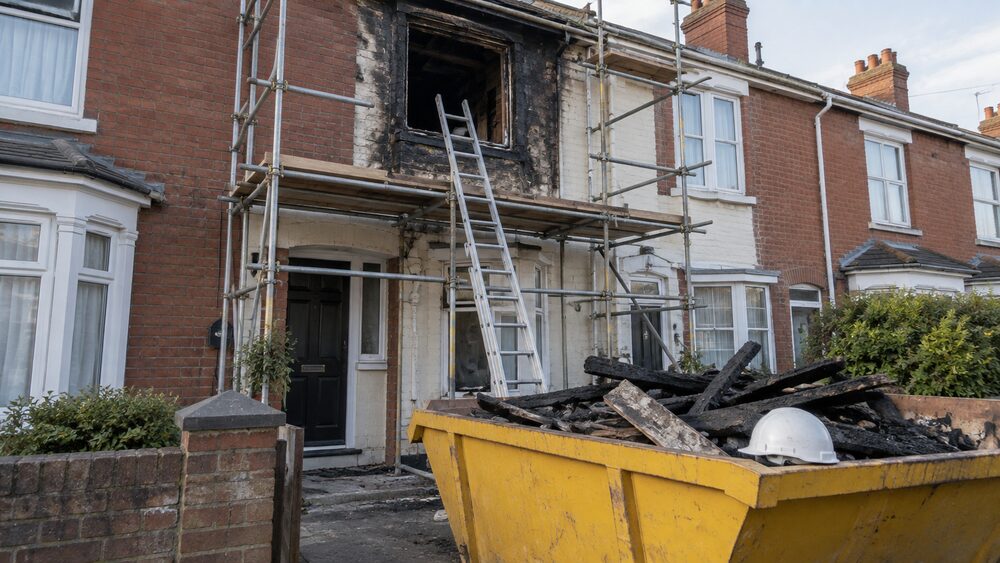
Policies generally include cover for temporary accommodation if your home has been made uninhabitable6. Home emergency cover may also provide alternative accommodation while the problem is being fixed if your home is unsafe or uninhabitable14. The two are not the same: home emergency cover responds to the emergency itself, while buildings or contents cover responds to the damage.
If you are evacuated as a precaution and your property has not been damaged, temporary accommodation is typically arranged through the local authority6. That distinction matters after a flood or a gas leak, when the property is intact but temporarily unsafe.
Travel insurance is a separate matter. While home insurance may cover certain possessions away from home, it will not cover medical care and cancellations23.
Can I claim for damage if I did not have insurance in place?
If you do not have insurance, you will not be able to make a claim for damage to your property6. That is the straightforward answer, and it is why lenders insist on buildings cover.
There is a separate route where a product caused the damage. You can make a claim for negligence against either the manufacturer or the company you bought the item from, and you may have to prove they were negligent24. For claims under £275, there is a small claims route24.
The same principle runs through insurance disputes about fault. Most motor insurance policies have an exclusion saying people should take reasonable care to protect their vehicle from loss or damage, but if there is no evidence the customer recognised the risk, the ombudsman might say they have not been reckless and it is unfair to apply the exclusion25. Fault, in other words, is assessed on what the person knew and could reasonably have done, not on the outcome alone.
How often should I review my home insurance cover?
It is usually a good idea to review your buildings and contents insurance cover at least once a year, perhaps when you renew5. Rebuild costs move with construction prices, contents accumulate, and home improvements change what needs insuring.
Underinsurance is the risk that review addresses. If the sum insured falls below the cost of rebuilding, a claim can be scaled back. Checking the rebuild figure and the contents total against current values is the practical step, and it is worth doing before renewal rather than after a loss.
Where to get help
If a claim is rejected or handled badly, the first step is the insurer's own complaints process. If that does not resolve it, the Financial Ombudsman Service can look at the complaint and, where it is upheld, require repairs, replacement, a cash settlement, or compensation for distress or inconvenience17. MoneyHelper offers free, impartial guidance on insurance and money questions, and debt advice charities can help where a loss has left bills unpaid.
Protection has limits. The Financial Services Compensation Scheme covers non-compulsory general insurance, including home insurance, at 90% of the claim4. That protects you if the insurer fails, not if the claim is declined. For disputes about what a policy covers, the ombudsman is the route.
Sources25 cited
- Home insurance complaints Financial Ombudsman Service
- Santander home insurance review Which?
- How to buy a house Which?
- FSCS: are my savings safe? Which?
- Underinsurance Hiscox
- Do you need home insurance add-ons? Which?
- NFU Mutual home insurance review Which?
- Nationwide home insurance review Which?
- 5 winter risks your home insurance might not cover Which?
- 6 questions to ask before you choose a home insurance policy Which?
- Accidental damage cover Post Office
- What is accidental damage insurance? Lloyds Bank
- Accidental damage NFU Mutual
- Home emergency insurance Financial Ombudsman Service
- Home emergency cover AXA
- Settling home insurance claims Financial Ombudsman Service
- Mobile phone and gadget insurance Financial Ombudsman Service
- Buildings insurance Aviva
- Home insurance flooding Which?
- AA home insurance The AA
- Misleading information at renewal Financial Ombudsman Service
- What is home insurance? Halifax
- Travel insurance ABTA
- Claim compensation if a product causes damage Citizens Advice
- Vehicle theft Financial Ombudsman Service




 MoneyHelperFree, impartial money and pensions guidance, set up by government
 Financial Ombudsman ServiceFree, independent help when a complaint about a firm is not put right
 FSCSProtects your money if a bank, insurer or investment firm fails
 Citizens AdviceFree advice on money, consumer and legal problems in England and Wales
 GOV.UKOfficial information on tax, benefits and government services